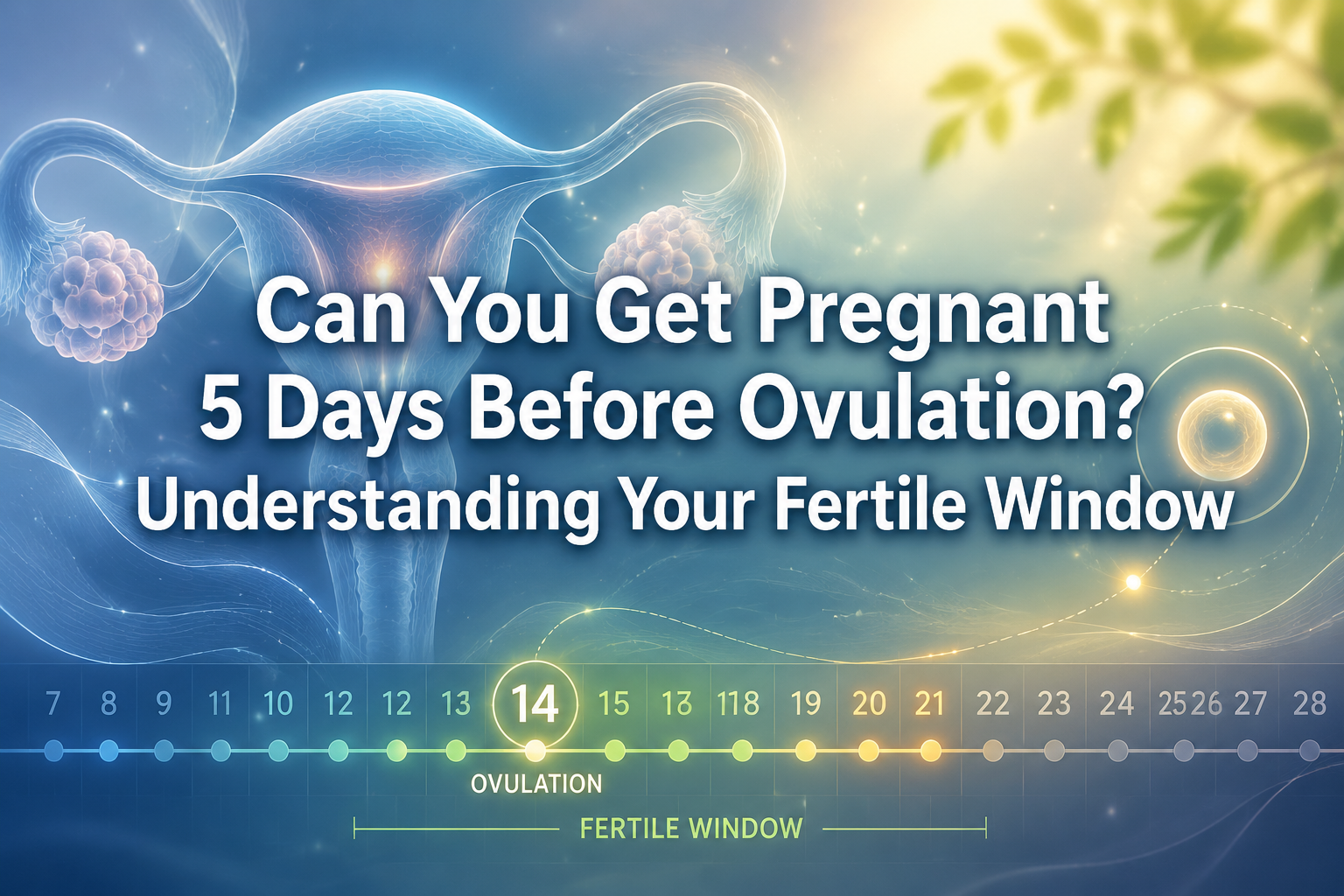
A surprising fact often overlooked in fertility discussions is that conception isn't limited to the day of ovulation itself. In fact, a woman's fertile window can begin as early as five days before ovulation, making sexual intercourse during this period a viable path to pregnancy. Understanding this extended window is crucial for anyone trying to conceive or manage their fertility in 2026.
Last updated: May 7, 2026
Quick Answer
Yes, you can absolutely get pregnant 5 days before ovulation. This is because sperm can survive inside the female reproductive tract for up to five days (and sometimes even longer) awaiting the release of an egg. While the chances increase significantly closer to ovulation, intercourse several days prior can still lead to conception.
Key Takeaways
- Sperm Longevity: Sperm can live for up to 5 days, and sometimes longer, within the female reproductive system.
- Fertile Window: The fertile window typically spans 6 days: the 5 days leading up to ovulation and the day of ovulation itself.
- Increasing Chances: Your chances of getting pregnant increase significantly as you get closer to the day of ovulation.
- Ovulation Is Key: Conception still requires the release of an egg (ovulation) and its fertilization by sperm.
- Tracking is Crucial: Accurate ovulation tracking helps pinpoint this fertile window, maximizing or minimizing pregnancy chances.
- Not a Guarantee: While possible, getting pregnant 5 days before ovulation is less likely than intercourse closer to ovulation.
- Individual Variation: Sperm survival and fertile windows can vary slightly from person to person.
Understanding the Fertile Window: Can You Get Pregnant 5 Days Before Ovulation?
Yes, you can get pregnant 5 days before ovulation. This possibility stems from the remarkable longevity of sperm once it enters the female reproductive tract. Unlike the egg, which is viable for a much shorter period, sperm can survive for an extended duration, sometimes up to five days, patiently waiting for an egg to be released.
For those trying to conceive, recognizing that the "fertile window" extends beyond just the day of ovulation is paramount. This window typically encompasses the five days leading up to ovulation, the day of ovulation itself, and a few hours immediately after. Engaging in sexual intercourse during this time frame increases the probability of conception. The chances are lower at five days before ovulation compared to, say, one or two days before, but it is certainly not zero. For a complete guide to maximizing your chances, explore our resource on the Best Days to Get Pregnant in 2026: Complete Guide to Conception.
 image showing a stylized calendar with the days leading up to ovulation highlighted in a from light green (less fertile)](https://zsxkvszxbhpwnvzxdydv.supabase.co/storage/v1/object/public/generated-images/kie/46c19e26-9ee6-4f87-8e7b-9f2bcc51c7cf/slot-1-1778165653761.png) )
)
Why Sperm Longevity Matters
The key factor enabling pregnancy 5 days before ovulation is sperm viability. Once ejaculated into the vagina, sperm rapidly travels through the cervix, into the uterus, and up into the fallopian tubes. Within the protective environment of the female reproductive system, particularly in the cervical mucus, sperm can remain alive and capable of fertilizing an egg for several days.
- Optimal Environment: The presence of fertile-quality cervical mucus (often described as "egg-white" consistency) creates a nourishing and protective pathway for sperm, extending their lifespan.
- Waiting Game: Sperm can effectively "wait" in the fallopian tubes for the egg to be released. If ovulation occurs within their survival window, fertilization can still take place.
- Individual Factors: While up to 5 days is a general guideline, sperm viability can be influenced by individual health, male fertility factors, and the quality of cervical mucus.
How Likely is Pregnancy 5 Days Before Ovulation?
While possible, the probability of conception 5 days before ovulation is generally lower than closer to the actual day of ovulation. Studies suggest that the highest chances of pregnancy occur with intercourse on the day of ovulation or the two days immediately preceding it.
- Day of Ovulation: Highest probability.
- 1-2 Days Before Ovulation: Very high probability.
- 3 Days Before Ovulation: Moderate probability.
- 4 Days Before Ovulation: Lower but still significant probability.
- 5 Days Before Ovulation: Low but definite probability.
For a clearer understanding of your overall chances, you can use our Probability of Getting Pregnant Calculator: Your Chances Explained.
The Interplay of Sperm and Egg Lifespan in Conception
The ability to get pregnant 5 days before ovulation hinges entirely on the differing lifespans of sperm and egg cells. While sperm can remain viable for several days, the egg has a much shorter window of opportunity for fertilization after it is released.
Once an egg is released during ovulation, it remains viable for fertilization for approximately 12 to 24 hours. If it isn't fertilized within this brief period, it begins to disintegrate, and pregnancy cannot occur in that cycle. This short lifespan of the egg is why timing intercourse within the fertile window, leading up to and including the day of ovulation, is so critical. Therefore, even if intercourse happens five days prior, it still relies on that single egg being released and meeting surviving sperm within its 12-24 hour window.
 infographic contrasting the lifespan of sperm and egg within the female reproductive tract. One side shows multiple sperm](https://zsxkvszxbhpwnvzxdydv.supabase.co/storage/v1/object/public/generated-images/kie/46c19e26-9ee6-4f87-8e7b-9f2bcc51c7cf/slot-2-1778165642577.png) )
)
The Egg's Brief Window
The female reproductive system is designed to release a mature egg, ready for fertilization, only once per menstrual cycle.
- Post-Ovulation: After ovulation, the egg travels down the fallopian tube. It is here that fertilization typically occurs.
- Time Sensitivity: If sperm are not present in the fallopian tube during this 12-24 hour window, or if they are no longer viable, fertilization cannot happen.
- No Egg, No Conception: Without an egg, even the healthiest, longest-living sperm cannot result in pregnancy. This is why tracking ovulation is essential. You can utilize tools like an Ovulation Calculator: Find Your Most Fertile Days & Ovulation Date to pinpoint this crucial event.
Sperm's Endurance Journey
In contrast to the egg, sperm embark on a journey that requires endurance. Their ability to survive for multiple days is a biological advantage, allowing for a broader fertile window.
- Cervical Crypts: Some sperm can hide in the crypts (folds) of the cervix, where they are protected and nourished by cervical mucus.
- Slow Release: From these reservoirs, sperm can be slowly released over several days, increasing the chances that viable sperm are present when an egg is finally released.
- Quality Matters: While many sperm may be present, only a select few will successfully reach the egg, and their overall health and motility (ability to move) play a significant role.
Chart: Sperm vs. Egg Viability
| Factor | Sperm | Egg |
|---|---|---|
| Typical Lifespan | Up to 5 days (sometimes 6-7) | 12-24 hours after ovulation |
| Survival Location | Female reproductive tract (cervix, uterus, fallopian tubes) | Fallopian tube (after ovulation) |
| Role in Conception | Fertilizes the egg | Is fertilized by sperm |
| Impact on Window | Extends the fertile window significantly | Defines the narrowest part of the window |
This comparison highlights why timing intercourse before ovulation is effective. You are ensuring a "sperm reserve" is in place, ready for the egg's short appearance.
Tracking Ovulation to Maximize Your Chances
To intentionally get pregnant 5 days before ovulation, or at any point within your fertile window, accurate ovulation tracking is indispensable. Various methods can help you pinpoint your fertile days in 2026.
Basal Body Temperature (BBT) Tracking
BBT tracking involves measuring your resting body temperature each morning before getting out of bed. Your BBT typically rises slightly (0.5 to 1.0 degree Fahrenheit) after ovulation due to the surge in progesterone.
- Identify Post-Ovulation: BBT charts primarily confirm that ovulation has occurred, indicating the end of the most fertile period.
- Predictive Power (Over Time): By observing patterns over several cycles, you can start to predict when ovulation is likely to occur in future cycles, helping you plan intercourse in the days leading up to the BBT rise.
- Consistency is Key: For accurate readings, it's vital to measure your temperature at the same time each morning. Use a dedicated BBT Calculator & Chart Tool for better analysis.
Ovulation Predictor Kits (OPKs)
OPKs detect the luteinizing hormone (LH) surge in your urine, which typically occurs 24-36 hours before ovulation. This makes them a more direct predictive tool than BBT.
- LH Surge: A positive OPK indicates that ovulation is imminent, usually within the next day or two.
- Optimal Timing: Once you get a positive OPK, it signals that you are entering your most fertile days. This is an excellent time to have intercourse.
- Daily Use: For best results, begin testing several days before your anticipated ovulation date and continue daily until you detect the surge.
Cervical Mucus Monitoring
Observing changes in cervical mucus throughout your cycle can provide valuable clues about your fertility.
- Dry/Sticky: After your period, mucus is often dry or sticky.
- Creamy/Lotion-like: As ovulation approaches, it may become creamy or lotion-like.
- Egg-White Consistency (EWCM): The most fertile type of cervical mucus is clear, stretchy, and slippery, resembling raw egg whites. This "egg-white cervical mucus" indicates peak fertility and is highly conducive to sperm survival and transport.
- Check Daily: Get into the habit of checking your cervical mucus daily to identify the shift to fertile-quality mucus.
Digital Fertility Trackers and Apps
Many apps and digital tools can integrate data from BBT, OPKs, and cervical mucus observations to predict your fertile window. Some even use AI to refine predictions over time.
- Integrated Data: These tools often provide a comprehensive view of your cycle, making it easier to spot patterns.
- Predictive Algorithms: Advanced algorithms can learn from your unique cycle data to offer more precise predictions for your fertile window.
- Ease of Use: They simplify the process of recording and interpreting fertility signs. Consider exploring an AI Ovulation Predictor for enhanced accuracy.
The Role of Intercourse Timing Within the Fertile Window
While it's possible to get pregnant 5 days before ovulation, strategically timing intercourse closer to ovulation significantly increases your chances. The goal is to ensure a healthy supply of sperm is present and ready when the egg is released.
Optimizing Intercourse for Conception
- Regularity is Key: For couples trying to conceive, having intercourse every 1-2 days during the entire fertile window is often recommended. This ensures fresh sperm are always available.
- Peak Fertility: The highest chances of conception are on the day of ovulation and the day immediately preceding it. Focus on these days if you cannot have intercourse every day of the fertile window.
- Don't Overdo It: While regular intercourse is beneficial, excessive frequency (multiple times a day) can sometimes reduce sperm count or quality. Find a balance that works for you and your partner.
When to Start Trying
If your cycle is regular, you might start having intercourse a few days before your estimated ovulation date. For example, if you expect to ovulate on day 14 of your cycle, you could begin having intercourse on day 9 or 10. This approach accounts for the 5-day sperm survival window. Our Fertile Window Calculator: Find the Exact Days can help you determine these dates.
Factors Affecting Your Chances
Several factors can influence the likelihood of getting pregnant, even if you time intercourse perfectly within the fertile window, including 5 days before ovulation.
Age
A woman's age is one of the most significant factors affecting fertility.
- Declining Fertility: Fertility generally peaks in the 20s and begins to decline in the early 30s, accelerating after age 35.
- Egg Quality and Quantity: As women age, both the quality and quantity of their eggs decrease, which can impact the chances of successful fertilization and implantation.
- Male Age: While less dramatic, male fertility also declines with age, affecting sperm quality. Learn more about your chances by age with our Pregnancy Chance by Age Calculator.
Sperm Health
The quality and quantity of sperm are crucial for conception.
- Motility: Sperm must be able to swim effectively to reach the egg.
- Morphology: Sperm shape also plays a role in its ability to fertilize.
- Count: A higher sperm count increases the chances of at least one viable sperm reaching the egg.
- Lifestyle: Factors like smoking, excessive alcohol consumption, and certain medications can negatively impact sperm health.
Ovulation Regularity and Health
Consistent, healthy ovulation is foundational for conception.
- Irregular Cycles: Women with irregular cycles may find it harder to predict their fertile window, including 5 days before ovulation. Conditions like Polycystic Ovary Syndrome (PCOS) can cause irregular or absent ovulation.
- Anovulation: Some women may not ovulate at all in a cycle, a condition called anovulation, which prevents pregnancy.
- Hormonal Balance: Overall hormonal health is critical for regular ovulation.
General Health and Lifestyle
Both partners' general health and lifestyle choices contribute to fertility.
- Nutrition: A balanced diet provides essential nutrients for reproductive health.
- Weight: Being significantly underweight or overweight can disrupt hormonal balance and ovulation.
- Stress: While the direct impact is complex, chronic stress can affect hormonal regulation.
- Underlying Medical Conditions: Conditions such as endometriosis, thyroid disorders, or sexually transmitted infections (STIs) can impact fertility.
Understanding Conception and Implantation
Even after fertilization, it takes several days for the fertilized egg (now an embryo) to travel to the uterus and implant into the uterine lining. This process, known as implantation, typically occurs 6-12 days after ovulation. This means that even if you conceive 5 days before ovulation (meaning fertilization happens on the day of ovulation), you won't experience early pregnancy symptoms or a positive pregnancy test for at least another week or more. For more information, read about When Does Implantation Occur After Ovulation.
Conclusion
The answer to "Can you get pregnant 5 days before ovulation?" is a clear yes. The longevity of sperm within the female reproductive tract allows for conception several days prior to the egg's release. While the odds generally increase as you get closer to the actual day of ovulation, understanding this extended fertile window is vital for anyone planning a pregnancy. By accurately tracking ovulation using methods like BBT, OPKs, and cervical mucus monitoring, you can identify your fertile window and optimize intercourse timing. Remember that various factors, including age, sperm health, and overall lifestyle, also play a significant role in your chances of conception. If you've been trying to conceive for a while without success, consulting a healthcare professional is always a wise next step. They can provide personalized advice and investigate any underlying fertility concerns.
FAQ
What is the fertile window?
The fertile window is the period during your menstrual cycle when sexual intercourse is most likely to result in pregnancy. It typically includes the five days leading up to ovulation and the day of ovulation itself.
How long do sperm live inside the female body?
Sperm can survive inside the female reproductive tract for up to 5 days, and sometimes even up to 7 days, in ideal conditions with fertile cervical mucus.
How long does an egg live after ovulation?
An egg is viable for fertilization for a much shorter period, approximately 12 to 24 hours, after it is released from the ovary.
Is it more likely to get pregnant closer to ovulation?
Yes, the chances of getting pregnant are highest with intercourse on the day of ovulation or the two days immediately preceding it. The probability decreases further away from ovulation.
Can I get pregnant 6 days before ovulation?
While technically possible due to rare instances of prolonged sperm survival, the chances of getting pregnant 6 days before ovulation are extremely low compared to 5 days before or closer to ovulation.
What are the best ways to track ovulation?
Effective methods include tracking Basal Body Temperature (BBT), using Ovulation Predictor Kits (OPKs), monitoring cervical mucus changes, and utilizing fertility tracking apps.
When should I have intercourse to maximize my chances of pregnancy?
To maximize your chances, aim to have intercourse every 1-2 days during your entire fertile window, especially focusing on the 2-3 days leading up to and including the day of ovulation.
References
- Wilcox, A. J., Weinberg, C. R., & Baird, D. D. (1995). Timing of sexual intercourse in relation to ovulation. The New England Journal of Medicine, 333(23), 1517–1521.