Trying to conceive can feel like navigating a complex biological puzzle, with timing being one of the most crucial pieces. Many individuals wonder: how many days after ovulation can you get pregnant? The answer lies within a specific, relatively short window, making precise timing essential for maximizing your chances.
Quick Answer
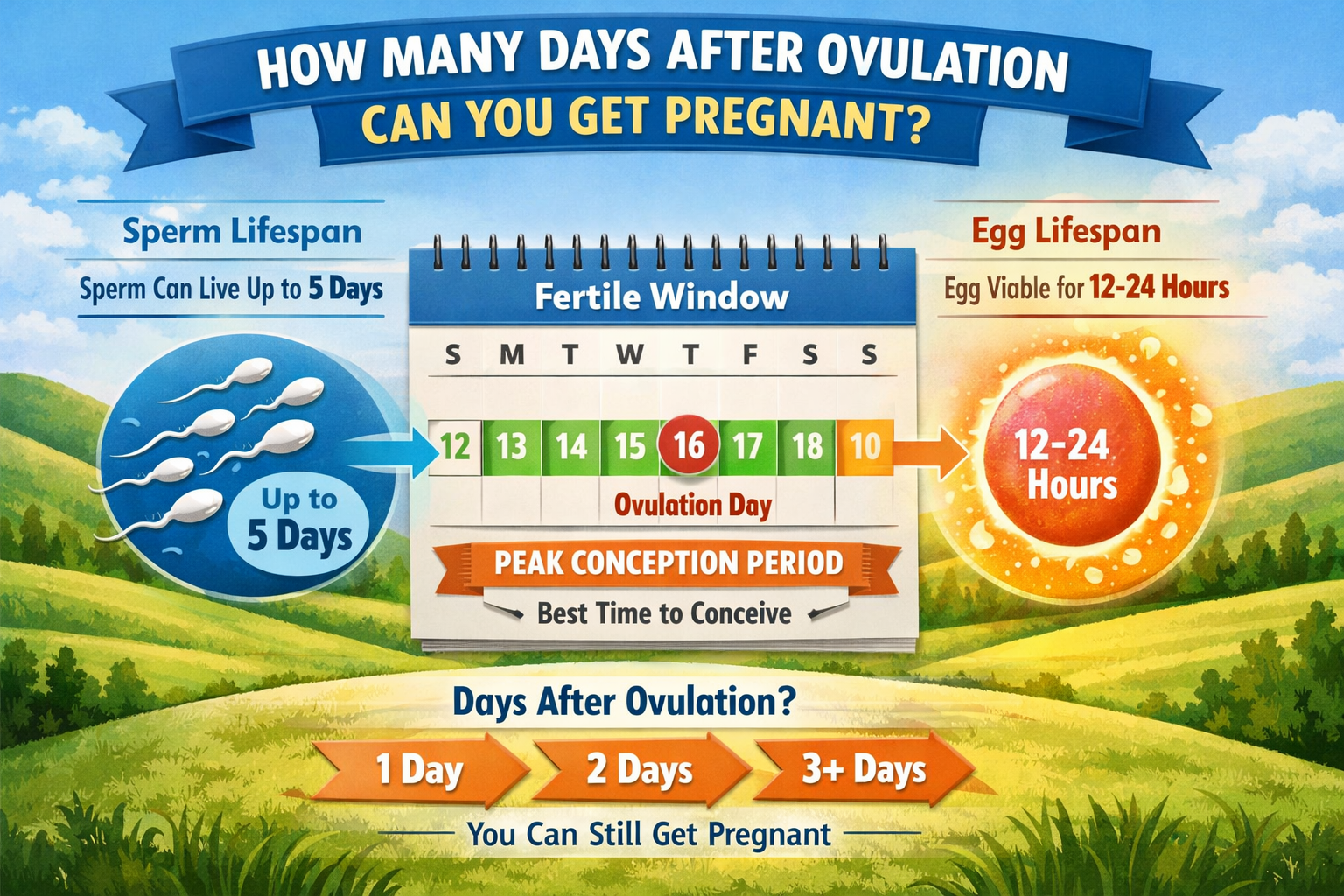
You can get pregnant within 12 to 24 hours after ovulation occurs, as this is the lifespan of the released egg. However, to maximize your chances, intercourse should ideally happen in the 5 days leading up to ovulation and on the day of ovulation itself, because sperm can survive inside the female reproductive tract for up to 5 days.
Key Takeaways
- Egg Lifespan: A released egg is viable for fertilization for only 12 to 24 hours after ovulation.
- Sperm Lifespan: Sperm can survive inside the female body for up to 5 days under optimal conditions.
- Fertile Window: The fertile window spans approximately 6 days – the 5 days leading up to ovulation and the day of ovulation itself.
- Peak Fertility: The highest chances of conception occur with intercourse on the 2-3 days immediately before ovulation and on ovulation day.
- Post-Ovulation: Pregnancy is highly unlikely more than 24 hours after ovulation, as the egg will no longer be viable.
- Tracking is Key: Understanding your individual cycle through methods like ovulation predictor kits (OPKs), basal body temperature (BBT), or cervical mucus monitoring is vital.
- Implantation: Even after fertilization, it takes another 6 to 12 days for the fertilized egg (now a blastocyst) to implant in the uterine wall.
Understanding the Ovulation Process and Your Fertile Window
So, how many days after ovulation can you get pregnant? The core of understanding this question lies in recognizing the limited lifespan of both the egg and sperm. Ovulation is the process where a mature egg is released from the ovary, ready for fertilization. This event marks the beginning of a very specific window of opportunity for conception.
The egg, once released, has a very short window of viability. It can only be fertilized for approximately 12 to 24 hours. If sperm is not present to fertilize the egg within this timeframe, the egg disintegrates, and pregnancy cannot occur until the next cycle. This brief period is why timing intercourse correctly is so important.
On the other hand, sperm have a more generous survival time. Under the right conditions (specifically, in fertile cervical mucus), sperm can live inside the female reproductive tract for up to 5 days. This extended lifespan of sperm is what creates the "fertile window" that precedes ovulation. Therefore, while you can only get pregnant on the day of ovulation or up to 24 hours after, having sperm already waiting in the fallopian tubes before ovulation significantly increases your chances.
The Critical Timeline: From Ovulation to Potential Conception
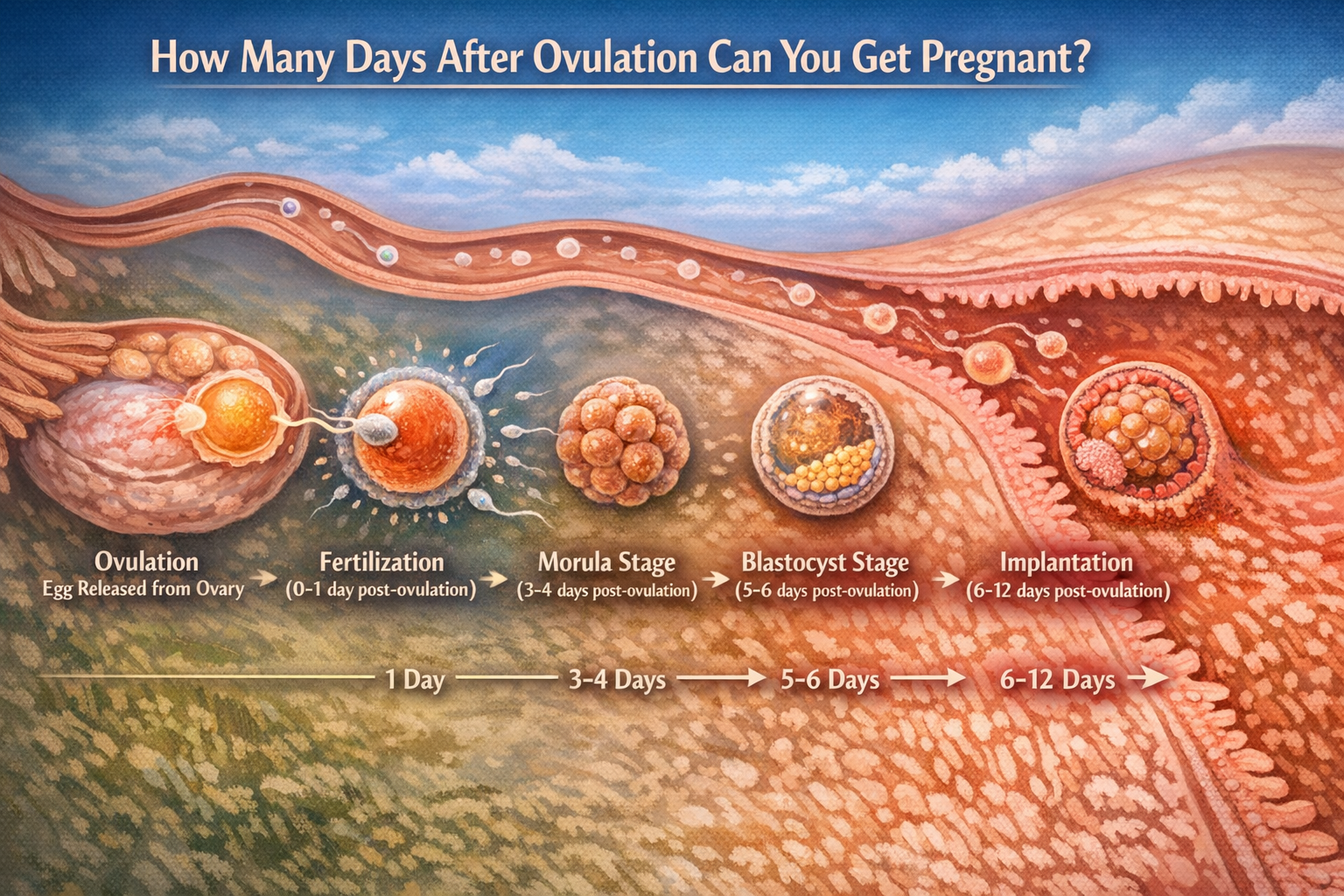
The process of conception is a meticulously timed biological sequence. While the question of how many days after ovulation can you get pregnant often focuses on the immediate post-ovulation period, understanding the full timeline clarifies why pre-ovulation timing is paramount.
Let's break down the journey:
- Days 1-5 Before Ovulation: Sperm can survive and wait. Intercourse during these days means sperm will be ready in the fallopian tubes when the egg is released.
- Days 0-1 (Ovulation Day and 12-24 hours after): This is the actual window when fertilization can occur. If sperm from previous days (or intercourse on ovulation day) meets the egg, conception is possible.
- Day 1-12 After Fertilization (Post-Ovulation): If fertilization happens, the fertilized egg (now called a zygote) begins to divide and travel down the fallopian tube, transforming into a morula, then a blastocyst. This entire journey takes about 3-5 days.
- Days 6-12 After Ovulation (Implantation): The blastocyst reaches the uterus and attempts to implant into the uterine lining. This process can take several days itself. Successful implantation is necessary for a pregnancy to continue. For more details on this, see our guide on Implantation After Ovulation: Timing, Symptoms.
Therefore, while the egg's viability is short, the opportunity for intercourse that leads to pregnancy is wider due to sperm survival. Focusing on the day of ovulation and the 2-3 days prior offers the highest probability of success.
When Are You Most Likely to Conceive After Ovulation?
You are most likely to conceive if intercourse occurs on the day of ovulation or in the 2-3 days immediately preceding it. The actual fertilization window, where the egg is viable, is very narrow—only 12 to 24 hours after ovulation.
To be precise, having unprotected intercourse:
- 5 days before ovulation: Approximately 10% chance of pregnancy.
- 4 days before ovulation: Approximately 16% chance of pregnancy.
- 3 days before ovulation: Approximately 27% chance of pregnancy.
- 2 days before ovulation: Approximately 31% chance of pregnancy (often the highest odds).
- 1 day before ovulation: Approximately 29% chance of pregnancy.
- On ovulation day: Approximately 20% chance of pregnancy.
- 1 day after ovulation: Less than 5% chance of pregnancy, dropping rapidly.
- 2 days after ovulation or more: Chances are virtually zero, as the egg is no longer viable.
This highlights that the "after ovulation" window is exceedingly small. The key to conception is usually ensuring sperm is present before or during ovulation.
The Role of Cervical Mucus
Cervical mucus plays a crucial role in enabling sperm survival. Around ovulation, cervical mucus becomes clear, slippery, and stretchy, resembling raw egg whites. This "fertile" mucus provides a protective environment for sperm, helping them survive longer and navigate towards the egg. Without this fertile mucus, sperm survival time is significantly reduced, sometimes to only a few hours.
👉 PRO TIP: Maximize Your Chances
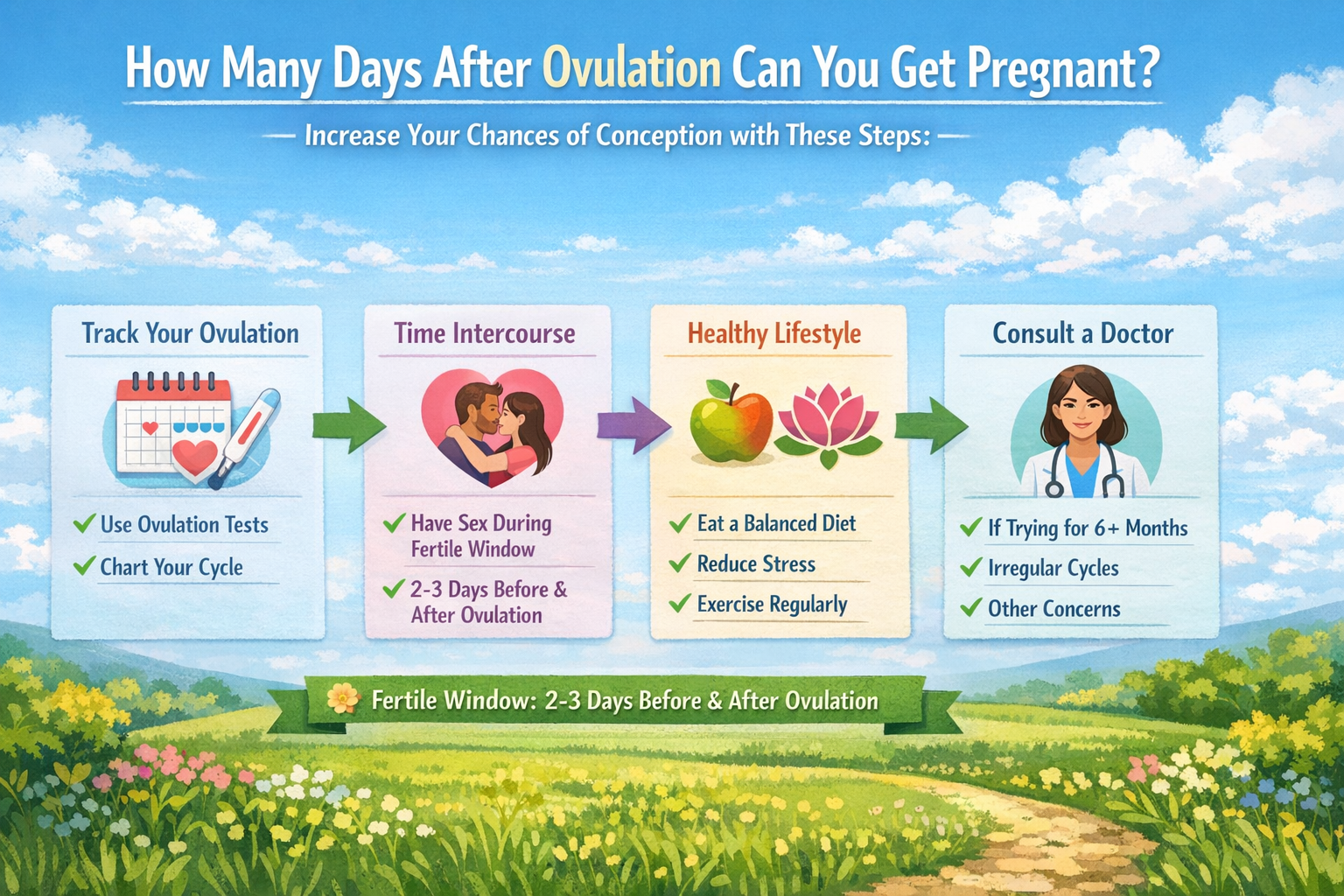
For those actively trying to conceive, having intercourse every day or every other day during the fertile window (the 5 days leading up to and including ovulation day) is often recommended. This ensures a consistent supply of healthy sperm is available when the egg is released.
What Factors Can Influence Conception Timing After Ovulation?
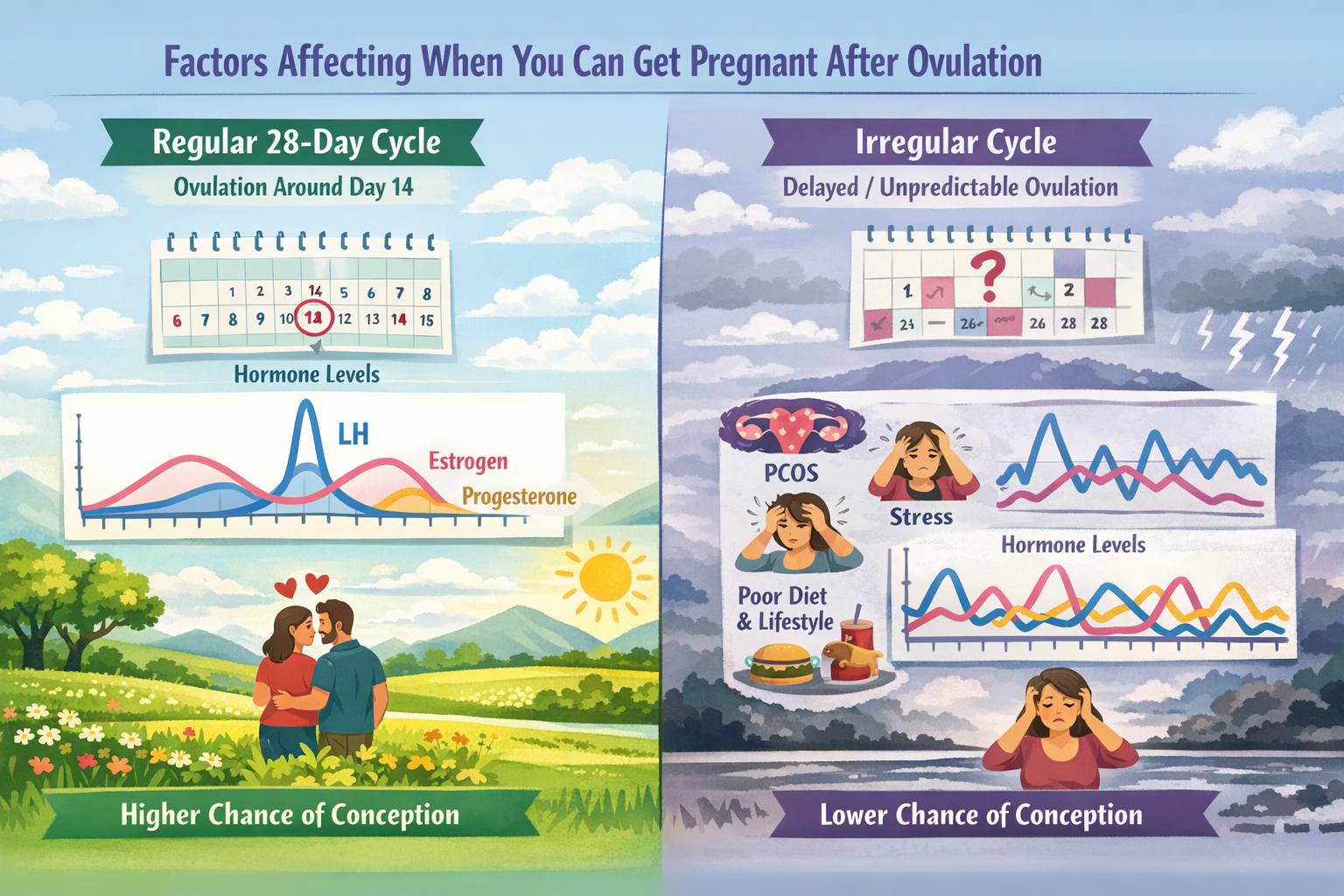
Several factors can influence the precise timing of ovulation and, consequently, your chances of conception after ovulation. These include the regularity of your menstrual cycle, age, underlying health conditions, and lifestyle choices.
Cycle Regularity
Individuals with highly regular menstrual cycles (e.g., 28-day cycles with ovulation consistently around day 14) generally have an easier time predicting their fertile window. However, many people experience variations. Irregular cycles can make it challenging to pinpoint ovulation, directly impacting the ability to time intercourse effectively. Conditions like Polycystic Ovary Syndrome (PCOS) are common causes of irregular ovulation. To learn more about this, check out our article on Can You Get Pregnant With Late Ovulation? | Expert Guide.
Age
Fertility naturally declines with age. For women, both egg quality and quantity decrease over time, particularly after age 35. This means that while the core principle of how many days after ovulation you can get pregnant remains the same, the overall chances of success within that window may be lower. For more information, see What Are My Chances of Getting Pregnant at 35?.
Health Conditions
Certain health conditions can directly affect ovulation. These include:
- PCOS: Can lead to anovulation (no ovulation) or irregular ovulation.
- Thyroid disorders: Imbalances can disrupt the hormones that control ovulation.
- Premature ovarian insufficiency: Ovaries stop functioning normally before age 40.
- Endometriosis: Can affect egg quality and implantation.
Lifestyle Factors
Lifestyle choices also play a role in fertility:
- Stress: High stress levels can interfere with hormonal balance and ovulation.
- Weight: Being significantly underweight or overweight can disrupt ovulation.
- Diet: A balanced, nutrient-rich diet supports overall reproductive health.
- Smoking and Alcohol: Both can negatively impact fertility in both men and women.
How to Accurately Track Your Ovulation and Fertile Window
Accurately tracking your ovulation is the most effective way to understand your unique cycle and determine your fertile window, thereby increasing your chances of getting pregnant. There are several reliable methods you can use, often in combination, to pinpoint when you are most fertile.
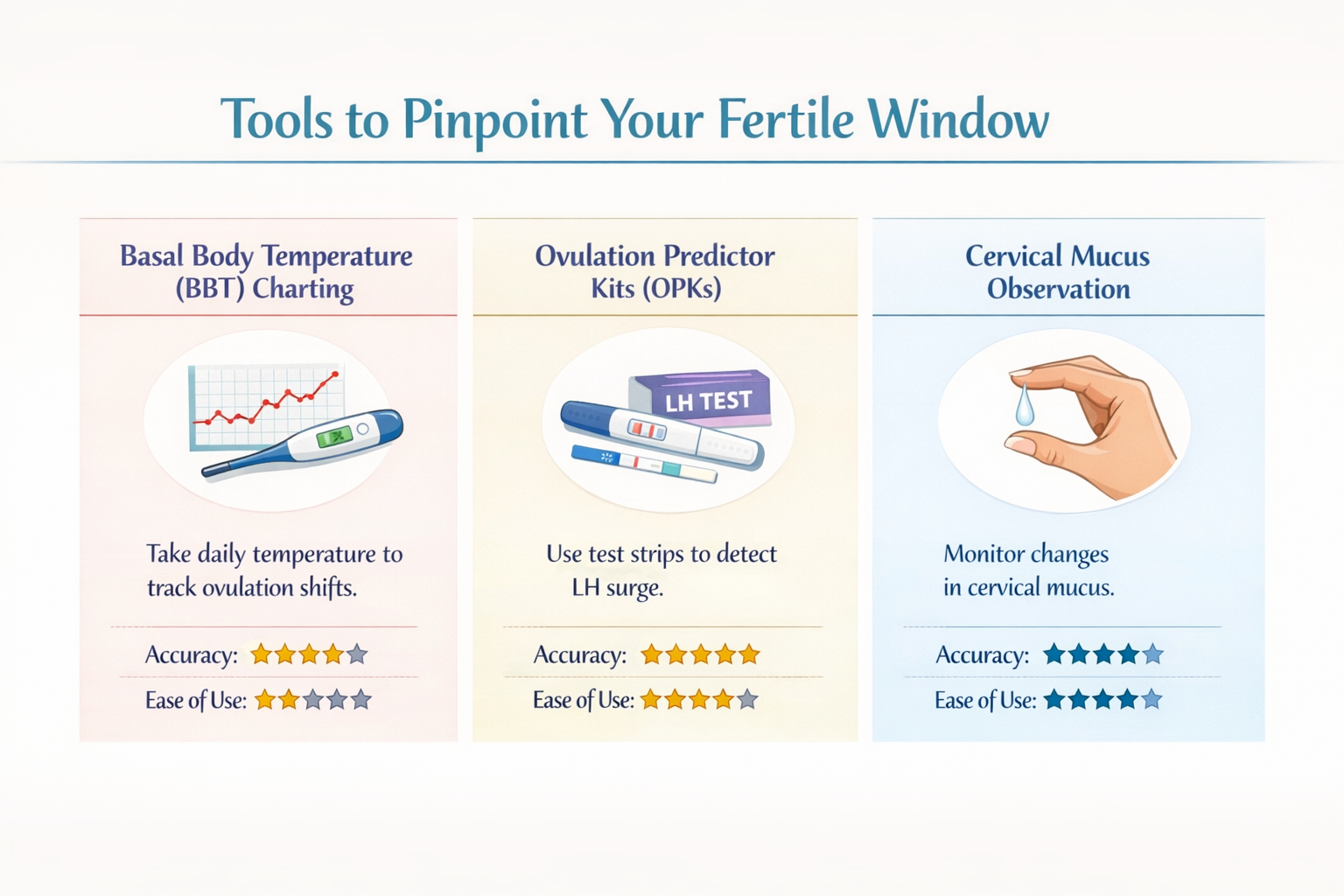
1. Basal Body Temperature (BBT) Charting
Your basal body temperature is your lowest resting body temperature. After ovulation, there's a slight but sustained increase (typically 0.5 to 1.0 degrees Fahrenheit) in BBT due to the rise in progesterone. By tracking your BBT every morning before getting out of bed, you can identify this temperature shift, confirming that ovulation has occurred. While it confirms ovulation after the fact, consistent charting over several cycles helps you predict your patterns. Our BBT Chart Tool can help you log and analyze your data.
2. Ovulation Predictor Kits (OPKs)
OPKs detect the surge of luteinizing hormone (LH) in your urine, which typically happens 24-36 hours before ovulation. This makes OPKs excellent for predicting the optimal time for intercourse before the egg is released. They are readily available over-the-counter and are a very popular method for timing conception.
3. Cervical Mucus Monitoring
Observing changes in your cervical mucus can provide valuable clues. As ovulation approaches, estrogen levels rise, causing cervical mucus to become clear, stretchy, and resemble raw egg whites. This "egg white cervical mucus" (EWCM) is a sign of peak fertility, indicating sperm can easily travel and survive. After ovulation, mucus typically becomes thicker or disappears.
4. Ovulation Calculators and Fertility Apps
Online tools like our Easy Ovulation Calculator or our Fertile Window Calculator can help you estimate your fertile window based on your cycle length and last period. Many fertility apps also integrate these calculations with options to log BBT, OPK results, and cervical mucus observations, providing a comprehensive view of your cycle. While useful for initial estimates, they are less precise than direct biological tracking methods.
5. Saliva Ferning Tests
Some women observe a "ferning" pattern in their dried saliva when estrogen levels are high, indicating an approaching fertile window. This method is less common and often less reliable than OPKs or BBT.
Comparison of Ovulation Tracking Methods
| Method | What it Detects | When it Predicts/Confirms | Pros | Cons |
|---|---|---|---|---|
| Ovulation Predictor Kits | LH surge | Predicts (12-36 hrs before) | Highly accurate, easy to use | Can be expensive, requires daily testing around fertile window |
| Basal Body Temperature | Temperature rise due to progesterone | Confirms (after ovulation) | Inexpensive, provides good overview of cycle patterns over time | Requires daily discipline, only confirms after the fact, affected by illness/sleep |
| Cervical Mucus | Changes in consistency (EWCM) | Predicts | Free, natural method, provides immediate feedback | Can be subjective, requires careful observation, affected by certain medications/conditions |
| Fertility Apps/Calculators | Estimates based on cycle data | Predicts | Easy to use, good for initial estimates, integrates multiple data points (some apps) | Less accurate for irregular cycles, relies on assumptions |
By combining several methods, such as using OPKs to predict ovulation and BBT to confirm it, you can gain the most accurate understanding of your unique fertile window and optimize your chances of getting pregnant.
Common Mistakes When Trying to Conceive Post-Ovulation
Focusing too heavily on getting pregnant after ovulation is a common mistake that can lead to missed opportunities and frustration. The reality of how many days after ovulation you can get pregnant is far narrower than many realize, making pre-ovulation timing critical.
1. Waiting Too Long After Ovulation
The most significant mistake is assuming there's a long window for conception after ovulation. As we've established, the egg is viable for only 12-24 hours. Waiting until you are sure ovulation has passed, or waiting for several days after an LH surge, often means missing the optimal window. By the time symptoms like a BBT rise confirm ovulation, the egg may no longer be viable.
2. Misinterpreting Ovulation Symptoms
While ovulation symptoms like mild cramping or breast tenderness can be helpful indicators, they can also be subjective and appear slightly before, during, or even shortly after the egg's release. Relying solely on these without more precise tracking methods can lead to misjudging the fertile window.
3. Not Tracking Accurately Enough
Guessing your ovulation based on a standard 28-day cycle or only using a basic calendar app without actual biological data (like OPK results or BBT) is another common error. Every individual's cycle is unique, and even regular cycles can vary month-to-month. Without accurate tracking, pinpointing the short, critical fertile window is challenging.
4. Over-Stressing About Timing
While timing is crucial, excessive stress can ironically hinder conception. High stress levels can affect hormone balance and even delay or prevent ovulation. It's important to be informed and proactive, but also to maintain a healthy emotional state. Remember, it can take time to conceive, and consistent effort across several cycles is often needed.
5. Neglecting Overall Health
Focusing only on the timing of intercourse while overlooking general health can also be a pitfall. Poor nutrition, lack of sleep, excessive caffeine or alcohol, and smoking can all negatively impact fertility for both partners. A holistic approach to health supports optimal reproductive function.
By avoiding these common mistakes and focusing on the fertile window leading up to and including the day of ovulation, individuals can significantly improve their chances of conception.
Conclusion
Understanding how many days after ovulation you can get pregnant is fundamental for anyone trying to conceive. While the egg itself is only viable for a very short 12 to 24-hour window post-ovulation, the broader "fertile window" extends for about 6 days, primarily due to the longer lifespan of sperm within the female reproductive tract. This means the best strategy for conception involves timing intercourse in the 5 days leading up to ovulation and on the day of ovulation itself.
Accurate ovulation tracking through methods like basal body temperature, ovulation predictor kits, and cervical mucus monitoring is paramount to identifying your unique fertile window. By focusing on these predictive signs and avoiding common mistakes like waiting too long after ovulation, you can significantly enhance your chances of conception. Remember that patience, consistency, and a holistic approach to health are also key components of a successful fertility journey.
If you are struggling to conceive after consistent efforts, or if you have irregular cycles or other concerns, consulting with a healthcare professional or fertility specialist in 2026 is always a wise next step.
Ready to pinpoint your most fertile days?
Use our advanced AI Ovulation Predictor | Advanced Fertility Tracking with Machine Learning to accurately determine your fertile window and maximize your chances of getting pregnant. You can also try our Easy Ovulation Calculator for quick and reliable estimates.
FAQ
What are the absolute best days to try to get pregnant?
The absolute best days to try to get pregnant are the 2-3 days leading up to ovulation and the day of ovulation itself, as these days offer the highest probability of the egg and live sperm meeting.
Is it possible to get pregnant 2 days after ovulation?
It is highly unlikely to get pregnant 2 days after ovulation because the egg is only viable for 12 to 24 hours after its release. By 48 hours post-ovulation, the egg will have disintegrated.
How quickly does an egg become unviable after ovulation?
An egg becomes unviable for fertilization approximately 12 to 24 hours after it is released from the ovary.
Can sperm wait for the egg?
Yes, sperm can wait for the egg. Under optimal conditions and in fertile cervical mucus, sperm can survive inside the female reproductive tract for up to 5 days, making intercourse before ovulation effective.
How soon after intercourse does fertilization occur?
If sperm is present in the fallopian tube when an egg is released, fertilization can occur within minutes to hours after the egg's release.
What is the fertile window?
The fertile window is the period of approximately 6 days when conception is possible, encompassing the 5 days leading up to ovulation and the day of ovulation itself.
When does implantation occur after ovulation?
Implantation of a fertilized egg into the uterine wall typically occurs 6 to 12 days after ovulation, with an average of 9 days post-ovulation.
Does late ovulation affect the chances of getting pregnant?
Late ovulation can make it more challenging to pinpoint your fertile window, but if ovulation does occur and a healthy egg is released, pregnancy is still possible. It simply shifts the timing of your fertile window.
What tracking methods are most reliable for predicting ovulation?
Ovulation predictor kits (OPKs) are generally considered most reliable for predicting ovulation, as they detect the LH surge that precedes egg release. Basal body temperature (BBT) charting is excellent for confirming ovulation after it has occurred.
How can I know for sure when I ovulate?
While no method is 100% foolproof without medical imaging, combining OPKs (to predict) with BBT charting and cervical mucus observation (to confirm and provide additional clues) offers the most accurate way to know when you ovulate at home.
References
- American College of Obstetricians and Gynecologists. (2020). Optimizing Fertility: ACOG Committee Opinion, Number 580.
- Stanford Medicine. (n.d.). The Reproductive System: The Female System. Retrieved from https://stanfordhealthcare.org/medical-conditions/womens-health/female-reproductive-system.html
- Wilcox, A. J., Weinberg, C. R., & Baird, D. D. (1995). Timing of sexual intercourse in relation to ovulation. New England Journal of Medicine, 333(23), 1517-1521.