When you're actively trying to conceive, the wait each month can feel endless, filled with hope and uncertainty. A probability of getting pregnant calculator offers a data-driven estimate of your likelihood of conceiving, helping you understand your fertility window and optimize your efforts by considering factors like age, cycle regularity, and timing of intercourse.
Key Takeaways
- A probability of getting pregnant calculator estimates your monthly conception odds based on various personal and biological factors.
- Key inputs often include age, cycle length, regularity, and the timing of unprotected intercourse relative to ovulation.
- Age is a primary determinant, with fertility naturally declining after the early 30s.
- Understanding your fertile window – the days leading up to and including ovulation – is crucial for maximizing chances.
- While calculators offer guidance, they are not diagnostic tools and should be used in conjunction with medical advice if concerns arise.
- Lifestyle factors, underlying health conditions, and male fertility also significantly influence the actual probability.
- For a more personalized assessment, consider combining calculator use with other tracking methods like basal body temperature (BBT) and ovulation predictor kits (OPKs).
What is a Probability of Getting Pregnant Calculator and How Does It Work?
A probability of getting pregnant calculator is an online tool designed to estimate your statistical chances of conceiving during a given menstrual cycle. It works by taking into account several personal biological factors you provide, such as your age, the typical length of your menstrual cycle, and often, the date of your last period or the timing of intercourse. The calculator then uses algorithms based on fertility research and statistical data to provide a percentage chance of pregnancy.
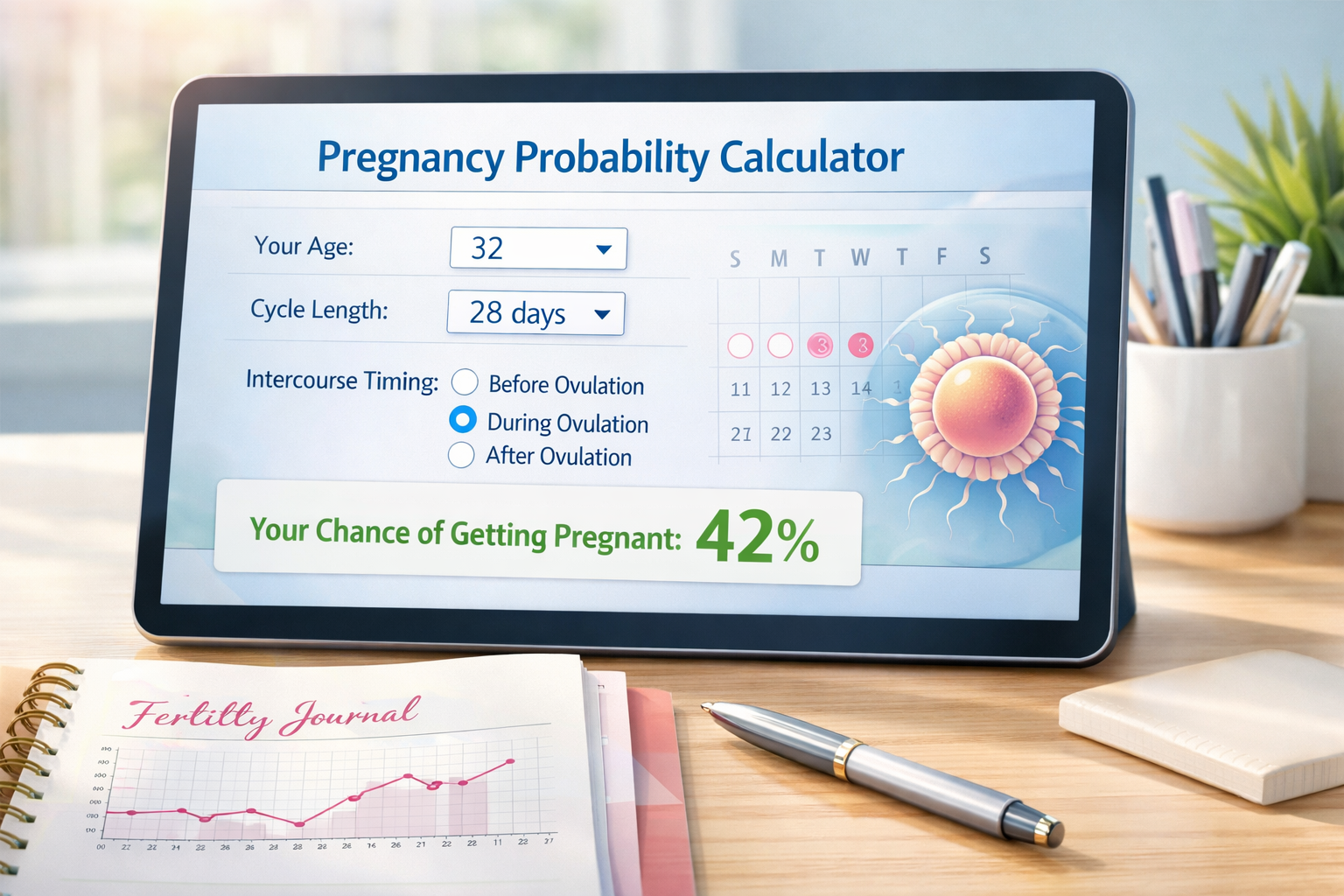
For instance, if you're a healthy 28-year-old with a regular 28-day cycle and timed intercourse around ovulation, a calculator might indicate a 20-25% chance of pregnancy in that specific cycle. These tools are built on the understanding that conception is not a certainty each month, even under ideal conditions, but rather a game of probabilities influenced by numerous variables. They aim to demystify some of this uncertainty, offering users a clearer picture of their individual odds.
How the Calculator Processes Your Data
Most probability of getting pregnant calculators use a multi-step approach:
- Input Collection: You input essential data points such as:
- Age: This is a significant factor as female fertility declines with age.
- Cycle Length: The number of days from the start of one period to the start of the next.
- Cycle Regularity: Whether your cycles are consistent or vary significantly.
- Last Menstrual Period (LMP): Used to estimate ovulation.
- Timing of Intercourse: Crucial for identifying intercourse within the fertile window.
- Duration of Trying (sometimes): Some advanced calculators might ask how long you've been trying to conceive.
- Ovulation Prediction: Based on your cycle length and LMP, the calculator estimates your ovulation day. For a typical 28-day cycle, ovulation usually occurs around day 14.
- Fertile Window Identification: The calculator then identifies your fertile window, which includes the five days leading up to ovulation and the day of ovulation itself. Sperm can live in the female reproductive tract for up to five days, while an egg is viable for only 12-24 hours after ovulation. Intercourse within this window maximizes conception chances. You can learn more about this with a Fertile Window Calculator.
- Probability Calculation: Using statistical models and research on various fertility rates, the tool calculates a percentage reflecting your likelihood of getting pregnant in that cycle. These models often incorporate population-level data on conception rates for different age groups and timing strategies.
Example Scenario: A 30-year-old woman with a consistent 29-day cycle has unprotected intercourse on days 12, 14, and 15 of her cycle. The probability of getting pregnant calculator would factor in her age (which indicates a higher fertility rate than, say, a 40-year-old) and the optimal timing of intercourse around her estimated ovulation day (likely day 15). This combination would yield a relatively good probability for that cycle. In contrast, a 38-year-old with irregular cycles and intercourse only on day 20 might see a significantly lower probability.
Factors Influencing Your Pregnancy Probability
Your probability of getting pregnant is a complex interplay of various biological and lifestyle factors. While a probability of getting pregnant calculator considers several, understanding these underlying influences can help you take more informed steps on your fertility journey.
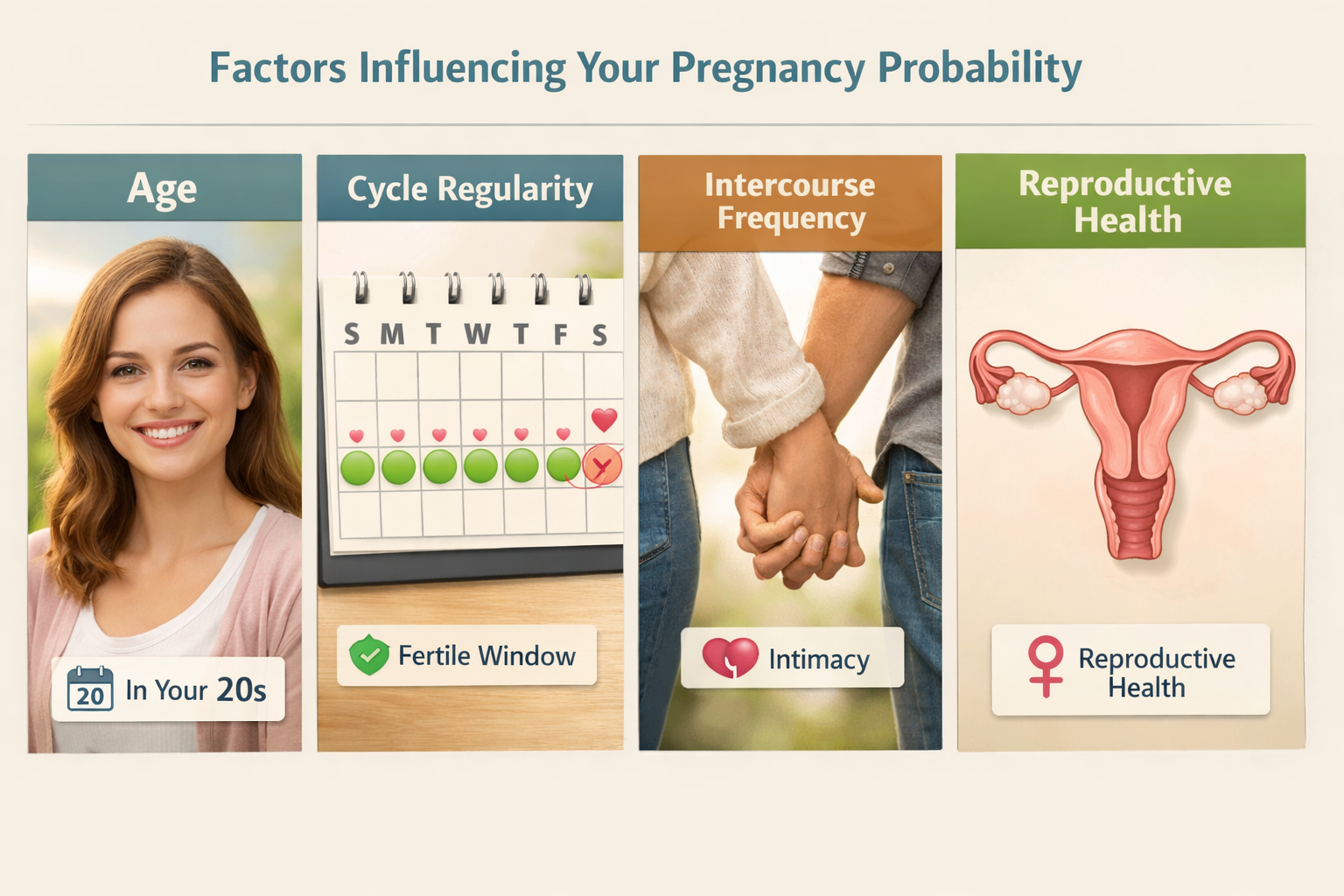
The most significant factors include age, menstrual cycle regularity, timing and frequency of intercourse, and overall health. For example, a 25-year-old woman has a higher monthly chance of conception (around 20-25%) compared to a 35-year-old (around 15%) or a 40-year-old (5% or less), assuming all other factors are equal. This decline is primarily due to the natural reduction in both egg quality and quantity over time. You can explore more specific age-related probabilities, such as What Are My Chances of Getting Pregnant at 30? or What Are My Chances of Getting Pregnant at 40?.
Key Factors and Their Impact
Here's a breakdown of the critical factors:
- Female Age: This is arguably the most dominant factor. Fertility peaks in the early to mid-20s and begins a gradual decline after age 30, accelerating significantly after 35. This is due to a natural decrease in the number and quality of eggs.
- Menstrual Cycle Regularity and Length: Consistent cycles (typically 21-35 days) with predictable ovulation are ideal. Irregular cycles make it harder to pinpoint the fertile window, directly impacting the probability of getting pregnant. Tools like a cycle length calculator can help you track this.
- Timing of Intercourse: Having unprotected sex during the fertile window (the 5 days leading up to ovulation and ovulation day itself) is paramount. Sperm can survive for up to 5 days, so having sperm present before the egg is released is key. Learn about the best days to get pregnant in 2026.
- Frequency of Intercourse: Regular intercourse (every 1-2 days) during the fertile window generally increases chances more than sporadic attempts.
- Male Fertility: Sperm count, motility (movement), and morphology (shape) are crucial. Male fertility issues account for a significant percentage of conception difficulties.
- Overall Health and Lifestyle:
- Weight: Being significantly underweight or overweight can disrupt hormonal balance and ovulation.
- Smoking, Alcohol, and Drug Use: These can negatively impact both male and female fertility.
- Stress: Chronic stress can sometimes interfere with ovulation.
- Diet and Exercise: A balanced diet and moderate exercise contribute to overall reproductive health.
- Underlying Medical Conditions: Conditions such as Polycystic Ovary Syndrome (PCOS), endometriosis, thyroid disorders, or sexually transmitted infections (STIs) can affect fertility in both men and women.
- Duration of Trying: If you've been trying for an extended period without success (typically a year for those under 35, or six months for those over 35), it might indicate an underlying issue that warrants medical investigation. This highlights the importance of understanding how long it takes to get pregnant naturally.
Common Mistake: Relying solely on your period start date to determine your fertile window, especially with irregular cycles. Ovulation can vary, and a calculator or ovulation predictor kit provides a more accurate estimate.
Maximizing Your Chances: Beyond the Probability of Getting Pregnant Calculator
While a probability of getting pregnant calculator offers valuable insights into your statistical odds, effectively maximizing your chances involves proactive steps that go beyond just numbers. This includes diligent tracking of your cycle, making informed lifestyle choices, and knowing when to seek professional medical advice.

Focusing on identifying your fertile window is paramount. Ovulation predictor kits (OPKs) and tracking basal body temperature (BBT) are excellent complementary methods. For example, OPKs detect the surge in luteinizing hormone (LH) that precedes ovulation, giving you a 24-48 hour heads-up to time intercourse effectively. Combining this with a probability of getting pregnant calculator gives you both a general statistical understanding and a precise, real-time indicator of your body's readiness for conception.
Actionable Strategies for Boosting Fertility
Here are practical steps to increase your probability of getting pregnant:
- Pinpoint Your Fertile Window:
- Use Ovulation Predictor Kits (OPKs): These urine tests detect the LH surge, signaling impending ovulation. Start testing a few days before your estimated ovulation date.
- Track Basal Body Temperature (BBT): Your BBT rises slightly (0.5-1.0°F) after ovulation and stays elevated until your next period. Tracking this daily helps confirm ovulation retrospectively, identifying patterns for future cycles. Our BBT Chart Tool can assist with this.
- Monitor Cervical Mucus: As ovulation approaches, cervical mucus often becomes clear, stretchy, and resembles raw egg whites – an excellent sign of peak fertility.
- Utilize Fertility Apps: Many apps help track these signs and predict your fertile window. The Fertile Window Calculator is another valuable resource.
- Time Intercourse Strategically:
- Aim for unprotected intercourse every 1-2 days during your entire fertile window, not just on the day of ovulation. This ensures a constant supply of healthy sperm is available when the egg is released.
- The "sweet spot" is often 1-2 days before ovulation.
- Adopt a Healthy Lifestyle:
- Balanced Diet: Eat nutrient-rich foods, including plenty of fruits, vegetables, whole grains, and lean proteins.
- Moderate Exercise: Maintain a healthy weight through regular, moderate physical activity. Avoid excessive, strenuous exercise, which can sometimes interfere with ovulation.
- Avoid Harmful Substances: Quit smoking, reduce alcohol consumption, and avoid recreational drugs.
- Manage Stress: Practice stress-reduction techniques like yoga, meditation, or spending time in nature. Chronic stress can impact hormonal balance.
- Consider Male Fertility:
- Male fertility is equally important. Men should also adopt a healthy lifestyle, avoid excessive heat exposure to the testes (e.g., hot baths, tight underwear), and limit alcohol and tobacco.
- Know When to Seek Professional Help:
- If you are under 35 and have been trying to conceive for 12 months without success.
- If you are 35 or older and have been trying for 6 months without success.
- If you have known fertility issues (e.g., PCOS, endometriosis, low sperm count).
- A healthcare provider can offer personalized advice, diagnostic testing, and discuss treatment options. This guidance is more comprehensive than any probability of getting pregnant calculator.
Decision Rule: Choose to incorporate multiple fertility tracking methods (e.g., OPKs + BBT + calculator) if you want the most accurate understanding of your unique cycle and the best timing for conception. If you're struggling with irregular cycles, consulting a doctor early is more beneficial than relying solely on a calculator.
Understanding the Limitations of a Probability of Getting Pregnant Calculator
While a probability of getting pregnant calculator is a helpful tool for estimating your conception odds, it's crucial to understand its inherent limitations. These calculators provide statistical probabilities based on general population data and your provided inputs, but they cannot account for every unique biological nuance or unseen health factor. For instance, a calculator won't detect blocked fallopian tubes, undiagnosed hormonal imbalances, or male factor infertility, which all significantly impact actual chances. Therefore, while useful for initial guidance and optimizing timing, it should not replace professional medical advice or comprehensive fertility evaluations.
What Calculators Can't Tell You
Here are some specific limitations to be aware of:
- Individual Biological Variations: Every woman's body is different. While calculators use averages, your ovulation might vary, or your fertile window might not perfectly align with typical patterns. They also don't measure the quality of your eggs or your ovarian reserve, which are critical for conception.
- Male Fertility Factors: Most online calculators focus predominantly on female factors. They typically don't assess sperm quality, count, or motility, which are essential for pregnancy. Male factor infertility accounts for about 30-40% of all infertility cases (NIH, 2017).
- Undiagnosed Medical Conditions: Conditions like endometriosis, PCOS, fibroids, thyroid issues, or structural abnormalities in the reproductive system (e.g., blocked fallopian tubes) are invisible to a calculator but can profoundly affect your ability to conceive.
- Accuracy of Input Data: The calculator's output is only as accurate as the information you provide. If you misestimate your cycle length, the timing of intercourse, or if your cycles are highly irregular, the probability provided will be less reliable.
- Stress and Lifestyle Nuances: While calculators might implicitly consider age-related lifestyle, they cannot quantify the impact of specific stress levels, detailed dietary habits, or subtle environmental factors on your personal fertility.
- Emotional Impact: Repeatedly using a calculator and focusing too heavily on a percentage can sometimes lead to increased stress or disappointment if conception doesn't occur quickly, overshadowing the emotional aspect of trying to conceive.
- No Diagnostic Capability: These tools are for estimation, not diagnosis. A high probability doesn't guarantee pregnancy, nor does a lower one mean you won't conceive. They cannot identify the root cause of difficulty in conceiving.
Pull Quote: "A calculator offers a statistical estimate, not a medical diagnosis. It's a guide, not a guarantee."
When to Seek Medical Consultation
If you are concerned about your fertility, or if you've been trying to get pregnant without success, it's vital to consult a healthcare provider, especially if:
- You are under 35 and have been trying for 12 months or more.
- You are 35 or older and have been trying for 6 months or more.
- You or your partner have known risk factors for infertility (e.g., irregular periods, previous pelvic inflammatory disease, endometriosis, male fertility issues).
- Your probability of getting pregnant calculator consistently shows very low chances despite optimizing timing.
A doctor can perform comprehensive evaluations, including hormonal tests, imaging, and sperm analysis, to identify any underlying issues and recommend appropriate interventions.
FAQ
How accurate is a probability of getting pregnant calculator?
A probability of getting pregnant calculator provides an estimate based on general statistical data and your inputs, typically around 70-80% accurate for predicting a fertile window, but less precise for individual conception due to many unquantifiable factors. Its accuracy depends heavily on the correctness and consistency of your input data.
What information do I need for a pregnancy probability calculator?
Typically, you'll need your age, the date of your last menstrual period (LMP), your average menstrual cycle length, and sometimes details about the regularity of your cycles and the dates of unprotected intercourse.
Can a calculator tell me my exact ovulation day?
No, a calculator estimates your ovulation day based on averages and your cycle length. For more precise ovulation detection, it's better to combine calculator use with methods like ovulation predictor kits (OPKs) or basal body temperature (BBT) tracking.
Does the calculator consider male fertility?
Most standard online probability of getting pregnant calculators do not directly consider male fertility factors such as sperm count, motility, or morphology. They primarily focus on female cycle data.
How often should I use the probability of getting pregnant calculator?
You can use it each cycle to track your estimated fertile window and probability, especially if your cycle lengths vary slightly. However, consistent use should be balanced with listening to your body's signs and avoiding excessive stress over numbers.
What is the average monthly probability of getting pregnant for a healthy couple?
For a healthy couple under 30 having regular, unprotected intercourse during the fertile window, the average monthly probability of getting pregnant is approximately 20-25%. This rate declines with age.
If my probability is low, does it mean I can't get pregnant?
No, a low probability simply indicates a lower statistical chance in that specific cycle based on the entered data. It does not mean you are infertile. Many factors can influence this, and it may be a good time to consult a doctor if you're concerned.
Should I only have intercourse during my fertile window?
While focusing intercourse during your fertile window maximizes your chances, having sex regularly throughout the month (every 2-3 days) can also be beneficial, as it ensures sperm is always available and reduces pressure on "performance."
Can lifestyle changes affect the probability of getting pregnant calculator's outcome?
While lifestyle changes (like diet, exercise, stress reduction) can improve your actual fertility, a basic probability of getting pregnant calculator typically won't have input fields for these details. You would see an improved actual chance, even if the calculator's numerical output doesn't directly reflect it.
Conclusion
The probability of getting pregnant calculator serves as a valuable initial guide for anyone trying to conceive in 2026, offering a data-driven estimate of monthly conception odds. By factoring in crucial variables like age, cycle regularity, and timing of intercourse, these tools empower individuals with a clearer understanding of their fertility landscape. However, it's essential to remember that while helpful for planning and optimizing efforts, a calculator provides statistical probabilities, not medical diagnoses. It cannot account for every unique biological nuance or underlying health condition that might impact your actual chances.
To truly maximize your probability of getting pregnant, combine calculator insights with active fertility tracking methods such as OPKs and BBT charting. Furthermore, adopting a healthy lifestyle, managing stress, and understanding the importance of male fertility are all critical components. If you're under 35 and have been trying for a year, or over 35 and trying for six months without success, consulting a healthcare professional is your most important next step. They can offer personalized advice, conduct diagnostic tests, and guide you through your unique fertility journey, moving beyond simple probabilities to comprehensive care.
References
- National Institutes of Health (NIH). (2017). Infertility FAQs.
- Note: While a specific year is cited, the NIH frequently updates general infertility information. Consult the latest NIH resources for the most current data.
Related Reading
- Pregnancy Chance Calculator – Find Your Exact Odds of Conceiving
- How Long Does It Take to Get Pregnant Naturally?
- Fertile Window Calculator – Best Days to Conceive & Ovulation Tracker (Free)
- Best Days to Get Pregnant in 2026: Complete Guide to Concept
- What Are My Chances of Getting Pregnant at 35?
- How Many Days After Ovulation Can You Get Pregnant?
- How Accurate Are Pregnancy Calculators? Your 2026 Guide