
Only 25-30% of couples conceive within the first three months of trying, highlighting the often-misunderstood complexity of conception timing. A fertile window calculator is a digital or manual tool that helps individuals identify the most opportune days within their menstrual cycle for conception, typically a six-day period leading up to and including ovulation. By predicting this crucial window, these calculators empower individuals to time intercourse effectively, significantly increasing their chances of pregnancy.
Key Takeaways
- A fertile window calculator pinpoints the 6-day period each cycle when conception is most likely, improving timing for pregnancy.
- These calculators primarily use your last menstrual period (LMP) and average cycle length to estimate ovulation.
- Accuracy varies based on cycle regularity; irregular cycles may require additional tracking methods.
- Combining a calculator with methods like ovulation predictor kits (OPKs) or basal body temperature (BBT) charting enhances precision.
- The fertile window comprises the 5 days before ovulation and the day of ovulation itself, as sperm can survive for several days.
- While useful for planning, these tools do not diagnose fertility issues; consult a healthcare provider for persistent difficulties.
- Many online fertile window calculators are free and easy to use, providing immediate estimates.
- Understanding your body's unique cycle is crucial for effective use of any fertility tracking method.
What Exactly Is a Fertile Window Calculator?
A fertile window calculator is a specialized tool designed to estimate the specific days in a menstrual cycle when a woman is most likely to conceive. It functions by predicting ovulation, which is the release of an egg from the ovary, and then identifying the several days leading up to and including this event. This six-day span—five days before ovulation and the day of ovulation itself—is considered the fertile window because sperm can survive in the female reproductive tract for up to five days, while an egg is viable for only 12-24 hours after release.
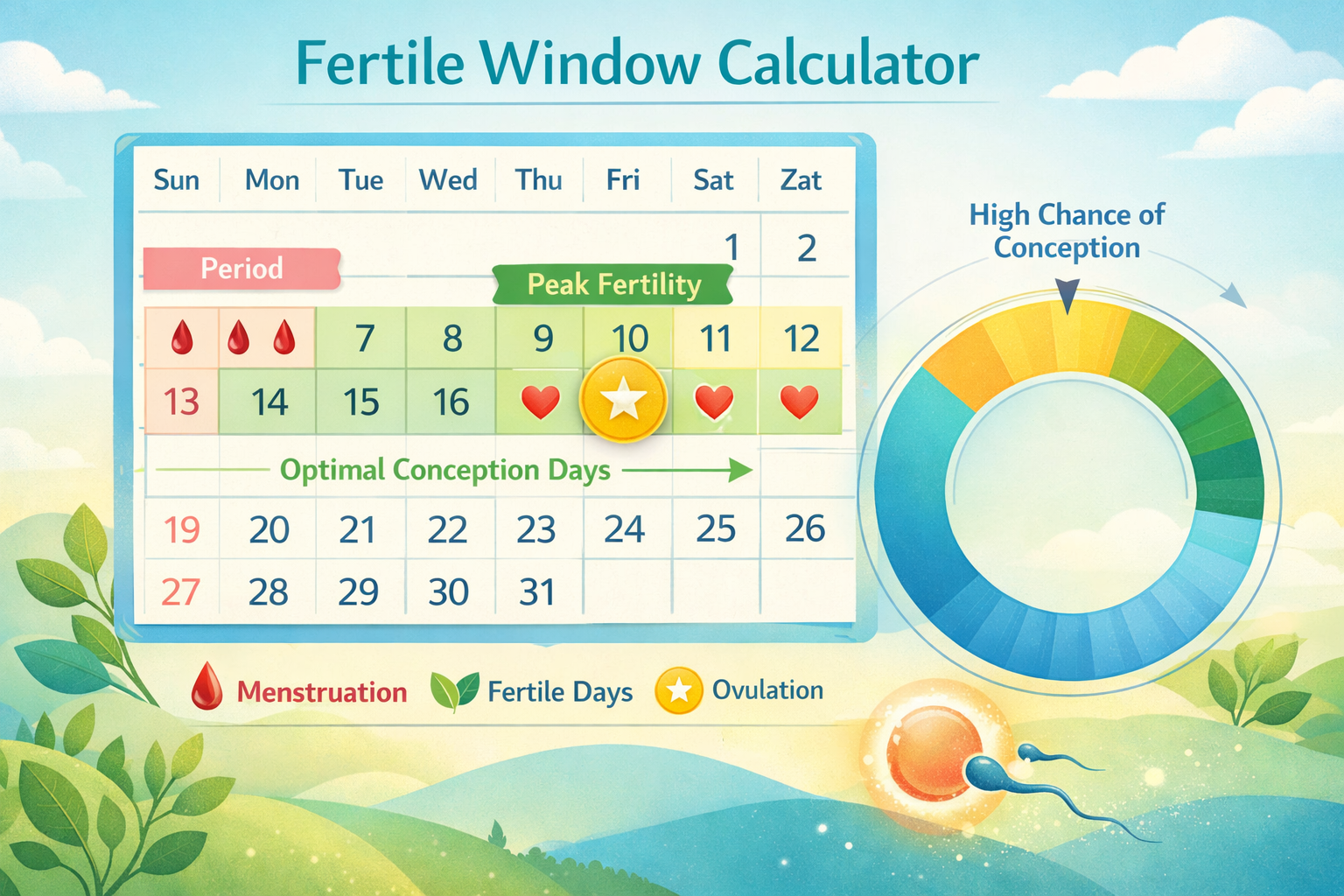
To use a basic fertile window calculator, you typically input two pieces of information:
- The first day of your last menstrual period (LMP): This marks the beginning of your current cycle.
- Your average menstrual cycle length: This is the number of days from the first day of one period to the first day of the next.
Once this data is entered, the calculator estimates your ovulation date and presents your most fertile days. For example, if you have a 28-day cycle and your LMP was January 1st, a calculator might estimate ovulation around January 14th, making your fertile window approximately January 9th to 14th. This estimation is based on the general assumption that ovulation occurs around day 14 of a 28-day cycle, with variations for shorter or longer cycles. If your cycle length is irregular, the accuracy of such a calculator may be limited, and you might need to combine it with other tracking methods. Many platforms, like the Fertile Window Calculator – Best Days to Conceive & Ovulation Tracker (Free) offered by Easy Ovulation Calculator, provide free and user-friendly interfaces to help with this.
How Does a Fertile Window Calculator Work to Predict Ovulation?
A fertile window calculator predicts ovulation by employing a standardized algorithm based on the typical length of the menstrual cycle and the phase lengths within it. Specifically, it primarily relies on the luteal phase, which is generally consistent at 12-16 days (averaging 14 days) in most women, occurring after ovulation and before the next period. By subtracting this average luteal phase length from the average total cycle length, the calculator estimates the approximate day of ovulation.
For example, if a woman has an average cycle length of 30 days:
- Estimate luteal phase: Assume a 14-day luteal phase.
- Calculate ovulation day: 30 days (cycle length) - 14 days (luteal phase) = Day 16. This suggests ovulation occurs around day 16 of the cycle.
- Determine fertile window: The calculator then identifies the 5 days leading up to day 16, plus day 16 itself, as the fertile window. This would be roughly days 11-16.

This method, while helpful, assumes regularity. For individuals with highly variable cycle lengths, a basic calculator may offer less precision. In such cases, combining the calculator's estimate with observable body signs or over-the-counter tests can significantly improve accuracy. Tracking your cycle length consistently is fundamental for the calculator's effectiveness; for guidance on this, see our article on How to Calculate Cycle Length (With Calculator).
Consider the following factors that influence the calculator's prediction:
- Regularity of cycles: The more consistent your cycle length, the more accurate the prediction.
- Input accuracy: Providing the correct first day of your LMP and average cycle length is crucial.
- Biological variations: Ovulation can occasionally shift due to stress, illness, or other factors, even in women with regular cycles.
What Are the Benefits and Limitations of Using a Fertile Window Calculator?
Using a fertile window calculator offers significant benefits for individuals trying to conceive, primarily by simplifying the process of identifying optimal conception days, but it also comes with notable limitations, particularly for those with irregular cycles or specific fertility concerns. The main benefit is the ease with which it can help couples time intercourse, thereby increasing their chances of pregnancy.
Benefits of a Fertile Window Calculator:
- Simplicity and Accessibility: Most fertile window calculators are free, easy to use, and widely available online or as smartphone apps, requiring only basic information about your menstrual cycle.
- Increased Awareness: It helps individuals understand their menstrual cycle patterns and when ovulation is likely to occur, fostering a better connection with their body's rhythms.
- Cost-Effective First Step: For many couples, it's a no-cost or low-cost initial step in family planning before resorting to more intensive or expensive methods.
- Guidance for Timing Intercourse: By narrowing down the fertile window, it provides clear guidance on when to have intercourse to maximize the chances of conception.
- Reduced Stress: For some, having a clear plan can alleviate the stress associated with "trying to conceive" by offering a focused approach.
Limitations of a Fertile Window Calculator:
- Accuracy for Irregular Cycles: These calculators are most accurate for women with regular menstrual cycles. For those with late ovulation or irregular periods, the predictions can be highly unreliable. If your cycles vary by more than a few days each month, the estimated fertile window might be incorrect.
- No Real-time Confirmation: A calculator predicts ovulation; it does not confirm that ovulation has actually occurred. Factors like stress, illness, travel, or hormonal imbalances can shift ovulation, even in typically regular cycles.
- Does Not Diagnose Infertility: It is a tool for timing, not a diagnostic instrument. It cannot identify underlying fertility issues in either partner. If conception doesn't occur after consistent, well-timed attempts, further medical investigation is warranted.
- Limited for Specific Conditions: Conditions like Polycystic Ovary Syndrome (PCOS) can cause anovulation (lack of ovulation) or highly irregular cycles, making calendar-based predictions ineffective.
- Relies on Historical Data: The calculator uses past cycle data to predict future events, which might not always reflect the current cycle's physiology.
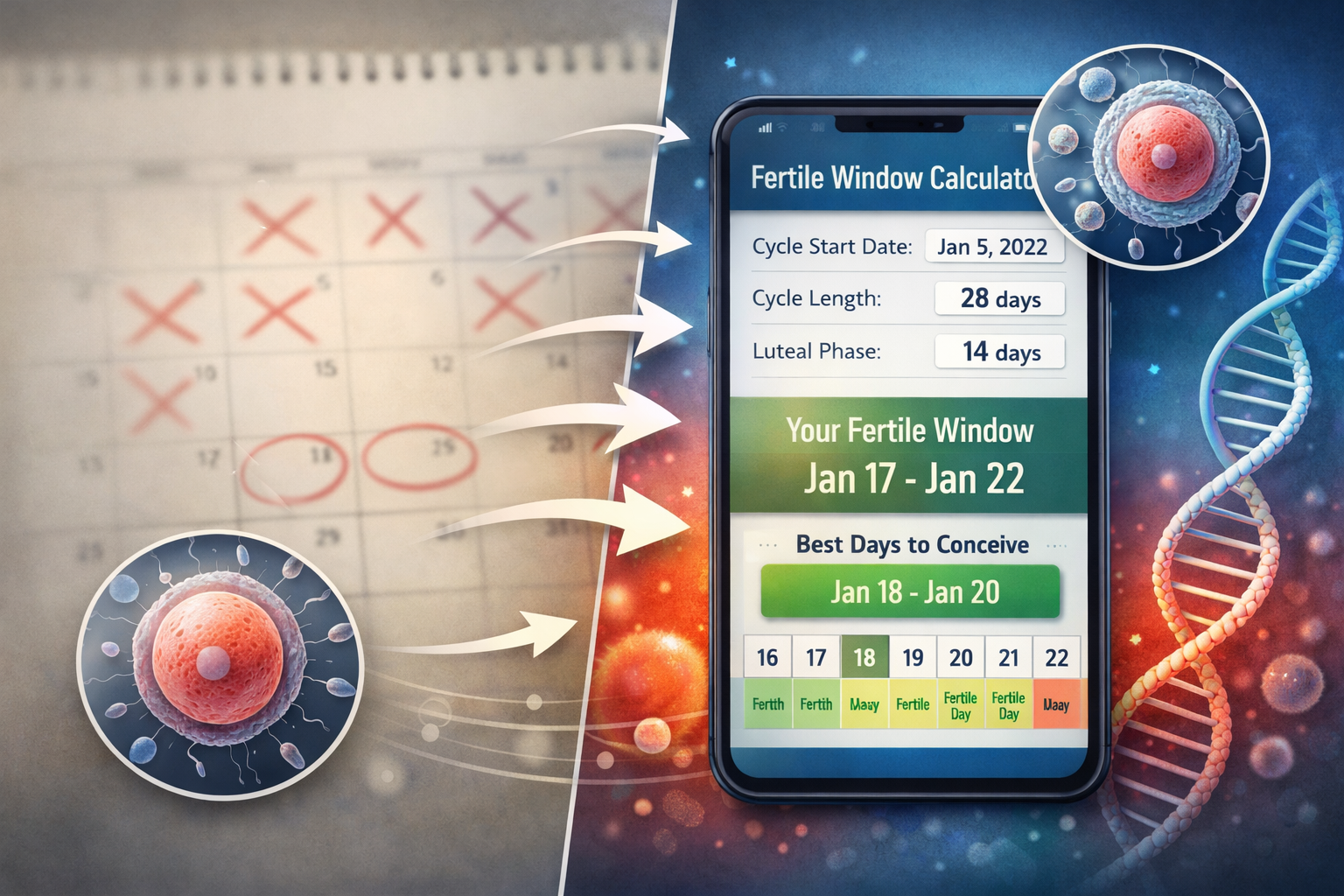
For individuals seeking higher accuracy, especially with irregular cycles, combining the use of a fertile window calculator with other methods is often recommended. This could include tracking basal body temperature (BBT) or using ovulation predictor kits (OPKs), which detect the surge in luteinizing hormone (LH) that precedes ovulation. For a deeper understanding of how accurate various pregnancy calculation tools can be, refer to "How Accurate Are Pregnancy Calculators? Your 2026 Guide" - https://easyovulationcalculator.com/blog/how-accurate-are-pregnancy-calculators-understanding-your-due-date-estimates.
FAQ
What is the most accurate way to find my fertile window?
The most accurate way is to combine a fertile window calculator with physical tracking methods like Basal Body Temperature (BBT) charting and Ovulation Predictor Kits (OPKs), which provide real-time hormonal and physiological indicators.
Can a fertile window calculator work if I have irregular periods?
A basic fertile window calculator's accuracy is significantly reduced with irregular periods. For better results, combine it with OPKs or BBT charting, or consult a healthcare provider.
How many days is the fertile window typically?
The fertile window is typically six days long: the five days leading up to ovulation and the day of ovulation itself.
What information do I need to use a fertile window calculator?
You typically need the first day of your last menstrual period (LMP) and your average menstrual cycle length.
Is it possible to get pregnant outside of the fertile window?
While highly unlikely, it is technically possible but extremely rare. Sperm survival is limited, and the egg is only viable for a short period after ovulation.
How soon after unprotected sex should I use a fertile window calculator?
A fertile window calculator is for planning conception. If you've already had unprotected sex and are concerned about pregnancy, you should consider a pregnancy chance calculator or a home pregnancy test rather than a fertile window calculator.
Does a fertile window calculator guarantee pregnancy?
No, a fertile window calculator helps optimize timing but does not guarantee pregnancy. Many factors influence conception, including sperm quality, egg health, and overall health.
What are the signs of ovulation?
Common signs include a change in cervical mucus (becoming clear, stretchy, like egg whites), mild pelvic pain (mittelschmerz), a slight increase in basal body temperature (BBT) after ovulation, and a positive result on an OPK.
How long do I try using a fertile window calculator before seeing a doctor?
Most experts recommend trying for 6-12 months (depending on age; generally 1 year for women under 35, 6 months for women over 35) with well-timed intercourse before seeking medical advice.
Are there any advanced fertile window calculators available?
Yes, some advanced apps and devices track multiple metrics (BBT, OPK results, cervical mucus) and use algorithms, sometimes even AI, to provide more personalized and accurate predictions. Our AI Ovulation Predictor is an example.
Conclusion
The fertile window calculator is an invaluable tool for anyone looking to optimize their chances of conception in 2026. By providing an estimated window of peak fertility, it transforms the often-abstract process of family planning into a concrete, actionable strategy. While basic calculators offer a strong starting point, especially for those with regular cycles, combining their insights with other tracking methods like BBT charting or OPKs can dramatically enhance accuracy, particularly for individuals with irregular menstrual patterns. Remember, these tools are powerful aids for timing, but they are not diagnostic. If you consistently face challenges conceiving, consulting a healthcare professional is always the best next step to explore potential underlying factors. Empower yourself with knowledge, utilize the best tools available, and approach your fertility journey with informed confidence.
References
- American College of Obstetricians and Gynecologists. (2020). Planning for Pregnancy.
- National Institute of Environmental Health Sciences. (2017). Ovulation Calculator.
- Mayo Clinic. (2023). Getting pregnant: What you need to know about ovulation and your fertile window.