When trying to conceive, pinpointing ovulation is paramount, yet fewer than 30% of women accurately identify their fertile window without tracking methods. A BBT calculator leverages basal body temperature changes to estimate ovulation, providing a non-invasive and often accurate way to understand your unique cycle and maximize your chances of conception. This tool transforms daily temperature readings into actionable insights, offering clarity in your fertility journey.
Key Takeaways
- A BBT calculator helps predict ovulation by analyzing subtle shifts in basal body temperature (BBT).
- BBT naturally rises after ovulation due to increased progesterone, making it a retrospective indicator.
- Accurate daily temperature measurement at the same time each morning is crucial for reliable results.
- Factors like illness, sleep patterns, and alcohol consumption can affect BBT readings.
- Combining a BBT calculator with other methods, like ovulation predictor kits (OPKs), can enhance accuracy.
- Consistent tracking over several cycles provides a clearer picture of your ovulation patterns.
- Many online tools and apps offer integrated BBT calculator functionality, simplifying data entry and analysis.
- Understanding your fertile window through BBT tracking empowers proactive family planning.
What is a BBT Calculator and How Does It Work?
A BBT calculator is an online tool or app that interprets your daily basal body temperature readings to help identify ovulation patterns and predict your fertile window. It works by recognizing the slight, yet significant, increase in your body's resting temperature that occurs after ovulation, typically by 0.4 to 1.0 degrees Fahrenheit (0.2 to 0.6 degrees Celsius), due to the rise in progesterone levels. This temperature shift confirms that ovulation has likely occurred, allowing the calculator to help pinpoint the approximate timing relative to your cycle.
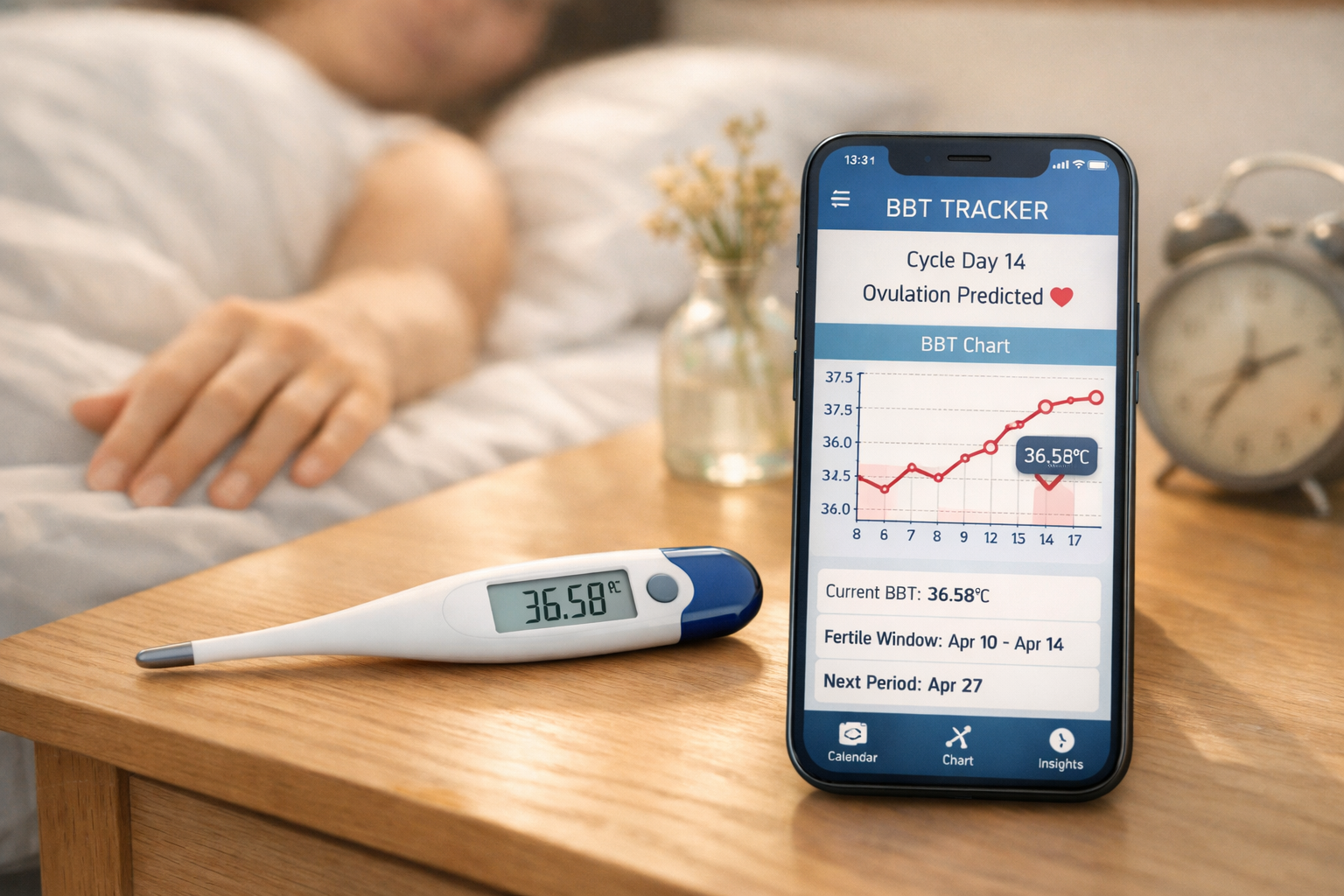
To effectively use a BBT calculator, you must consistently measure your basal body temperature every morning, immediately upon waking and before any activity. These daily readings are then input into the calculator, which charts the data and looks for the characteristic biphasic temperature shift. The "fertile window" is the period leading up to and including ovulation, and while BBT primarily confirms ovulation after it happens, consistent tracking over several cycles allows the calculator to establish a baseline and predict future ovulation more accurately.
- Key Principle: Progesterone, a hormone released after ovulation, causes the basal body temperature to rise and remain elevated until your next period or, if pregnant, throughout early pregnancy.
- Data Input: Users manually enter their daily BBT readings, typically taken with a specialized basal thermometer that measures to a tenth or hundredth of a degree.
- Analysis: The calculator or app then plots these temperatures on a chart, looking for a sustained temperature shift to identify the likely day of ovulation retrospectively.
- Prediction (Over Time): After several cycles of consistent data, the BBT calculator can help users anticipate their fertile window in upcoming cycles by identifying consistent patterns.
- Choosing a Calculator: Look for a reputable ovulation calculator that integrates BBT tracking, offers clear charting, and provides educational resources.
How Do I Use a BBT Calculator to Track My Fertility?
To use a BBT calculator effectively for fertility tracking, you need to consistently measure your basal body temperature each morning before getting out of bed, and then input these readings into the calculator. This daily data collection allows the tool to chart your temperature patterns, identify the post-ovulatory temperature rise, and help you understand your unique cycle.
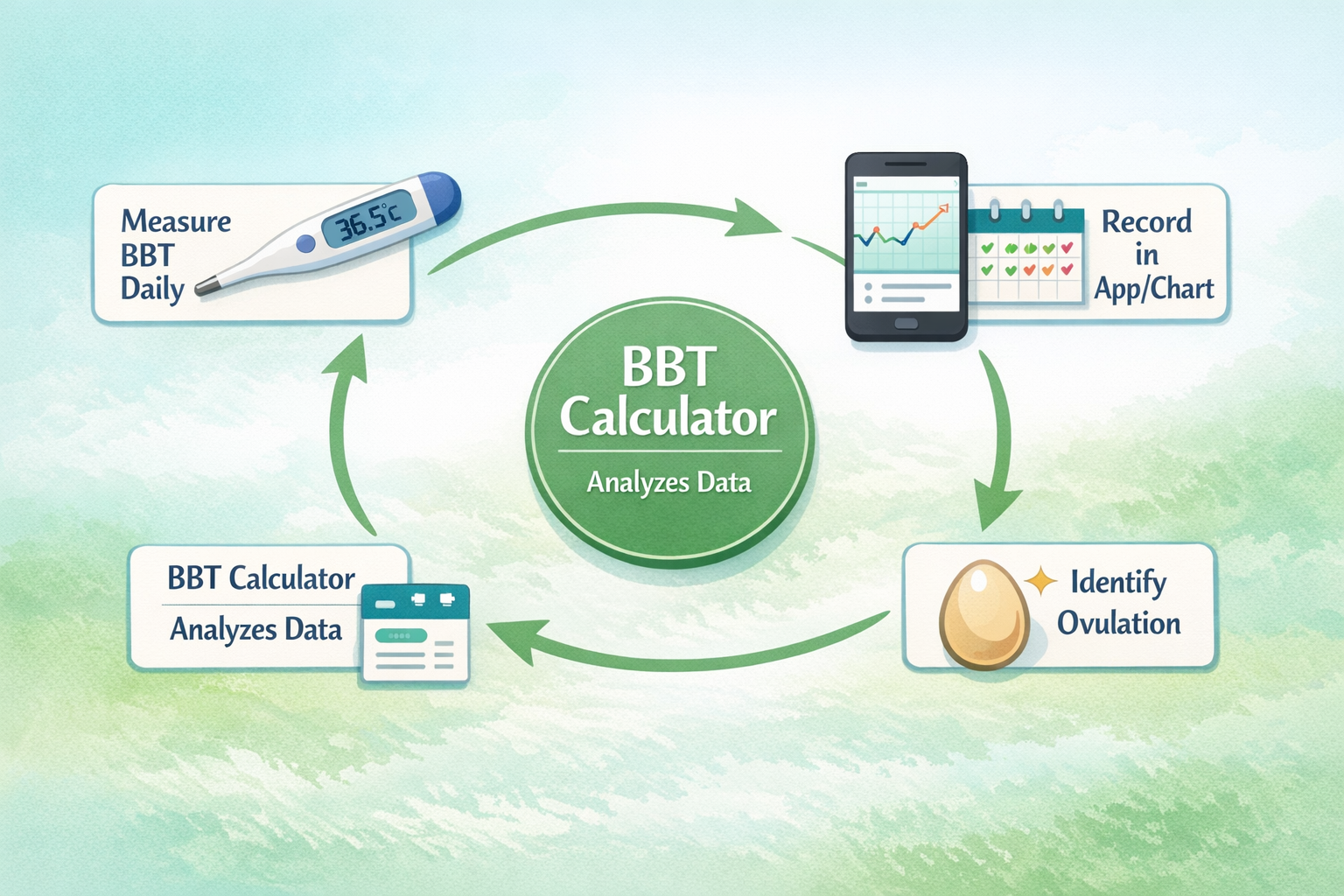
Here’s a step-by-step guide to using a BBT calculator:
- Get a Basal Thermometer: Purchase a highly sensitive thermometer specifically designed for BBT tracking, which measures to at least two decimal places (e.g., 97.64°F).
- Establish a Routine: Take your temperature at the same time every morning, immediately after waking up and before any activity (eating, drinking, talking, getting out of bed). Aim for at least 3-4 hours of uninterrupted sleep prior to taking your temperature.
- Record Daily: Input your daily BBT reading into the chosen BBT calculator. Many online tools and fertility apps offer this functionality. You'll also typically record your period start dates and any other relevant observations like cervical mucus changes.
- Identify the Shift: The BBT calculator will display your temperatures on a chart. Look for a sustained temperature rise (at least three consecutive days with temperatures higher than the previous six days) indicating ovulation has occurred. This rise confirms ovulation after the fact.
- Interpret Your Fertile Window: While BBT confirms ovulation retrospectively, consistent tracking over several cycles helps you understand your typical ovulation day. Your most fertile days are typically the 5 days leading up to ovulation and the day of ovulation itself. This information can be cross-referenced with a fertile window calculator for a more comprehensive approach.
- Patience and Consistency: It can take a few cycles to see clear patterns. Don't get discouraged if your first cycle or two are irregular or difficult to interpret.
What Are the Benefits and Limitations of Using a BBT Calculator?
Using a BBT calculator offers several benefits, primarily being a non-invasive, cost-effective method for identifying ovulation and understanding your menstrual cycle. However, it also comes with limitations, as various external factors can influence temperature readings and its primary function is to confirm ovulation retrospectively rather than predict it in real-time.
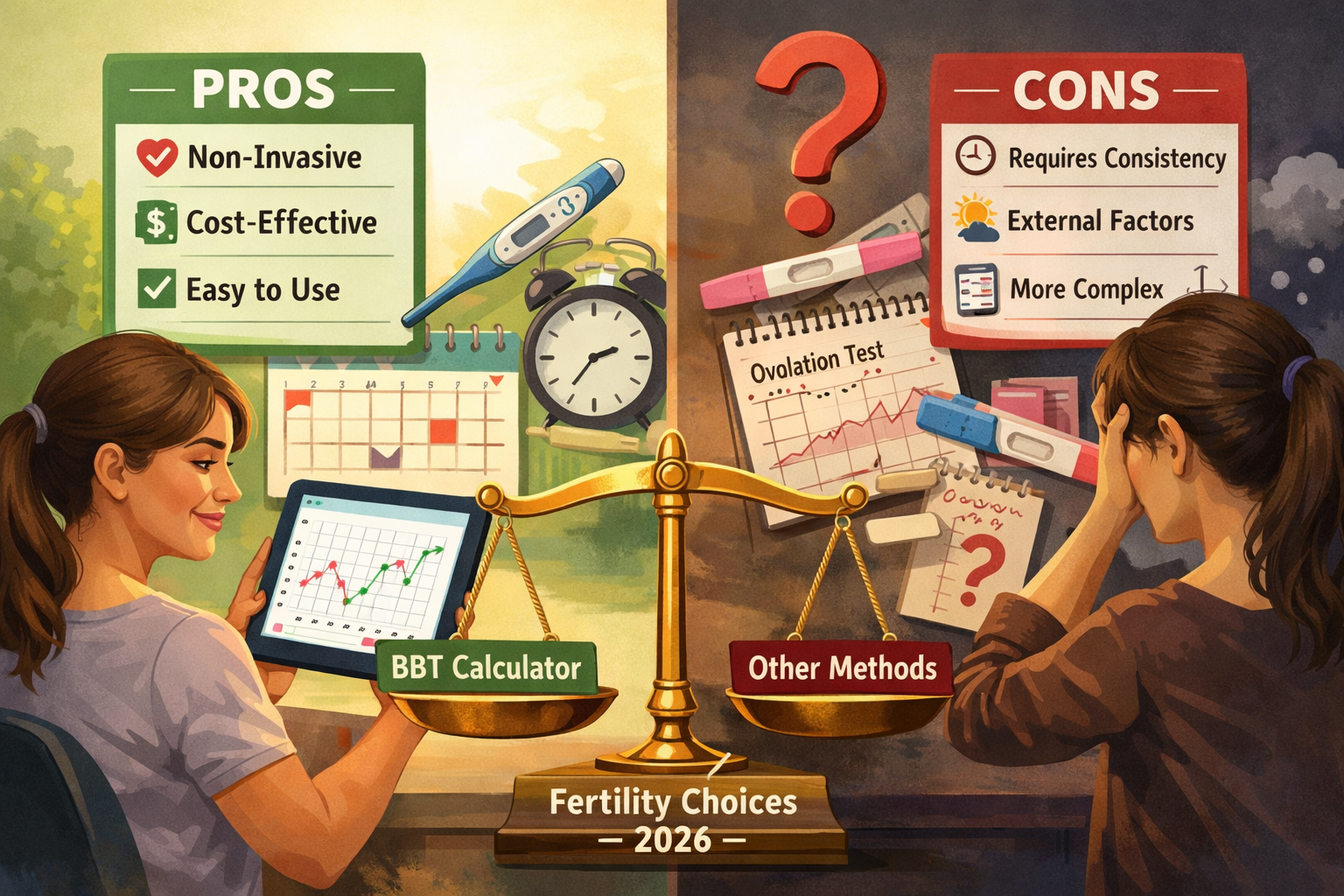
Benefits
- Non-Invasive and Natural: BBT tracking doesn't involve hormones or medical procedures, making it a natural way to monitor fertility.
- Cost-Effective: The only necessary equipment is a basal thermometer, which is a one-time purchase, and most BBT calculators are free online tools or integrated into free apps.
- Educational: It provides valuable insights into your body's unique cycle, helping you understand your fertility patterns, average cycle length, and an estimate of your typical ovulation day.
- Confirmation of Ovulation: While other methods predict, BBT charting is one of the most reliable at-home ways to confirm that ovulation has actually occurred.
- Identifying Luteal Phase Defects: Consistent BBT charting can sometimes help identify a short luteal phase, which might impact conception.
Limitations
- Retrospective Confirmation: BBT charting confirms ovulation after it has already happened. This means by the time you see the temperature shift, your most fertile window (the days leading up to and including ovulation) may have passed. This is why combining it with predictive methods like OPKs is often recommended.
- Susceptible to External Factors: Many variables can affect your basal body temperature, leading to skewed readings:
- Illness, fever, or infection 🤒
- Insufficient sleep or interrupted sleep patterns 😴
- Alcohol consumption 🍷
- Stress and certain medications 💊
- Travel or time zone changes ✈️
- Even the time you take your temperature each day can create fluctuations.
- Requires Consistency and Discipline: For accurate results, BBT must be taken every single day at the exact same time, immediately upon waking. This level of consistency can be challenging for some individuals.
- Irregular Cycles: For individuals with highly irregular cycles, the temperature patterns might be less clear, making it harder for a BBT calculator to identify ovulation confidently. In such cases, professional medical advice or advanced AI ovulation predictor tools may be more beneficial.
- Limited Predictive Power (Initially): While consistent data over several months can help predict future ovulation, it's not an immediate, real-time predictor for your first few cycles of tracking.
Common Mistakes to Avoid When Using a BBT Calculator
To ensure the accuracy of your BBT calculator readings, it's crucial to avoid common pitfalls that can skew your results and misinterpret your fertile window. The primary goal is consistent, accurate data input, as any deviation can lead to an unclear temperature chart.
Here are common mistakes and how to avoid them:
- Inconsistent Timing: Taking your BBT at different times each morning can lead to inaccurate readings, as your temperature naturally fluctuates throughout the night and day.
- Solution: Set an alarm to take your temperature at the exact same time every morning, even on weekends.
- Not Enough Sleep: Insufficient sleep (less than 3-4 consecutive hours) before measuring can suppress or alter your BBT.
- Solution: Ensure you get adequate, uninterrupted sleep before taking your temperature.
- Moving Before Measuring: Any activity, even just getting out of bed or talking, can elevate your body temperature and invalidate the "basal" reading.
- Solution: Keep your thermometer on your bedside table and take your temperature before moving, speaking, or drinking anything.
- Using the Wrong Thermometer: Standard fever thermometers are not sensitive enough to detect the subtle temperature shifts of BBT.
- Solution: Invest in a dedicated basal thermometer that measures to at least two decimal places (e.g., 97.64°F).
- Failing to Record External Factors: Illness, stress, alcohol, or certain medications can all impact your BBT. Not noting these in your calculator can lead to confusion.
- Solution: Many BBT calculators and apps allow you to log these "interfering factors." Make a habit of noting them down.
- Expecting Immediate Predictive Power: BBT primarily confirms ovulation retrospectively. Expecting it to accurately predict ovulation in your first cycle of tracking is a common misconception.
- Solution: Understand that it takes several cycles (3-6 typically) to establish a baseline and gain predictive insights for your future cycles.
- Not Recording All Data: Only recording temperatures without noting other fertility signs like cervical mucus changes or positive OPK results misses a valuable opportunity for cross-referencing.
- Solution: Use a comprehensive fertility app or a dedicated BBT chart tool that allows you to log multiple data points for a more complete picture.
- Giving Up Too Soon: Interpreting BBT charts can be complex, especially with irregular cycles. Some individuals give up before they've collected enough data to see a pattern.
- Solution: Commit to tracking for at least 2-3 cycles to give the method a fair chance, and consult with a healthcare professional if you have persistent irregularities.
Can a BBT Calculator Predict Sex of Baby?
No, a BBT calculator cannot predict the sex of a baby. The primary function of a BBT calculator is to help identify ovulation patterns and the fertile window for conception, not to determine or influence the gender of a child. There is no scientific basis or method within BBT tracking that allows for sex prediction.
The sex of a baby is determined by the sperm that fertilizes the egg. If an X-carrying sperm fertilizes the egg, the baby will be female (XX). If a Y-carrying sperm fertilizes the egg, the baby will be male (XY). This is a random event at the moment of fertilization and is entirely independent of the mother's basal body temperature or the timing of intercourse relative to ovulation. While popular theories suggest that timing intercourse closer to or further from ovulation might influence gender, scientific evidence consistently refutes these claims, classifying them as old wives' tales. Focus on accurately tracking your fertile window to maximize your chances of conception, regardless of desired gender.
How Accurate Is a BBT Calculator Compared to Other Fertility Methods?
A BBT calculator is a reasonably accurate method for confirming ovulation retrospectively, but its predictive accuracy for upcoming cycles can vary compared to other fertility tracking methods. Its strength lies in its ability to show that ovulation has occurred, while other methods might offer more real-time or predictive insights.
-
Compared to Ovulation Predictor Kits (OPKs):
- BBT: Confirms ovulation after it happens by detecting the progesterone-induced temperature rise. Requires consistent daily effort. Accuracy for confirming ovulation is high when done correctly.
- OPKs: Predict ovulation before it happens by detecting a surge in Luteinizing Hormone (LH), which typically precedes ovulation by 24-36 hours. More expensive but provides a real-time "heads-up."
- Combination: Many experts recommend combining BBT tracking with OPKs. OPKs help you identify your best days to get pregnant in 2026 before ovulation, while BBT confirms that ovulation actually occurred.
-
Compared to Cervical Mucus Monitoring (CMM):
- BBT: Objective, numerical data. Less subjective to interpretation.
- CMM: Involves observing changes in cervical mucus consistency, which becomes clear, stretchy, and abundant (like raw egg white) leading up to ovulation. This is a subjective, but very useful, predictive sign.
- Combination: Both BBT and CMM are natural family planning methods. Using them together, BBT can confirm the ovulation suggested by the peak cervical mucus day.
-
Compared to Fertility Monitors:
- BBT: Relatively low cost, manual data entry.
- Fertility Monitors: These devices often track multiple hormones (like LH and estrogen) from urine samples, providing a "high" and "peak" fertility window with greater precision. They are more expensive but offer advanced predictive capabilities, sometimes integrating BBT tracking as well.
-
Compared to Ultrasound Tracking:
- BBT: At-home method, no medical intervention.
- Ultrasound: The most accurate method for observing follicular growth and ovulation in real-time, performed by a medical professional. This is typically used in fertility clinics for individuals undergoing assisted reproductive technologies.
In summary, a BBT calculator is a valuable, accessible tool for understanding your cycle, especially for confirming ovulation. For optimal accuracy and predictive power, many users find it most effective when integrated with other methods like OPKs and cervical mucus monitoring. It’s a foundational element in fertility awareness methods.
When Should You Consult a Doctor About Your BBT Chart?
You should consult a doctor about your BBT chart if you observe consistent irregularities, prolonged flat temperature patterns, or if you've been consistently trying to conceive without success after a reasonable period (typically 6-12 months, depending on age). While a BBT calculator is a helpful at-home tool, it cannot diagnose underlying fertility issues.
Here are specific scenarios when medical consultation is advisable:
- No Consistent Temperature Shift: If your BBT chart consistently shows no clear biphasic temperature shift after several cycles of diligent tracking, it might indicate anovulation (not ovulating). This warrants a discussion with your doctor.
- Irregular Cycles: While some variation is normal, consistently irregular or very long (e.g., >35 days) or very short (e.g., <21 days) cycles on your BBT chart, even with a discernible shift, could point to hormonal imbalances like Polycystic Ovary Syndrome (PCOS). Our period delay calculator might offer insights into common causes for a late period, but medical consultation is key for diagnosis.
- Short Luteal Phase: If your BBT rise (luteal phase) consistently lasts for less than 10 days before your period starts, it could indicate a luteal phase defect, which might affect embryo implantation.
- Difficulty Interpreting Charts: If you find your charts consistently "rocky" or difficult to interpret despite following all best practices, a healthcare provider can help analyze the data or suggest further investigation.
- Unsuccessful Conception: If you are under 35 and have been tracking your BBT and having regular unprotected intercourse for 12 months without conception, or over 35 and trying for 6 months, it's time to seek medical advice. A doctor can conduct further tests to understand potential barriers to pregnancy.
- Concerns About Ovulation Symptoms: If you're experiencing unusual late ovulation symptoms or suspect something is off with your cycle based on your BBT data and how you feel, discuss it with your doctor.
Your BBT chart provides valuable information that can guide discussions with your healthcare provider and help them identify potential issues or recommend appropriate fertility investigations.
Conclusion
A BBT calculator serves as an invaluable, accessible tool in your fertility journey, transforming daily temperature readings into meaningful insights about your ovulation patterns. By consistently charting your basal body temperature, you gain a deeper understanding of your body's unique rhythms, helping to retrospectively confirm ovulation and, over time, anticipate your fertile window. While it offers a non-invasive and cost-effective method for fertility awareness, it's crucial to acknowledge its limitations, particularly its retrospective nature and susceptibility to external influences.
For those actively trying to conceive, integrating a BBT calculator with other methods like ovulation predictor kits and cervical mucus monitoring can create a more comprehensive and accurate picture of your fertile window, maximizing your chances. Remember, accuracy hinges on diligent, consistent tracking and adherence to best practices. If you encounter persistent irregularities, struggle with interpretation, or have been trying to conceive without success for an extended period, consulting a healthcare professional is always the recommended next step. Empower yourself with knowledge, track wisely, and embrace the clarity a BBT calculator can bring to your family planning efforts in 2026.
Related Reading
- Fertile Window Calculator: Maximize Conception in 2025
- How Accurate Are Pregnancy Calculators? Your 2026 Guide
- How Many Days After Ovulation Can You Get Pregnant?
FAQ
Q1: What is a BBT?
A1: BBT stands for Basal Body Temperature, which is your body's lowest resting temperature, typically measured first thing in the morning before any activity.
Q2: Why does BBT change during my cycle?
A2: BBT changes due to hormonal shifts. It typically remains lower during the follicular phase, rises by 0.4-1.0°F (0.2-0.6°C) after ovulation, and stays elevated during the luteal phase due to increased progesterone.
Q3: When should I take my BBT?
A3: You should take your BBT immediately upon waking, before getting out of bed, eating, drinking, or talking, and ideally after at least 3-4 hours of uninterrupted sleep, at the same time every day.
Q4: How accurate is a BBT calculator for predicting ovulation?
A4: A BBT calculator is highly accurate for confirming ovulation retrospectively. Its accuracy for predicting future ovulation improves with consistent tracking over several cycles as it identifies your unique patterns.
Q5: Can illness affect BBT readings?
A5: Yes, illness, fever, insufficient sleep, alcohol consumption, and certain medications can all affect your basal body temperature and skew readings. It's important to note these factors in your chart.
Q6: What if my BBT chart is "rocky" or hard to interpret?
A6: Rocky charts can be due to inconsistent measurement, external factors, or an irregular cycle. Try to improve consistency, log interfering factors, and consider combining with other methods like OPKs. If issues persist, consult a doctor.
Q7: Do I need a special thermometer for BBT tracking?
A7: Yes, you need a sensitive basal thermometer that measures to at least two decimal places (e.g., 97.64°F or 36.47°C) to detect the subtle temperature shifts.
Q8: How long should I track my BBT before seeing a pattern?
A8: It often takes 2-3 consistent cycles to establish a clear baseline and identify your unique ovulation patterns. Patience and consistency are key.
Q9: Can a BBT calculator help me avoid pregnancy?
A9: While BBT tracking is part of Fertility Awareness Methods (FAM) used for natural family planning, it is not as effective as hormonal birth control. If avoiding pregnancy is your primary goal, consult a healthcare provider for reliable contraception methods.
Q10: What is a short luteal phase according to BBT tracking?
A10: A luteal phase lasting consistently less than 10 days (the time between your BBT rise and your next period) is considered short and may warrant a discussion with your doctor.
Q11: Can a BBT calculator tell me if I'm pregnant?
A11: A sustained elevated BBT for 18 days or more after ovulation can be an early indicator of pregnancy, but a positive pregnancy test is the definitive confirmation.
Q12: Are there apps that integrate BBT calculators?
A12: Yes, many fertility tracking apps available for smartphones include integrated BBT calculator functions, charting, and the ability to log other fertility signs.
Sources
- American College of Obstetricians and Gynecologists (ACOG). (2020). Planning for Pregnancy. https://www.acog.org/womens-health/faqs/planning-for-pregnancy
- Mayo Clinic. (2024). Basal body temperature for natural family planning. https://www.mayoclinic.org/tests-procedures/basal-body-temperature/about/pac-20393021