👉 Tracking your cycle: Digital ovulation tests provide clear results to help you track your fertile window alongside pattern estimates.
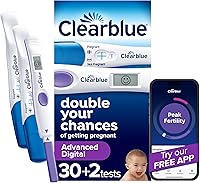
Combine cycle tracking with digital ovulation testing. Easy to read results without line interpretation.
View on Amazon
A comprehensive home monitor that stores historical data and tracks two key fertility hormones throughout your cycle.
View on AmazonAs an Amazon Associate, we may earn from qualifying purchases.
How the AI Ovulation Predictor Works
Our AI ovulation predictor evaluates historical cycle patterns to calculate an educational fertile window estimate. While standard tools often rely on a single, fixed cycle length, this predictor gathers multiple recent cycle lengths to determine your historical pattern and variations over time.
Here is how the calculation process operates:
- Historical averaging: The tool takes your recorded recent cycle lengths and computes your average cycle duration.
- Luteal relationship estimate: In healthy menstrual physiology, the luteal phase (the window between ovulation and the next period) typically lasts around 14 days. The calculator estimates ovulation approximately 14 days prior to the projected onset of your next cycle.
- Fertile window mapping: Viable sperm can survive inside the reproductive tract for up to 5 days, while an released egg remains viable for 12 to 24 hours. The fertile window is projected across the 5 days leading up to and including the estimated ovulation day.
- Next period projection: Your next estimated menstrual period is projected from the start of your last period plus your historical average cycle length.
These timing milestones are calendar-based estimates and cannot confirm whether ovulation actually takes place.

Using Multiple Cycle Lengths
A primary advantage of examining several consecutive cycles is understanding your personal cycle spread. When you use a standard ovulation calculator, you typically enter a single number, such as 28 days. However, real menstrual cycles naturally shift from month to month.
Entering two or three recent cycle lengths helps establish whether your baseline is consistent or variable:
Consistent Cycle Patterns
A stable sequence such as 28, 28, and 28 days demonstrates high historical regularity. This stable baseline makes mathematical calendar estimates more straightforward, though natural month-to-month hormonal variations can still alter actual ovulation timing.
Variable Cycle Patterns
A sequence such as 26, 31, and 28 days indicates that cycle timing naturally shifts across months. By evaluating the spread across cycles, the predictor gives you a more realistic view of timing uncertainty rather than assuming rigid precision.
To explore your historical cycle averages in greater depth, you can also calculate your average baseline with our dedicated cycle length calculator.
Understanding the Ovulation Estimate
The results generated by this tool show when ovulation is mathematically most probable based on your recorded history. Understanding the distinction between calendar estimates and physiological reality is essential:
- Follicular phase variability: The follicular phase (the first half of the cycle before egg release) is the most flexible part of the menstrual cycle. Stress, travel, illness, or poor sleep can delay follicular maturation and shift ovulation later.
- Fertile window span: Because conception can result from intercourse that occurs several days before ovulation, timing intercourse during the fertile window offers the highest opportunity for conception.
- Post-ovulation tracking: Once ovulation has passed, you can track your luteal phase and early testing milestones day-by-day using our DPO calculator.

When Cycle Lengths Vary
It is normal for menstrual cycle lengths to fluctuate by a few days from cycle to cycle. However, when cycle variation spans 5 or more days (such as across recorded cycles of 21, 28, and 35 days), calendar-based predictions become significantly less reliable.
In cases of notable cycle irregularity:
- The actual day of egg release may occur substantially earlier or later than the statistical average suggests.
- Single-point calendar dates should not be relied upon for precise fertility timing or natural family planning.
- If your cycles frequently extend beyond 35 to 40 days, exploring the mechanisms of late ovulation can provide helpful context regarding extended follicular phases.
Cycle irregularity can stem from temporary stressors, lifestyle factors, postpartum adjustments, or underlying endocrine considerations. If your cycles are persistently unpredictable, speaking with a gynecologist or reproductive endocrinologist can help identify the root cause.
Ways to Track Ovulation
Because calendar-based calculations are mathematical approximations, combining them with observational fertility-awareness methods provides a more complete picture of your fertility cycle:
Cervical Mucus
Rising estrogen levels before ovulation cause cervical fluid to become clear, wet, and slippery (often resembling raw egg whites). This fertile mucus nourishes and helps transport sperm.
Basal Body Temperature
Progesterone released after ovulation causes a slight, sustained rise in resting morning temperature. You can chart daily temperatures with our BBT chart tool to identify a post-ovulation temperature shift.
Ovulation Predictor Kits (OPKs)
Urine test strips detect the surge in luteinizing hormone (LH) that precedes ovulation by 24 to 36 hours, providing a biochemical indicator of imminent egg release.
Couples planning to conceive can also explore timing estimates using our conception calculator and learn how timing influences fertility chances with our pregnancy chance calculator.
Frequently Asked Questions
How does the AI ovulation predictor work?
Despite its name, this calculator does not run a complex clinical AI or machine-learning model. Instead, it evaluates your recent recorded cycle lengths, determines your historical average cycle length and variability, and projects an estimated ovulation day and fertile window based on standard calendar rhythm calculations.
How many cycle lengths should I enter?
Entering at least 2 to 3 recent cycle lengths allows the tool to evaluate whether your cycles are relatively consistent or vary significantly from month to month. Tracking multiple cycles provides a clearer baseline than relying on a single cycle length.
Can this calculator tell me exactly when I will ovulate?
No. A calendar-based calculator cannot confirm ovulation or predict the exact day it will occur. Ovulation timing naturally shifts from cycle to cycle in response to stress, illness, sleep, or hormonal changes.
What if my cycle lengths vary from month to month?
Natural cycle variation is common. However, greater differences between your shortest and longest cycles mean that calendar-based estimates carry wider uncertainty. When cycle variation is high, observing physical fertility signs or using ovulation test strips can provide clearer timing cues.
How can I track ovulation besides using a calendar estimate?
You can observe changes in cervical mucus (which becomes clear, slippery, and stretchy near ovulation), measure basal body temperature (BBT) each morning to identify the post-ovulation temperature shift, or use urine ovulation predictor kits (OPKs) to detect the luteinizing hormone (LH) surge.