Quick Answer: An "am I pregnant calculator percentage" tool provides an estimated probability of pregnancy based on various inputs like your last menstrual period, cycle length, and timing of intercourse. While these calculators offer a helpful initial assessment, they are not diagnostic tools; a positive result from a home pregnancy test or a blood test from a healthcare professional remains the definitive confirmation of pregnancy.
Key Takeaways
- Estimation, Not Diagnosis: Pregnancy probability calculators provide an estimated percentage chance, not a definitive diagnosis.
- Key Inputs: Most tools require your last menstrual period (LMP), cycle length, and intercourse dates to calculate odds.
- Factors Influencing Odds: Age, menstrual cycle regularity, frequency of intercourse, and general health significantly impact pregnancy chances.
- Peak Fertility Window: Intercourse during the fertile window, particularly on ovulation day, dramatically increases the percentage chance of conception.
- Accuracy Limitations: Online calculators cannot account for individual biological nuances, underlying fertility issues, or proper timing of ovulation.
- Confirmation is Key: A home pregnancy test or a medical blood test is required for actual confirmation of pregnancy.
- Next Steps: If you suspect pregnancy, use a home test and consult a healthcare provider for accurate guidance.
- Not a Contraceptive: These tools are for estimation, not for preventing pregnancy or as a substitute for contraception.
What Factors Influence My Am I Pregnant Calculator Percentage?
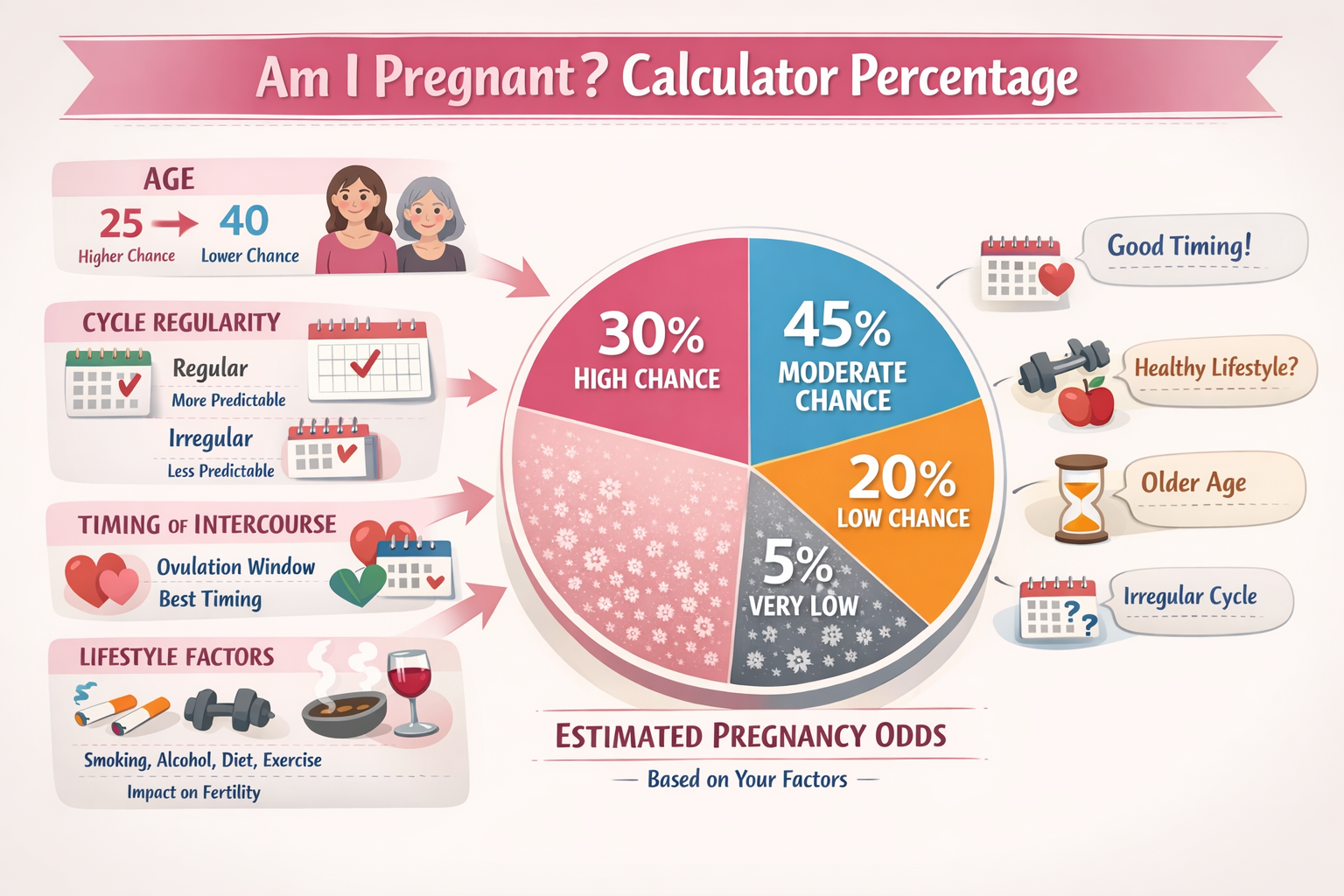
The percentage calculated by an "am I pregnant calculator" is determined by several key factors that influence fertility and the likelihood of conception. These include the timing of unprotected intercourse relative to your ovulation window, your age, the regularity of your menstrual cycle, and to a lesser extent, general lifestyle factors.
Online pregnancy probability calculators leverage algorithms that process the data you input to estimate your chances. For instance, inputting intercourse during your estimated fertile window will yield a higher percentage than intercourse outside this window.
Key Factors Considered:
- Last Menstrual Period (LMP): This helps the calculator estimate where you are in your current cycle.
- Average Cycle Length: Knowing your typical cycle length allows the tool to predict your ovulation day more accurately.
- Date(s) of Unprotected Intercourse: This is crucial for determining if intercourse occurred during your fertile window.
- Age: Fertility naturally declines with age, especially after 30. Calculators often incorporate age-related statistics. For instance, you might want to explore articles like What Are My Chances of Getting Pregnant at 30? or What Are My Chances of Getting Pregnant at 35? for more specific insights.
- Cycle Regularity: Regular cycles lead to more predictable ovulation, increasing the calculator's reliability. Irregular cycles make predictions less accurate.
Decision Rule: If your cycle is highly irregular, the percentage provided by an "am I pregnant calculator percentage" might be less reliable, and tracking ovulation using other methods (like basal body temperature or ovulation predictor kits) may offer more accurate insights into your fertile window.

How Does an Am I Pregnant Calculator Percentage Work?
An "am I pregnant calculator percentage" works by combining your provided data, primarily concerning your menstrual cycle and sexual activity, with statistical models of fertility. The core mechanism is to pinpoint your most likely ovulation day and then assess if unprotected intercourse occurred within the fertile window surrounding that day.
These calculators function by first estimating your ovulation date based on the average menstrual cycle. Most women ovulate around day 14 of a 28-day cycle, but this can vary. Once ovulation is estimated, the calculator determines your fertile window, which typically includes the 5 days leading up to ovulation and the day of ovulation itself. Sperm can live in the female reproductive tract for up to 5 days, while an egg is viable for 12-24 hours post-ovulation. If you had unprotected sex during this peak fertile period, the calculator assigns a higher probability percentage.
Step-by-Step Calculation Logic:
- Input Collection: You enter your last menstrual period (LMP) start date and average cycle length.
- Ovulation Prediction: The calculator uses this information to predict your next ovulation date. For example, if your cycle is 28 days, ovulation is typically around day 14.
- Fertile Window Identification: A fertile window is then established, usually 5-6 days leading up to and including ovulation. For a deeper dive into this, check out our Fertile Window Calculator.
- Intercourse Timing Assessment: You enter the dates of unprotected intercourse. The calculator checks if any of these dates fall within the identified fertile window.
- Percentage Assignment:
- High Probability: If intercourse occurred during the most fertile days (1-2 days before ovulation or on ovulation day itself), the percentage will be significantly higher.
- Moderate Probability: Intercourse earlier in the fertile window (e.g., 3-5 days before ovulation) yields a moderate probability.
- Low/No Probability: Intercourse outside the fertile window results in a very low or zero percentage.
- Additional Factors: Some advanced calculators may factor in age, frequency of intercourse, or general health indicators to refine the percentage.
Common Mistake: Relying solely on a calendar-based calculation without considering individual variations in ovulation timing. Many women do not ovulate exactly on day 14, and cycle lengths can vary month to month. This is why tools like our AI Ovulation Predictor can offer more personalized insights.

How Accurate is an Am I Pregnant Calculator Percentage, and What Are Its Limitations?
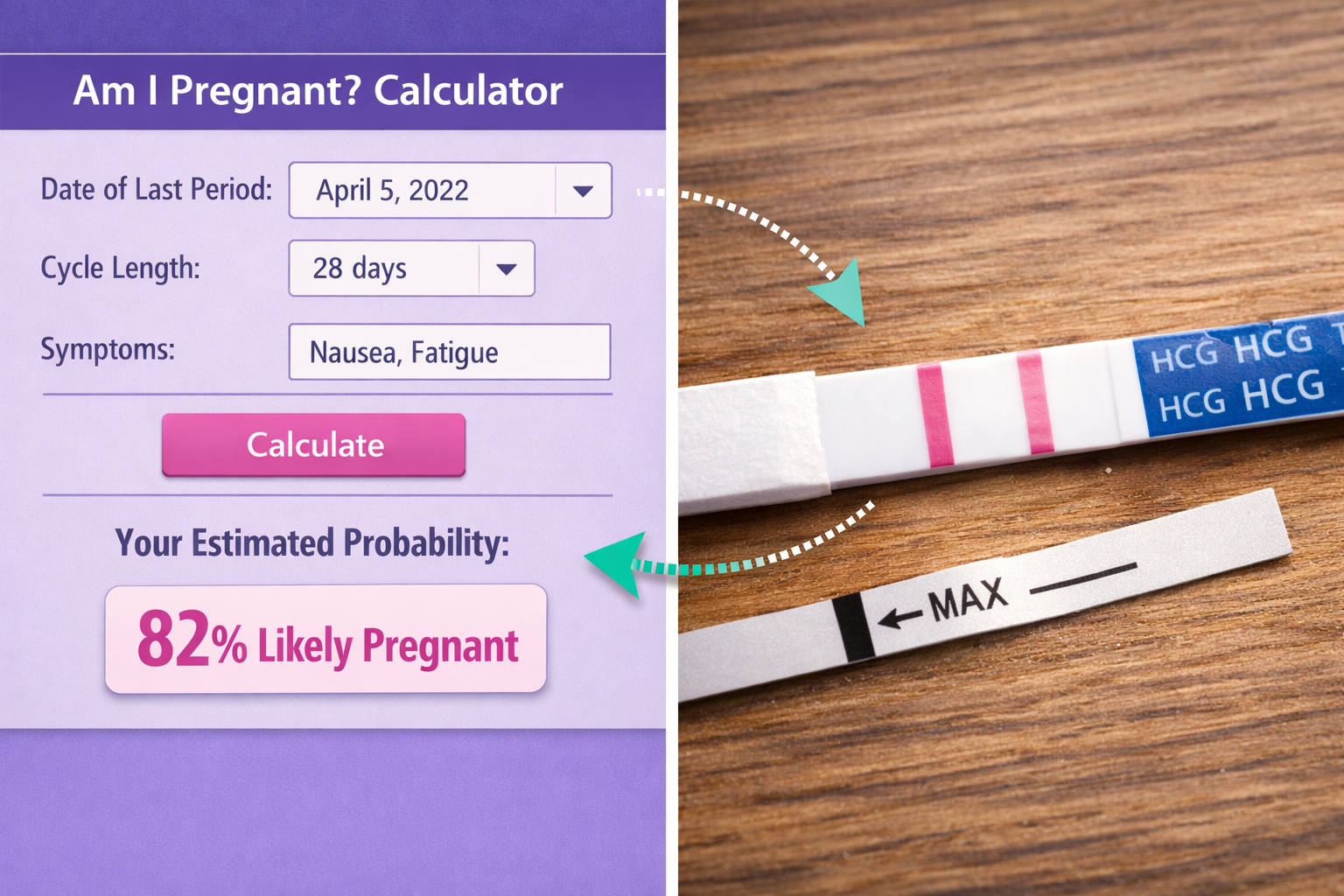
An "am I pregnant calculator percentage" offers a statistical estimate of your chances, but its accuracy is limited because it cannot account for all biological variables. It's best used as an informational tool rather than a definitive predictor of pregnancy.
While these calculators provide a useful snapshot, they operate on averages and generalized assumptions. The actual chance of pregnancy can be influenced by numerous individual biological factors that an online calculator cannot measure, such as the viability of the sperm and egg, the presence of underlying fertility conditions (e.g., PCOS, endometriosis), or hormonal imbalances. The most significant limitation is that these tools cannot detect the presence of the human chorionic gonadotropin (hCG) hormone, which is the actual marker of pregnancy.
Limitations of Accuracy:
- Individual Variation in Ovulation: Not everyone ovulates precisely according to an average cycle length. Stress, diet, illness, and even travel can shift ovulation timing.
- Sperm and Egg Quality: The calculator has no way to assess the health and viability of the sperm or egg involved in conception.
- Fertility Health: It cannot detect underlying fertility issues in either partner, such as blocked fallopian tubes, low sperm count, or ovulatory disorders, which can significantly reduce the actual chances of conception.
- Implantation Success: Even if fertilization occurs, successful implantation of the embryo into the uterine wall is not guaranteed, and the calculator cannot predict this crucial step. For more on this, consider reading about Implantation After Ovulation: Timing, Symptoms.
- Biological Unpredictability: Conception is a complex biological process with many variables that are not easily quantifiable by an algorithm.
- Not a Diagnostic Tool: Ultimately, the percentage is a probability. Only a pregnancy test (home or clinical) can confirm an actual pregnancy.
Edge Case: For women with extremely irregular cycles or those undergoing fertility treatments, the accuracy of an "am i pregnant calculator percentage" drops considerably. In these situations, direct medical consultation and specialized tracking methods are far more reliable.
When Should I Use an Am I Pregnant Calculator Percentage?
You should use an "am I pregnant calculator percentage" when you are trying to conceive and want an early, general idea of your chances based on recent sexual activity, or if you've had unprotected sex and are wondering about the possibility of pregnancy. It serves as a preliminary informational tool.
It's particularly helpful for those who are tracking their cycles and are aware of their fertile window. It can provide a quick, low-stakes assessment that might prompt you to take a home pregnancy test if the percentage is high. However, it's crucial to remember that it is not a substitute for a medical diagnosis or proper pregnancy testing.
Ideal Scenarios for Use:
- After Unprotected Sex: If you've had unprotected intercourse and are unsure about your fertile window timing, the calculator can offer an initial probability.
- Family Planning: When actively trying to conceive, it can help confirm if intercourse occurred during the optimal fertility window, giving you an idea of your potential success for that cycle. You can learn more about optimal timing with our Best Days to Get Pregnant in 2026: Complete Guide to Concept.
- Early Assessment of Symptoms: If you're experiencing early pregnancy symptoms before a missed period, using the calculator can provide context to your current cycle phase, though a symptom checker might be more direct. See our Early Pregnancy Symptoms Checker.
- Curiosity: Simply to understand the statistical likelihood based on your cycle data.
Choose X if: Choose to use an "am i pregnant calculator percentage" if you are looking for a quick, initial assessment of your potential pregnancy risk or likelihood of conception and understand that a definitive answer requires a pregnancy test.
What Are the Next Steps After Using an Am I Pregnant Calculator Percentage?
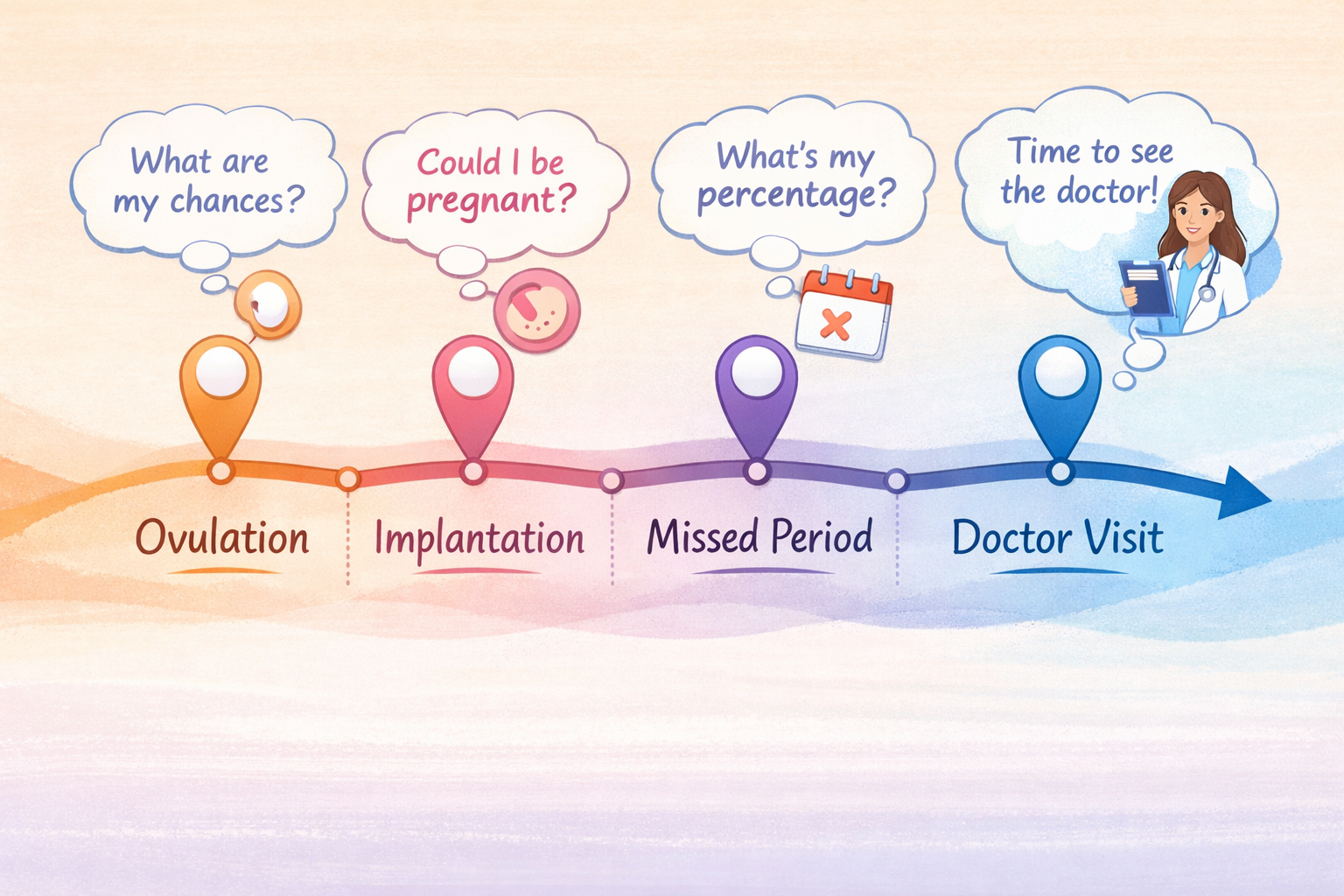
After using an "am I pregnant calculator percentage," the most crucial next steps depend on the calculated percentage and your personal situation, but almost always involve taking a physical pregnancy test if pregnancy is suspected.
If the calculator yields a high percentage, it's a strong indicator that you should take a home pregnancy test. If the percentage is low but you still have concerns or missed your period, a pregnancy test is still advisable. Regardless of the calculator's output, a missed period or the presence of early pregnancy symptoms warrants further investigation with a reliable test and potentially a medical consultation.
Recommended Actions:
- Take a Home Pregnancy Test: This is the most immediate and reliable next step if you suspect pregnancy, especially if your period is late. Most tests are accurate from the day of your missed period.
- Understand Implantation Timing: Pregnancy tests detect hCG, which is produced after implantation. Our Implantation Calculator (DPO) can help you estimate when implantation might have occurred, guiding when to test for the most accurate results.
- Consult a Healthcare Provider: If your home test is positive, or if you have concerns despite a negative test and a missed period, schedule an appointment with your doctor. They can confirm pregnancy with a blood test (which is more sensitive) and begin prenatal care.
- Track Your Cycle: Continue to track your menstrual cycle, ovulation, and intercourse dates, whether you are trying to conceive or not. This information is invaluable for future calculations and understanding your body. Our How to Calculate Cycle Length guide can assist you.
- Review Related Information: Explore other tools and articles to deepen your understanding, such as the Pregnancy Chance Calculator for more detailed odds or the Early Pregnancy Symptoms Before Missed Period guide.

Am I Pregnant Calculator Percentage vs. Other Pregnancy Tools
The "am I pregnant calculator percentage" differs from other pregnancy tools in its primary function: it offers a probability estimate, while other tools provide either diagnostic results or predictive timing for other aspects of pregnancy.
While a percentage calculator gives you an educated guess based on historical data and inputted actions, it lacks the biological confirmation that a pregnancy test provides. Similarly, ovulation calculators focus on predicting the fertile window, and due date calculators look ahead once pregnancy is confirmed.
Comparison Table: Pregnancy Tools
| Tool Type | Primary Function | What it Provides | Accuracy Level | Best Used For |
|---|---|---|---|---|
| Am I Pregnant Calculator Percentage | Estimates probability of conception | A numerical percentage chance | Statistical Estimate | Initial curiosity, pre-test assessment after unprotected sex |
| Home Pregnancy Test | Detects hCG hormone in urine | Positive/Negative result | High (if used correctly) | Definitive early pregnancy confirmation after missed period |
| Blood Pregnancy Test | Detects hCG hormone in blood (quantitative/qualitative) | Exact hCG levels, confirms pregnancy | Very High (most accurate) | Early, definitive confirmation, monitoring pregnancy progression |
| Ovulation Calculator | Predicts fertile window and ovulation day | Estimated ovulation date, peak fertile days | Moderate to High (based on cycle regularity) | Timing intercourse for conception, understanding menstrual cycle |
| Due Date Calculator | Estimates baby's arrival date | Estimated due date, gestational age | High (once pregnant) | Planning, understanding pregnancy timeline, after confirmed pregnancy |
| Pregnancy Symptoms Checker | Identifies potential early pregnancy symptoms | List of common symptoms, likelihood of pregnancy based on symptoms | Low (symptoms are often non-specific) | Guiding initial self-assessment, prompting a pregnancy test if symptoms align |
Avoid: Using a percentage calculator as a definitive diagnostic tool. It's a stepping stone, not the final answer.
FAQ
Q1: Can an "am I pregnant calculator percentage" tell me for sure if I'm pregnant?
No, an "am I pregnant calculator percentage" cannot tell you for sure if you are pregnant. It provides a statistical probability based on your inputted data. Only a home pregnancy test or a medical test can confirm pregnancy.
Q2: What kind of information do I need to use an "am I pregnant calculator percentage"?
You typically need your last menstrual period (LMP) start date, your average menstrual cycle length, and the dates of any unprotected intercourse.
Q3: How accurate are these calculators compared to a home pregnancy test?
These calculators are far less accurate than a home pregnancy test. A calculator gives a statistical estimate, while a home pregnancy test detects a biological marker (hCG hormone) directly.
Q4: If I get a low percentage, does that mean I'm definitely not pregnant?
A low percentage indicates a low statistical probability, but it does not mean you are definitely not pregnant. Conception can sometimes occur outside the predicted fertile window, or calculator inputs might be slightly off. Always follow up with a pregnancy test if you have concerns or a missed period.
Q5: When is the best time to take a home pregnancy test after getting a high percentage from a calculator?
The best time to take a home pregnancy test is typically on or after the day of your missed period. Some early detection tests can be used a few days before your expected period, but accuracy increases closer to the missed period.
Q6: Can my age affect the percentage shown by the calculator?
Yes, many "am I pregnant calculator percentage" tools factor in age, as fertility naturally declines with age. Older age groups may see lower percentage chances, even with optimal timing of intercourse.
Q7: What if my menstrual cycles are irregular?
If your menstrual cycles are irregular, the accuracy of an "am I pregnant calculator percentage" will be significantly reduced. Irregular cycles make it harder to accurately predict ovulation. In such cases, methods like ovulation predictor kits (OPKs) or basal body temperature (BBT) tracking might be more helpful.
Conclusion
The "am I pregnant calculator percentage" is a valuable initial tool for those curious about their chances of pregnancy in 2026. By processing details about your menstrual cycle and intercourse timing, it offers a statistical probability that can guide your next steps. However, it's crucial to understand its limitations: it's an estimation, not a diagnosis. For a definitive answer, a home pregnancy test or a medical blood test is indispensable. Use these calculators as a smart starting point, but always rely on medical-grade tests and professional advice for confirmation and guidance on your journey.
Actionable Next Steps:
- Input Your Data: Use a reliable "am I pregnant calculator percentage" with accurate information about your cycle and intercourse dates.
- Assess the Result: If the percentage is high, consider it a strong signal to proceed to a physical test.
- Take a Pregnancy Test: Purchase a high-quality home pregnancy test and use it as directed, ideally on or after your missed period.
- Consult a Professional: If your home test is positive, or if you have a missed period with negative tests and persistent symptoms, contact your healthcare provider for confirmation and next steps.
Related Reading
- Pregnancy Chance Calculator – Find Your Exact Odds of Conceiving
- Fertile Window Calculator – Best Days to Conceive & Ovulation Tracker (Free)
- Early Pregnancy Symptoms Before Missed Period (2026 Guide)
- How Accurate Are Pregnancy Calculators? Your 2026 Guide
- Implantation Calculator (DPO) – When to Test + Implantation Date Calculator
Sources
- American College of Obstetricians and Gynecologists. (2020). Having a Baby.
- National Institute of Environmental Health Sciences. (2017). Environmental Factors and Fertility.
- Mayo Clinic. (2023). Pregnancy week by week.