Quick Answer
Subtract two weeks from your current pregnancy week count, then count backward from today to find your approximate conception window. For example, if you are 8 weeks pregnant, conception most likely occurred about 6 weeks ago. This works because pregnancy weeks are counted from the first day of your last menstrual period (LMP), not from the actual moment of fertilization.
Key Takeaways
- Pregnancy weeks start at LMP, not at conception. Actual fertilization happens roughly 2 weeks after LMP in a standard 28-day cycle.
- To estimate conception date: subtract 2 weeks from your current gestational age, then count back from today.
- A quick formula: Conception date ≈ LMP date + 14 days (for average cycles).
- Conception can only happen during ovulation, which typically falls around day 14 of a 28-day cycle, but varies widely.
- Ultrasound dating (especially before 12 weeks) is the most accurate clinical method for estimating conception timing.
- Late ovulation shifts the conception window later, which can affect due date estimates.
- Sperm can survive in the reproductive tract for up to 5 days, so conception may occur days after intercourse.
- Online tools like an accurate conception calculator can give you a personalized estimate in seconds.
How Does Pregnancy Dating Work? (And Why It Matters for Conception Timing)
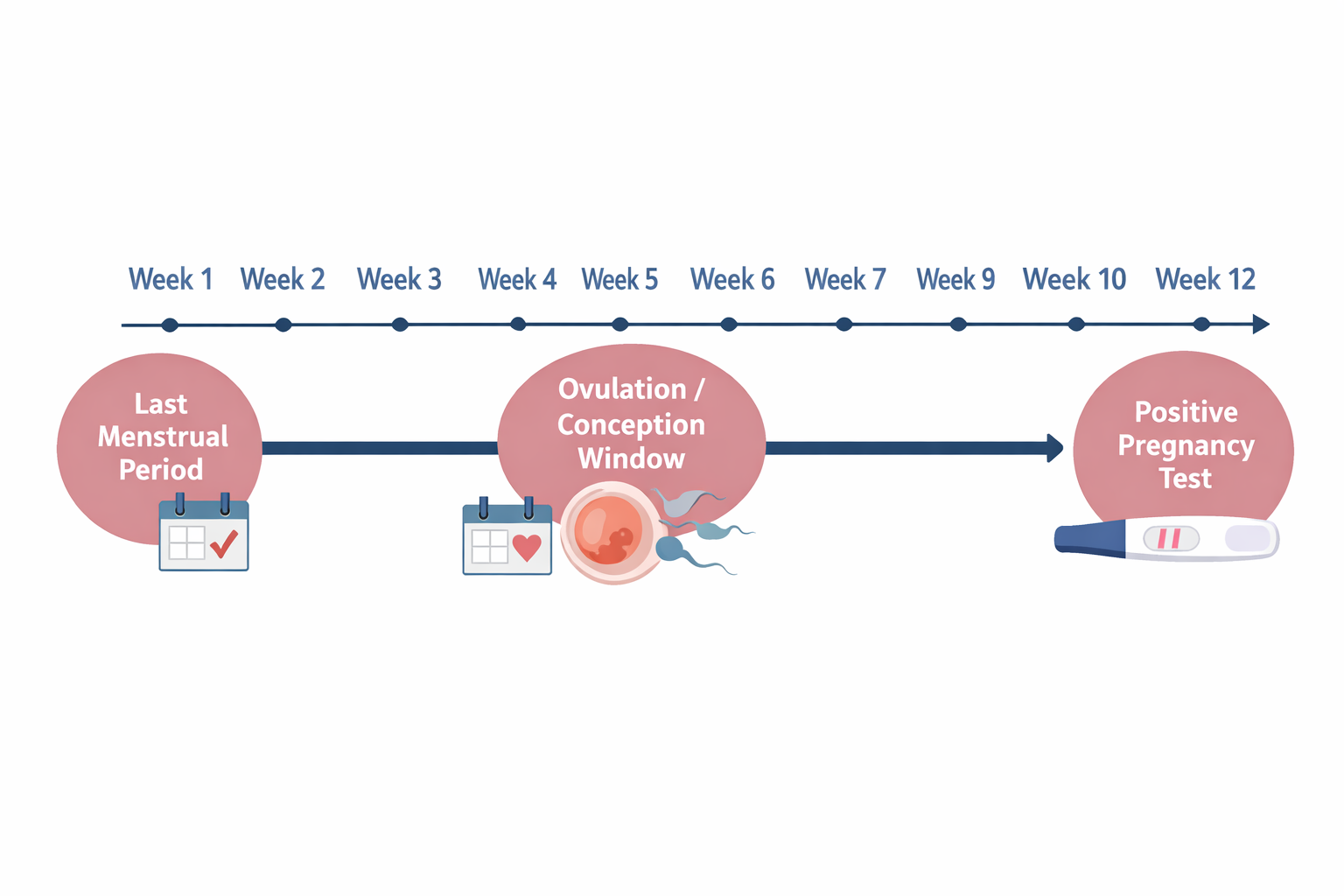
Doctors count pregnancy from the first day of your last menstrual period, not from the day you actually conceived. This is a medical convention, not a biological fact. It exists because LMP is a known, trackable date, while ovulation and fertilization are rarely observed directly.
This means that when your provider says you are "6 weeks pregnant," your embryo is biologically closer to 4 weeks old. The 2-week offset is built into every standard pregnancy calculation.
Why this matters: If you are X weeks pregnant, when did you conceive? The answer is almost always "about 2 weeks after your LMP" — or, in practical terms, roughly 2 weeks fewer than your current gestational week count.
If You Are X Weeks Pregnant, When Did You Conceive? The Week-by-Week Breakdown
For most people with a regular 28-day cycle, use this table as a quick reference. The "weeks since conception" column reflects biological embryo age.
| Weeks Pregnant (Gestational) | Approx. Weeks Since Conception | Estimated Conception Timeframe |
|---|---|---|
| 4 weeks | ~2 weeks ago | About 14 days after your LMP |
| 6 weeks | ~4 weeks ago | About 28 days after your LMP |
| 8 weeks | ~6 weeks ago | About 42 days after your LMP |
| 10 weeks | ~8 weeks ago | About 56 days after your LMP |
| 12 weeks | ~10 weeks ago | About 70 days after your LMP |
| 16 weeks | ~14 weeks ago | About 98 days after your LMP |
| 20 weeks | ~18 weeks ago | About 126 days after your LMP |
Important caveat: These estimates assume a standard 28-day cycle with ovulation on day 14. If your cycle is shorter or longer, your conception date shifts accordingly. See the section on cycle length below.
For a personalized calculation, use the when did I conceive calculator to enter your specific LMP and cycle length.
The Simple Math: How to Calculate Your Conception Date
You don't need a medical degree to estimate when you conceived. Here's a straightforward process:
Step 1: Identify the first day of your last menstrual period (LMP).
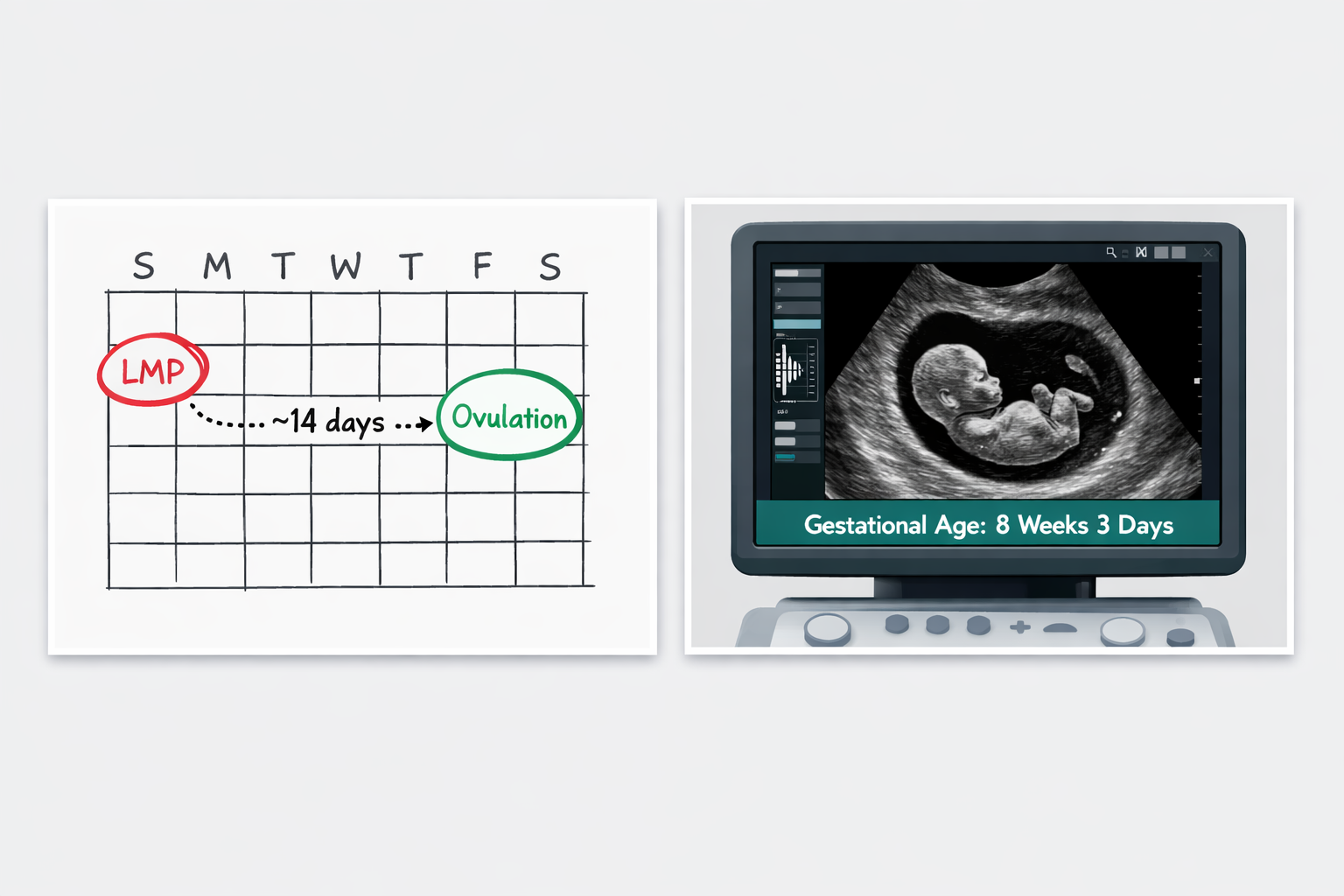
Step 2: Add the number of days that typically pass before you ovulate. For a 28-day cycle, that's about 14 days. For a 30-day cycle, roughly 16 days. For a 24-day cycle, closer to 10 days.
Step 3: The resulting date is your estimated ovulation date, which is also your most likely conception date (or within 1–2 days of it).
Step 4: Cross-check by counting backward from today. If you are currently 10 weeks pregnant, go back 10 weeks, then add 2 weeks — that's approximately when conception occurred.
Quick example: LMP was January 1. You have a 28-day cycle. Add 14 days: estimated conception around January 15. If today is March 12, you'd be about 10 weeks pregnant — which lines up.
Because sperm can live up to 5 days inside the reproductive tract, intercourse from 5 days before ovulation through the day of ovulation can result in pregnancy. For more on this, see how many days after ovulation you can get pregnant.
How Cycle Length Changes Your Conception Estimate
Not everyone ovulates on day 14. Cycle length varies significantly from person to person, and even month to month.
- Short cycles (21–24 days): Ovulation may occur around day 7–10. Conception would be earlier than the standard formula suggests.
- Average cycles (25–30 days): Ovulation typically falls between day 11–16.
- Long cycles (31–35+ days): Ovulation may not happen until day 17–21 or later.
If you have irregular or long cycles, late ovulation is a real factor. This can push your conception date later than expected and may cause discrepancies between your LMP-based due date and an ultrasound-based one.
Common mistake: Assuming ovulation always happens on day 14. If your cycles run long, you may have conceived later than the standard formula indicates — and your due date may need to be adjusted after an early ultrasound.
Can an Ultrasound Tell You When You Conceived?
Yes, and it's often more accurate than LMP-based math alone. A first-trimester ultrasound (ideally between 8 and 12 weeks) measures the fetal crown-rump length (CRL) and uses that measurement to estimate gestational age. From that gestational age, your provider can work backward to approximate conception timing.
First-trimester ultrasounds are accurate to within about 5–7 days, according to the American College of Obstetricians and Gynecologists (ACOG). After 20 weeks, accuracy decreases because fetal size varies more between individuals.
For a deeper look at how this works, see how ultrasound estimates conception date.
Choose ultrasound dating if: Your cycles are irregular, you don't know your LMP, or your LMP-based and ultrasound-based dates differ by more than 7 days in the first trimester.
If You Are X Weeks Pregnant, When Did You Conceive? Edge Cases to Know
Some situations make conception dating less straightforward:
- Irregular periods: Without a reliable LMP, ultrasound becomes the primary dating tool.
- Conception after stopping birth control: Cycles can be unpredictable for several months, making ovulation timing harder to predict.
- IVF pregnancies: Conception date is known precisely because egg retrieval and embryo transfer are scheduled. Gestational age is still counted from a calculated LMP (typically 2 weeks before retrieval).
- Breastfeeding: Ovulation can return unpredictably while nursing, complicating LMP-based estimates.
If you want to understand whether your conception date estimate is reliable, the article on conception date accuracy from due date covers this in detail.
Tools to Help You Find Your Conception Date
You don't have to do all this math manually. Several free tools can help:
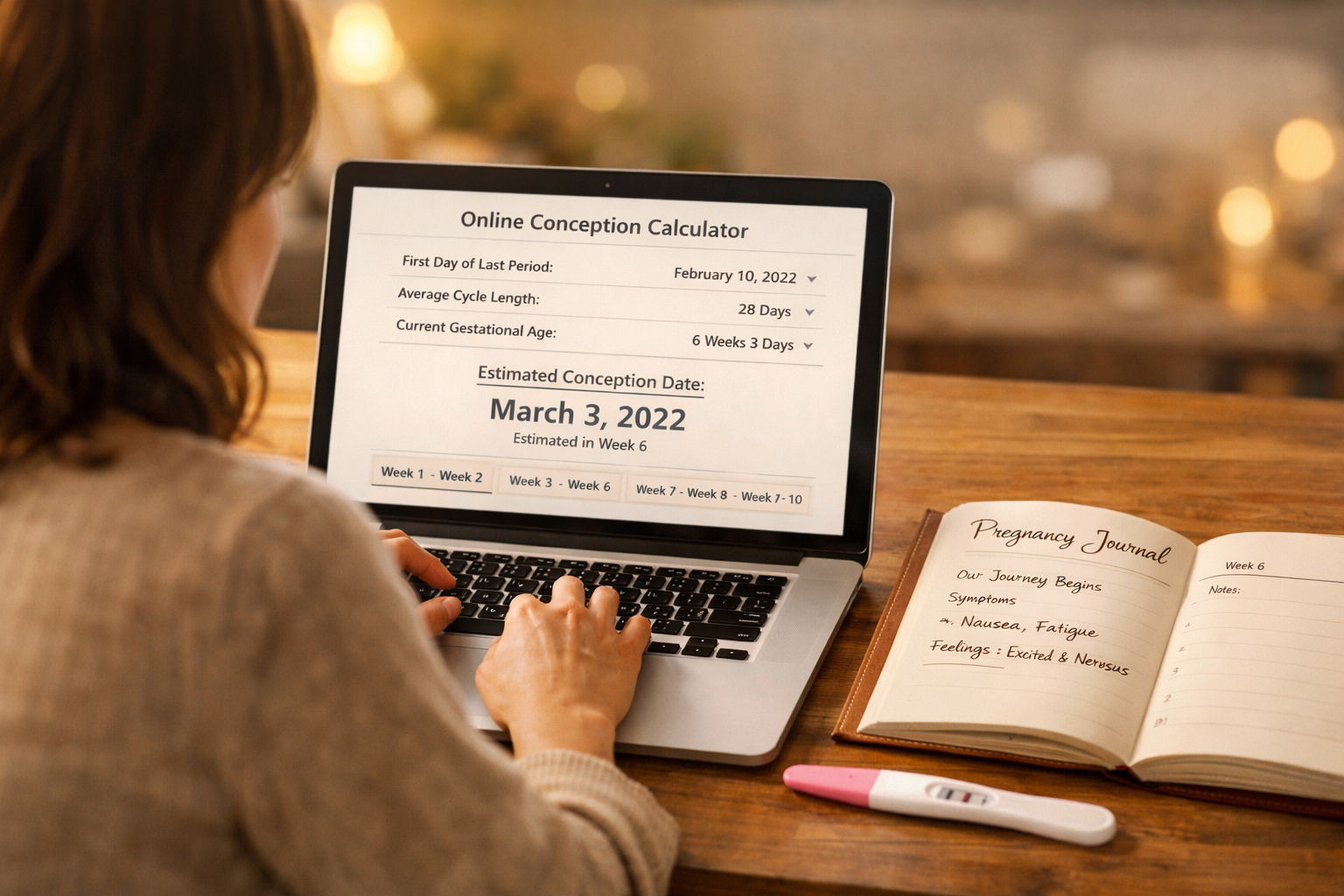
- Conception calculator: Enter your LMP and cycle length to get an estimated conception window.
- Pregnancy week calculator: Find out exactly how many weeks pregnant you are and what that means for your timeline.
- Due date calculator: Work forward from LMP or conception date to estimate your due date.
- Week-by-week pregnancy calendar: See what's happening developmentally at each stage.
FAQ
Q: If I'm 5 weeks pregnant, when did I conceive? A: Most likely about 3 weeks ago, roughly 2 weeks after your last menstrual period started. In a standard 28-day cycle, that places conception around day 14 of your cycle.
Q: Can I know the exact day I conceived? A: Rarely, unless you tracked ovulation precisely with LH strips or basal body temperature. Even then, sperm can survive several days, so pinpointing the exact day of fertilization is difficult. See can you know the exact day you conceived for more.
Q: Why does my ultrasound date differ from my LMP date? A: Because ovulation doesn't always happen on day 14. If you ovulated earlier or later than average, the ultrasound — which measures actual fetal size — will reflect that more accurately than LMP math alone.
Q: Does conception happen the same day as sex? A: Not necessarily. Sperm can survive up to 5 days in the fallopian tubes, so fertilization may occur days after intercourse, at the moment of ovulation.
Q: If I'm 12 weeks pregnant, how many weeks ago did I conceive? A: About 10 weeks ago. Gestational age counts from LMP, so conception occurred approximately 2 weeks into that count.
Q: Can late ovulation affect my due date? A: Yes. If you ovulated later than day 14, your actual conception date is later than LMP math suggests. This can make you appear "behind" on early ultrasound if providers use LMP alone. Your due date may be adjusted accordingly.
Q: Is a conception calculator accurate? A: It's a reliable estimate for people with regular cycles, but not a guarantee. Ultrasound in the first trimester remains the gold standard for clinical dating.
Q: What if I had sex multiple times around ovulation — which encounter led to conception? A: There's no way to know for certain. Any act of intercourse within the 5-day fertile window before ovulation, or on the day of ovulation itself, could have resulted in fertilization.
Conclusion
Understanding when you conceived comes down to one core fact: pregnancy weeks are counted from your LMP, not from fertilization. So if you are X weeks pregnant, when did you conceive? Subtract 2 weeks from your gestational age to get a solid estimate — then adjust for your actual cycle length.
Your next steps:
- Use the accurate conception calculator to get a personalized estimate based on your LMP and cycle length.
- If your cycles are irregular, ask your provider about first-trimester ultrasound dating for the most reliable result.
- Track future cycles with a fertile window calculator to better understand your ovulation patterns.
- Review your week-by-week pregnancy calendar to understand what's happening at each stage of development.
The math isn't perfect, but it's close enough to give you a meaningful answer — and your provider can always fine-tune the estimate with an early ultrasound.
References
- American College of Obstetricians and Gynecologists (ACOG). Methods for Estimating the Due Date. Committee Opinion No. 700. 2017. https://www.acog.org/clinical/clinical-guidance/committee-opinion/articles/2017/05/methods-for-estimating-the-due-date
- Wilcox, A.J., et al. "Timing of Sexual Intercourse in Relation to Ovulation." New England Journal of Medicine, 1995. https://www.nejm.org/doi/full/10.1056/NEJM199512073332301
- Cunningham, F.G., et al. Williams Obstetrics, 25th ed. McGraw-Hill, 2018.