Are you expecting, or hoping to be soon, and wondering about your baby's arrival? Pregnancy calculators offer a quick and convenient way to estimate your due date, but many people ask: How accurate are pregnancy calculators? While these digital tools provide valuable initial estimates, they are not always perfectly precise and should be used as a guide, not a definitive diagnosis. Their accuracy depends heavily on the information you provide and various biological factors.
Key Takeaways
- Pregnancy calculators offer estimates, not definitive dates, with accuracy varying based on input data.
- Most calculators rely on your last menstrual period (LMP) or ovulation/conception date.
- Irregular menstrual cycles, hormonal conditions, and breastfeeding can significantly reduce calculator accuracy.
- Ultrasound scans, particularly in the first trimester, provide the most accurate due date estimations.
- Calculators are useful for initial planning and tracking but should always be supplemented by medical consultation.
- Knowing your ovulation date, if tracked, can yield more precise calculator results.
- The "due date" is an estimated 40-week mark; babies rarely arrive on that exact day.
- Always discuss calculator results with your healthcare provider for personalized guidance.
Quick Answer
Pregnancy calculators are generally quite accurate for individuals with regular menstrual cycles, offering a good estimate of your due date within a range of about one to two weeks. However, their precision significantly decreases with irregular cycles or unknown ovulation dates. For the most accurate due date, a first-trimester ultrasound performed by a healthcare professional remains the gold standard.
What Information Do Pregnancy Calculators Use to Estimate Due Dates?
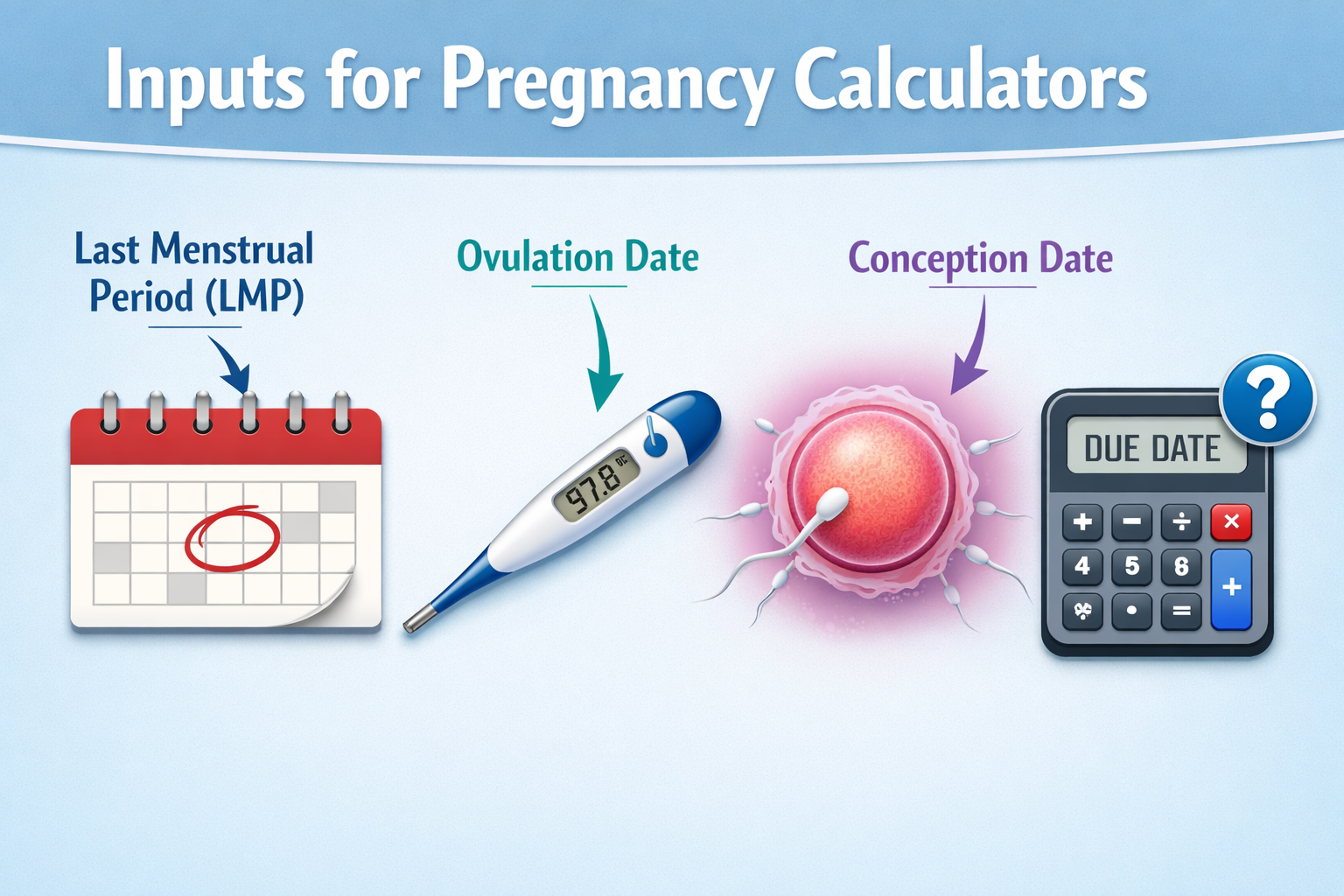
Pregnancy calculators primarily use your last menstrual period (LMP), ovulation date, or estimated conception date to calculate your potential due date. These inputs form the basis of their algorithms, which typically assume a standard 28-day menstrual cycle with ovulation occurring around day 14.
Most digital pregnancy calculators operate on a few core principles:
- Last Menstrual Period (LMP): This is the most common input. Calculators add 40 weeks (280 days) to the first day of your last menstrual period. This method works because doctors typically count pregnancy duration from the start of your last period, even though conception usually happens about two weeks later. It's an easy starting point because most women remember this date.
- Ovulation Date: If you track your ovulation (using tools like fertile window calculators or basal body temperature), you can input this more precise date. Calculators then add 38 weeks (266 days) from your ovulation date, as this is typically when conception occurs. This method can offer greater accuracy if your cycle isn't a perfect 28 days. For more on tracking, consider using an AI Ovulation Predictor.
- Conception Date: Similar to the ovulation date, if you know the exact or approximate date you conceived, calculators will add 38 weeks. This is less common for most individuals to know precisely without ovulation tracking. You can use a conception date calculator to help estimate this if needed.
Decision Rule: Choose the LMP method if your periods are consistently regular. Opt for the ovulation or conception date method if you actively track your cycles and know these dates, as it can yield a more personalized estimate.
How Accurate Are Pregnancy Calculators Compared to Medical Methods?
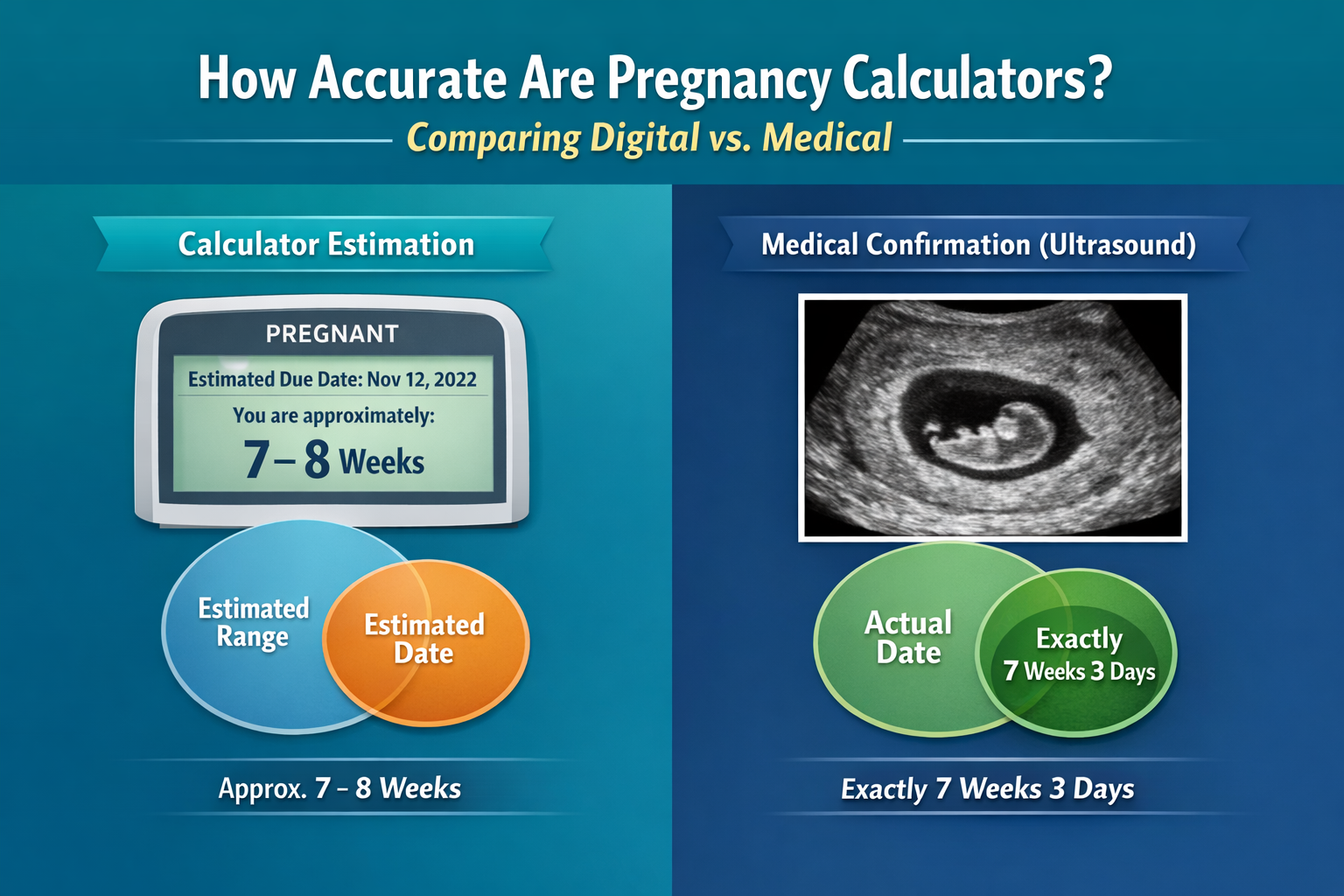
Pregnancy calculators provide a helpful initial estimate, but medical methods, particularly early ultrasound scans, offer superior accuracy. While a calculator provides a statistical average, an ultrasound measures the actual size and development of the fetus.
Here's a breakdown of the comparison:
- Digital Pregnancy Calculators: As discussed, these tools rely on self-reported dates and assumptions about cycle length. For someone with a perfectly regular 28-day cycle and ovulation on day 14, a calculator can be quite accurate, often within a week or so of the actual due date. However, this ideal scenario doesn't apply to everyone.
- Early Ultrasound Scans (8-13 weeks): This is considered the most accurate method for dating a pregnancy. During a first-trimester ultrasound, a sonographer measures the crown-rump length (CRL) of the embryo/fetus. This measurement is highly consistent during early development, allowing for an estimated due date with an accuracy of ±5-7 days. The American College of Obstetricians and Gynecologists (ACOG) states that ultrasound dating is the most accurate method, especially when performed early in pregnancy (ACOG, 2017).
- LMP-based Calculation by a Doctor: A healthcare provider will also use your LMP, often applying Naegele's Rule (LMP + 7 days + 9 months) to get an initial due date. While the rule is the same as many calculators, a doctor considers your individual health history, cycle regularity, and can adjust the estimate based on clinical findings.
Common Mistake: Relying solely on a calculator's due date without medical confirmation. Always verify with your healthcare provider, especially if your cycle is irregular.
What Factors Can Affect Pregnancy Calculator Accuracy?
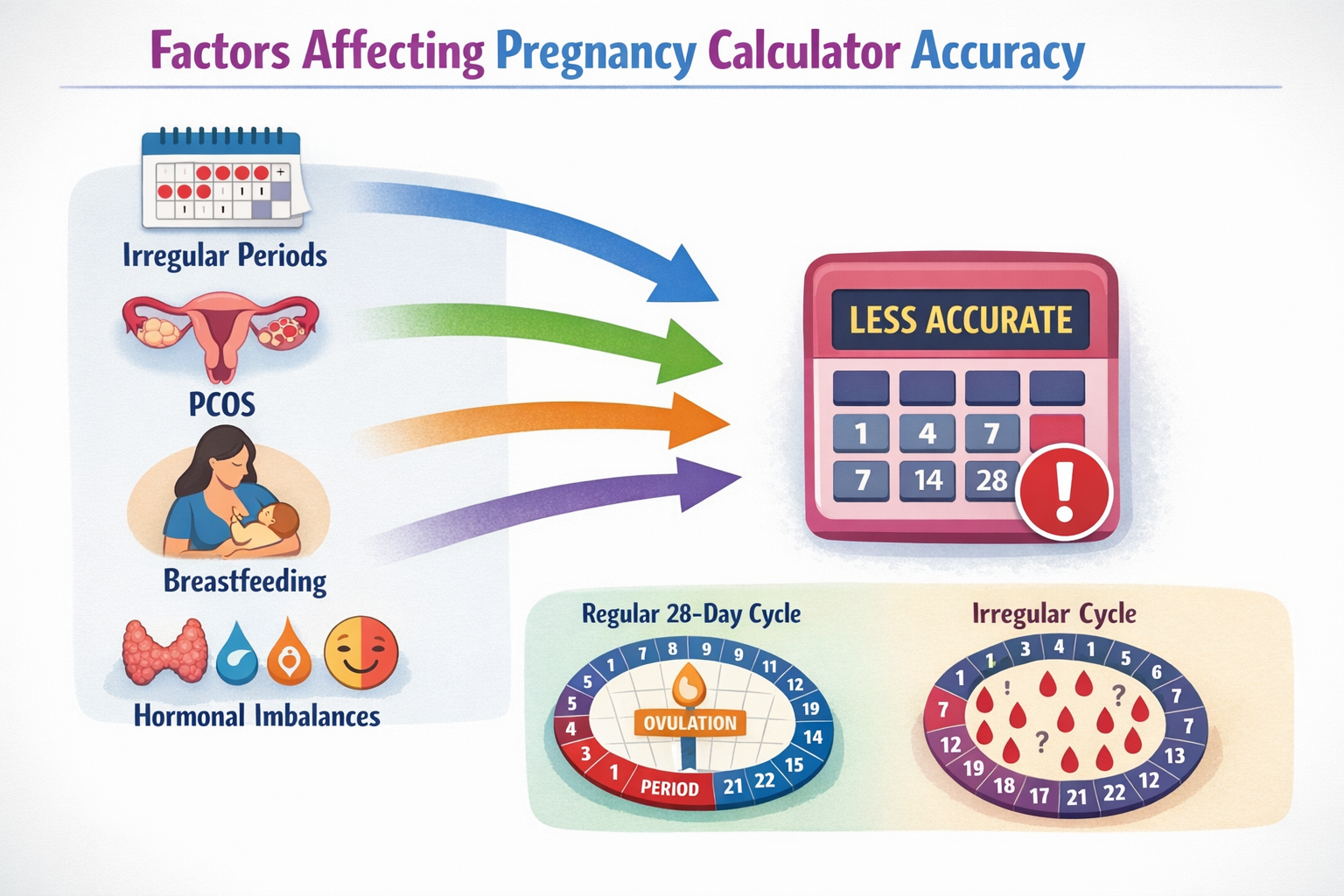
Several biological and lifestyle factors can significantly impact how accurate pregnancy calculators are. These variables can throw off the standard assumptions built into most algorithms.
Key factors that can reduce accuracy include:
- Irregular Menstrual Cycles: This is the most common reason for inaccurate calculator results. If your periods are not consistently 28 days apart, or if the timing of your ovulation varies greatly, a calculator based on your LMP will likely be off. Conditions like Polycystic Ovary Syndrome (PCOS) often lead to irregular cycles, making LMP-based calculations unreliable.
- Uncertain Last Menstrual Period (LMP): If you can't recall the exact date of your LMP, any calculator relying on this input will provide a less accurate estimate.
- Late Ovulation: Some women ovulate later in their cycle than the assumed day 14. If you have a longer cycle, or if ovulation is delayed (for example, due to stress or illness), a calculator might overestimate your gestational age and due date. Understanding late ovulation can be crucial.
- Recent Discontinuation of Hormonal Birth Control: Coming off birth control pills can temporarily disrupt your cycle, leading to irregular periods in the months following. This can make your LMP an unreliable starting point.
- Breastfeeding: If you were breastfeeding before conceiving, your cycles might not have returned to a regular pattern, making it harder to pinpoint your LMP or ovulation.
- Early Pregnancy Bleeding: Some women experience light bleeding or spotting around the time of implantation, which can sometimes be mistaken for a period, leading to an incorrect LMP.
- Short Luteal Phase: While less common, a shorter-than-average luteal phase (the time between ovulation and your period) can affect the overall cycle length without necessarily altering the time from ovulation to due date.
Edge Case: If you conceived through In Vitro Fertilization (IVF), your due date is calculated very precisely based on the date of egg retrieval or embryo transfer, making traditional calculators less relevant.
How Can I Improve the Accuracy of Pregnancy Calculator Results?
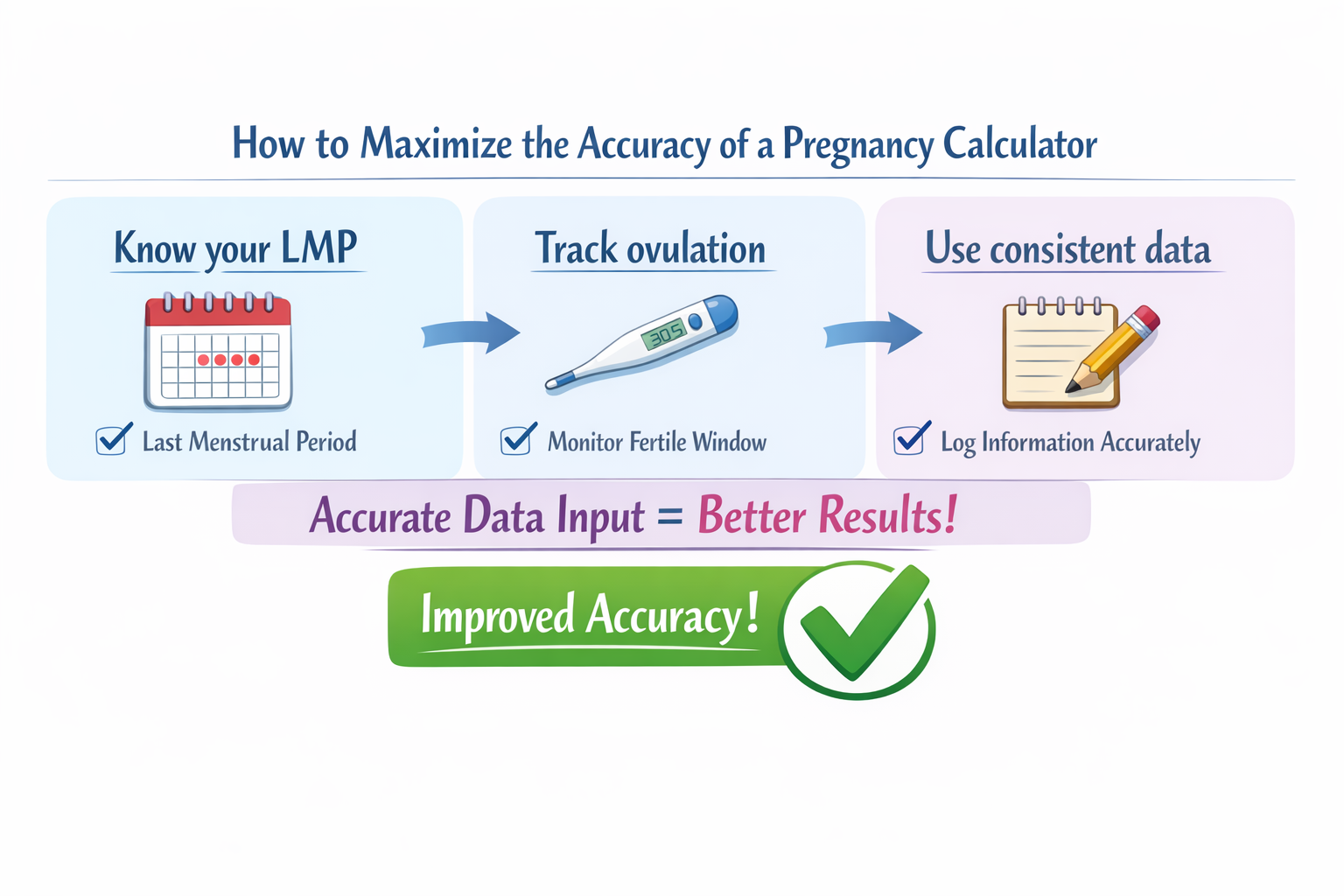
To get the most out of pregnancy calculators and improve their accuracy, focusing on precise input data and supplementing with other tracking methods is key.
Here are actionable steps to maximize your calculator's reliability:
-
Track Your Cycle Meticulously:
- Know Your LMP: Always note the first day of your last period. This is the cornerstone for most calculators.
- Monitor Ovulation: Use ovulation predictor kits (OPKs), track your basal body temperature (BBT) with a BBT chart tool, or observe cervical mucus changes. Knowing your exact ovulation date is often more accurate than LMP, especially if your cycles are not exactly 28 days. For those with irregular cycles, this step is critical.
- Utilize a Cycle Length Calculator: Understanding your typical cycle length can also help you understand if your ovulation is typically later or earlier than average.
-
Use an Ovulation-Based Calculator: If you have tracked your ovulation, prioritize calculators that allow you to input this specific date rather than just your LMP. This bypasses assumptions about a standard cycle. A Due Date Calculator that accepts an ovulation date will generally be more precise.
-
Cross-Reference Multiple Calculators: While not inherently making one calculation more accurate, checking a few different reputable online calculators can give you a consistent range or highlight potential discrepancies if your input data is ambiguous.
-
Understand the "Due Date" is an Estimate: Remember that only about 5% of babies are born on their exact due date. Most babies arrive between 37 and 42 weeks of gestation. Think of the due date as a target window rather than a fixed deadline. For more on tracking, consider using a pregnancy calendar.
-
Consult Your Healthcare Provider: The most crucial step to improving accuracy is to confirm your pregnancy dating with a medical professional. An early ultrasound scan (between 8 and 13 weeks) is the gold standard for dating and will provide the most precise due date estimate.
Checklist for Maximizing Accuracy:
- ✅ Record your LMP immediately.
- ✅ Track ovulation using OPKs or BBT.
- ✅ Use an ovulation-based calculator if available.
- ✅ Consider the due date as a 5-week window (37-42 weeks).
- ✅ Schedule an early dating ultrasound with your doctor.
When Should I Rely More on Medical Advice Than a Calculator?
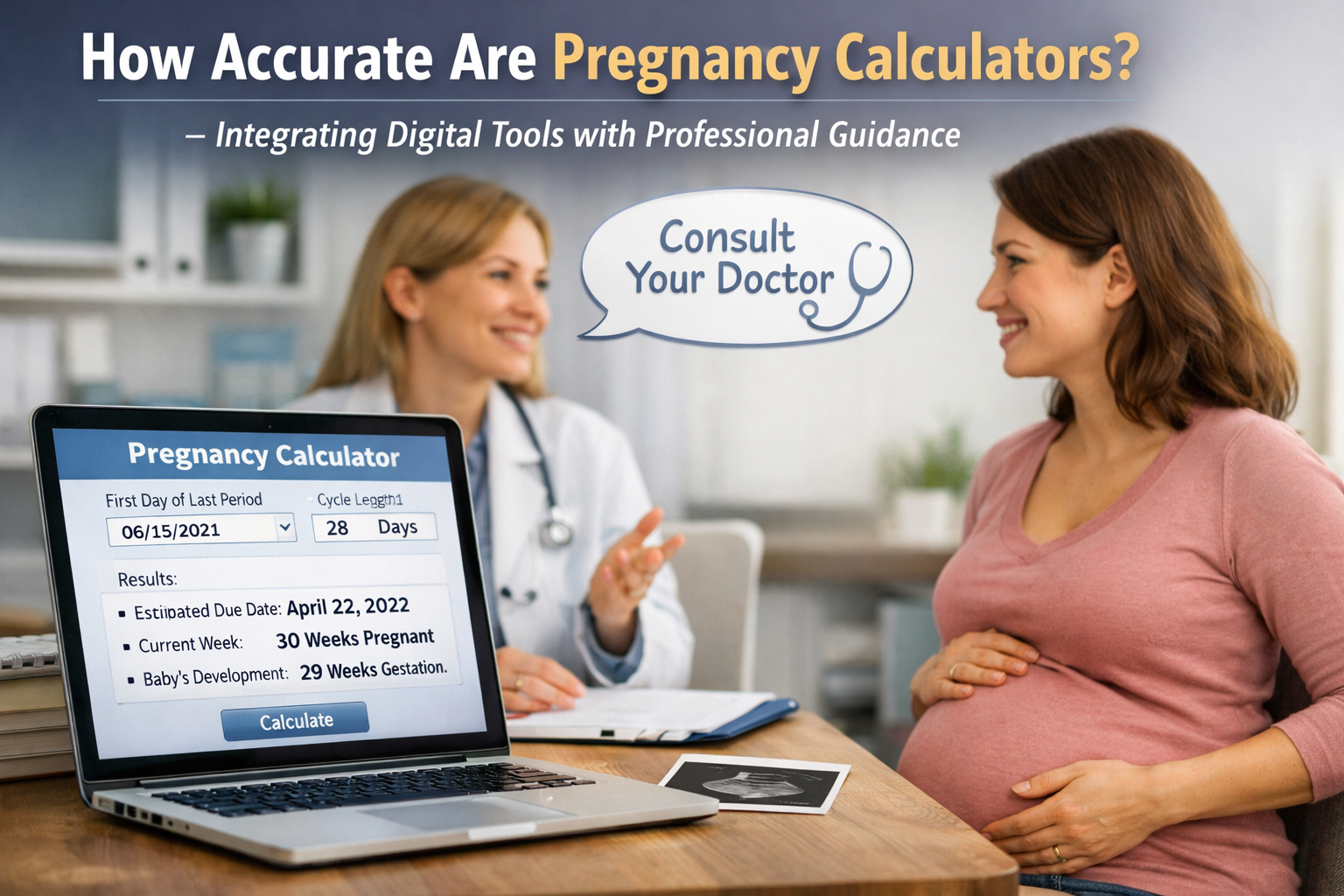
You should always prioritize medical advice over pregnancy calculator results, especially as your pregnancy progresses and for critical decisions. While calculators are excellent initial tools, they lack the nuanced understanding and diagnostic capabilities of a healthcare professional.
Here are specific situations where medical advice becomes paramount:
- Initial Pregnancy Confirmation and Dating: Once you have a positive home pregnancy test, your first step should be to contact a doctor. They will confirm the pregnancy and perform an early ultrasound to establish the most accurate due date. This medical dating can sometimes differ from your calculator's estimate, and the medical date should always take precedence.
- Irregular Cycles or Unknown LMP: If you have highly irregular periods, PCOS, or cannot recall your LMP, your calculator's estimates will be unreliable. In these cases, a doctor will rely on early ultrasound measurements to accurately date your pregnancy.
- Concerns About Fetal Growth or Development: If you have any worries about your baby's development, movement, or your own health, a calculator cannot provide answers. Medical professionals conduct regular check-ups, measurements, and scans to monitor growth and address any concerns.
- Planning for Delivery: As you approach your due date, medical advice is essential for discussing labor and delivery plans, potential interventions, or managing any complications. Calculators simply provide a date; doctors provide comprehensive care.
- Previous Pregnancy Complications: If you have a history of miscarriages, preterm birth, or other complications, your doctor will need to monitor your pregnancy closely, and calculator estimates will be secondary to their expert assessment.
- Anytime You Feel Unwell: For symptoms like severe pain, heavy bleeding, or persistent nausea, a calculator offers no help. Seek immediate medical attention.
Pull Quote: "While pregnancy calculators are excellent for preliminary estimates, an early ultrasound is truly the gold standard for dating, providing crucial accuracy that digital tools cannot match." – Dr. Sarah Miller, OB/GYN.
Ultimately, calculators serve as educational and planning aids. They can help you envision your timeline, track your weeks with a pregnancy week calculator, or estimate a pregnancy chance. However, they are no substitute for professional medical guidance and monitoring throughout your pregnancy journey.
Conclusion
Pregnancy calculators are valuable, user-friendly tools that offer a convenient way to estimate your due date and track your pregnancy journey in 2026. Their accuracy, however, is heavily influenced by the quality of the data you provide—particularly your last menstrual period or ovulation date—and the regularity of your menstrual cycle. While they can provide a good initial estimate, especially for those with predictable cycles, they cannot match the precision of medical dating methods like early ultrasound scans.
For the most accurate assessment of your due date, always confirm calculator estimates with a healthcare professional. They will take into account your full medical history, conduct examinations, and perform ultrasounds to provide you with the most reliable information. Use pregnancy calculators as a helpful guide for planning and curiosity, but remember that the true authority on your pregnancy timeline and health lies with your doctor.
Actionable Next Steps:
- Track Your Cycle: Accurately record your LMP and, if possible, ovulation dates for future pregnancies or fertility planning.
- Consult Your Doctor: Schedule an appointment with an OB/GYN after a positive home pregnancy test to get a medically confirmed due date.
- Utilize Medical Resources: Rely on your healthcare provider's advice for all critical pregnancy information and decisions.
- Embrace the Range: Understand that a due date is an estimate, and babies rarely arrive on the exact predicted day.
FAQ
Q1: Can a pregnancy calculator tell me my exact conception date? A1: A pregnancy calculator can provide an estimate of your conception date based on your LMP or ovulation, but it's rarely exact. An ultrasound provides a more precise range.
Q2: How accurate are pregnancy calculators if I have irregular periods? A2: If you have irregular periods, pregnancy calculators using your LMP will be significantly less accurate. It's best to rely on ovulation tracking or an early ultrasound for dating.
Q3: Is an early ultrasound more accurate than a pregnancy calculator? A3: Yes, an early first-trimester ultrasound is considered the most accurate method for dating a pregnancy, typically accurate to within 5-7 days.
Q4: Do all pregnancy calculators use the same formula? A4: Most pregnancy calculators use Naegele's Rule (LMP + 40 weeks) or adjust by 38 weeks from ovulation/conception, but minor variations in their algorithms may exist.
Q5: What is the typical "due date" window for babies? A5: While a specific due date is given, most babies are born within a five-week window, usually between 37 and 42 weeks of gestation.
Q6: Should I share my calculator results with my doctor? A6: Yes, it's helpful to share your calculator results and the data you used (like LMP) with your doctor to provide context for their medical assessment.
Q7: Can a pregnancy calculator tell me the gender of my baby? A7: No, pregnancy calculators only estimate gestational age and due date; they cannot determine the baby's gender.
Q8: If I know my ovulation date, how much more accurate is a calculator? A8: Knowing your exact ovulation date can significantly improve calculator accuracy by bypassing assumptions about standard cycle length, potentially making it accurate to within a few days.
Q9: Why do doctors count pregnancy from the last menstrual period, not conception? A9: It's often easier for women to pinpoint their LMP, and dating from this point standardizes calculations, even though conception occurs later.
Q10: Can lifestyle factors affect calculator accuracy? A10: Lifestyle factors don't directly change the calculator's algorithm, but they can affect your cycle regularity (e.g., stress, diet), which in turn impacts the accuracy of your input data.
References
- American College of Obstetricians and Gynecologists (ACOG). (2017). Methods for Estimating the Due Date. Practice Bulletin No. 179. Obstetrics & Gynecology, 130(4), e265–e279.