Quick Answer: Many women notice early pregnancy symptoms before a missed period, sometimes as early as 6 to 12 days after conception. These signs — including implantation bleeding, breast tenderness, fatigue, and nausea — are caused by rising hCG and progesterone levels. They can be subtle and easy to confuse with PMS, but knowing what to look for can help you decide when to test.
Key Takeaways
- Early pregnancy symptoms before a missed period can appear as early as 1 to 2 weeks after conception, before your period is even due.
- Implantation bleeding is one of the earliest and most specific signs — it typically occurs 6 to 12 days after ovulation.
- Breast tenderness, fatigue, mild cramping, and nausea are common pre-period pregnancy symptoms, but they overlap with PMS.
- Rising hCG (human chorionic gonadotropin) is the hormone responsible for most early symptoms — and it's what pregnancy tests detect.
- A home pregnancy test is most accurate from the first day of a missed period, though some sensitive tests can detect hCG a few days earlier.
- Not every pregnant woman experiences symptoms before her missed period — absence of symptoms does not mean absence of pregnancy.
- Tracking your cycle and ovulation timing helps you interpret symptoms more accurately.
- If you're unsure whether your symptoms are pregnancy-related, use a free early pregnancy symptoms checker to guide your next step.
What Causes Early Pregnancy Symptoms Before a Missed Period?
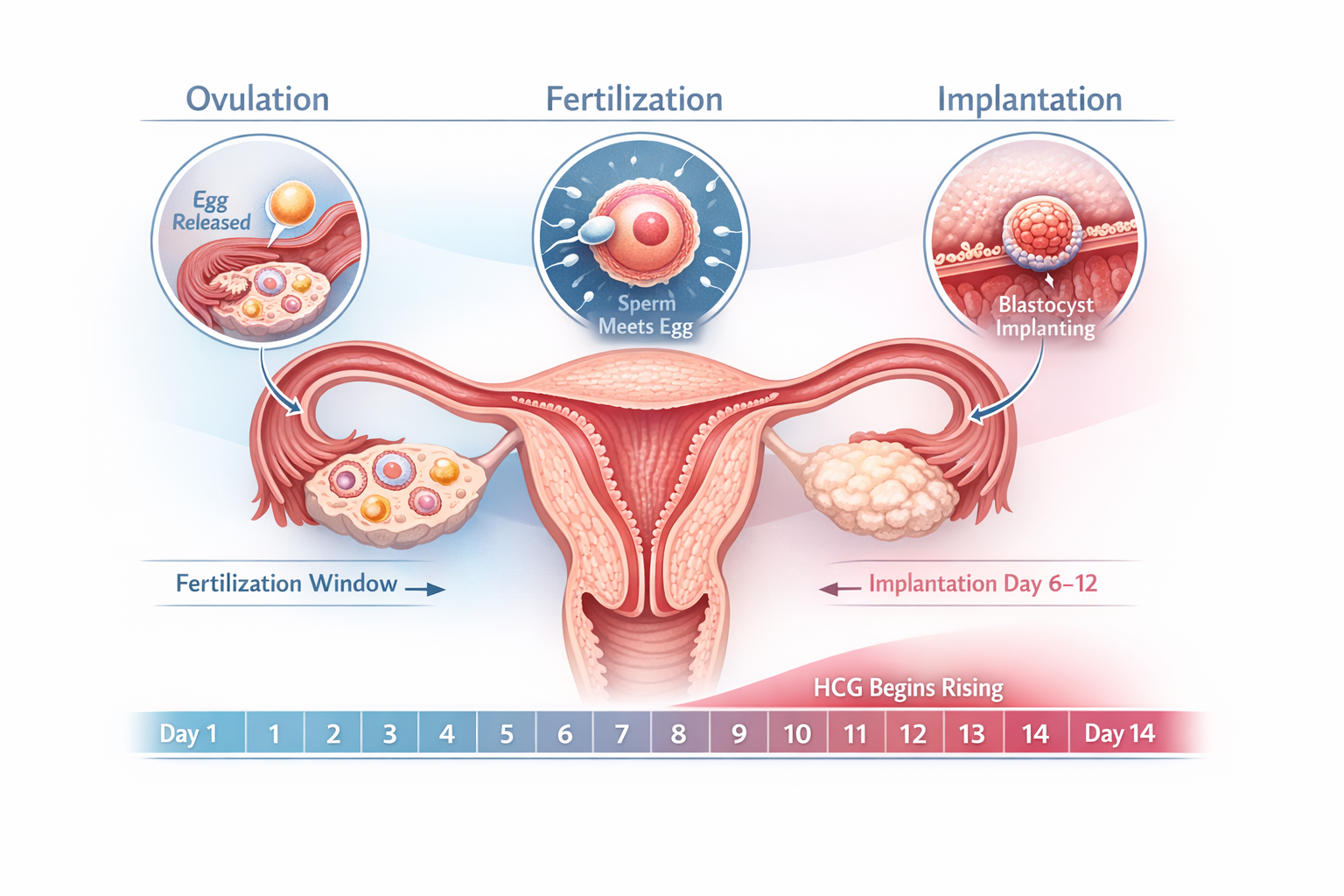
Early pregnancy symptoms before a missed period are driven by rapid hormonal changes that begin at the moment of implantation. When a fertilized egg embeds in the uterine lining, the body starts producing hCG, which signals the ovaries to keep producing progesterone instead of triggering a period.
These two hormones — hCG and progesterone — are responsible for most of the physical changes you might notice in the days before your period is due. Progesterone relaxes smooth muscle tissue (which can cause bloating and constipation), increases body temperature, and affects your mood. hCG, meanwhile, stimulates the corpus luteum and can contribute to nausea.
The timeline matters: Implantation typically occurs between 6 and 12 days after ovulation, according to the American College of Obstetricians and Gynecologists (ACOG). Symptoms often begin within a day or two of implantation, which means some women start noticing changes a full week before their expected period. For a detailed day-by-day breakdown, see this guide on implantation symptoms day by day.
The Most Common Early Pregnancy Symptoms Before Missed Period
Most early pregnancy symptoms before a missed period fall into a predictable cluster. Here's what to watch for, roughly in the order they tend to appear:
1. Implantation Bleeding (6–12 Days After Ovulation)
Light spotting or pinkish discharge that lasts 1 to 3 days. It's lighter than a period, doesn't fill a pad, and often appears earlier than your period would. This is one of the most telling early signs, though only about 15–25% of pregnant women experience it (American Pregnancy Association).
Not sure if what you're seeing is implantation bleeding or the start of your period? Our guide on implantation bleeding vs. period breaks down the differences clearly.
2. Breast Tenderness and Swelling
Breasts may feel heavier, sore, or unusually sensitive — similar to PMS, but often more intense. The nipples may darken slightly. This can start as early as 1 to 2 weeks after conception.
3. Fatigue
Progesterone is a natural sedative. Many women describe feeling exhausted in a way that feels different from normal tiredness — a deep, bone-level fatigue that hits even when they've slept well.
4. Mild Cramping
Light, period-like cramps without actual bleeding can signal implantation. These cramps are usually milder than menstrual cramps and may feel more like a dull pressure or twitching sensation in the lower abdomen.
5. Nausea (Morning Sickness)
Nausea typically begins around weeks 4 to 6 of pregnancy (counting from the last menstrual period), which means it can start right around the time of a missed period — or just before. Some women notice food aversions or a heightened sense of smell even earlier.
6. Frequent Urination
Increased blood flow to the kidneys and rising hCG levels can cause more frequent trips to the bathroom, even before a missed period.
7. Elevated Basal Body Temperature (BBT)
If you track your BBT, a temperature that stays elevated for 18 or more consecutive days after ovulation is a strong indicator of pregnancy. A sustained high temperature past the point where it would normally drop signals that progesterone is still being produced.
8. Mood Changes and Heightened Emotions
Rapid hormonal shifts can cause irritability, tearfulness, or anxiety that feels disproportionate to the situation.
💬 "Many women know something is different before they even take a test. Their instincts are picking up on real physiological changes — and those changes are measurable." — General consensus among reproductive health professionals.
How to Tell Early Pregnancy Symptoms Apart from PMS
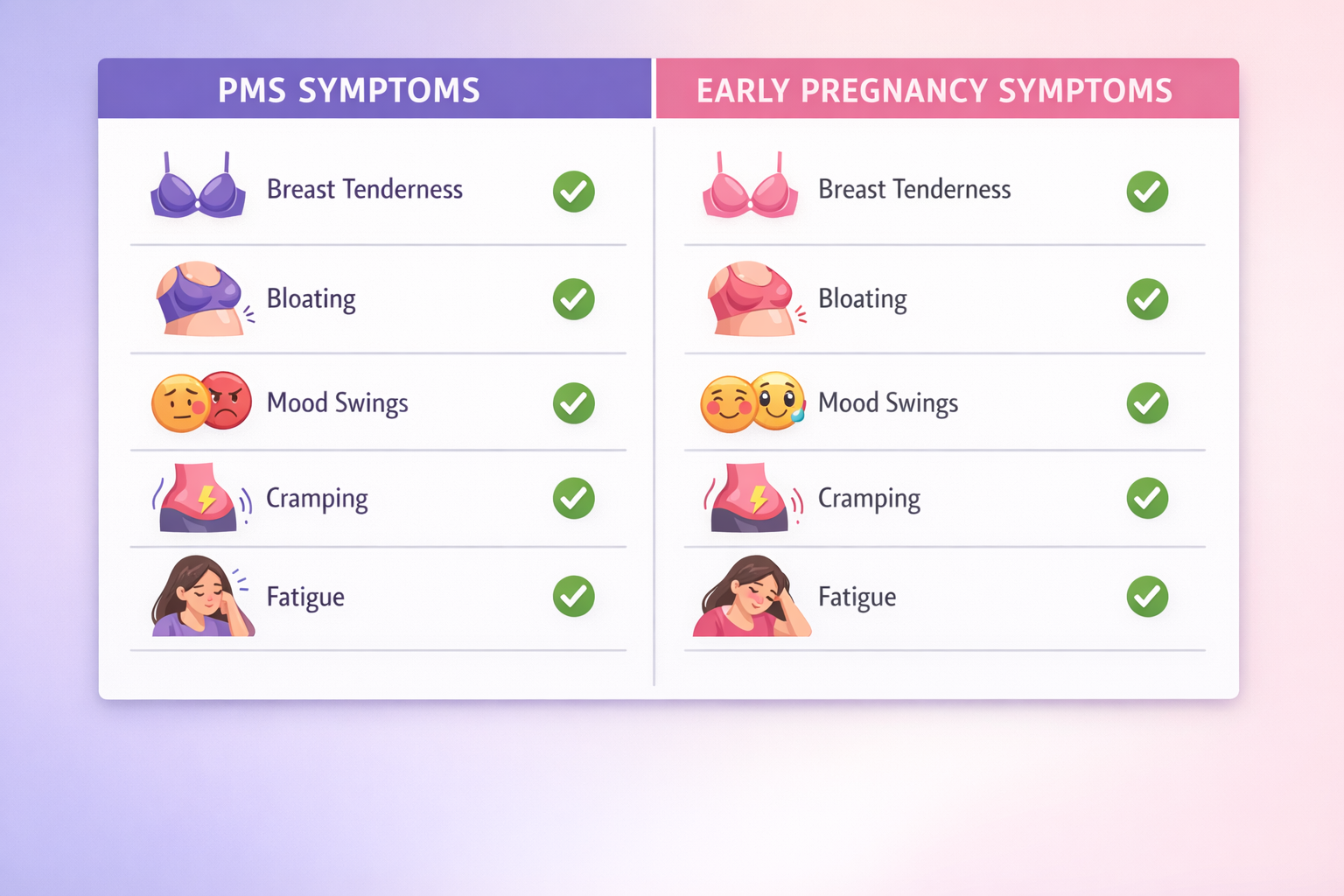
This is where things get genuinely tricky. Early pregnancy symptoms before a missed period overlap significantly with premenstrual syndrome (PMS). Both conditions are driven by progesterone, which is why the symptom lists look almost identical.
Here's a practical comparison:
| Symptom | PMS | Early Pregnancy |
|---|---|---|
| Breast tenderness | Common, eases before period | Often more intense, persists |
| Cramping | Increases as period approaches | Mild, may occur at implantation |
| Spotting | Rare | Light implantation bleeding possible |
| Fatigue | Moderate | Often more pronounced |
| Nausea | Uncommon | More common |
| Mood changes | Common | Common |
| Basal body temperature | Drops before period | Stays elevated |
| Frequent urination | Uncommon | More common |
The most useful distinguishing factors:
- Implantation bleeding is specific to pregnancy (PMS doesn't cause it).
- BBT staying high past day 18 post-ovulation strongly suggests pregnancy.
- Nausea with food aversions is more characteristic of early pregnancy than PMS.
- Symptoms that persist or worsen as your period date passes are worth investigating with a test.
Common mistake: Assuming that because you've had these symptoms before and your period arrived, they can't be pregnancy symptoms this time. Every cycle is different, and the only reliable way to confirm is a pregnancy test.
When Do Early Pregnancy Symptoms Typically Start?
Early pregnancy symptoms can begin as early as 6 to 10 days after ovulation (around the time of implantation) and become more noticeable in the week leading up to a missed period.
Here's a rough timeline based on a standard 28-day cycle:
- Days 1–14: Menstrual phase and follicular phase; ovulation occurs around day 14.
- Days 15–25: Fertilization (if it occurs) and travel of the fertilized egg to the uterus.
- Days 20–26: Implantation window. Earliest possible symptoms begin here.
- Days 25–28: Pre-period window. Symptoms may intensify. Some sensitive pregnancy tests can detect hCG now.
- Day 28+: Missed period. Home pregnancy tests are most reliable from this point.
If your cycle is longer or shorter than 28 days, these windows shift accordingly. Use our implantation calculator to estimate your personal implantation window based on your cycle length and ovulation date.
For more on the relationship between ovulation timing and implantation, see implantation after ovulation: timing and symptoms.
Can You Feel Pregnant Before a Positive Test?
Yes — and it's not just in your head. The hormonal changes that cause early pregnancy symptoms begin before a home pregnancy test can reliably detect hCG. This is why many women feel "off" or notice changes before they get a positive result.
However, it's also true that symptoms alone cannot confirm pregnancy. Progesterone rises in the luteal phase of every cycle (whether or not conception occurred), which means your body produces many of the same sensations every month.
Choose to test if:
- Your period is late by even one day and you've had unprotected sex.
- You notice implantation bleeding at the right time in your cycle.
- Your BBT has stayed elevated for 18+ days post-ovulation.
- You feel symptoms that are noticeably different from your usual PMS pattern.
Wait to test if:
- You're still more than 3 days before your expected period (unless using a highly sensitive early-detection test).
- You want the most accurate result — testing at or after a missed period reduces false negatives significantly.
Not sure about your chances of conception this cycle? The pregnancy chance calculator can give you a probability estimate based on your timing.
What to Do If You Notice Early Pregnancy Symptoms Before Your Period
If you're experiencing symptoms that feel different from your usual cycle, here's a practical checklist:
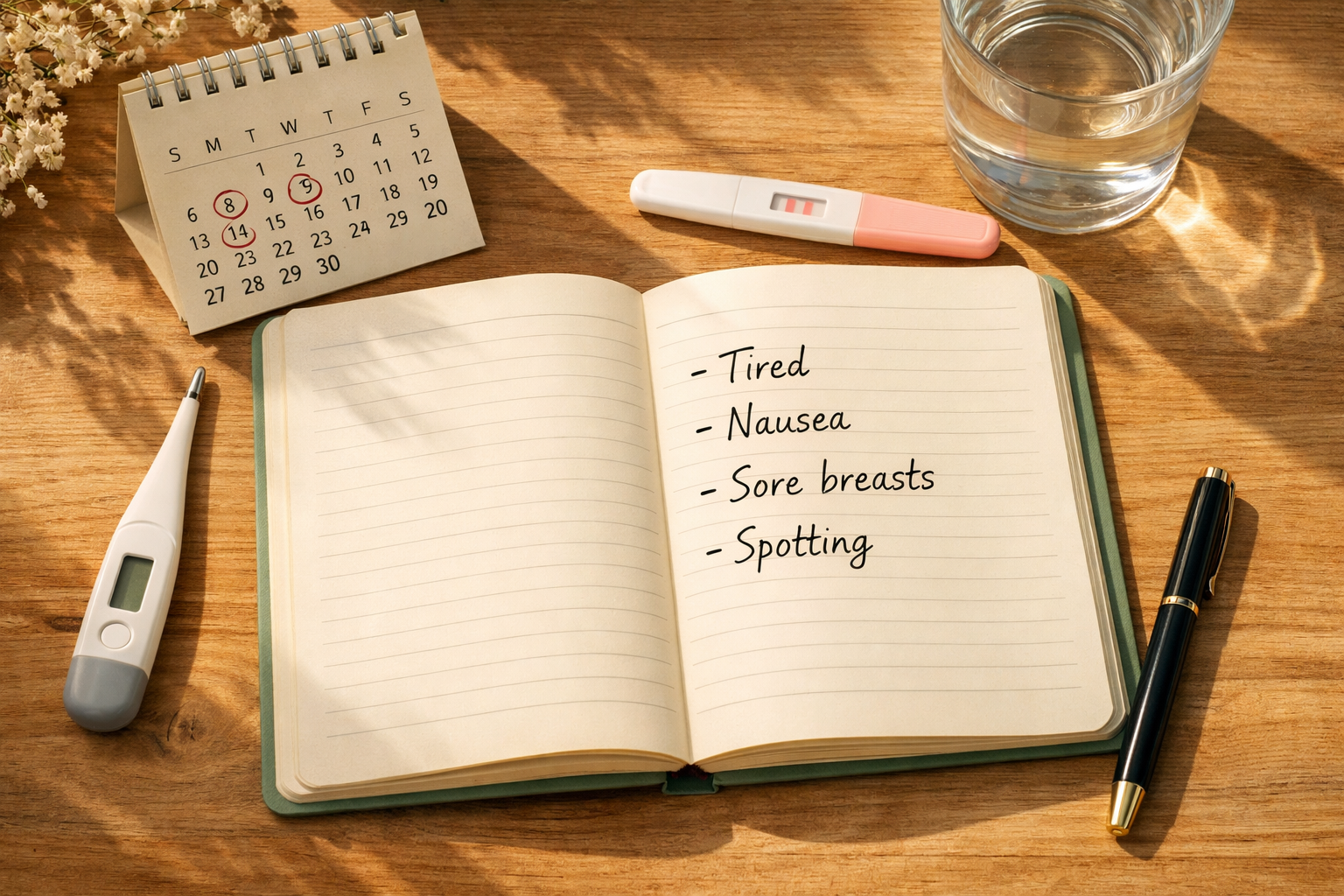
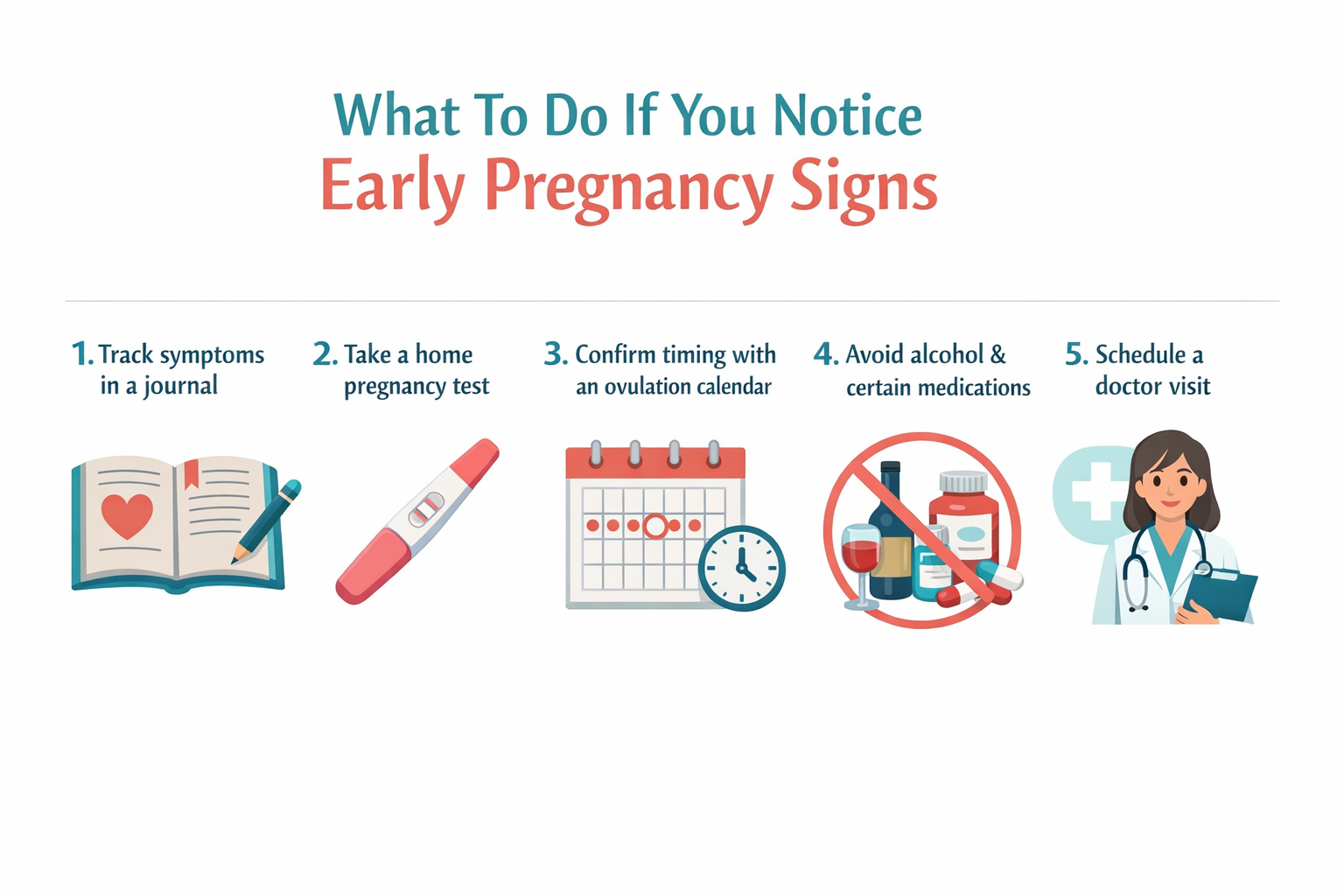
- Track your symptoms in a journal or app. Note the date, type, and intensity of each symptom. This helps you spot patterns and gives your doctor useful information.
- Confirm your ovulation timing. Symptoms are only meaningful in context. If you don't know when you ovulated, use a fertile window calculator to estimate.
- Wait until your period is due before testing (or use an early-detection test 3–4 days before, understanding the false-negative risk).
- Avoid alcohol, high-dose supplements, and unnecessary medications while you wait, as a precaution.
- If your period is late and your test is positive, schedule an appointment with your OB-GYN or midwife. Use our pregnancy week calculator to estimate how far along you are.
- If your period is late and your test is negative, retest in 48–72 hours. hCG doubles roughly every 48 hours in early pregnancy, so a borderline result can turn positive quickly.
- If your period is late and you're not pregnant, consider other causes. Our period delay calculator can help identify why your period might be late.
Less Common Early Pregnancy Symptoms Worth Knowing
Beyond the classic signs, some women notice less-talked-about symptoms before their missed period:
- Metallic taste in the mouth — sometimes called dysgeusia, linked to rising estrogen levels.
- Vivid or unusual dreams — reported anecdotally by many pregnant women in early pregnancy.
- Increased vaginal discharge — a thin, milky white discharge (called leukorrhea) can increase due to hormonal changes.
- Bloating and constipation — progesterone slows digestion, which can cause both.
- Headaches — increased blood volume and hormonal shifts can trigger headaches in early pregnancy.
- Light-headedness or dizziness — blood pressure changes and blood sugar fluctuations can cause this.
- Darkening of the areolas — the skin around the nipples may darken noticeably, even before a missed period.
Edge case: Some women experience no symptoms at all before their missed period — and have perfectly healthy pregnancies. Symptom intensity does not predict pregnancy viability.
FAQ: Early Pregnancy Symptoms Before Missed Period
Q: How early can pregnancy symptoms start? Symptoms can begin as early as 6 to 10 days after ovulation — around the time of implantation — though most women notice them in the week before their expected period.
Q: Is cramping before a missed period a sign of pregnancy? It can be. Mild implantation cramping occurs around 6 to 12 days after ovulation and is typically lighter than menstrual cramps. However, cramping also occurs with PMS, so it's not a definitive sign on its own.
Q: Can I take a pregnancy test before my missed period? Yes, but accuracy is lower. Early-detection tests can pick up hCG 3 to 5 days before a missed period, but false negatives are more common. Testing on or after the first day of a missed period gives the most reliable result.
Q: Is nausea always a sign of early pregnancy? No. Nausea has many causes. In the context of early pregnancy, it's more significant when it appears alongside other symptoms (breast tenderness, missed period, positive test) and feels different from your usual digestive patterns.
Q: Can stress cause early pregnancy symptoms? Yes. Stress can cause breast tenderness, fatigue, nausea, and even delayed periods — which is why symptoms alone can't confirm pregnancy. Only a pregnancy test can do that.
Q: What does implantation bleeding look like? It's usually light pink or brown spotting, much lighter than a period. It lasts 1 to 3 days and doesn't progress to heavier flow. It occurs earlier than a typical period would.
Q: Can I have early pregnancy symptoms and not be pregnant? Absolutely. Many early pregnancy symptoms are identical to PMS symptoms because both are driven by progesterone. A pregnancy test is the only way to know for certain.
Q: What if I have no symptoms before my missed period? That's completely normal. Many women have no noticeable symptoms until after a missed period, and some have very few symptoms throughout the first trimester. Absence of symptoms does not indicate a problem.
Q: How long after implantation do symptoms start? Symptoms can begin within 1 to 2 days of implantation as hCG starts to rise, though they may be very subtle at first.
Q: Should I call a doctor if I think I'm pregnant? Once you have a positive pregnancy test, yes — schedule a confirmation appointment. Most OB-GYN offices see patients around 8 weeks of pregnancy, but they can advise you on timing based on your situation.
Conclusion: What to Do Next
Early pregnancy symptoms before a missed period are real, measurable, and driven by genuine hormonal changes in your body. The most common signs — implantation bleeding, breast tenderness, fatigue, mild cramping, and nausea — can appear as early as a week before your period is due. But because these symptoms overlap so heavily with PMS, the only way to confirm pregnancy is with a test.
Your practical next steps:
- Track your symptoms with dates and details — this information is useful whether the result is positive or negative.
- Know your cycle — use a fertile window calculator or ovulation tracker to understand your timing.
- Test at the right time — wait until your period is due for the most accurate result, or use an early-detection test a few days before with the understanding that a negative result may need to be repeated.
- Use a symptom checker — if you're unsure, the early pregnancy symptoms checker can help you evaluate what you're experiencing.
- See a doctor once you have a positive test to confirm the pregnancy and start prenatal care.
Your body is giving you information — learning to read it clearly is one of the most useful things you can do when you're trying to conceive or simply paying attention to your reproductive health.
References
- American College of Obstetricians and Gynecologists (ACOG). Implantation and Early Pregnancy. acog.org. (2023)
- American Pregnancy Association. Implantation Bleeding. americanpregnancy.org. (2022)
- Mayo Clinic. Symptoms of Pregnancy: What Happens Right Away. mayoclinic.org. (2023)
- National Institutes of Health (NIH), MedlinePlus. Early Pregnancy Symptoms. medlineplus.gov. (2022)
- Wilcox, A.J., Baird, D.D., & Weinberg, C.R. Time of Implantation of the Conceptus and Loss of Pregnancy. New England Journal of Medicine. (1999)