Quick Answer: Your conception date is most likely 11–21 days after the first day of your last menstrual period (LMP), depending on your cycle length. The most reliable way to find it is to use a conception date calculator, subtract roughly 266 days from your due date, or count back 14 days from your confirmed ovulation date. No method gives a guaranteed exact day, but combining two or more approaches gets you very close.
Key Takeaways
- Conception happens at ovulation, not during intercourse — sperm can survive 3–5 days inside the body, so sex before ovulation can still result in pregnancy.
- The standard medical estimate places conception 14 days after your LMP (for a 28-day cycle), but this shifts with longer or shorter cycles.
- A conception calculator uses your LMP and average cycle length to estimate a conception window, typically a 5–7 day range.
- First-trimester ultrasound (before 14 weeks) is the most accurate clinical method for dating a pregnancy and estimating conception.
- Conception date and ovulation date are not identical — learn the difference here.
- If you have irregular cycles, the standard 14-day formula is less reliable — use your actual cycle length data instead.
- Knowing your conception date helps you estimate your due date, track fetal development, and answer paternity timing questions.
How Does Conception Actually Work? (And Why the Date Is Tricky)
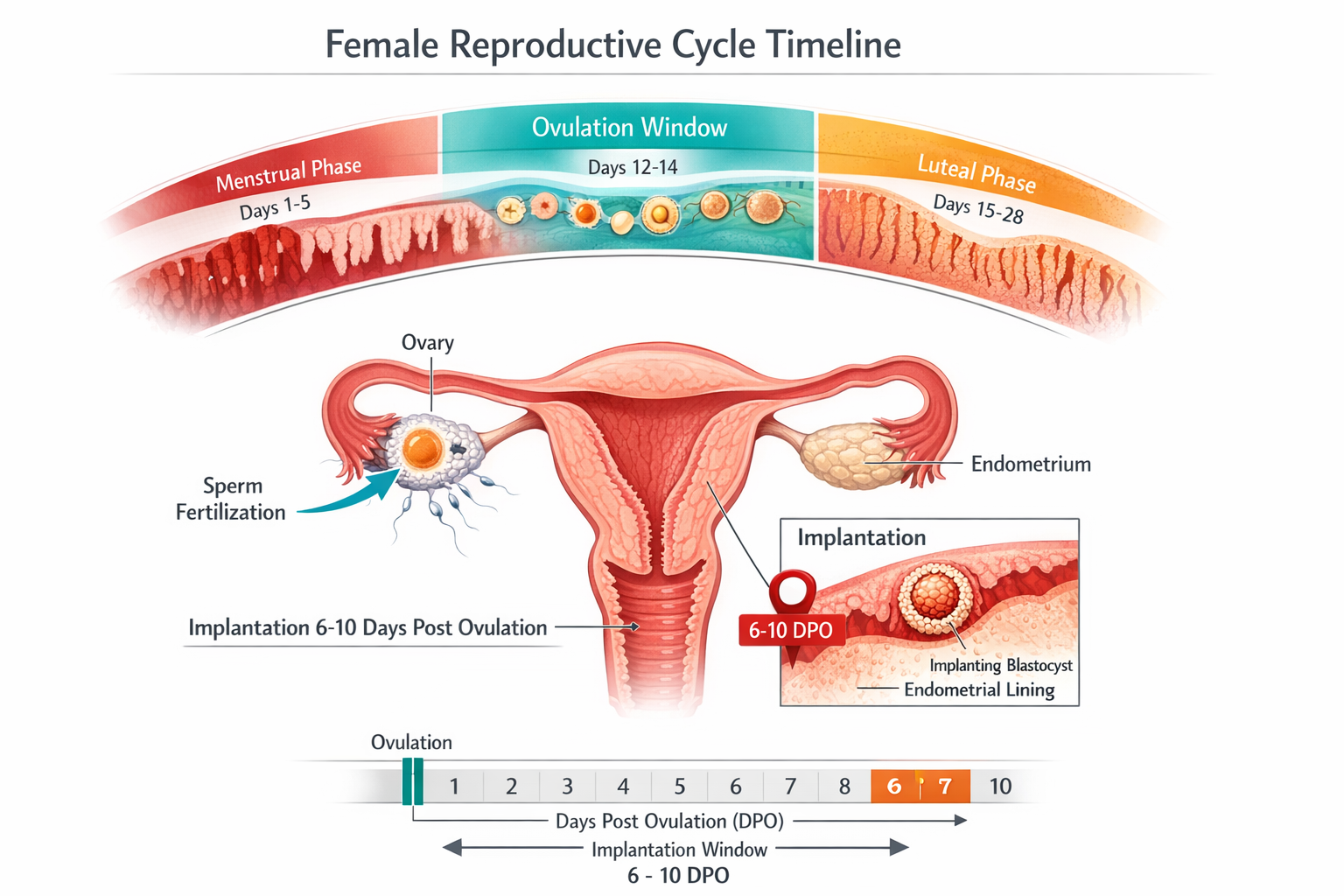
Conception occurs when a sperm fertilizes an egg — and that egg is only available for 12–24 hours after ovulation. Sperm, however, can live in the reproductive tract for up to 5 days. This means conception can result from intercourse that happened several days before you ovulated.
That biological gap is exactly why pinpointing a single conception date is difficult. You're not looking for the day you had sex — you're looking for the day your egg was fertilized, which is tied to ovulation, not intercourse timing.
What affects when you ovulate:
- Average cycle length (shorter cycles = earlier ovulation; longer cycles = later ovulation)
- Stress, illness, or hormonal fluctuations
- Recent use of hormonal contraception
- Conditions like PCOS, which can cause late ovulation
💡 Key point: Conception date ≈ ovulation date. They're not always the same calendar day, but they're within 24 hours of each other.
When Did I Conceive? Find Your Exact Conception Date (With Calculator) — The Main Methods
There are four practical ways to estimate your conception date. Each has different accuracy levels depending on what data you have available.
Method 1: Use a Conception Date Calculator
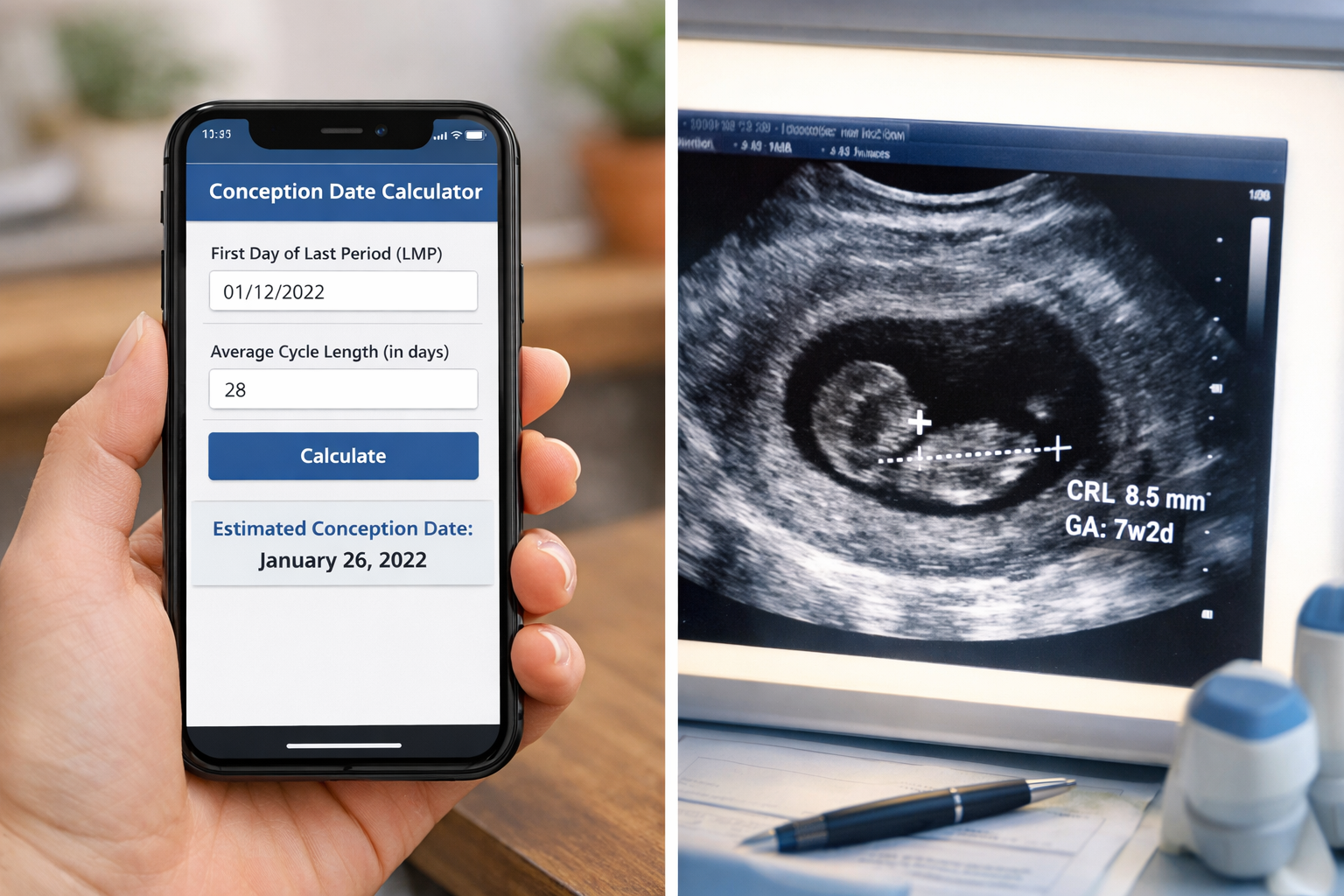
A conception calculator takes your LMP and average cycle length, then estimates your ovulation window — and therefore your likely conception window.
How to use it:
- Enter the first day of your last menstrual period.
- Enter your average cycle length (use our cycle length calculator if you're unsure).
- The tool returns a 5–7 day conception window centered on your estimated ovulation date.
Choose this method if: You know your LMP and have a reasonably regular cycle.
Method 2: Count Back from Your Due Date
If you already have a due date from a doctor or dating scan, subtract 266 days (38 weeks) to estimate conception. This works because full-term pregnancy is approximately 266 days from fertilization.
| Known Information | Formula | Result |
|---|---|---|
| Due date | Due date − 266 days | Estimated conception date |
| LMP (28-day cycle) | LMP + 14 days | Estimated ovulation/conception |
| Confirmed ovulation date | Ovulation date + 0–1 day | Conception window |
For a more precise due date calculation, use the due date calculator.
Method 3: Track Your Ovulation Signs
If you were tracking ovulation when you conceived, your data is your best evidence. Reliable ovulation signs include:
- LH surge on an ovulation predictor kit (OPK) — ovulation typically follows 24–36 hours later
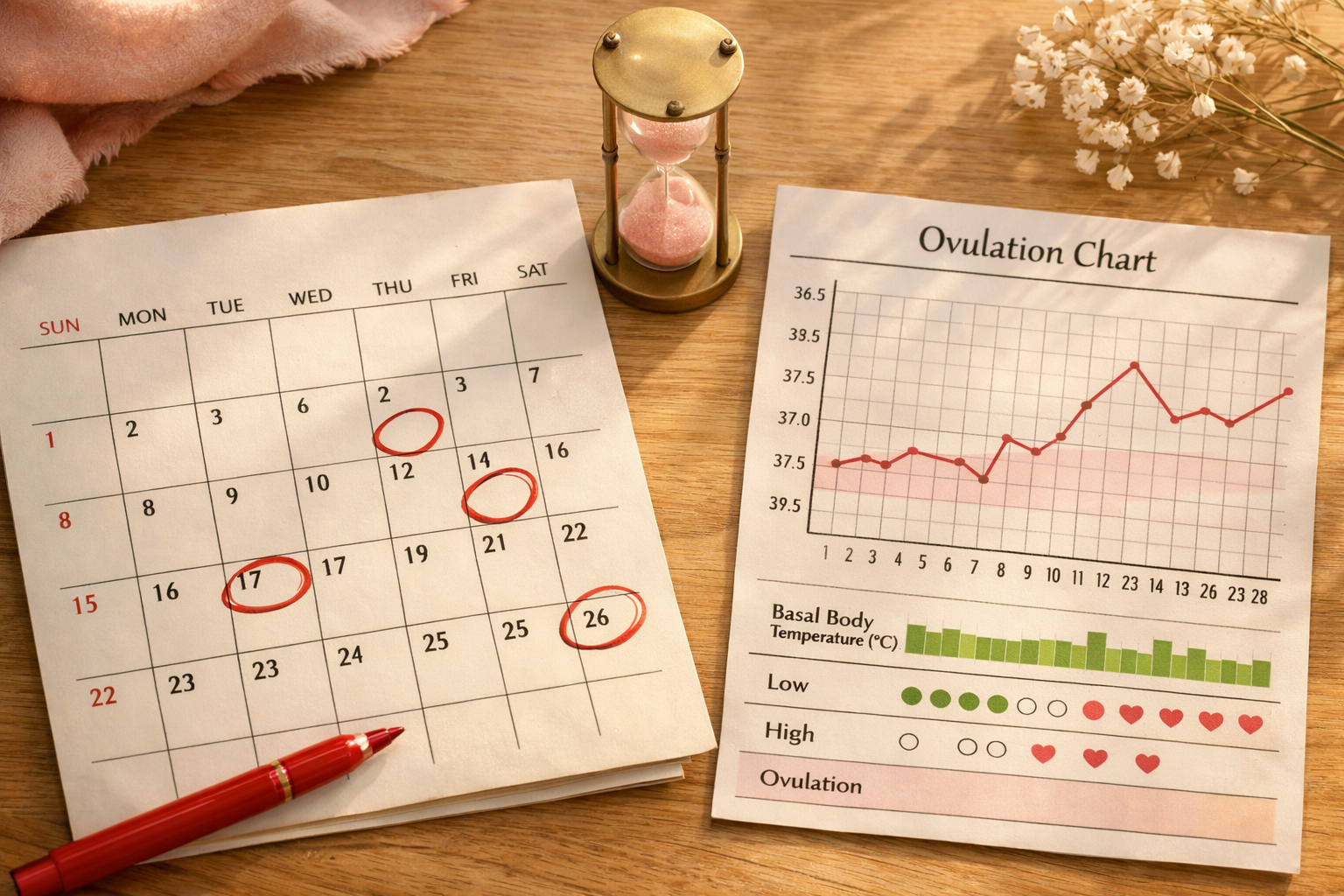
- Basal body temperature (BBT) rise — confirms ovulation has occurred (use a BBT chart tool to review your data)
- Cervical mucus changes — egg-white consistency signals peak fertility
Method 4: First-Trimester Ultrasound Dating
A dating ultrasound before 14 weeks is the gold standard for estimating gestational age and, by extension, conception date. The sonographer measures the fetal crown-rump length (CRL) and compares it to established growth charts. This method is accurate to within ±5–7 days in the first trimester. For more on how this works, see how ultrasound estimates conception date.
What If My Cycles Are Irregular?
Standard conception calculators assume a 28-day cycle with ovulation on day 14. If your cycle is longer, shorter, or unpredictable, that formula shifts — sometimes significantly.
Adjusting for cycle length:
- Shorter cycle (e.g., 24 days): Ovulation likely around day 10 — conception window moves earlier.
- Longer cycle (e.g., 35 days): Ovulation likely around day 21 — conception window moves later.
- Highly irregular cycles: A calculator gives a range, not a precise date. Ultrasound dating becomes more important.
If you experience late ovulation regularly, read about whether late ovulation affects implantation timing — it can shift your entire pregnancy timeline.
⚠️ Common mistake: Assuming ovulation always happens on day 14. For women with cycles outside 26–30 days, this estimate can be off by a week or more.
How Accurate Is a Conception Date Estimate?
Honest answer: no calculator gives you a guaranteed single day. What you get is a window, and that window's accuracy depends on your inputs.
Accuracy by method:
| Method | Accuracy Range | Best Used When |
|---|---|---|
| LMP-based calculator | ±5–7 days | Regular cycles, known LMP |
| Confirmed ovulation (OPK/BBT) | ±1–2 days | You were actively tracking |
| First-trimester ultrasound | ±5–7 days | Clinical confirmation needed |
| Due date back-calculation | ±7–10 days | No other data available |
For a deeper look at calculator reliability, see how accurate pregnancy calculators really are.
When Did I Conceive? Find Your Exact Conception Date (With Calculator) — Step-by-Step Guide
Here's a practical checklist to work through if you're trying to determine your conception date right now:
- [ ] Step 1: Identify the first day of your last menstrual period (LMP).
- [ ] Step 2: Calculate or recall your average cycle length.
- [ ] Step 3: Run the conception calculator with those two inputs.
- [ ] Step 4: Cross-reference with any ovulation tracking data you have (OPK results, BBT chart, cervical mucus notes).
- [ ] Step 5: If you have a confirmed due date or ultrasound report, subtract 266 days to verify.
- [ ] Step 6: If results conflict or you need clinical accuracy, request a dating ultrasound from your provider.
FAQ
Q: Can I find out the exact day I conceived? A: Rarely, unless you had confirmed ovulation tracking on that specific day. Most methods give a window of 3–7 days, not a single date. See can you know the exact day you conceived for a full explanation.
Q: Is my conception date the same as my ovulation date? A: Almost — fertilization happens within 24 hours of ovulation, so they're typically the same day or one day apart. They're not always identical calendar dates.
Q: Can I conceive after ovulation has already passed? A: No. The egg survives only 12–24 hours post-ovulation. Sex after that window will not result in conception for that cycle. Read more about how many days after ovulation you can get pregnant.
Q: My due date changed after my ultrasound — does that mean my conception date changed? A: It means the ultrasound measurement gave a more accurate gestational age estimate than the LMP calculation. The actual conception date didn't change; the estimate was refined.
Q: How do I calculate conception date from my due date? A: Subtract 266 days (38 weeks) from your due date. For example, a due date of January 1, 2027 points to a conception date around April 10, 2026.
Q: Does the conception date affect my due date calculation? A: Yes. If you enter your confirmed conception date into a due date calculator, it adds 266 days to get your estimated delivery date.
Q: What if I had sex on multiple days — how do I know which led to conception? A: You can't know for certain. The conception date is tied to ovulation, not to a specific act of intercourse. Any sex within the 5-day fertile window before ovulation (plus ovulation day itself) could have resulted in pregnancy.
Q: Is a conception calculator useful for paternity questions? A: It can help narrow the window, but it cannot confirm paternity. Only a DNA test can do that.
Conclusion
Figuring out when you conceived comes down to three things: knowing your LMP, understanding your cycle length, and cross-referencing with any ovulation data or ultrasound results you have. No single method is perfect, but combining a conception date calculator with confirmed ovulation tracking gets you as close as possible without clinical testing.
Your next steps:
- Use the conception calculator with your LMP and cycle length for an immediate estimate.
- Pull any OPK or BBT data you recorded around the time of conception.
- If you need clinical confirmation, ask your OB or midwife for a first-trimester dating ultrasound.
- Once you have your conception date, use the due date calculator to map out your full pregnancy timeline.
The answer won't always be a single day — but it will be close enough to be genuinely useful.
References
- American College of Obstetricians and Gynecologists (ACOG). Methods for Estimating the Due Date. Committee Opinion No. 700. (2017). https://www.acog.org/clinical/clinical-guidance/committee-opinion/articles/2017/05/methods-for-estimating-the-due-date
- Wilcox, A.J., Weinberg, C.R., & Baird, D.D. Timing of Sexual Intercourse in Relation to Ovulation. New England Journal of Medicine. (1995). https://www.nejm.org/doi/full/10.1056/NEJM199512073332301
- Norwitz, E.R., & Snegovskikh, V.V. Prolonged pregnancy: when should we intervene? Clinical Obstetrics and Gynecology. (2007).
- National Health Service (NHS). Your pregnancy and baby guide — due dates. (2023). https://www.nhs.uk/pregnancy/finding-out/due-date-calculator/