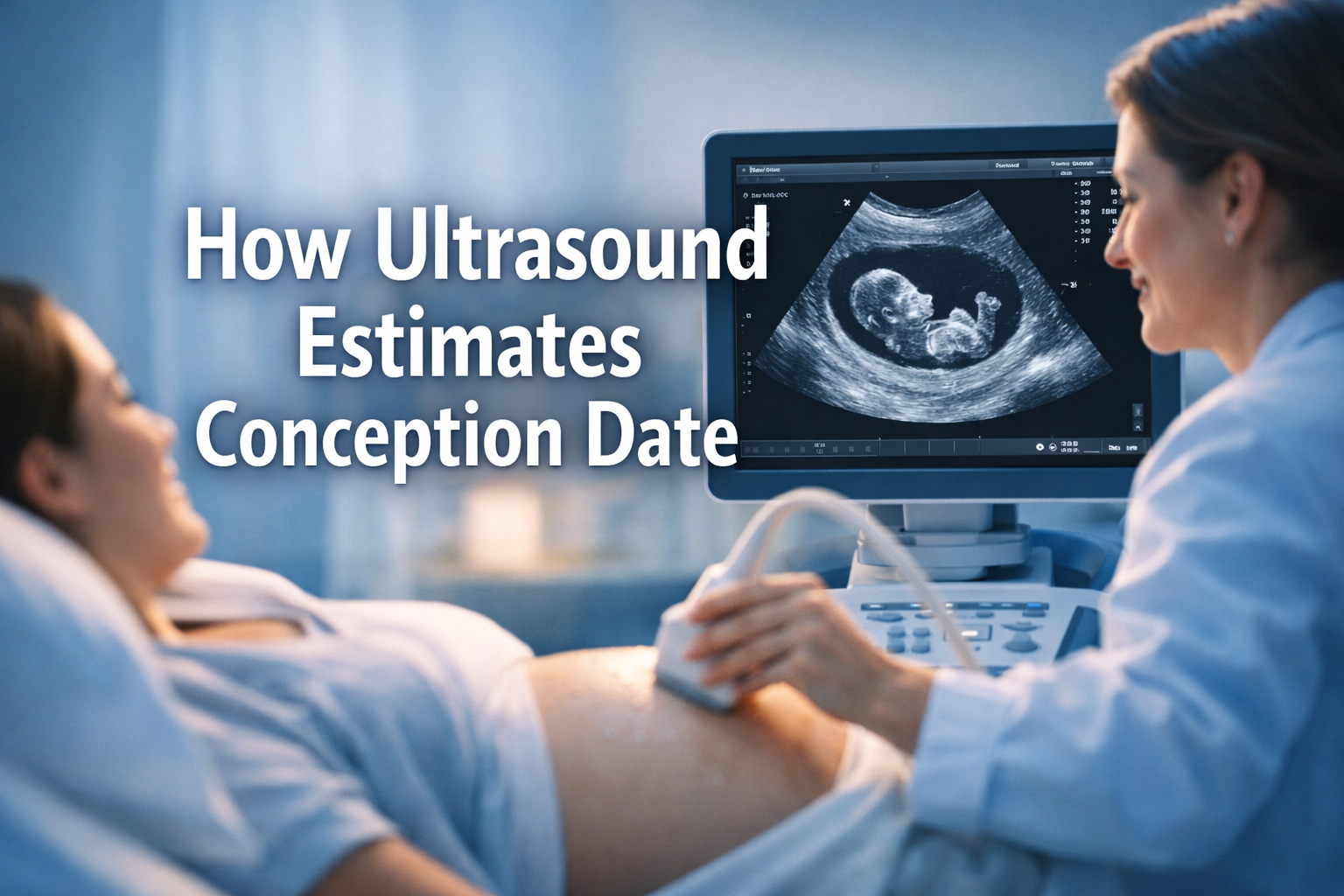
When you discover you're expecting, one of the first questions you'll likely have is, "When did I conceive?" While home pregnancy tests confirm pregnancy, they don't pinpoint your exact conception date. This is where modern medical technology, specifically ultrasound, becomes invaluable. Understanding how ultrasound estimates conception date is crucial for accurate prenatal care, due date calculations, and monitoring fetal development throughout pregnancy in 2026.
Key Takeaways
- Ultrasound offers the most accurate method for estimating conception date, especially in the first trimester.
- Conception date is typically calculated by subtracting two weeks from the estimated gestational age derived from ultrasound.
- Early pregnancy measurements, particularly Crown-Rump Length (CRL), provide the highest accuracy.
- Later ultrasound measurements (second and third trimesters) are less precise for dating but still valuable for growth monitoring.
- Knowing the accurate conception date helps determine the estimated due date and plan crucial prenatal screenings.
- Discrepancies between ultrasound estimates and Last Menstrual Period (LMP) dates are common, especially with irregular cycles.
- A healthcare provider will integrate various data points to establish the most reliable due date.
What is the Primary Method How Ultrasound Estimates Conception Date?
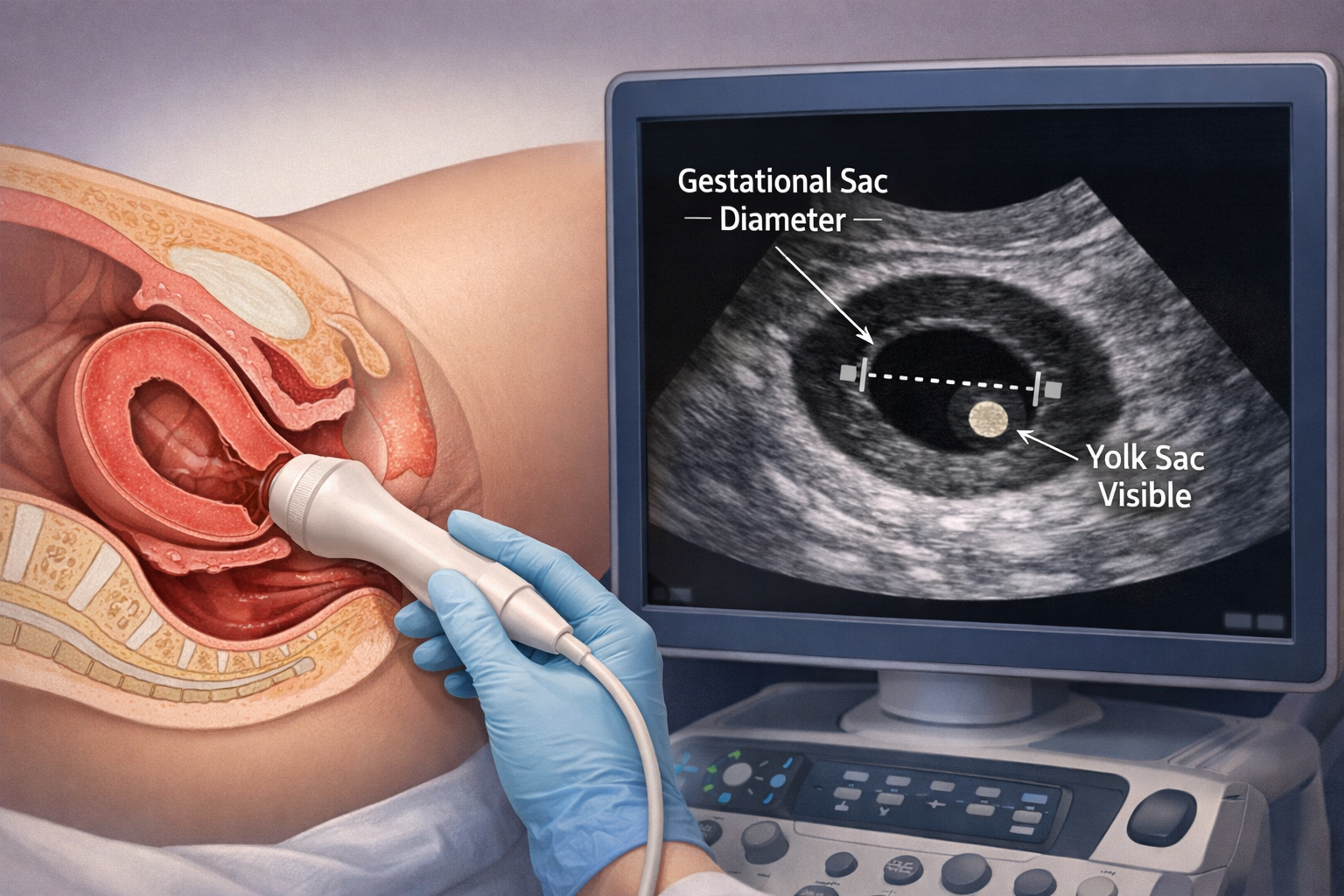
Ultrasound primarily estimates conception date by measuring specific fetal or embryonic structures and comparing these measurements to established growth charts. This provides an estimated gestational age, from which the conception date can be inferred. The accuracy of this estimation is highest during the first trimester, roughly between 6 and 14 weeks of gestation, because fetal growth is most consistent during this period.
During your first prenatal appointment, a healthcare provider will typically order an ultrasound to confirm pregnancy, check fetal viability, and accurately date the pregnancy. This dating ultrasound helps establish a baseline for your baby's development. For instance, if the ultrasound determines you are 8 weeks pregnant, your conception date would be estimated at approximately 6 weeks prior to that scan, accounting for the standard two-week difference between gestational age (from LMP) and true embryonic age (from conception).
How Does First Trimester Ultrasound Pinpoint Conception Date?
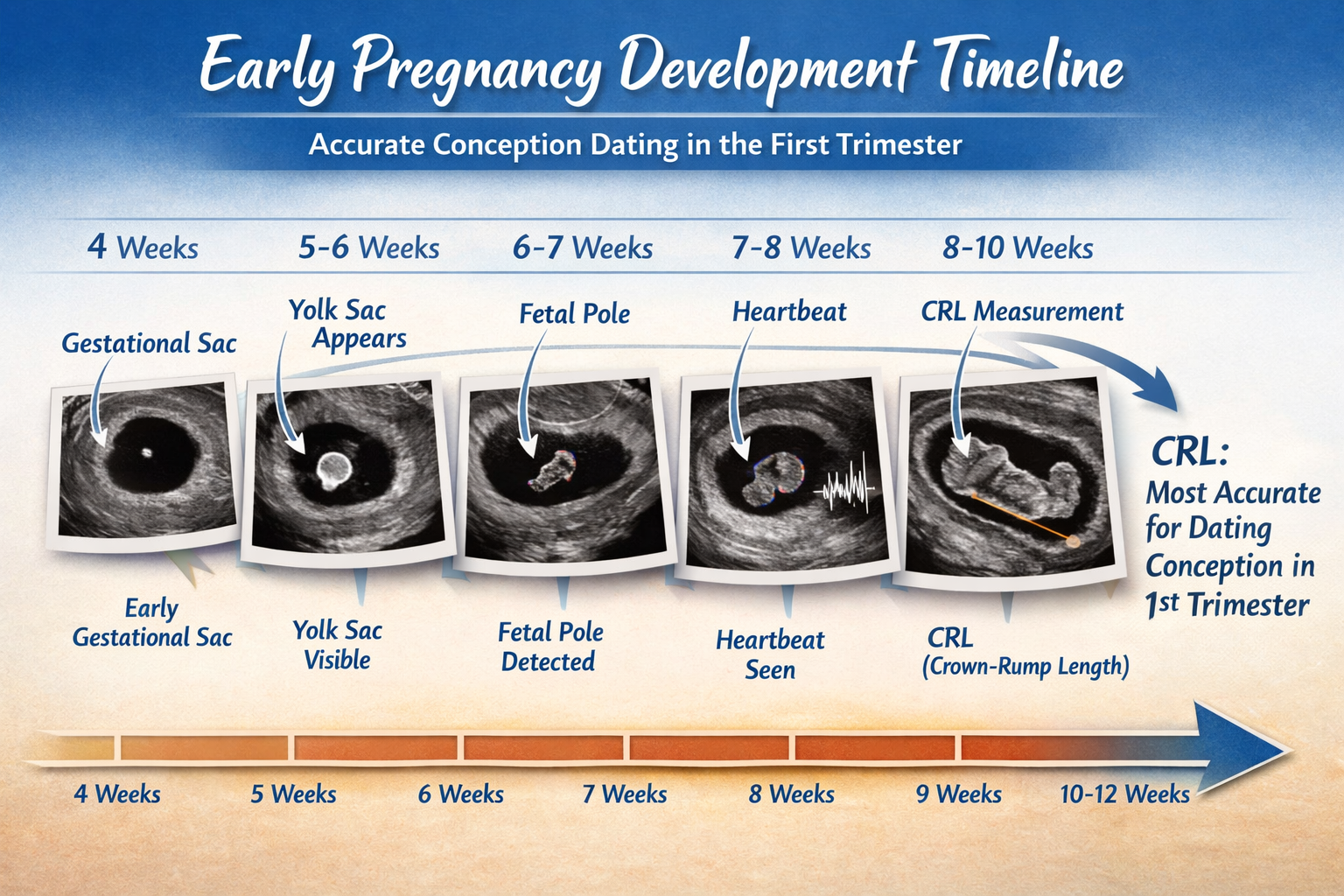
A first-trimester ultrasound is the gold standard for accurately determining gestational age and, by extension, estimating the conception date. This is because embryonic and fetal growth is remarkably uniform during these early weeks, making measurements highly reliable. The key measurements used include the Gestational Sac Diameter (GSD), Yolk Sac presence, and most importantly, the Crown-Rump Length (CRL).
- Gestational Sac Diameter (GSD): This is the earliest structure visible, usually around 5 weeks of gestation. The sac's size can give an initial, though less precise, estimate of gestational age. It's often measured when the embryo is too small to be seen.
- Yolk Sac: A round structure within the gestational sac, typically seen around 5.5 to 6 weeks. Its presence confirms an intrauterine pregnancy and indicates healthy early development, but it's not used for precise dating.
- Crown-Rump Length (CRL): This is the measurement from the top of the embryo's head (crown) to its bottom (rump). The CRL is the most accurate parameter for dating a pregnancy between 6 and 14 weeks. During this period, the variation in CRL measurements from actual gestational age is usually within ±5-7 days. For example, if your CRL measurement indicates a gestational age of 8 weeks and 2 days, your conception date is estimated to be 6 weeks and 2 days prior to the ultrasound date. This provides a more precise foundation for your due date than relying solely on your Last Menstrual Period (LMP). For a general estimate, you can use a conception date calculator to understand the typical timing.
Why CRL is So Accurate
The remarkable accuracy of CRL measurements stems from the fact that all embryos, regardless of genetic background or future size, grow at a very predictable rate during the first trimester. Variations in fetal growth become more pronounced in later trimesters, making early measurements critical for establishing a definitive due date.
What Measurements are Used to Estimate Conception Date in Later Trimesters?
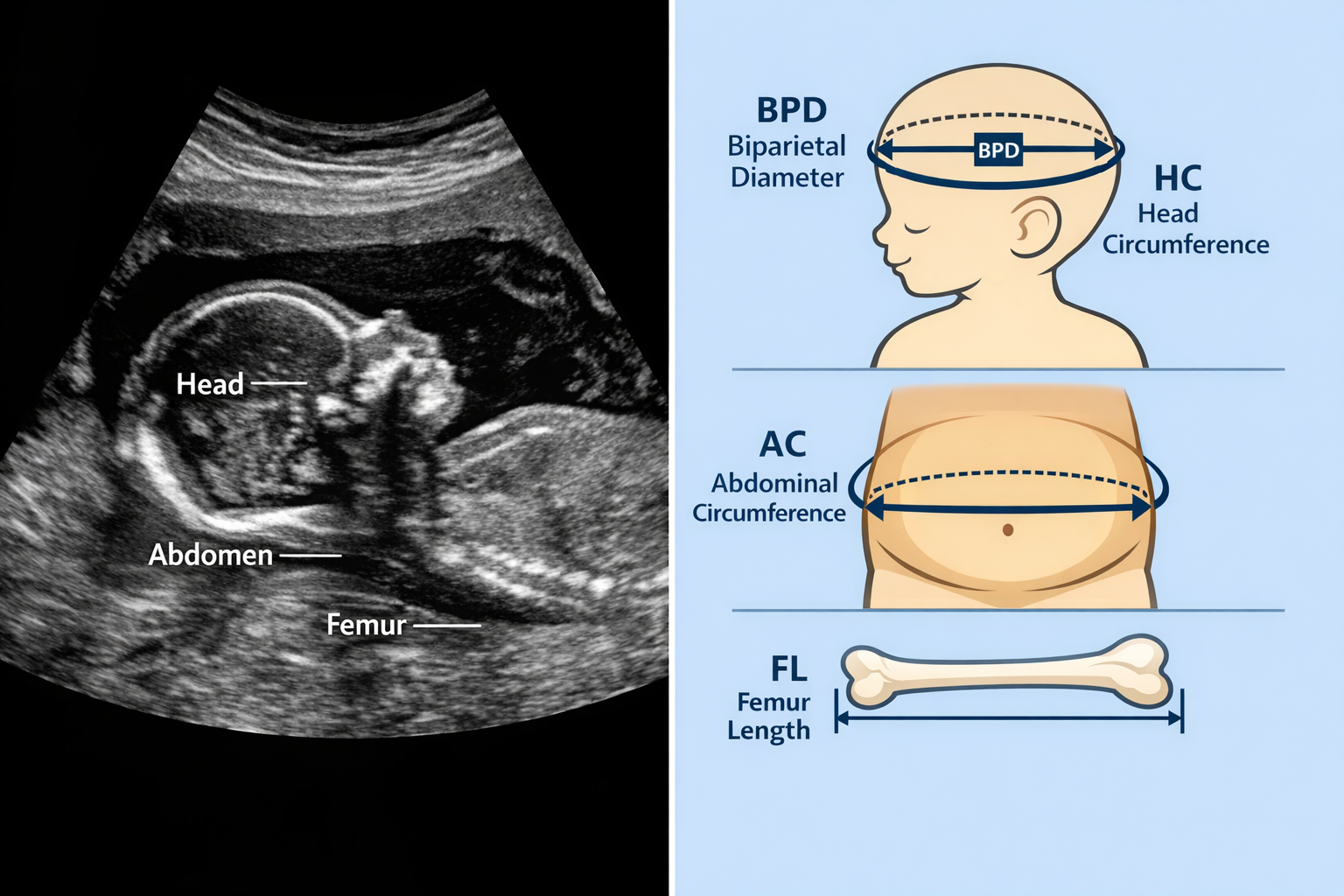
While the first-trimester Crown-Rump Length (CRL) offers the most accurate estimation of conception date, later trimester ultrasounds utilize various fetal biometrics to assess gestational age when an early scan wasn't performed or if there's a need to confirm growth. These measurements include Biparietal Diameter (BPD), Head Circumference (HC), Abdominal Circumference (AC), and Femur Length (FL). However, it's important to note that their accuracy for dating decreases significantly after the first trimester.
- Biparietal Diameter (BPD): This measures the widest part of the fetal head from one parietal bone to the other. It's measurable from about 12 weeks onward.
- Head Circumference (HC): The circumference measurement around the fetal head. Often used in conjunction with BPD.
- Abdominal Circumference (AC): Measures the circumference of the fetal abdomen at the level of the liver. This measurement is particularly sensitive to fetal growth and nutrition.
- Femur Length (FL): Measures the length of the longest bone in the body, the femur (thigh bone).
Accuracy Considerations for Later Trimester Scans
While these measurements are invaluable for monitoring fetal growth and development, their ability to precisely date a pregnancy diminishes as gestation progresses. By the second trimester (14-28 weeks), the dating accuracy can be ±7-14 days, and in the third trimester (28+ weeks), it can be ±21 days or more (American College of Obstetricians and Gynecologists, 2017). This decreased precision is due to increasing variability in fetal growth rates influenced by genetics, maternal health, and other factors. Therefore, if there's a discrepancy between an early ultrasound date and a later one, the first-trimester estimate is almost always preferred for determining the conception date and due date. Understanding this variability is also important when looking into how accurate pregnancy calculators are.
| Trimester | Key Measurement(s) | Dating Accuracy | Primary Use |
|---|---|---|---|
| First | Gestational Sac, CRL | ±5-7 days | Most accurate for dating, confirming viability |
| Second | BPD, HC, AC, FL | ±7-14 days | Growth monitoring, anomaly screening |
| Third | BPD, HC, AC, FL | ±21 days or more | Growth monitoring, position, fluid assessment |
How Do Ultrasound Dates Compare to LMP Dates for Conception?
Ultrasound dating often provides a more reliable estimate of the conception date and subsequently, the due date, especially when compared to relying solely on the Last Menstrual Period (LMP). While the LMP method assumes a regular 28-day cycle with ovulation occurring exactly on day 14, many women have irregular cycles or cannot recall their LMP precisely. In such cases, the ultrasound provides an objective measurement of fetal size, allowing for a more accurate calculation of how ultrasound estimates conception date.
- LMP Method: Traditionally, gestational age is calculated from the first day of your last menstrual period. Conception is then estimated to have occurred approximately two weeks after this date. This method works well for women with regular cycles who remember their LMP. You can use a due date calculator based on LMP for an initial estimate.
- Ultrasound Method: As discussed, ultrasound measures embryonic or fetal biometrics to determine gestational age. For example, if your LMP suggests you are 10 weeks pregnant, but a first-trimester ultrasound measures the CRL at a size consistent with 8 weeks, the ultrasound date (and thus, the adjusted conception date) will typically supersede the LMP date. This adjustment is crucial for ensuring accurate medical care and planning.
- When Ultrasound Takes Precedence:
- Irregular Cycles: If a woman has irregular menstrual cycles, ovulation might occur much earlier or later than day 14, making LMP dating highly inaccurate.
- Uncertain LMP: If the woman is unsure of her LMP or conceives shortly after stopping hormonal birth control, ultrasound provides the best estimate.
- Significant Discrepancy: If the difference between the LMP-derived due date and the first-trimester ultrasound-derived due date is more than 5-7 days, the ultrasound date is generally used. For second-trimester scans, if the discrepancy is more than 7-10 days, the ultrasound date might be adopted (ACOG, 2017).
Understanding these comparisons is key to appreciating the precision ultrasound brings to pregnancy dating. For those tracking fertility, tools like a fertile window calculator can help understand potential conception timing.
What Factors Can Influence the Accuracy of Ultrasound Conception Dating?
While ultrasound is highly effective for estimating conception date, several factors can influence its accuracy. The most significant factor is the timing of the ultrasound scan; earlier scans are inherently more accurate. Other influences include the skill of the sonographer, the quality of the ultrasound equipment, and the presence of multiple gestations.
- Timing of the Scan: This is paramount. A first-trimester ultrasound (ideally between 7 and 10 weeks of gestation) using Crown-Rump Length (CRL) is considered the most accurate, with a margin of error of about ±5-7 days (Society of Obstetricians and Gynaecologists of Canada, 2010). As the pregnancy progresses, individual fetal growth rates begin to vary more widely, leading to less precise dating estimates.
- Sonographer Skill and Experience: The expertise of the person performing the ultrasound (sonographer or physician) directly impacts the precision of measurements. A skilled professional will obtain accurate views and measurements, minimizing errors.
- Equipment Quality: High-resolution ultrasound equipment provides clearer images, allowing for more precise measurements of tiny embryonic or fetal structures.
- Maternal Factors: While less common, certain maternal conditions (e.g., uterine fibroids or obesity) can sometimes make it more challenging to obtain clear images and accurate measurements, though modern ultrasound technology can often mitigate these issues.
- Multiple Gestations: In twin or triplet pregnancies, variations in the growth of individual fetuses can make dating slightly more complex, though typically the largest or most clearly visible fetus's measurements are used for dating.
Decision Rule for Dating
When a patient has a known LMP, and an early first-trimester ultrasound is performed, the ultrasound-derived due date will generally replace the LMP-derived date if the discrepancy is greater than 5-7 days. If the ultrasound is performed later in the first trimester (after 14 weeks) or in the second trimester, a larger discrepancy (e.g., >7-10 days) might be needed for the ultrasound to supersede the LMP date. The final decision on the estimated conception and due date is always made by your healthcare provider, taking all available information into account.
What Are the Benefits of Accurate Conception Dating by Ultrasound?
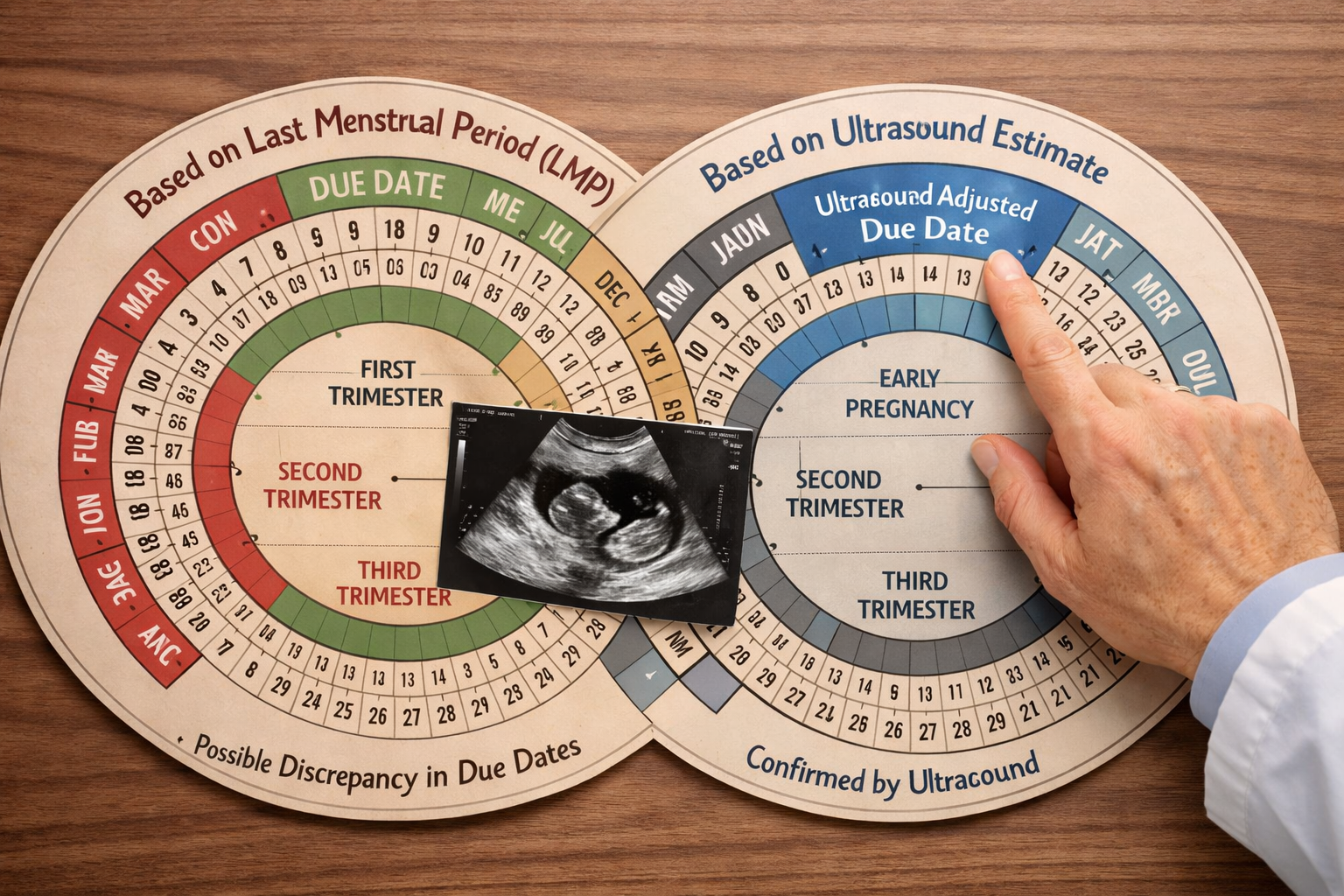
Accurate conception dating via ultrasound provides numerous benefits for both expectant parents and healthcare providers, ensuring optimal prenatal care and management throughout the pregnancy journey in 2026. Knowing precisely how ultrasound estimates conception date allows for better timing of critical screenings, informed decisions regarding interventions, and reduced anxiety for parents.
- Accurate Due Date Calculation: The most obvious benefit is establishing a precise estimated due date. This helps parents prepare for the baby's arrival and allows healthcare providers to monitor for term or post-term pregnancies. You can find more details on how this influences your pregnancy timeline with a pregnancy calendar.
- Optimal Timing for Prenatal Screenings: Many crucial prenatal tests, such as nuchal translucency screening for Down syndrome, serum marker screens, and the glucose tolerance test for gestational diabetes, are time-sensitive. Accurate dating ensures these tests are performed at the correct gestational age for reliable results.
- Monitoring Fetal Growth and Development: A precise baseline gestational age allows for consistent monitoring of fetal growth. If a later ultrasound indicates the baby is significantly larger or smaller than expected for its age, it can signal potential issues like restricted growth or macrosomia, prompting further investigation and intervention.
- Informed Decisions on Labor Induction: If a pregnancy extends beyond the estimated due date, accurate dating helps determine if and when labor induction might be medically appropriate, reducing the risks associated with post-term pregnancy.
- Reduced Anxiety for Parents: For many expectant parents, knowing a more exact timeline can alleviate uncertainty and anxiety, allowing them to better plan and connect with their pregnancy.
- Avoidance of Unnecessary Interventions: Misdating a pregnancy can lead to unnecessary interventions, such as inducing labor too early (which carries risks for the baby) or too late. Accurate dating minimizes these risks.
In essence, accurate dating through ultrasound empowers healthcare providers to deliver the best possible care and empowers parents with reliable information, making the pregnancy journey smoother and safer.
Conclusion
Understanding how ultrasound estimates conception date is fundamental to modern prenatal care. By utilizing precise measurements of embryonic and fetal growth, especially the Crown-Rump Length in the first trimester, ultrasound provides the most reliable method for dating a pregnancy. This accuracy is paramount for calculating an estimated due date, ensuring timely prenatal screenings, monitoring fetal development, and making informed decisions throughout the pregnancy journey. While other methods like LMP calculations offer initial estimates, ultrasound often provides the definitive timeline, particularly for those with irregular cycles or uncertain dates. Always consult with your healthcare provider to interpret your ultrasound results and determine the most accurate conception date and due date for your pregnancy in 2026.
Related Reading
- Conception Date Calculator – Find When You Conceived or Your Due Date
- How Accurate Are Pregnancy Calculators? Your 2026 Guide
- Fertile Window Calculator | Find Your 6-Day Conception Window
FAQ

Q1: Is ultrasound the most accurate way to determine conception date?
A1: Yes, a first-trimester ultrasound, especially between 7 and 10 weeks using Crown-Rump Length (CRL), is considered the most accurate method for determining gestational age and estimating conception date.
Q2: How far off can an ultrasound be in dating a pregnancy?
A2: In the first trimester, ultrasound dating is typically accurate within ±5-7 days. This margin of error increases in later trimesters.
Q3: What is the difference between gestational age and embryonic age?
A3: Gestational age is calculated from the first day of the Last Menstrual Period (LMP). Embryonic or fetal age (true age) is calculated from the date of conception, typically about two weeks after the LMP.
Q4: Will my due date change after an ultrasound?
A4: Your due date may change if the first-trimester ultrasound dating significantly differs (usually by more than 5-7 days) from the date estimated by your Last Menstrual Period (LMP).
Q5: Can an ultrasound tell me the exact day I conceived?
A5: While highly accurate, an ultrasound provides an estimated conception date, not an exact date. It's usually a window of a few days due to the inherent variability in measurements.
Q6: Why is an early ultrasound more accurate for dating?
A6: During the first trimester, embryonic growth is very consistent and predictable across all pregnancies, making measurements like Crown-Rump Length (CRL) highly reliable for dating.
Q7: What if I didn't have an early ultrasound?
A7: If an early ultrasound wasn't performed, later trimester ultrasounds can still estimate gestational age using various fetal measurements, but with less precision for dating than a first-trimester scan.
Q8: Does an irregular cycle affect ultrasound dating accuracy?
A8: No, an irregular cycle makes LMP dating inaccurate, which is precisely why an ultrasound becomes even more crucial and reliable for accurate dating in such cases.
Q9: Is it possible for an ultrasound to be wrong about the conception date?
A9: While highly accurate, errors can occur due to factors like poor image quality, an uncooperative fetus, or less experienced sonographers, but these are generally rare with standard practices.
Sources
- American College of Obstetricians and Gynecologists (ACOG). (2017). Methods for Estimating the Due Date. Committee Opinion No. 700.
- Society of Obstetricians and Gynaecologists of Canada (SOGC). (2010). Determination of Gestational Age by Ultrasound. Clinical Practice Guideline No. 248.