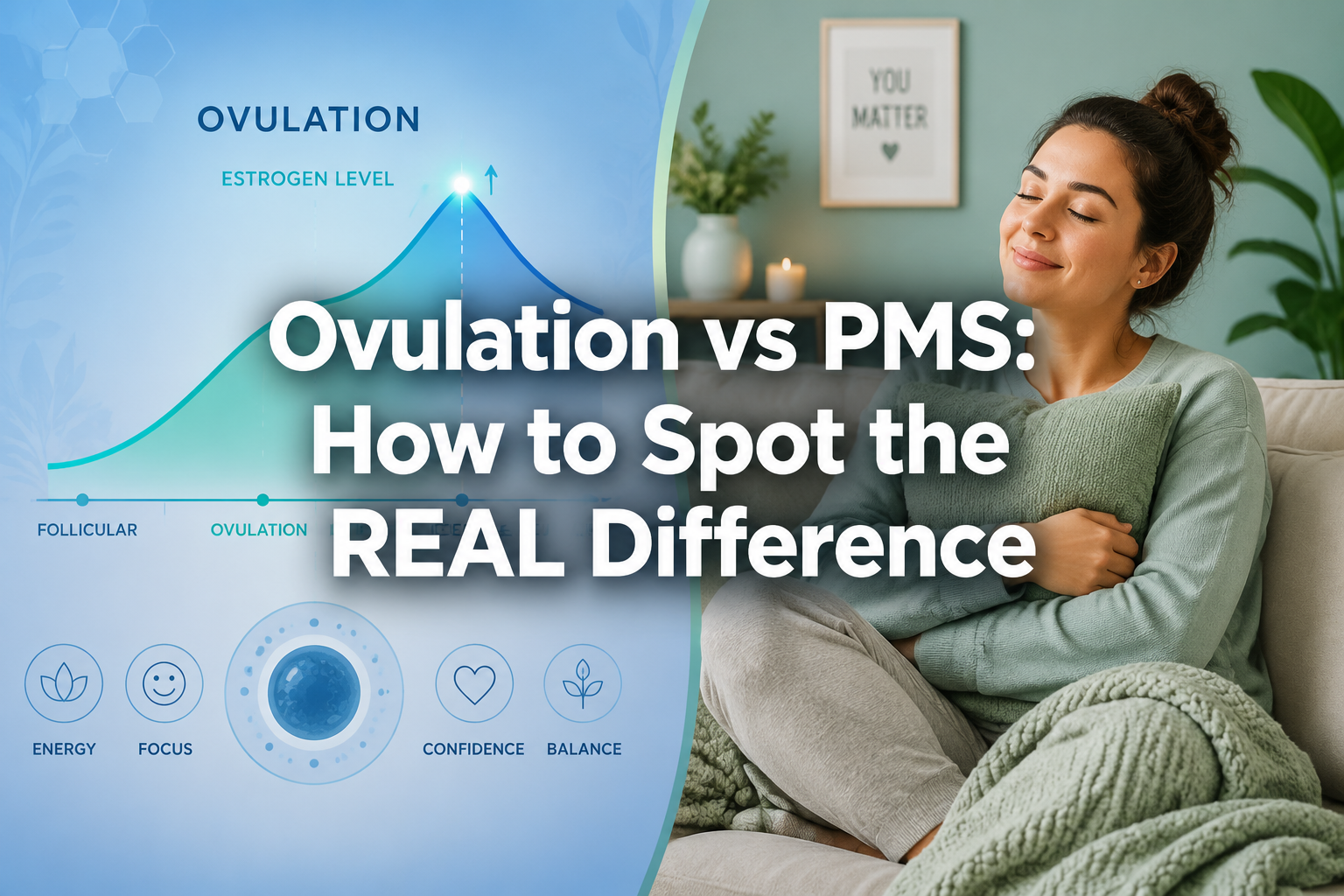
Quick Answer: Distinguishing between ovulation symptoms and PMS primarily involves noting the timing in your menstrual cycle and the specific characteristics of the symptoms. Ovulation occurs mid-cycle, usually around day 14, and its symptoms indicate fertility, such as clear, stretchy cervical mucus and a rise in basal body temperature. PMS, conversely, arises in the week or two before your period and typically involves a broader range of emotional and physical discomforts, like bloating, mood swings, and breast tenderness, that subside once menstruation begins.
Key Takeaways
- Timing is Crucial: Ovulation symptoms manifest mid-cycle (around day 14 in a 28-day cycle), marking the fertile window. PMS symptoms appear in the luteal phase, the week or two before your period.
- Purpose of Symptoms: Ovulation signs are cues of impending or active fertility, while PMS symptoms are reactions to hormonal shifts after ovulation and before menstruation.
- Key Ovulation Markers: Look for clear, stretchy cervical mucus (egg white consistency), a slight increase in basal body temperature (BBT), and sometimes mild, one-sided pelvic pain (mittelschmerz).
- Common PMS Indicators: Expect symptoms such as mood swings, irritability, bloating, breast tenderness, headaches, and food cravings.
- Symptom Intensity & Duration: Ovulation symptoms are often subtle and short-lived (1-3 days). PMS symptoms can be more pronounced and last several days up to two weeks.
- Tracking Helps: Consistent tracking of your cycle, BBT, and cervical mucus can significantly help identify patterns and differentiate between these two phases.
- When in Doubt: Consult a healthcare provider if symptoms are severe, disruptive, or if you are trying to conceive and need clarity on your cycle.
Understanding Ovulation Symptoms: Your Body's Fertile Signals
Ovulation symptoms are the body's natural indicators that an egg is being released from the ovary, signifying the most fertile period of the menstrual cycle. These signs typically occur around the middle of your cycle, approximately 12-16 days before your next period is expected. Recognizing these symptoms is crucial for those trying to conceive or seeking to understand their reproductive health.
What are the distinct signs of ovulation?
The most reliable signs of ovulation are physiological changes that directly reflect the hormonal shifts necessary for egg release. These typically include changes in cervical mucus, a shift in basal body temperature, and sometimes mild abdominal discomfort.
- Cervical Mucus Changes: As ovulation approaches, estrogen levels rise, causing the cervical mucus to become clear, slippery, and stretchy, resembling raw egg whites. This type of mucus is fertile-quality and helps sperm travel to the egg. After ovulation, progesterone causes the mucus to become thicker and less noticeable. You can learn more about this by tracking your Signs Ovulation Is Over Day by Day.
- Basal Body Temperature (BBT) Shift: Your BBT, which is your lowest resting body temperature, slightly drops just before ovulation and then rises by about 0.5 to 1.0 degree Fahrenheit after ovulation. This sustained temperature increase, caused by progesterone release, confirms that ovulation has occurred. Consistent daily tracking using a BBT Calculator & Chart Tool is essential for accuracy.
- Mittelschmerz (Ovulation Pain): Some individuals experience a mild, one-sided pelvic ache or cramp during ovulation. This pain can last anywhere from a few minutes to a few hours and is thought to be caused by the follicle rupturing to release the egg or the irritation from the fluid released with the egg.
- Increased Libido: Many report a noticeable increase in sex drive around their fertile window, a natural biological nudge towards conception.
- Light Spotting: A small percentage of people might experience very light spotting or discharge, often pinkish or brownish, around ovulation due to hormonal fluctuations. This is usually not a cause for concern.
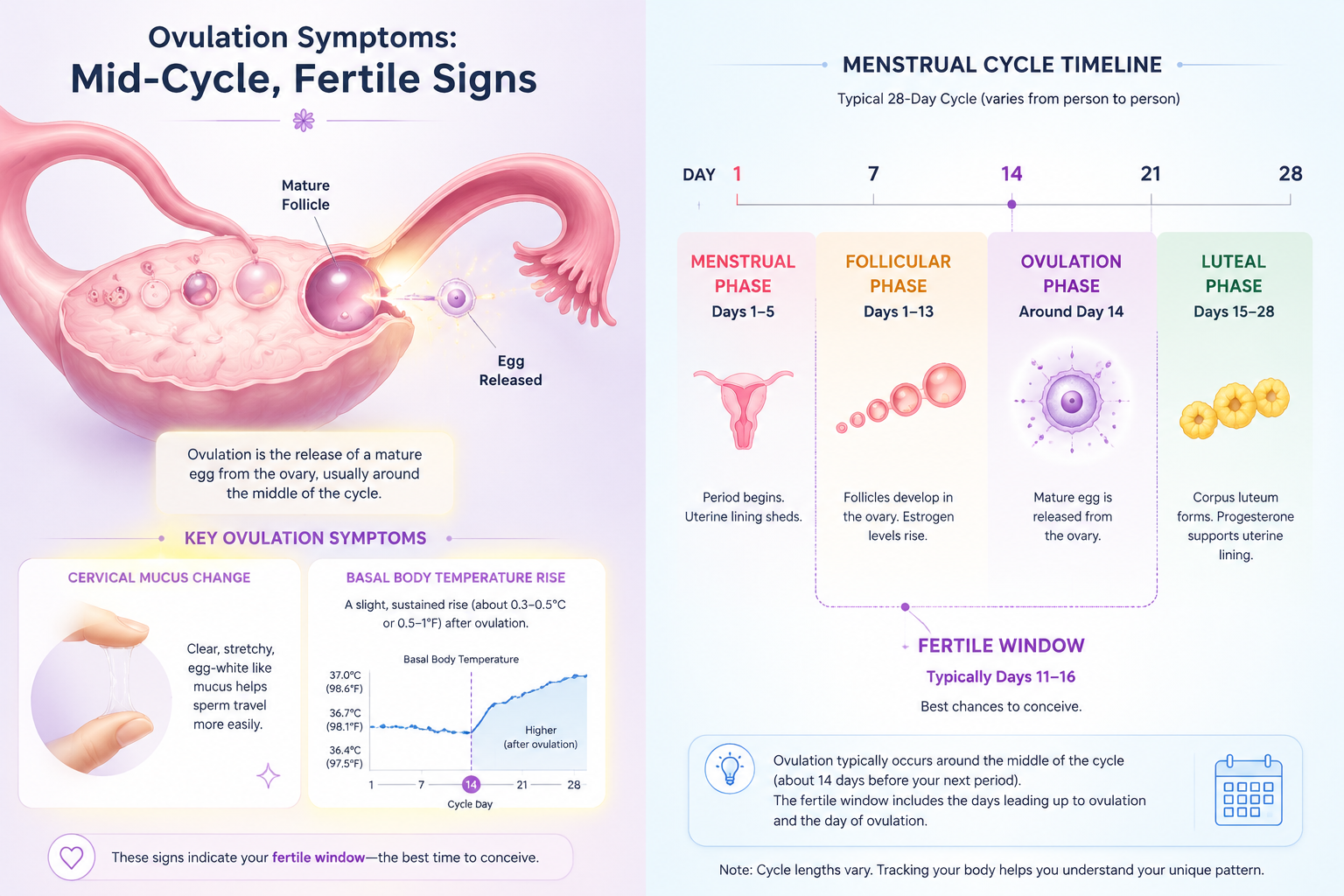
Decision Rule: If you are monitoring for fertility, prioritize tracking cervical mucus and basal body temperature as they are the most indicative physiological markers of impending or past ovulation. Using an Ovulation Calculator can help predict your fertile window based on your cycle length.
Decoding PMS Symptoms: Pre-Menstrual Signals
Premenstrual Syndrome (PMS) refers to a collection of physical and emotional symptoms that occur in the one to two weeks leading up to menstruation. These symptoms typically disappear shortly after the period begins. Unlike ovulation symptoms, which signal fertility, PMS symptoms are a reaction to the hormonal shifts (specifically the drop in estrogen and progesterone) that happen after ovulation if pregnancy does not occur.
How do PMS symptoms manifest?
PMS encompasses a wide spectrum of symptoms, ranging from mild to severe, and they vary significantly from person to person. These symptoms are primarily related to changes in hormone levels during the luteal phase of the menstrual cycle.
- Mood Swings and Irritability: Emotional volatility, including feelings of sadness, anxiety, anger, or heightened sensitivity, are hallmarks of PMS.
- Bloating and Weight Gain: Many individuals experience abdominal bloating and a temporary increase in weight due to fluid retention before their period.
- Breast Tenderness: Breasts may feel swollen, tender, or painful to the touch.
- Headaches: Tension headaches or migraines can become more frequent in the days leading up to menstruation.
- Food Cravings: An increased desire for specific foods, especially sugary or salty items, is common.
- Fatigue: Feelings of tiredness or a lack of energy, even after adequate sleep, can occur.
- Sleep Disturbances: Difficulty falling asleep or staying asleep (insomnia) can be part of PMS.
- Acne Flare-ups: Hormonal fluctuations can trigger breakouts, particularly on the face, chest, or back.
Common Mistake: Confusing early pregnancy symptoms with PMS. While some symptoms overlap (like breast tenderness or fatigue), early pregnancy symptoms, such as Implantation Symptoms Day by Day, will persist or intensify, whereas PMS symptoms resolve with the onset of menstruation. If you're unsure, a Pregnancy Symptoms Checker might help, but a pregnancy test is definitive.
Ovulation Symptoms vs PMS: How to Tell the Difference Clearly
The key to distinguishing ovulation symptoms from PMS lies in their timing within the menstrual cycle, their typical characteristics, and their underlying hormonal causes. While some symptoms might seem similar on the surface, a closer look at these factors reveals clear differentiators.
Timing in Your Cycle
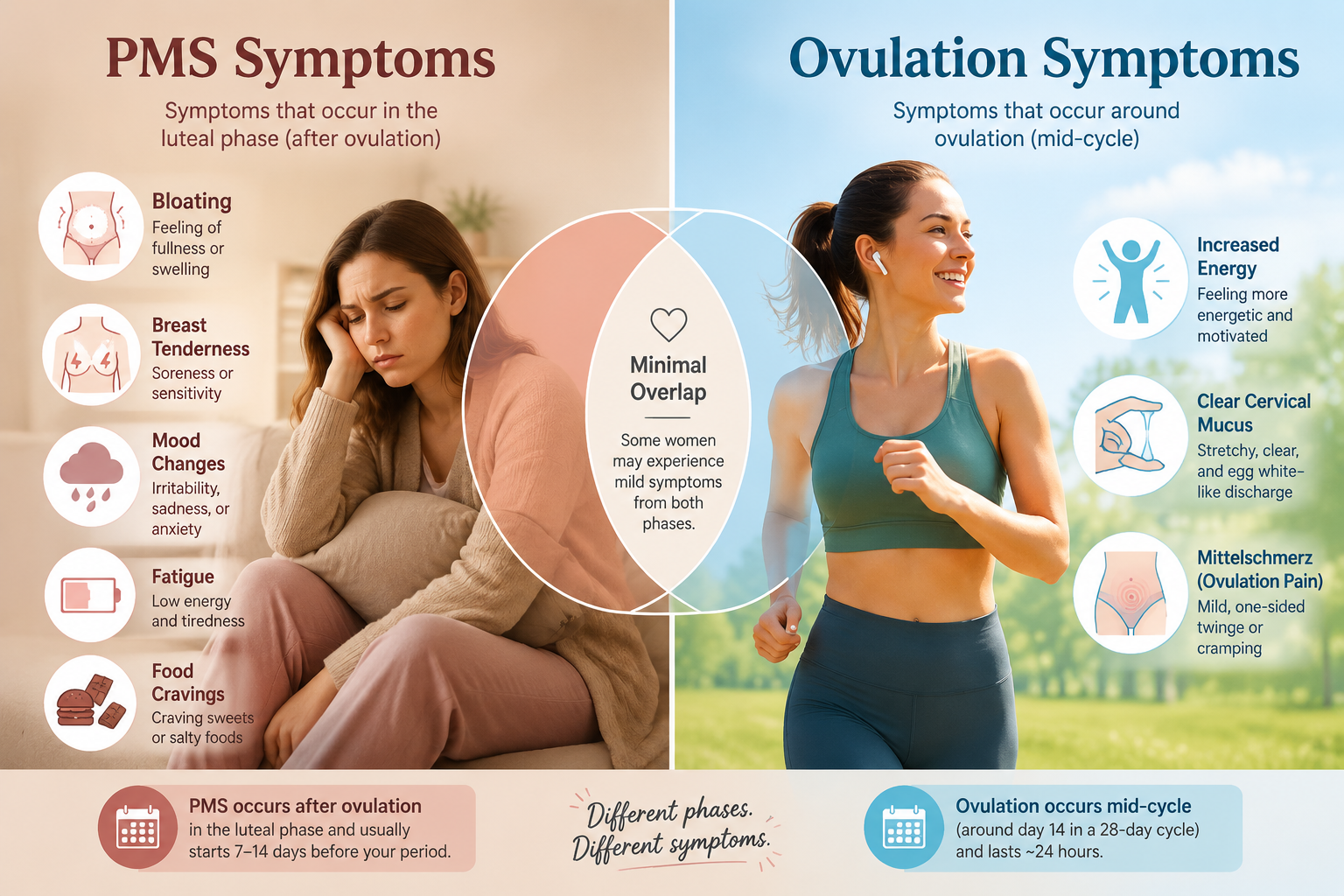
- Ovulation: Occurs mid-cycle. In a typical 28-day cycle, ovulation happens around day 14. Its symptoms, therefore, fall around this time. This is your fertile window.
- PMS: Occurs in the luteal phase, which is the second half of your cycle, specifically in the 7-14 days leading up to your period. Symptoms cease once your period starts.
Nature of the Symptoms
Consider the primary purpose and sensation of each symptom.
| Symptom Category | Ovulation Symptoms | PMS Symptoms |
|---|---|---|
| Timing | Mid-cycle (approx. Days 12-16) | Luteal phase (7-14 days before period) |
| Cervical Mucus | Clear, stretchy, egg-white consistency (fertile) | Sticky, thick, or dry (non-fertile) |
| BBT | Slight drop, then sustained rise (post-ovulation) | No specific pattern, generally stable or fluctuating |
| Pain | Mild, one-sided pelvic pain (mittelschmerz) | Generalized cramps, headaches, body aches, breast tenderness |
| Mood | Often positive, increased libido | Irritability, anxiety, sadness, mood swings |
| Bloating | Minimal to none | Common, noticeable abdominal distension |
| Energy Levels | Often increased, especially around fertile window | Fatigue, lethargy, decreased energy |
| Duration | Short-lived (1-3 days) | Can last 1-2 weeks |
Underlying Hormonal Changes
- Ovulation: Driven by a surge in Luteinizing Hormone (LH) and high estrogen levels, leading to egg release. The subsequent progesterone rise is responsible for the BBT increase.
- PMS: Caused by the sharp drop in estrogen and progesterone levels after ovulation if conception doesn't occur. These hormonal fluctuations impact neurotransmitters in the brain, contributing to emotional and physical symptoms.
Quick Example: If you experience a burst of energy and notice clear, stretchy discharge around day 14 of your cycle, you're likely ovulating. If, a week later, you feel bloated, irritable, and have tender breasts, these are classic PMS signs signaling your period is approaching.
Tracking Your Cycle to Identify Ovulation vs PMS
Accurate cycle tracking is the most effective way to discern between ovulation symptoms and PMS. By consistently monitoring your body's signals, you can establish patterns unique to your cycle, making differentiation much easier in 2026.
Essential Tracking Methods
- Basal Body Temperature (BBT) Charting: Take your temperature every morning before getting out of bed. A sustained rise confirms ovulation has occurred. This helps pinpoint the luteal phase, when PMS begins. A BBT Calculator & Chart Tool can streamline this process.
- Cervical Mucus Monitoring: Observe and record changes in your cervical mucus daily. Fertile, egg-white consistency indicates ovulation.
- Ovulation Predictor Kits (OPKs): These at-home tests detect the LH surge that precedes ovulation, providing a clear indication of your most fertile days.
- Calendar Method/Cycle App: Track your period start dates to estimate your cycle length and typical ovulation window. Many apps also allow you to log symptoms, helping you see patterns over time. An AI Ovulation Predictor can offer advanced insights.
- Symptom Journaling: Keep a detailed record of any physical or emotional symptoms you experience daily, noting their intensity and duration. This will help you see when specific symptoms typically appear in relation to your period or ovulation.
Self-Contained Passage: For individuals aiming to conceive, knowing how to track ovulation accurately is paramount. The Fertile Window Calculator can help identify the prime days for intercourse by factoring in sperm viability (up to 5 days) and egg viability (12-24 hours). Combining this with physical symptom tracking provides a comprehensive approach to maximizing conception chances.
When to Seek Professional Advice
While understanding your body's signals is empowering, there are times when it's best to consult a healthcare provider. Self-monitoring helps, but medical expertise provides clarity and addresses potential underlying issues.
When to contact a doctor:
- Severe or Debilitating Symptoms: If your ovulation pain (mittelschmerz) or PMS symptoms are so intense they disrupt your daily life, work, or relationships.
- Irregular Cycles: If your menstrual cycles are highly irregular, extremely long (over 35 days), or very short (under 21 days), making it difficult to pinpoint ovulation or predict your period. This could indicate an underlying condition like PCOS.
- Difficulty Conceiving: If you've been trying to get pregnant for over a year (or six months if over 35) and are having trouble identifying your fertile window, a doctor can offer fertility assessments and guidance.
- Concerns About PMS: If you suspect you might have Premenstrual Dysphoric Disorder (PMDD), a more severe form of PMS, which can cause significant emotional distress, including depression and anxiety.
- Unusual Bleeding: If you experience heavy or prolonged spotting outside of your expected period or typical ovulation spotting.
- New or Worsening Symptoms: Any new or significantly worsening symptoms, especially if they appear suddenly or are accompanied by other alarming signs.
Constraint for Action: For those actively trying to conceive, tracking your cycle and knowing your fertile window is critical, but if you consistently struggle to identify ovulation or experience unusual symptoms, professional guidance is important for both peace of mind and effective family planning. Utilizing resources like "How to Track Ovulation at Home" - https://easyovulationcalculator.com/blog/how-to-track-ovulation-at-home-complete-beginner-s-guide can further assist in initial tracking efforts.
Conclusion
Understanding the subtle yet significant differences between ovulation symptoms and PMS is a powerful step towards greater body literacy and reproductive health in 2026. By paying close attention to the timing, nature, and intensity of your symptoms, you can accurately decipher your body's messages. Ovulation signals a window of fertility, characterized by specific mucus changes and a BBT rise, while PMS marks the hormonal shifts preceding menstruation, manifesting as a broader range of physical and emotional discomforts. Consistent tracking through methods like BBT charting, cervical mucus observation, and using ovulation predictor kits can demystify your cycle. If symptoms are severe, cycles are irregular, or conception is challenging, consulting a healthcare professional is always the best next step to ensure optimal health and accurate guidance.
Related Reading
- Late Ovulation Symptoms Explained: Your Guide to Delayed
- Early Pregnancy Symptoms Before Missed Period (2026 Guide)
FAQ
Q1: Can I have both ovulation symptoms and PMS in the same cycle? A1: Yes, absolutely. Ovulation symptoms occur mid-cycle, marking your fertile window, while PMS symptoms appear in the 1-2 weeks after ovulation and before your period.
Q2: Is it possible to confuse ovulation pain (mittelschmerz) with period cramps? A2: Yes, they can both cause pelvic discomfort. However, mittelschmerz is typically a sharp, one-sided pain occurring mid-cycle, while period cramps are usually generalized lower abdominal pain that starts just before or during menstruation.
Q3: Do all women experience noticeable ovulation symptoms? A3: No, not everyone experiences distinct ovulation symptoms. Some women might have very subtle signs, while others might not notice any at all. Tracking methods like BBT or OPKs can confirm ovulation even without obvious symptoms.
Q4: Can PMS symptoms be mistaken for early pregnancy symptoms? A4: Yes, there's a significant overlap. Symptoms like breast tenderness, fatigue, and mood swings can occur in both PMS and early pregnancy. The key differentiator is that PMS symptoms typically disappear with your period, while early pregnancy symptoms persist and may intensify.
Q5: How long do ovulation symptoms typically last? A5: Ovulation symptoms are usually short-lived, lasting 1-3 days around the time the egg is released. The fertile window, however, can be up to 6 days including the days leading up to ovulation.
Q6: What if my PMS symptoms are severe? A6: If your PMS symptoms are severe enough to interfere with your daily life, it's advisable to speak with a healthcare provider. You might have Premenstrual Dysphoric Disorder (PMDD) or another underlying condition that can be managed.
Q7: Can stress affect my ovulation or PMS symptoms? A7: Yes, stress can significantly impact your hormonal balance, potentially affecting the timing of ovulation or exacerbating PMS symptoms. Managing stress can contribute to a more regular cycle and milder symptoms.
Sources
- American College of Obstetricians and Gynecologists (ACOG). (2021). Premenstrual Syndrome (PMS). Retrieved from https://www.acog.org/womens-health/faqs/premenstrual-syndrome-pms
- Mayo Clinic. (2023). Ovulation: Calculating your most fertile time. Retrieved from https://www.mayoclinic.org/healthy-lifestyle/getting-pregnant/in-depth/ovulation/art-20047190
- The American Society for Reproductive Medicine (ASRM). (2012). Optimizing Natural Fertility. Retrieved from https://www.reproductivefacts.org/globalassets/rf/news-and-publications/bookletsfacts-sheets/optimizing_natural_fertility_factsheet.pdf