For many trying to conceive, understanding the intricate timing of the menstrual cycle can feel like navigating a complex calendar. A common concern that arises is whether late ovulation, which shifts the entire fertile window, also delays the critical process of implantation. The answer, in most cases, is a nuanced yes, but not in a way that typically hinders conception if other factors are optimal.
Key Takeaways
- Late ovulation generally delays the timing of implantation because implantation occurs a fixed number of days after ovulation.
- The luteal phase (time between ovulation and menstruation) usually remains consistent regardless of when ovulation occurs.
- Successful implantation primarily depends on a healthy embryo and a receptive uterine lining, not just the day of ovulation.
- An unusually short luteal phase, often associated with very late ovulation, can potentially impact implantation.
- Tracking ovulation accurately is crucial for pinpointing the fertile window and understanding potential implantation dates.
- If you experience consistently late ovulation or have concerns about your luteal phase, consulting a healthcare professional is advisable.
- Tools like ovulation calculators and basal body temperature (BBT) tracking can help manage expectations and identify patterns.
Quick Answer
Yes, late ovulation delays implantation by pushing back the entire timeline for conception. Implantation typically occurs about 6 to 12 days after ovulation, so if ovulation itself is delayed, the subsequent implantation will also be delayed by the same number of days, maintaining the standard post-ovulation window for implantation.
Does Late Ovulation Directly Impact the Implantation Window?
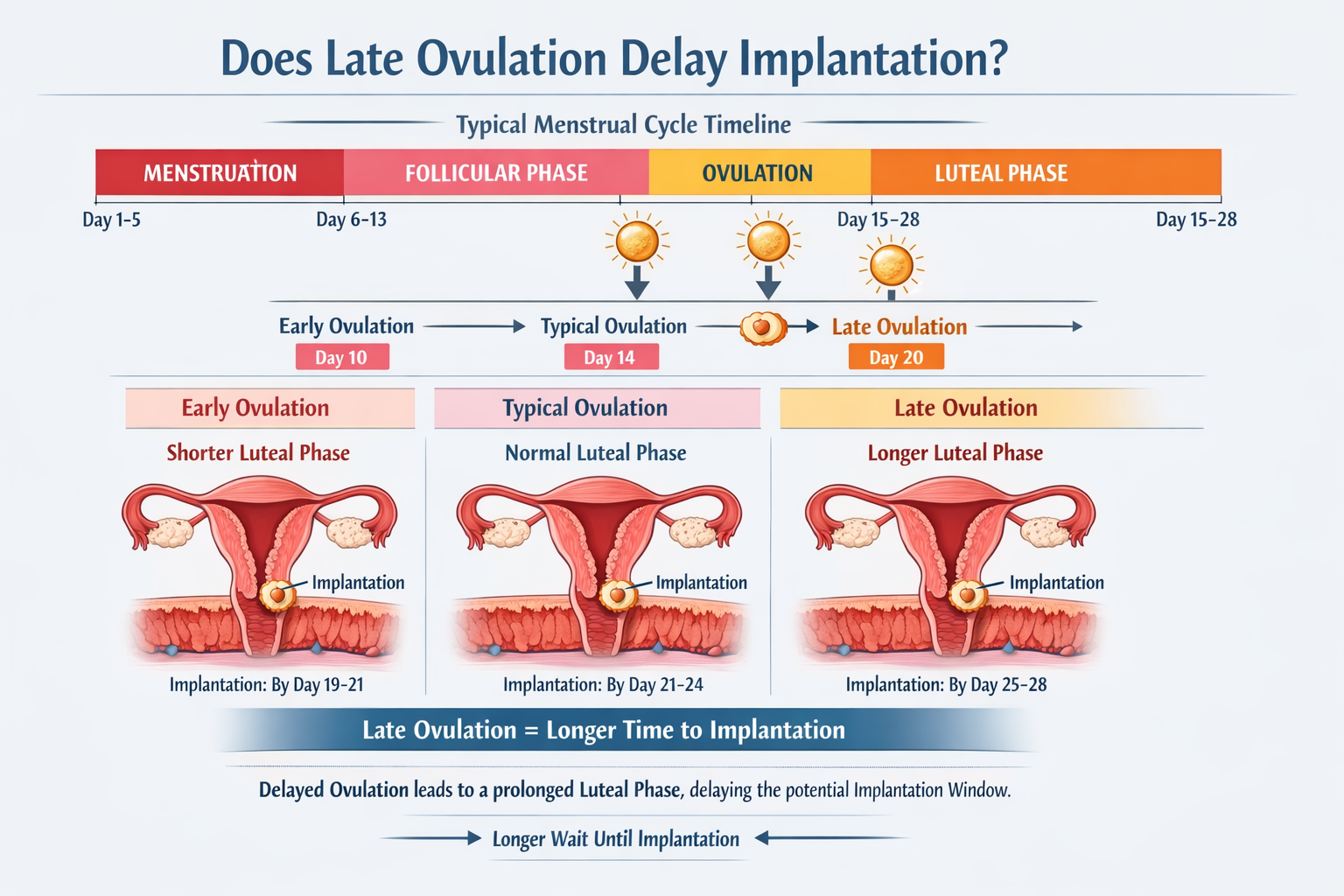
Late ovulation does not change the duration of the implantation window itself, but it absolutely shifts its timing on the calendar. The implantation window, which is the period when the uterine lining is most receptive to an embryo, typically opens about 6 to 10 days after ovulation and fertilization. Therefore, if you ovulate on day 20 instead of the typical day 14, the implantation window will likewise shift to begin around day 26-30 of your cycle. The key factor for successful implantation remains the healthy development of the embryo and the adequate preparation of the uterine lining, which is governed by post-ovulatory hormone levels.
Understanding this shift is crucial for anyone monitoring their cycle for pregnancy. For instance, if you're using an Implantation Calculator, you'll need to input your actual ovulation date, not just assume a mid-cycle day, to get an accurate estimate for when implantation might occur. The luteal phase, the period from ovulation to your next period, generally remains a consistent length (typically 12-16 days) for most individuals, regardless of when ovulation happens. This means a delayed ovulation often results in a longer overall cycle, not necessarily a shortened post-ovulatory phase impacting implantation negatively.
How Does Hormonal Regulation Influence Implantation with Late Ovulation?
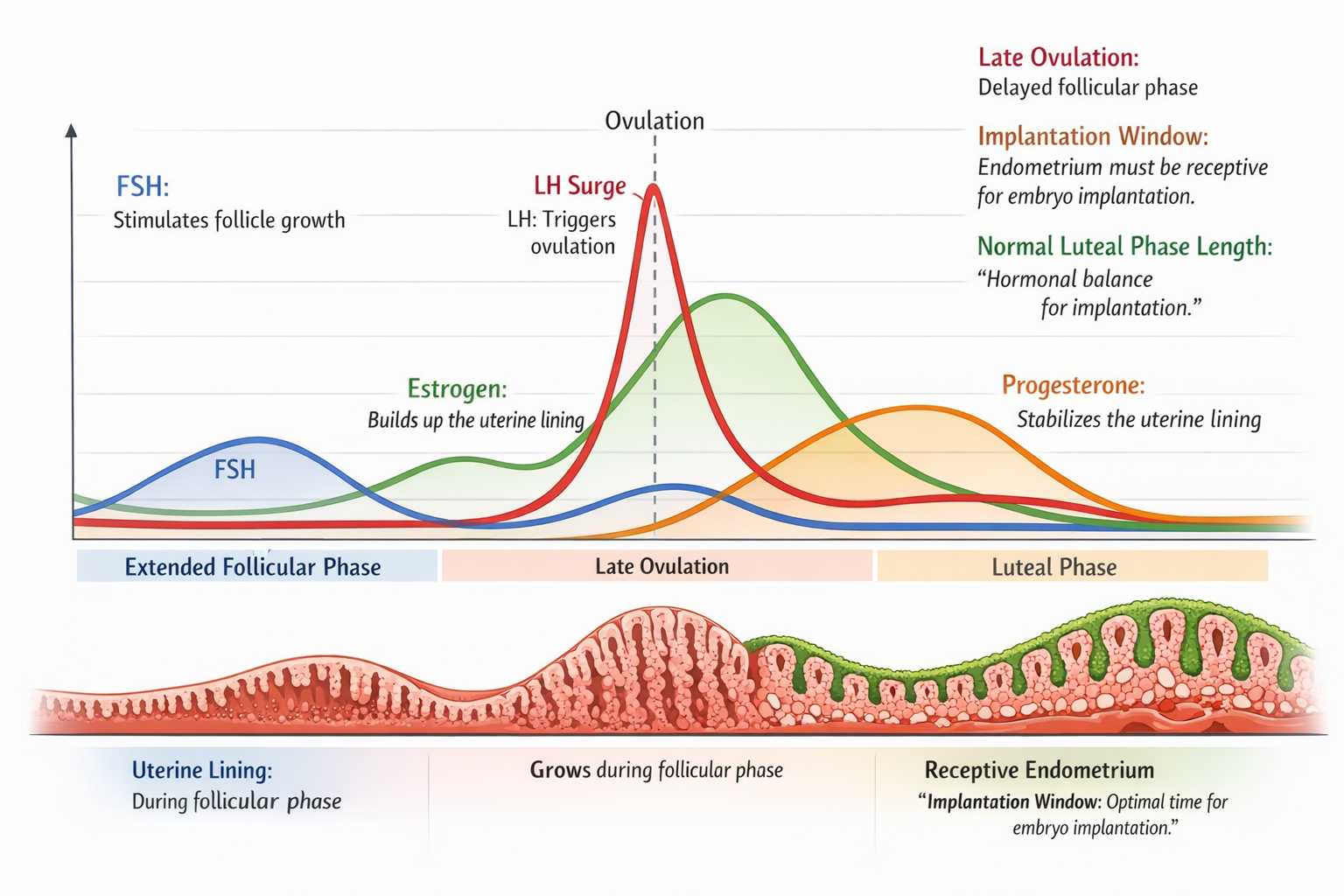
Hormonal regulation plays a critical role in preparing the uterus for implantation, and with late ovulation, these hormonal events simply unfold later in the menstrual cycle. Following ovulation, the ruptured follicle transforms into the corpus luteum, which produces progesterone. This increase in progesterone is vital for thickening the uterine lining (endometrium) and making it receptive to a fertilized egg. If ovulation is delayed, the rise in progesterone also occurs later, thus delaying the window of uterine receptivity.
The critical factor is not when these hormonal changes happen in the cycle, but rather that they occur correctly after ovulation and that the luteal phase is of adequate length. A typical luteal phase lasts 12 to 16 days. If the luteal phase is consistently shorter than 10 days, this could indicate insufficient progesterone production, which might affect the uterine lining's ability to support implantation, regardless of when ovulation happened. Conditions that cause very late ovulation, such as Polycystic Ovary Syndrome (PCOS), can sometimes be associated with luteal phase defects, making professional guidance important. You can use tools like an AI Ovulation Predictor to help identify patterns in your cycle's hormonal shifts.
What is the Typical Timeline for Implantation After Ovulation?
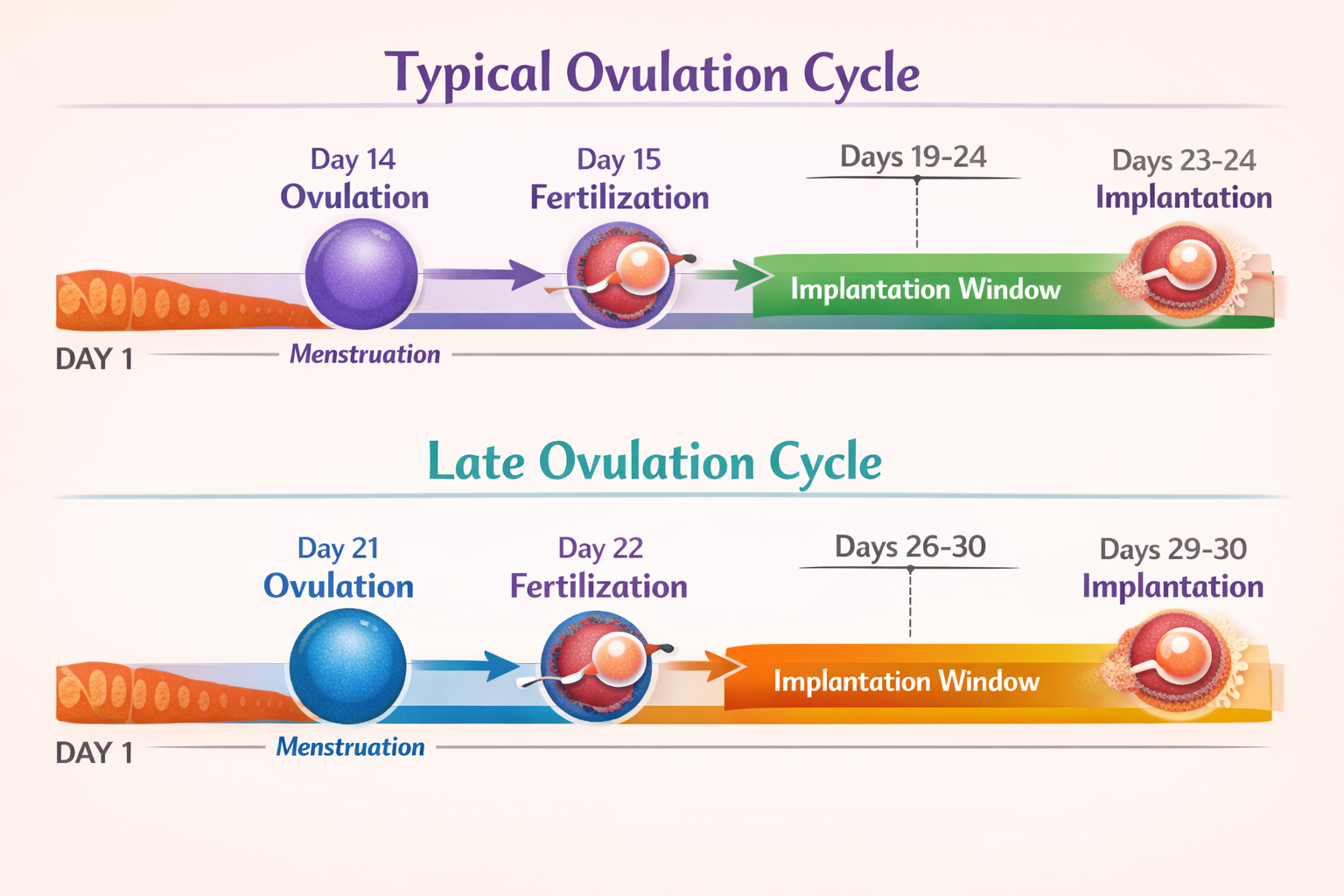
The typical timeline for implantation after ovulation is remarkably consistent, usually occurring between 6 and 12 days post-ovulation, with the most common timeframe being 8 to 10 days. This period is initiated once the fertilized egg (now a blastocyst) travels down the fallopian tube and reaches the uterus, where it then attaches to the uterine wall. Therefore, regardless of whether ovulation happens on cycle day 14, day 20, or even day 30, implantation will still generally follow within that 6-12 day window after the egg was released and fertilized.
For example, if you ovulate on:
- Day 14: Implantation likely occurs between cycle days 20 and 26.
- Day 20: Implantation likely occurs between cycle days 26 and 32.
- Day 30: Implantation likely occurs between cycle days 36 and 42.
This consistent post-ovulation window is why tracking your actual ovulation date is far more important than assuming a "standard" cycle. Understanding this timing can also help in knowing when to expect early pregnancy symptoms, which might begin to appear shortly after successful implantation. Our Implantation Date Calculator can provide a more personalized estimate based on your specific ovulation day.
| Event | Typical Timeline (from Ovulation) |
|---|---|
| Ovulation | Day 0 |
| Fertilization | Day 0-1 |
| Zygote to Blastocyst | Days 1-5 |
| Blastocyst arrives in Uterus | Days 3-5 |
| Implantation Begins | Days 6-7 |
| Implantation Completed | Days 8-12 |
When Should You Seek Professional Advice Regarding Late Ovulation and Implantation Concerns?
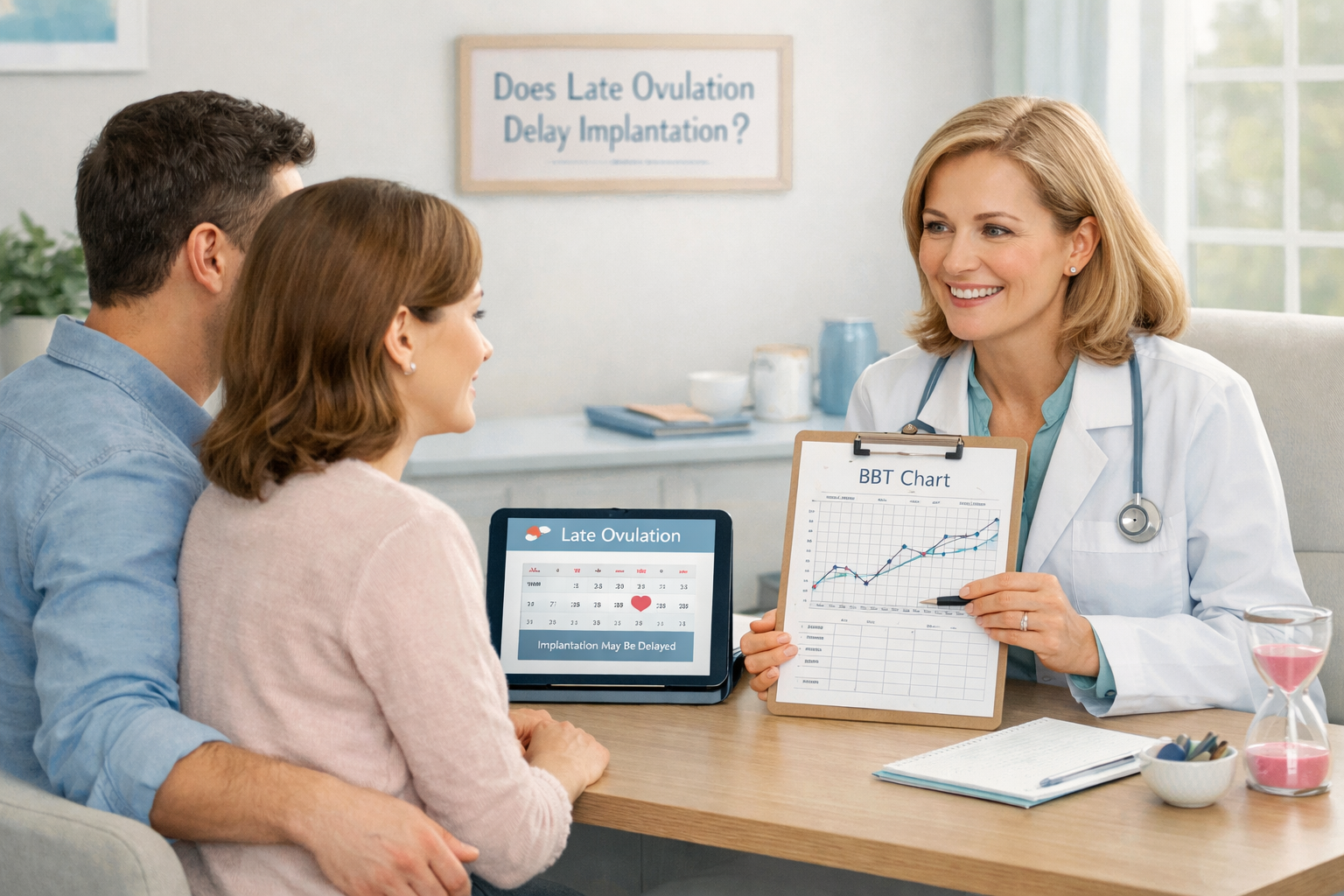
You should seek professional advice regarding late ovulation and potential implantation concerns if you've been trying to conceive for an extended period without success, or if your cycles are highly irregular or unusually long. Specifically, if you have:
- Cycles longer than 35 days: This often indicates consistently late or anovulatory cycles.
- Irregular periods: If your cycle length varies significantly month to month.
- A suspected short luteal phase: If you consistently get your period less than 10 days after ovulation, as indicated by basal body temperature (BBT) tracking or ovulation predictor kits (OPKs).
- Been trying to conceive for 12 months (under 35 years old) or 6 months (35 years or older): These are general guidelines for when to consider a fertility evaluation.
- Symptoms of underlying conditions: Such as excessive hair growth, acne, or significant weight changes, which could point to conditions like PCOS that affect ovulation.
A healthcare provider can assess your hormonal profile, check for underlying conditions, and discuss strategies to regulate ovulation or support the luteal phase. They might recommend blood tests, ultrasounds, or specific medications. For more context on the broader implications, read our article "Late Ovulation: Chances, Timing, & Implantation Success" - https://easyovulationcalculator.com/blog/late-ovulation-pregnancy-chances-implantation-timing. Early intervention can optimize your chances of conception and address any factors that might be making the journey challenging.
Conclusion
Understanding the relationship between late ovulation and implantation is crucial for anyone tracking their fertility. While late ovulation does shift the calendar date of when implantation is expected, it typically does not inherently impede the process itself, provided the luteal phase is of adequate length and hormonal support for the uterine lining is present. Implantation maintains its consistent 6-to-12-day window following the actual day of ovulation.
For those experiencing consistently late or irregular ovulation, accurate cycle tracking through tools like basal body temperature (BBT) and ovulation predictor kits (OPKs) becomes even more vital. If you have concerns about a very short luteal phase or have been trying to conceive without success for an extended period, consulting a healthcare professional is always the best next step. They can provide personalized advice, conduct necessary diagnostics, and recommend interventions to support your fertility journey in 2026.