What Is My Conception Date? Easy Ways to Find Out
Last updated: April 17, 2026
Quick Answer: Your conception date is the day a sperm fertilized your egg, which typically falls within your fertile window — usually 11 to 21 days before your next expected period. You can estimate it by working backward from your due date, using your last menstrual period (LMP), tracking ovulation, or using an online conception calculator. No method gives a guaranteed exact date, but most estimates are accurate within a few days to a week.
Key Takeaways
- Conception usually happens 11–21 days after the first day of your last menstrual period (for a typical 28-day cycle).
- Your due date minus 266 days (38 weeks) gives an estimated conception date.
- Ultrasound dating, especially in the first trimester, is one of the most reliable ways to narrow down when you conceived.
- Ovulation tracking tools — including LH strips, basal body temperature (BBT) charts, and apps — can pinpoint your fertile window with good accuracy.
- Online conception calculators can give a quick estimate if you know your LMP or due date.
- Sperm can survive up to 5 days inside the body, so conception may not happen on the exact day of intercourse.
- Irregular cycles make conception dating less precise; ultrasound becomes more important in those cases.
- No method is 100% exact — even ultrasound carries a margin of error of about ±5–7 days in the first trimester.
Why Does Your Conception Date Matter?
Your conception date matters for several practical reasons. It helps establish your pregnancy timeline, estimate your due date, and answer questions about paternity timing. Doctors also use it to track fetal development milestones.
Knowing when you conceived can:
- Confirm how far along you are in pregnancy
- Help your provider schedule appropriate prenatal screenings
- Clarify paternity if the timing of intercourse is a factor
- Satisfy natural curiosity about your baby's story
"The conception date is the biological starting point of a pregnancy — but it's almost always estimated, not measured directly."
For most people, the question "What is my conception date?" comes up right after a positive pregnancy test. The good news: there are several reliable methods to find out.
What Is My Conception Date? Easy Ways to Find Out Using Your Last Menstrual Period
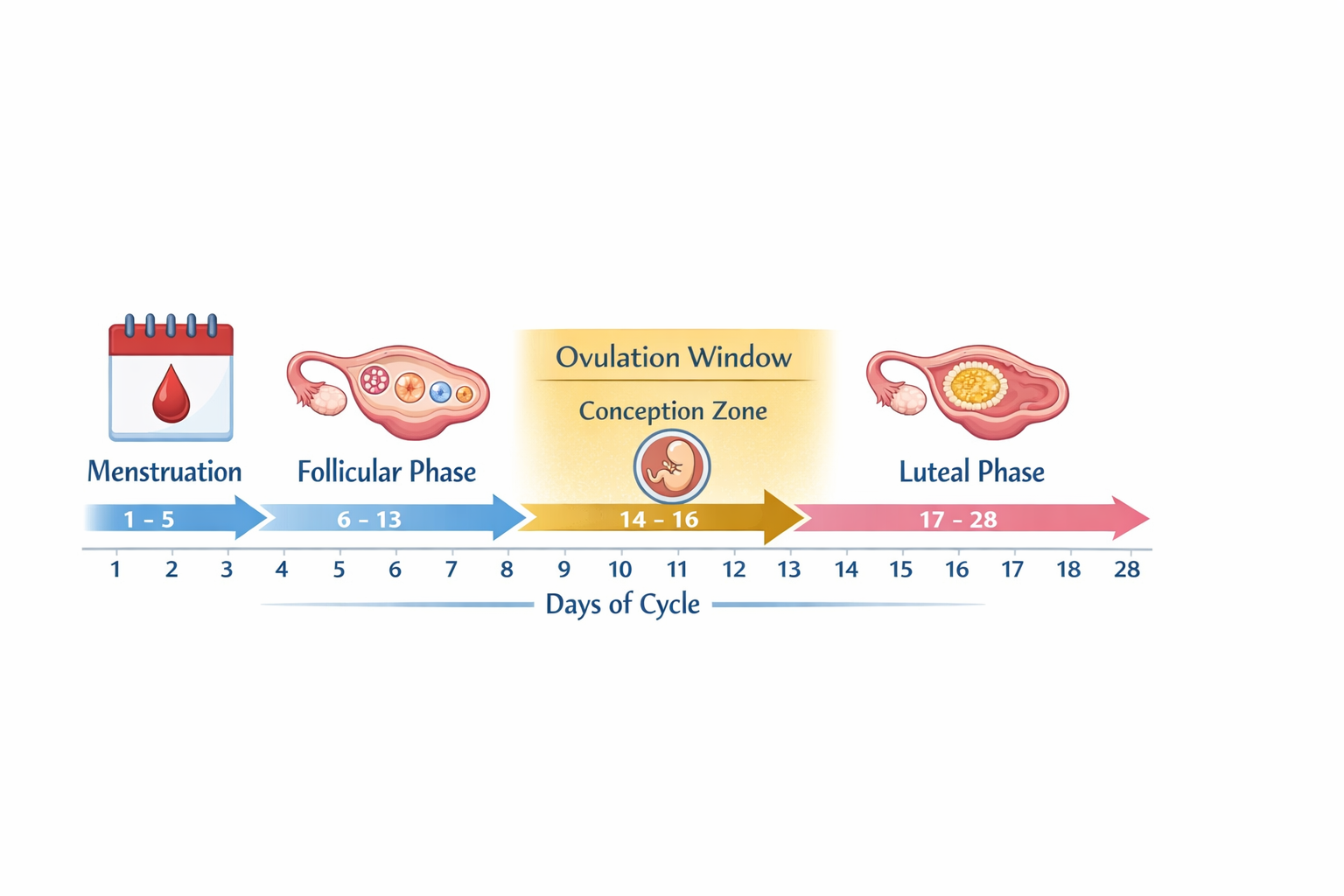
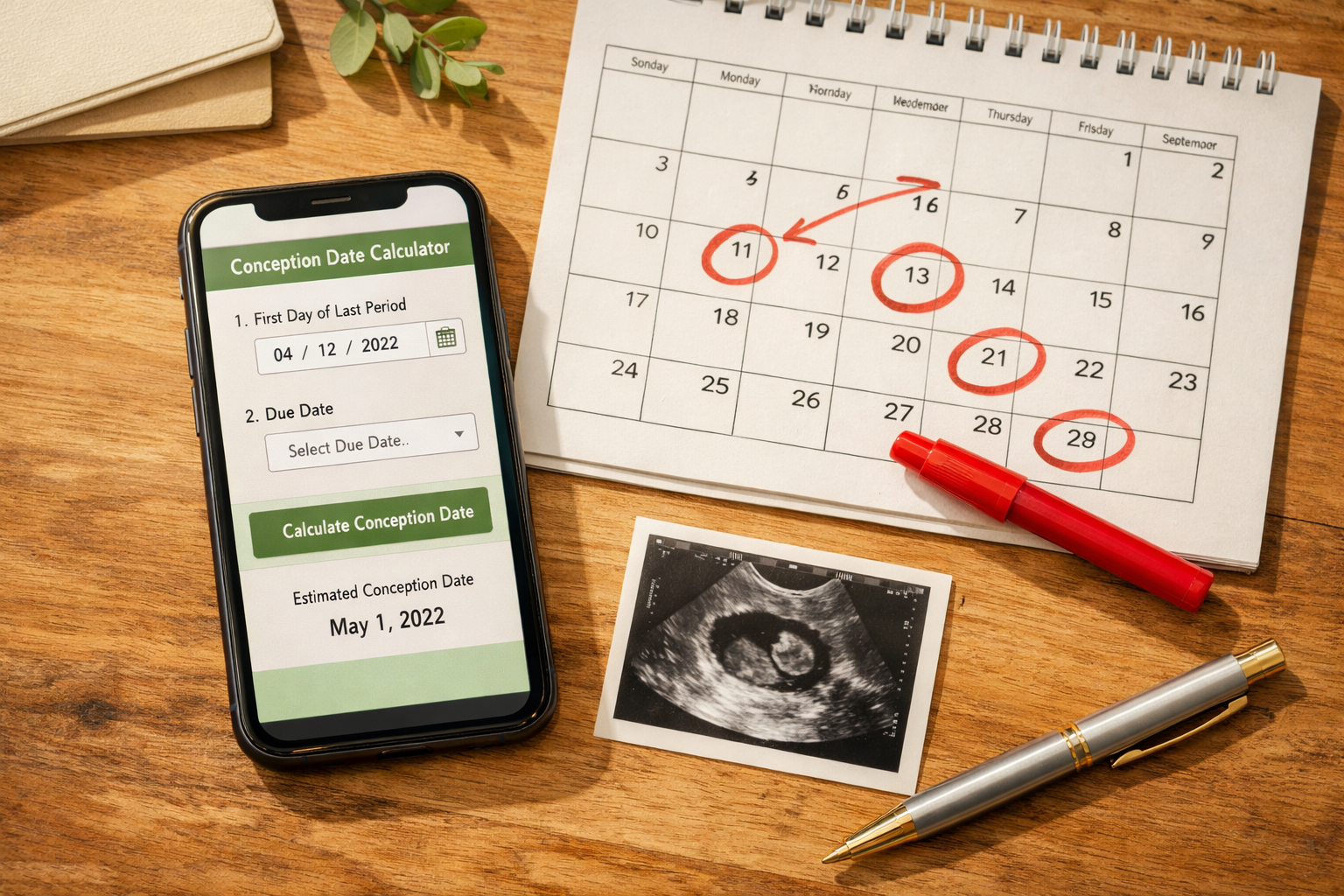
The LMP method is the most common starting point. If you have a regular 28-day cycle, ovulation typically occurs around day 14, and conception follows within 12–24 hours of ovulation (since an egg only survives that long after release).
How to use the LMP method:
- Note the first day of your last menstrual period.
- Add 14 days to estimate your ovulation date.
- Your conception date is likely within 1–2 days of that ovulation date.
Example: If your LMP started on January 1, your estimated ovulation date is January 15, and conception likely occurred between January 13–16.
Important caveat: This method assumes a textbook 28-day cycle. If your cycle is shorter (say, 24 days) or longer (35+ days), ovulation shifts accordingly. Late ovulation can push your conception date significantly later than the standard estimate.
Use our Accurate Conception Calculator to plug in your LMP and cycle length for a personalized estimate.
How to Estimate Your Conception Date from Your Due Date
If you already know your due date, working backward is straightforward. A full-term pregnancy lasts approximately 266 days (38 weeks) from conception, or 280 days (40 weeks) from the LMP.
Formula: Due Date − 266 days = Estimated Conception Date
Example: If your due date is October 1, subtract 266 days to get an estimated conception date of approximately January 8.
This approach is useful when you know your due date but don't remember your LMP clearly. Keep in mind that due dates themselves carry a margin of error — for more on this, see our guide on how accurate conception date estimates from due dates really are.
You can also use our Due Date Calculator to cross-check your dates in both directions.
What Is My Conception Date? Easy Ways to Find Out with Ultrasound
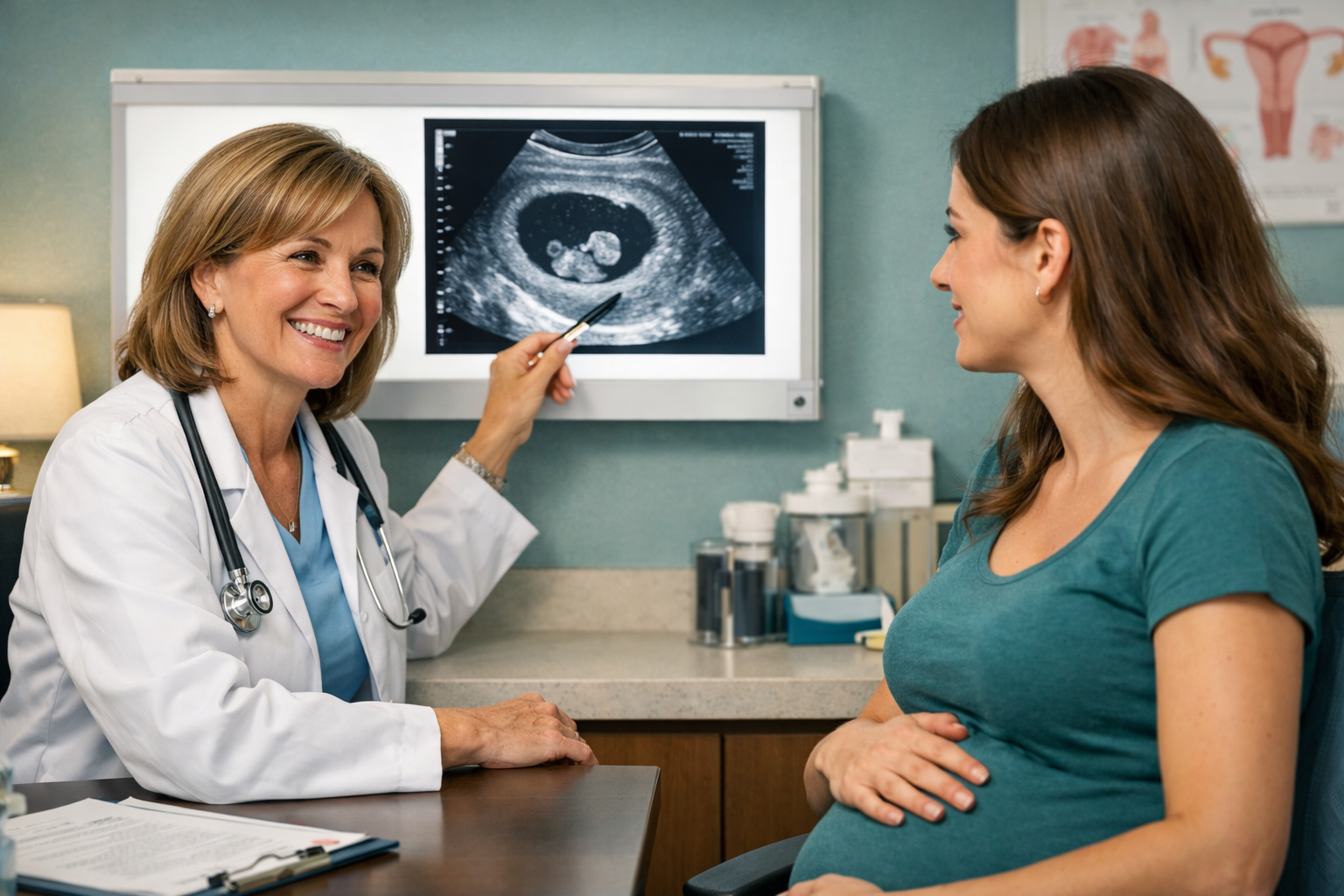
Ultrasound is the most clinically reliable method for estimating conception date, especially when done in the first trimester (before 13 weeks). The sonographer measures the embryo's crown-rump length (CRL) and compares it to standard growth charts to estimate gestational age.
How ultrasound estimates conception date:
- First-trimester ultrasound is accurate to within ±5–7 days.
- Second-trimester ultrasound accuracy drops to ±10–14 days.
- Third-trimester ultrasound is the least precise for dating.
For a detailed breakdown of how this works, see How Ultrasound Estimates Conception Date.
Choose ultrasound dating if: You have irregular periods, you're unsure of your LMP, or your LMP-based estimate conflicts with your baby's measured size.
Common mistake: Assuming ultrasound gives the exact conception date. It gives gestational age, which your provider then uses to back-calculate an approximate conception window — usually a range of a few days, not a single date.
How Ovulation Tracking Helps You Find Your Conception Date
If you were actively tracking ovulation before conceiving, you may already have your most accurate data. Ovulation marks the only window in which conception can occur, so knowing when you ovulated narrows things down considerably.
Tracking methods that help:
| Method | Accuracy | Notes |
|---|---|---|
| LH (ovulation predictor) strips | High | Detects LH surge 24–36 hrs before ovulation |
| Basal body temperature (BBT) | Moderate | Confirms ovulation after it happens |
| Cervical mucus monitoring | Moderate | Egg-white mucus signals peak fertility |
| Fertility apps | Variable | Accuracy depends on cycle regularity |
Since sperm can live up to 5 days inside the reproductive tract, conception might occur a few days after intercourse — not necessarily on the day of sex. This is why understanding the difference between conception date vs. ovulation date matters when you're calculating timing.
Our Fertile Window Calculator can help you identify your peak conception days based on your cycle data.
Can You Know the Exact Day You Conceived?
Rarely, and only under specific circumstances. Conception is not directly observable — it happens inside the fallopian tube, typically within hours of ovulation. Even with all available tools, most people get an estimated window of 2–5 days rather than a single confirmed date.
Factors that make exact dating harder:
- Irregular or long cycles
- Uncertain LMP (common if you weren't tracking)
- Multiple acts of intercourse across the fertile window
- Late ovulation shifting the expected timeline
For a deeper look at this question, see Can You Know the Exact Day You Conceived?
Step-by-Step: How to Find Your Conception Date Right Now
Here's a practical process you can follow today:
- Find your LMP. Check your period tracking app, calendar, or memory for the first day of your last period.
- Estimate ovulation. Add 14 days for a 28-day cycle, or adjust for your actual cycle length using our Pregnancy Week by Week Calculator.
- Use a conception calculator. Enter your LMP or due date into our When Did I Conceive Calculator for an instant estimate.
- Cross-check with ultrasound. If you've had a dating scan, compare the gestational age given to your calculated estimate.
- Narrow the window. If you tracked ovulation with LH strips or BBT, use that data to refine your estimate further.
FAQ
Q: How many days after sex does conception occur? Conception can happen anywhere from a few hours to 5 days after intercourse, because sperm can survive that long waiting for ovulation. The egg itself only survives 12–24 hours after release.
Q: Is my conception date the same as my ovulation date? Not exactly. Conception is when sperm meets egg, which happens at or shortly after ovulation. The two dates are usually within 1–2 days of each other. See our guide on conception date vs. ovulation date for the full breakdown.
Q: Can a doctor tell me my exact conception date? No. Doctors estimate conception date based on LMP or ultrasound measurements. Even with clinical tools, the result is a window — typically ±5–7 days — not a precise date.
Q: What if I have irregular cycles? Irregular cycles make LMP-based estimates unreliable. A first-trimester ultrasound is the best option for dating your pregnancy accurately if your cycle length varies significantly.
Q: Does my conception date equal my baby's birthday minus 9 months? Roughly, but not precisely. Pregnancy lasts about 38 weeks from conception (not exactly 9 months), and babies rarely arrive exactly on their due date.
Q: Can I use a conception date to determine paternity? Conception date estimates can help narrow a paternity window, but because they carry a margin of error, they're not definitive. DNA testing is the only reliable way to confirm paternity.
Q: What's the difference between gestational age and age from conception? Gestational age counts from the LMP (so it includes about 2 weeks before conception). Age from conception starts at fertilization. A baby at 10 weeks gestational age is roughly 8 weeks post-conception.
Q: How accurate are online conception calculators? They're a useful starting point, but they rely on the data you enter. Accuracy depends on how well you know your LMP and cycle length. For more context, see How Accurate Are Pregnancy Calculators?
Conclusion
Finding your conception date comes down to combining what you know — your LMP, cycle length, ovulation tracking data, and any ultrasound results — to build the most accurate estimate possible. No single method is perfect, but using two or three together gives you a reliable window.
Your next steps:
- Use our Accurate Conception Calculator to get an instant estimate based on your LMP or due date.
- If you had a first-trimester ultrasound, ask your provider for the gestational age measurement and cross-reference it.
- If you're still trying to conceive, start tracking ovulation now so you'll have precise data when you need it — our Fertile Window Calculator is a good place to start.
The more data you have, the clearer your picture becomes.
References
- American College of Obstetricians and Gynecologists (ACOG). (2017). Methods for Estimating the Due Date. Committee Opinion No. 700. https://www.acog.org/clinical/clinical-guidance/committee-opinion/articles/2017/05/methods-for-estimating-the-due-date
- Wilcox, A. J., Dunson, D., & Baird, D. D. (2000). The timing of the "fertile window" in the menstrual cycle: day specific estimates from a prospective study. BMJ, 321(7271), 1259–1262. https://doi.org/10.1136/bmj.321.7271.1259
- Mongelli, M., Wilcox, M., & Gardosi, J. (1996). Estimating the date of confinement: ultrasonographic biometry versus certain menstrual dates. American Journal of Obstetrics and Gynecology, 174(1), 278–281.