When you discover you're expecting, one of the first questions many people ask is, "When did I conceive?" Determining the conception date is a natural curiosity, often leading to attempts to work backward from an estimated due date. But how accurate is conception date from due date, really? While a due date provides a general timeframe for your baby's arrival, deriving a precise conception date from it involves several assumptions and can often be a broader estimate rather than an exact day.
Key Takeaways
- Due dates are estimates: Only about 5% of babies are born on their exact due date.
- Conception is estimated backward: Due dates primarily use the first day of your last menstrual period (LMP) or early ultrasound measurements to estimate when conception occurred.
- LMP method has variability: This method assumes a 28-day cycle with ovulation on day 14, which isn't true for everyone, leading to potential inaccuracies in conception date estimates.
- Ultrasound offers better precision: Early ultrasounds (especially in the first trimester) are generally the most accurate method for dating a pregnancy and, by extension, estimating the conception window.
- Ovulation timing is key: Knowing your precise ovulation day (through tracking methods) provides the most accurate conception date information, but this data isn't always available.
- Conception is a window, not a single day: Sperm can survive for several days, and the egg is viable for about 12-24 hours, meaning conception can occur over a few days, not just one.
- Discrepancies are common: It's normal for conception date estimates from different methods to vary, highlighting the importance of medical consultation.
- Medical purpose: The primary goal of dating a pregnancy is for optimal prenatal care and delivery planning, not to pinpoint the exact moment of conception.
Quick Answer
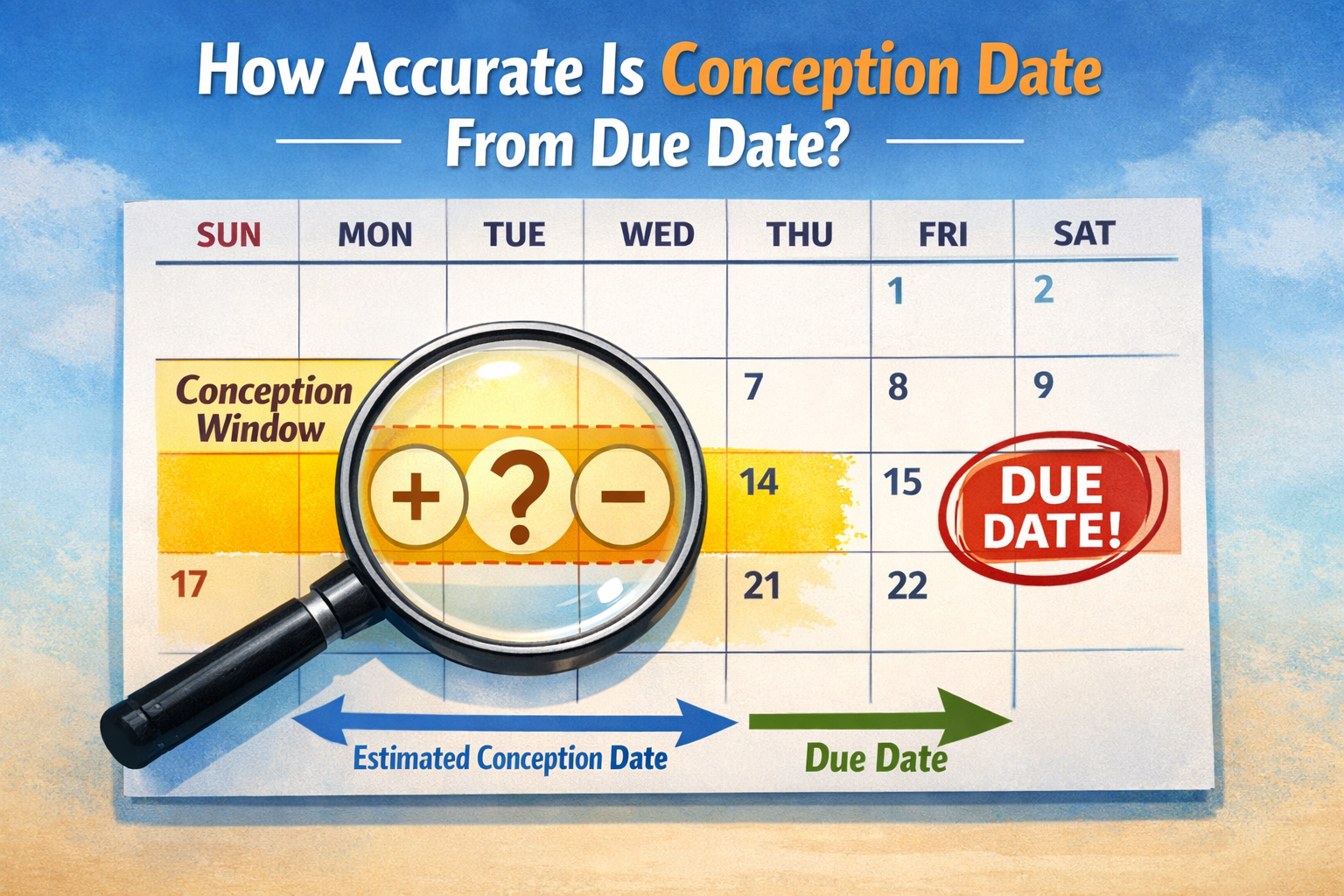
Calculating your conception date from a due date is an estimate, typically ranging from a few days to over a week of accuracy. While methods like using your Last Menstrual Period (LMP) or early ultrasound help narrow down the timeframe, individual biological variations, such as irregular menstrual cycles or delayed ovulation, significantly impact the precision of working backward from a projected due date to pinpoint the exact moment of conception.
How Do Doctors Calculate Due Dates?
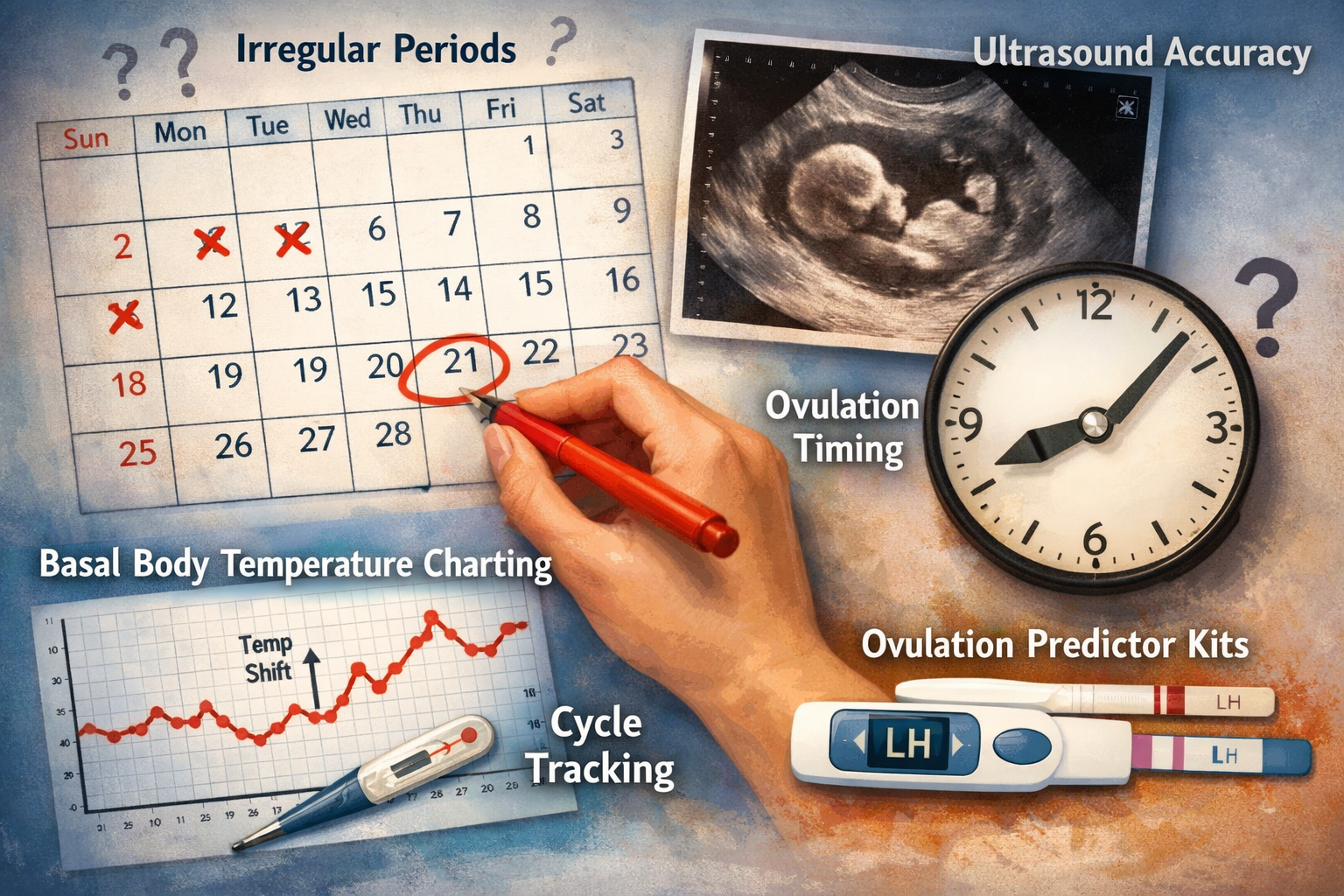
Doctors primarily calculate due dates using two main methods: the first day of your last menstrual period (LMP) and early ultrasound measurements. The LMP method, often referred to as Naegele's Rule, adds 280 days (40 weeks) to the first day of your last period, assuming a regular 28-day cycle with ovulation on day 14. For instance, if your LMP was January 1, 2026, your estimated due date would be October 8, 2026. This calculation is a starting point, but it relies on assumptions about cycle regularity and ovulation timing that may not apply to everyone.
Early ultrasounds, particularly those performed between 8 and 14 weeks of gestation, measure the size of the fetus (crown-rump length) to determine gestational age. This measurement is highly effective because fetal growth during the first trimester is very predictable. If the ultrasound-derived due date differs significantly from the LMP-derived date (typically by more than 5-7 days in the first trimester), the ultrasound date is generally considered more accurate and will be used to guide prenatal care. This is especially true for individuals with irregular periods, as the LMP method would be less reliable for them.
- Naegele's Rule (LMP Method):
- Add 7 days to the first day of your last menstrual period.
- Subtract 3 months from that date.
- Add 1 year.
- Example: LMP on April 5, 2026 → Add 7 days (April 12) → Subtract 3 months (January 12) → Add 1 year (January 12, 2027).
- Ultrasound Measurement:
- Performed by a medical professional using sound waves to measure the fetus.
- Crown-rump length (CRL) is a key measurement for accuracy in early pregnancy.
- Can correct due dates if LMP is unknown or cycles are irregular.
- Key Consideration: The further along a pregnancy is, the less accurate an ultrasound becomes for dating, as individual fetal growth rates start to vary more. Early ultrasounds are therefore the gold standard for precision.
For a quick estimate, you can use our Due Date Calculator | Estimate Your Baby's Arrival Day.
Factors Affecting the Accuracy of Conception Date Estimation
The accuracy of estimating a conception date from a due date is significantly influenced by several biological and timing factors. The primary assumption for many calculations is a consistent 28-day menstrual cycle with ovulation occurring precisely on day 14, but this is often not the case for many individuals.
Irregular menstrual cycles are a major source of variability. If a person ovulates earlier or later than day 14, their actual conception date will shift accordingly, making a standard LMP-based calculation less reliable. Late ovulation, for example, can delay the conception date significantly, even if the LMP is known. Additionally, the viability of sperm (up to 5 days) and the egg (12-24 hours) means that conception can occur over a window of several days, not a single isolated moment, regardless of precise ovulation tracking.
- Irregular Menstrual Cycles:
- Cycles shorter or longer than 28 days can lead to ovulation happening at different times.
- Conditions like PCOS can cause unpredictable ovulation, making LMP unreliable.
- Decision Rule: If your cycles are irregular, an ultrasound will provide a more accurate dating of your pregnancy than relying solely on your LMP.
- Late Ovulation:
- Even with a regular cycle length, ovulation might not occur exactly on day 14.
- Stress, illness, or travel can temporarily delay ovulation.
- Can You Get Pregnant With Late Ovulation? | Expert Guide and Is Late Ovulation Normal? Your 2026 Guide to Fertility provide more insights.
- Sperm Viability:
- Sperm can survive in the female reproductive tract for up to 5 days.
- Conception could occur days after intercourse if ovulation happens later.
- Egg Viability:
- An egg is typically viable for only 12 to 24 hours after ovulation.
- This narrows the actual conception "moment" but the window for intercourse leading to conception is wider.
- Recall Error:
- Accurately remembering the exact first day of the last menstrual period can be challenging for some, especially if periods are light or irregular.
Comparing LMP and Ultrasound for Conception Date Estimation
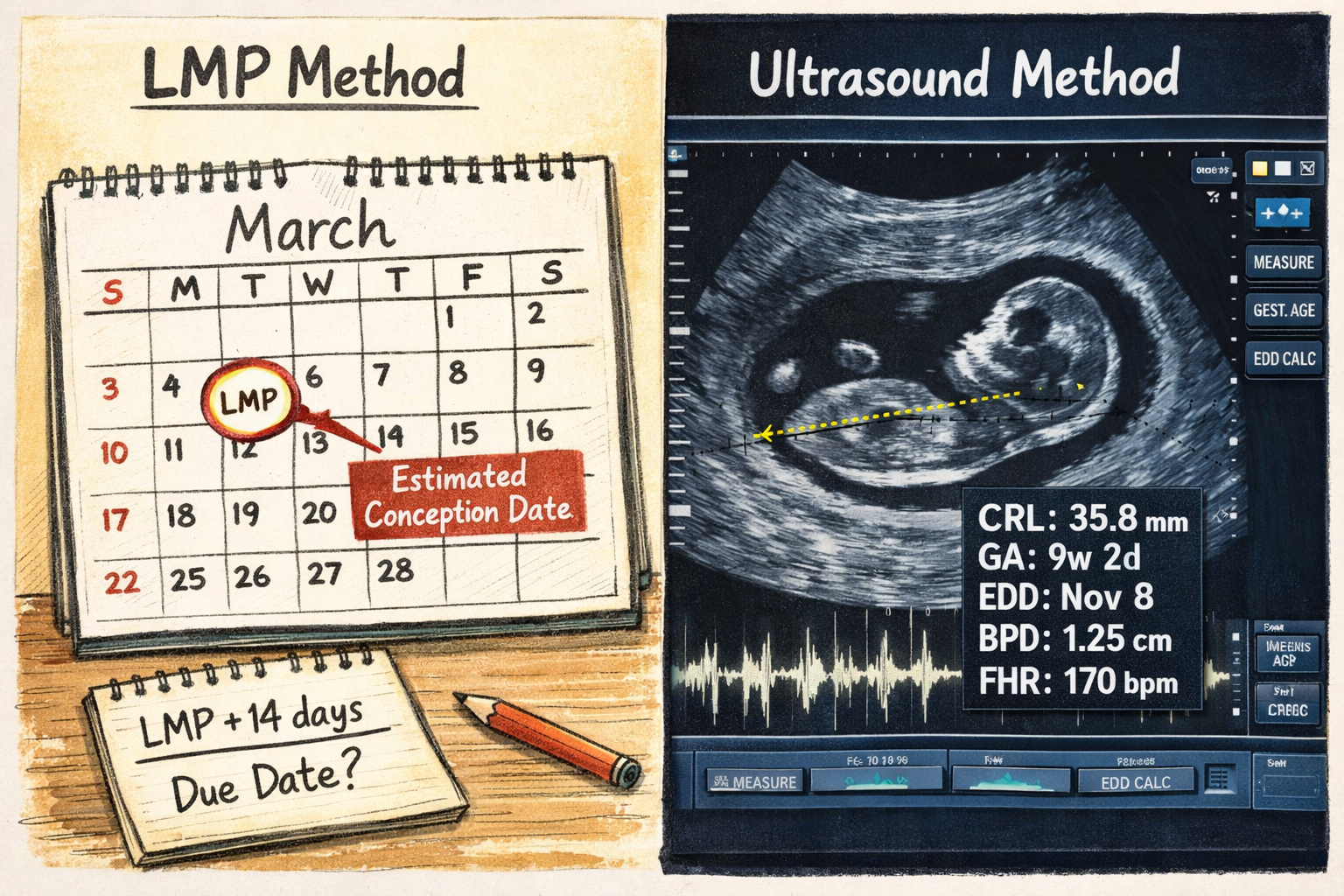
When trying to determine "How accurate is conception date from due date?", it's important to understand the different strengths and weaknesses of the primary dating methods: using the Last Menstrual Period (LMP) and early ultrasound. While the LMP method is a simple calculation, it relies on several assumptions about a woman's cycle that may not hold true, making it less precise for many.
Early ultrasound, on the other hand, provides a more objective measure of fetal development, which is highly consistent in the first trimester. This allows for a more accurate estimation of gestational age and, consequently, a more refined conception window. For individuals with irregular cycles or who are unsure of their LMP, ultrasound is the preferred and often only reliable method for dating the pregnancy.
Here’s a comparison:
| Feature | LMP Method (Naegele's Rule) | Early Ultrasound Dating |
|---|---|---|
| Primary Input | First day of last menstrual period (LMP) | Fetal measurements (e.g., Crown-Rump Length, CRL) |
| Underlying Assumption | 28-day cycle, ovulation on day 14 | Consistent fetal growth rate in early pregnancy |
| Accuracy for Due Date | Good for regular cycles; poor for irregular/unknown LMPs | Highly accurate, especially between 8-14 weeks of gestation |
| Accuracy for Conception | +/- 5-7 days, potentially more with irregular cycles | +/- 3-5 days, considered the most precise medical estimate |
| Required Information | Accurate recall of LMP | Access to ultrasound technology and trained sonographer/doctor |
| When Preferred | Initial estimate, quick calculation | All pregnancies, especially with irregular cycles or unknown LMP |
| Common Discrepancy | Can be off by more than a week if ovulation is delayed | Generally used to adjust or confirm LMP-based due dates |
Takeaway: While the LMP provides a convenient initial estimate, an early ultrasound is usually the most reliable method for precisely dating a pregnancy and estimating the conception window. If you're using an Ovulation Calculator or Fertile Window Calculator to track ovulation, this personal data can also significantly improve the accuracy of your own conception date estimate.
Why Precision in Conception Date Matters (and Doesn't Always)
Understanding "How accurate is conception date from due date?" has implications both for personal curiosity and clinical management, though its importance can vary. For expectant parents, knowing the approximate conception date can offer a sense of connection and help them recall the specific time when their journey began. It's often linked to remembering significant personal events or trying to pinpoint the partner responsible if there's uncertainty.
Clinically, a precise conception date (derived from an accurate due date) is crucial for several reasons. It helps healthcare providers:
- Monitor fetal growth and development: Ensuring the baby is growing on track for their gestational age.
- Schedule screenings and tests: Many prenatal tests (e.g., genetic screenings, glucose tolerance tests) are time-sensitive and must be performed within specific gestational windows.
- Plan for intervention: In cases of premature labor or post-term pregnancy, an accurate due date helps determine the best course of action.
- Manage potential complications: Conditions like pre-eclampsia or gestational diabetes require careful timing of care based on gestational age.
However, absolute precision to the exact day of conception is often not strictly necessary for medical management. A window of a few days is usually sufficient. The medical focus is more on gestational age and predicting the due date, rather than pinpointing the singular moment of fertilization.
- When Precision Matters (Clinically):
- Timing of prenatal screenings: Specific blood tests and ultrasounds have narrow windows for optimal results.
- Fetal viability decisions: In very early or very late deliveries, knowing gestational age precisely is critical for medical interventions.
- Induction decisions: Elective inductions are generally not recommended before 39 weeks unless medically necessary, so a precise due date prevents premature intervention.
- When Precision is Less Critical (Clinically):
- For the vast majority of pregnancies with typical prenatal care, a due date accurate to within a few days is perfectly adequate.
- The baby will arrive when ready, usually within a two-week window around the due date.
- Common Mistakes in Self-Estimation:
- Assuming a 28-day cycle when yours is shorter or longer.
- Not accounting for sperm survival time.
- Confusing the date of intercourse with the date of conception.
- Relying solely on memory for LMP when tracking was inconsistent.
Consulting Your Healthcare Provider for the Most Accurate Dates

For the most accurate assessment of your due date and a reliable estimate of your conception window, consulting with your healthcare provider is paramount. They possess the medical expertise and diagnostic tools, such as early ultrasound, to provide the most precise dating information for your pregnancy. Relying solely on online calculators or personal estimations can introduce inaccuracies that might impact prenatal care.
Your doctor or midwife will consider all available information, including your LMP, any early ovulation tracking data you have (like from an AI Ovulation Predictor), and critically, the results of your first-trimester ultrasound. If there's a discrepancy between dating methods, they will determine the most appropriate due date based on established medical guidelines, ensuring your pregnancy receives optimal monitoring and care from day one through delivery.
- Why Professional Consultation is Key:
- Medical Accuracy: Healthcare providers use validated methods and equipment for dating.
- Personalized Assessment: They can account for individual factors like irregular cycles, previous pregnancy complications, or medical conditions.
- Comprehensive Care: An accurate due date forms the foundation for scheduling all subsequent prenatal appointments, screenings, and interventions.
- Addressing Concerns: They can discuss any specific worries you have about your conception date or due date, offering professional reassurance and guidance.
Actionable Next Steps:
- Schedule your first prenatal appointment: This is the most crucial step for official dating.
- Gather relevant information: Be ready to share the first day of your last menstrual period, details about your cycle regularity, and any ovulation tracking data you have.
- Discuss discrepancies: If you have calculated a different due date than your doctor, don't hesitate to ask questions and understand their reasoning.
- Understand the "due window": Remember that due dates are estimates, and babies rarely arrive on the exact day. Your healthcare provider will often refer to a "due window" of a few weeks around the estimated date.
Conclusion
Understanding how accurate conception date is from due date reveals that it is primarily an estimate, with varying degrees of precision depending on the method used. While the Last Menstrual Period (LMP) offers a quick initial calculation, its reliance on assumptions about cycle regularity can lead to significant inaccuracies. Early ultrasound measurements, particularly in the first trimester, provide the most reliable medical estimate of gestational age and, by extension, a more precise conception window.
Ultimately, pinpointing the exact moment of conception is challenging due to biological factors like sperm viability and individual variations in ovulation. The medical priority lies in establishing an accurate due date to guide prenatal care and ensure timely interventions, rather than an exact conception date. For the most accurate and personalized information, always consult your healthcare provider, who can use a combination of methods and their clinical expertise to give you the clearest picture of your pregnancy timeline.
Actionable Next Steps:
- Schedule an early prenatal appointment with your doctor or midwife to get your pregnancy officially dated via ultrasound.
- Share your LMP and any ovulation tracking data you have to help your provider establish the most accurate initial estimate.
- Understand that due dates are estimates: Prepare for your baby's arrival within a broader two-week window around your estimated due date, as only a small percentage of babies are born on their exact due date.
FAQ

Q: How accurate is a conception date based on a due date? A: A conception date derived from a due date is typically an estimate, accurate within a few days to a week. Its precision depends heavily on the method used to establish the due date (LMP vs. ultrasound) and the regularity of your menstrual cycle.
Q: Can a doctor tell me the exact date of conception? A: Doctors can provide a highly accurate estimated conception window, especially with early ultrasound, but pinpointing the exact day of conception is extremely difficult due to factors like sperm viability and the limited window of egg fertility.
Q: Is LMP or ultrasound more accurate for dating pregnancy? A: Early ultrasound (performed between 8-14 weeks) is generally considered more accurate for dating a pregnancy than the LMP method, especially for individuals with irregular cycles or uncertain LMP.
Q: How much can my due date change after an ultrasound? A: If an early ultrasound dating differs from your LMP-based date by more than 5-7 days in the first trimester, your due date will typically be adjusted to align with the ultrasound findings, which are usually more accurate.
Q: Why do conception calculators give different dates? A: Conception calculators often use different algorithms and assumptions (e.g., standard 28-day cycle, fixed ovulation day). Without specific ovulation tracking data, they can only provide generalized estimates.
Q: If I know my exact ovulation date, how accurate is that for conception? A: Knowing your exact ovulation date is the most precise personal data point for estimating conception, typically narrowing the window to 1-2 days. However, medical confirmation with an ultrasound remains important.
Q: Does late ovulation affect the estimated conception date? A: Yes, late ovulation will push your actual conception date later than what a standard LMP calculation might suggest, making the LMP-derived conception date less accurate.
Q: What is the average time between intercourse and conception? A: Conception typically occurs within 12-24 hours after ovulation. However, because sperm can survive for up to 5 days, intercourse can occur several days before ovulation and still result in conception.
Q: Does an accurate conception date matter for my baby's health? A: While a precise conception date isn't critical for your baby's health, an accurate due date (which helps estimate conception) is vital for proper prenatal care, scheduling screenings, and making informed decisions about interventions if needed.
Q: Can I use an online calculator to find my conception date? A: Online conception calculators can provide a rough estimate, but they are not a substitute for medical dating by a healthcare professional. Always confirm with your doctor. You can try our Conception Date Calculator for an initial estimate.
Sources
- American College of Obstetricians and Gynecologists (ACOG). (2017). Methods for Estimating the Due Date.
- National Institute of Child Health and Human Development (NICHD). (n.d.). How to calculate a due date.
Related Reading: