Quick Answer: Ovulation typically lasts 12–24 hours. Once the egg is released and that window closes, your body sends clear signals that the fertile phase has ended — including a rise in basal body temperature (BBT), a shift in cervical mucus from slippery to thick or dry, disappearing ovulation pain, and a drop in LH on test strips. Recognizing these signs day by day helps you understand your cycle and time conception (or avoidance) more accurately.
🔑 Key Takeaways
- Ovulation itself lasts only 12–24 hours, but the fertile window spans roughly 5–6 days before and during ovulation.
- A sustained BBT rise of 0.2°C–0.5°C (about 0.4°F–1°F) for three consecutive days is the most reliable sign that ovulation is over.
- Cervical mucus shifts from clear and stretchy (egg-white consistency) to thick, cloudy, or absent after ovulation.
- LH test strips turn negative within 24–48 hours after the LH surge peaks, signaling the fertile window has closed.
- Mid-cycle pelvic pain (mittelschmerz) fades once the egg has been released.
- After ovulation ends, progesterone rises — which can cause bloating, breast tenderness, and fatigue.
- The post-ovulation phase (luteal phase) lasts roughly 12–16 days before your next period.
- If you're trying to conceive, sex after ovulation is confirmed is generally too late for that cycle.
- Tracking multiple signs together is more accurate than relying on any single indicator.
- Use our Ovulation Symptoms Checker if you're unsure whether you're still in your fertile window.
What Happens to Your Body When Ovulation Ends?
Once ovulation is over, your body shifts from an estrogen-dominant state to a progesterone-dominant one. This hormonal switch drives most of the physical signs you'll notice in the days that follow.
Here's the basic sequence:
- LH surge peaks (Day 0, roughly) — triggers egg release.
- Egg is released from the dominant follicle — ovulation occurs.
- Egg survives 12–24 hours — this is the actual fertile window for the egg.
- Corpus luteum forms from the empty follicle and begins producing progesterone.
- Progesterone rises — this is what causes most post-ovulation symptoms.
Understanding this sequence makes the day-by-day signs much easier to interpret.
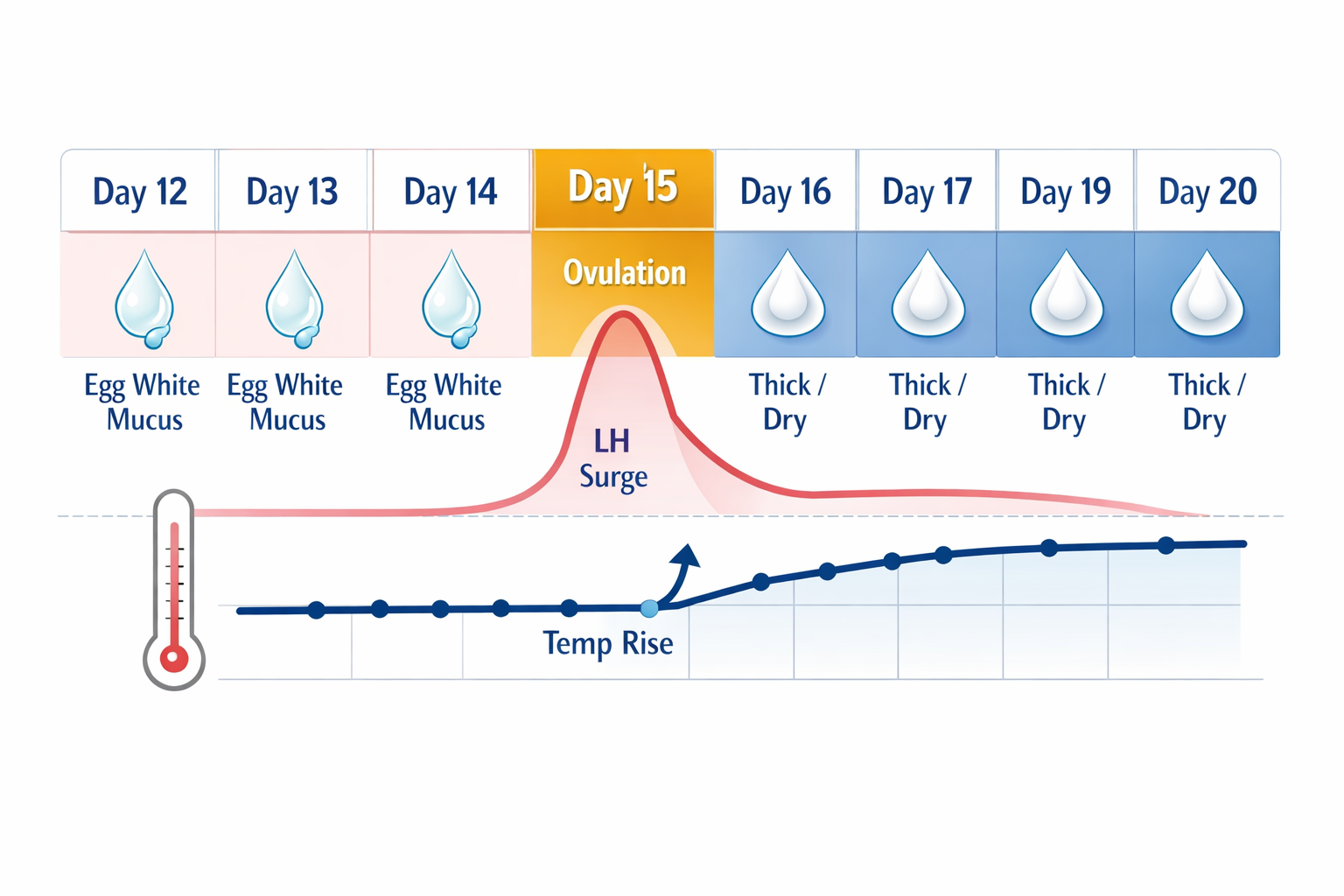
Signs Ovulation is Over (Day by Day): A Practical Timeline
The signs ovulation is over (day by day) don't all appear at once. They unfold gradually over 2–4 days after the egg is released. Here's what to expect:
Day 1 After Ovulation (1 DPO)
- BBT begins to rise — you may notice a slight temperature increase, but it needs 2 more days of elevation to confirm ovulation has passed.
- LH strips go negative — if you were using ovulation predictor kits (OPKs), the test line fades noticeably.
- Cervical mucus starts changing — the slippery, egg-white texture begins to thicken or diminish.
- Mittelschmerz fades — any mid-cycle cramps or pelvic aching from ovulation typically ease off.
Day 2 After Ovulation (2 DPO)
- BBT remains elevated — a second consecutive high temperature strengthens the signal.
- Cervical mucus becomes thicker or sticky — some women notice it becomes almost absent.
- Cervix begins to lower and close — if you check cervical position, it feels firmer and lower than at peak fertility.
- Mild bloating may begin — progesterone causes water retention and digestive slowing.
Day 3 After Ovulation (3 DPO)
- Three consecutive high BBT readings confirm ovulation is over — this is the gold standard for retrospective confirmation.
- Breast tenderness may start — progesterone stimulates breast tissue.
- Energy may dip slightly — progesterone has a sedating effect for many women.
Days 4–7 After Ovulation (4–7 DPO)
- Luteal phase symptoms settle in — fatigue, mild mood changes, and bloating are common.
- Cervical mucus stays dry or sticky — the "fertile quality" mucus is gone.
- No ovulation-related cramping — any cramps at this stage are unrelated to egg release.
💡 Important: Early pregnancy symptoms and luteal phase symptoms overlap almost completely. You cannot reliably distinguish them before 10–12 DPO.
How to Use BBT to Confirm Ovulation Has Passed
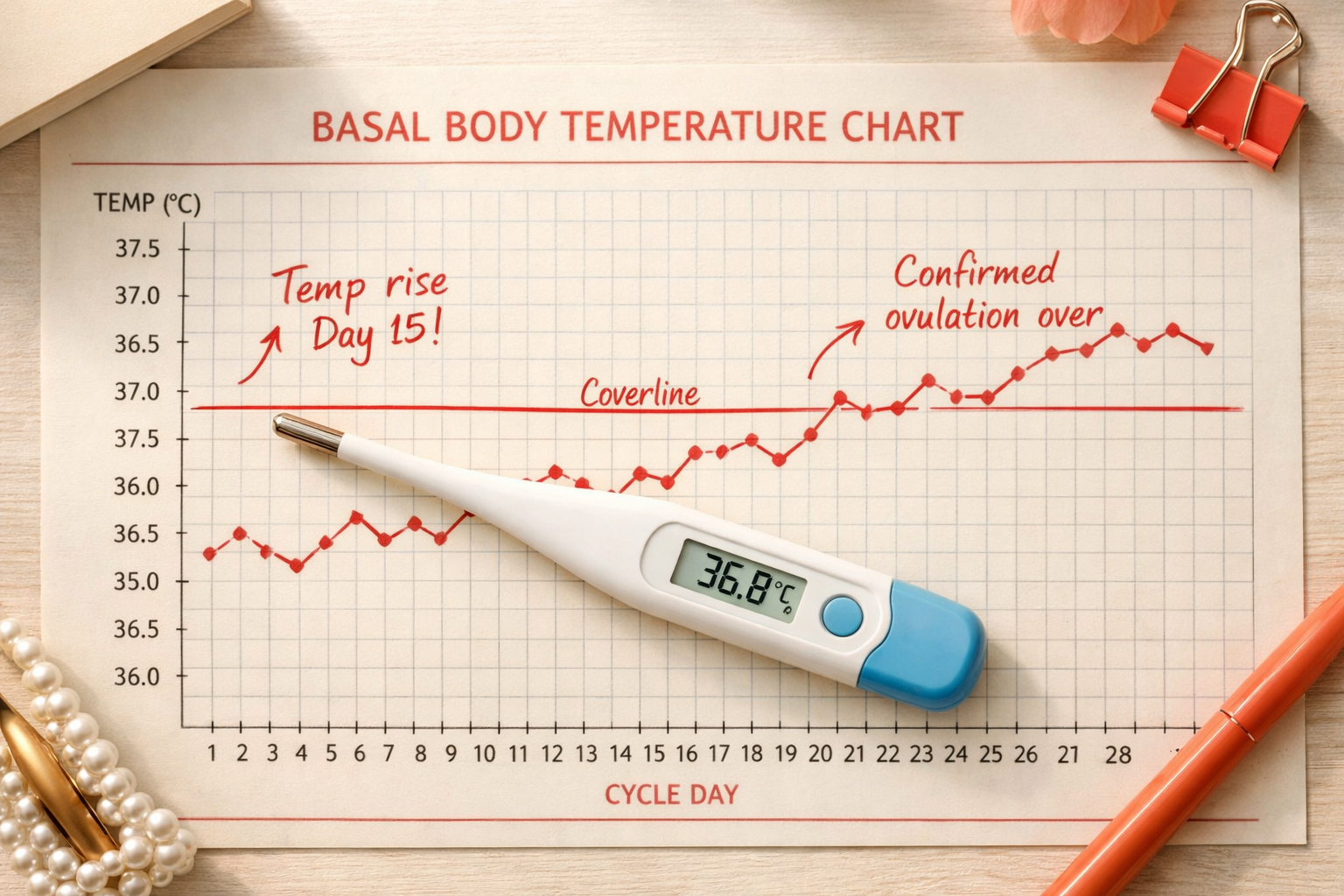
Basal body temperature tracking is the most reliable at-home method for confirming that ovulation is over — not for predicting it.
How it works: After ovulation, the corpus luteum releases progesterone, which raises your resting body temperature by roughly 0.2°C–0.5°C. This shift persists until your next period (or throughout pregnancy if conception occurred).
The three-day rule: Most fertility specialists and charting methods (including the Fertility Awareness Method) use three consecutive elevated temperatures to confirm ovulation has passed. Until you have three high readings, ovulation is not yet confirmed.
Common mistakes:
- Taking your temperature after getting up, drinking, or talking (must be taken immediately upon waking, after at least 3–4 hours of sleep).
- Expecting a dramatic spike — the shift is subtle and easy to miss without a dedicated BBT thermometer.
- Confusing a fever or illness with a post-ovulation temperature rise.
Use our BBT Chart Tool to log your temperatures and visualize your shift clearly.
Cervical Mucus Changes: Signs Ovulation is Over (Day by Day)
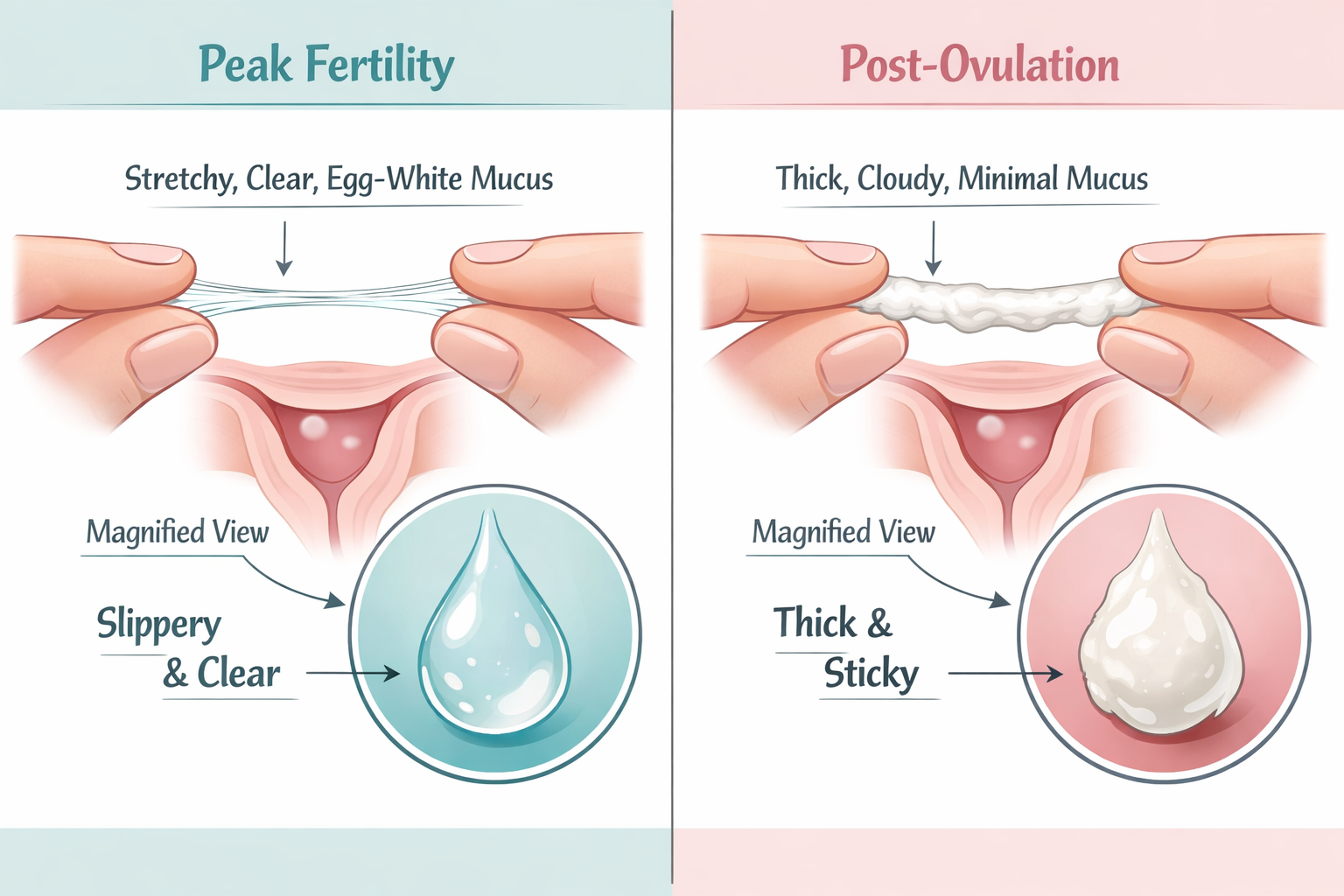
Cervical mucus is one of the clearest real-time indicators that ovulation is ending. The changes happen quickly — often within 24–48 hours of egg release.
| Phase | Mucus Appearance | Texture | Fertility Status |
|---|---|---|---|
| Pre-ovulation | Cloudy, white | Sticky, crumbly | Low fertility |
| Peak ovulation | Clear, abundant | Stretchy, slippery (egg-white) | Highest fertility |
| 1–2 days post-ovulation | Cloudy, reduced | Thick, tacky | Fertility declining |
| 3+ days post-ovulation | Minimal or absent | Dry or sticky | Not fertile |
Choose this method if: You want a real-time, hormone-free way to track your cycle. Mucus changes happen before your BBT shift, so combining both gives you a complete picture — mucus tells you when ovulation is approaching, BBT confirms it's over.
Edge case: Some women experience a secondary mucus patch mid-luteal phase due to estrogen fluctuations. This does not indicate a second ovulation (humans almost never ovulate twice in one cycle from separate events more than 24 hours apart).
OPK Strips After Ovulation: What to Expect
Ovulation predictor kits detect the LH surge that triggers egg release. Once ovulation is over, LH levels fall rapidly.
- Positive OPK = LH surge is happening; ovulation is 12–36 hours away.
- Negative OPK after a positive = LH has dropped; ovulation has likely occurred.
- Timeline: Most women see OPKs return to negative within 24–48 hours after the peak positive.
Common mistake: Continuing to test with OPKs after ovulation and misreading a faint line as a second surge. A faint line on an OPK is always negative — only a line as dark as or darker than the control line counts as positive.
If your OPKs never showed a clear positive this cycle, you may want to read about what causes late ovulation or check late ovulation symptoms explained.
What Comes Next: The Luteal Phase and Implantation Window
After ovulation ends, you enter the luteal phase — the second half of your cycle. This phase typically lasts 12–16 days and is driven by progesterone from the corpus luteum.
If conception occurred:
- The fertilized egg travels to the uterus over 3–5 days.
- Implantation occurs approximately 6–12 days after ovulation.
- hCG begins to rise after implantation, eventually producing a positive pregnancy test.
If conception did not occur:
- The corpus luteum breaks down around Day 10–14 post-ovulation.
- Progesterone drops, triggering your period.
When to test: Testing before 10–12 DPO is almost always too early, even if implantation has occurred. For the most accurate result, wait until the day your period is due or use our implantation symptoms day by day guide to understand what to watch for.
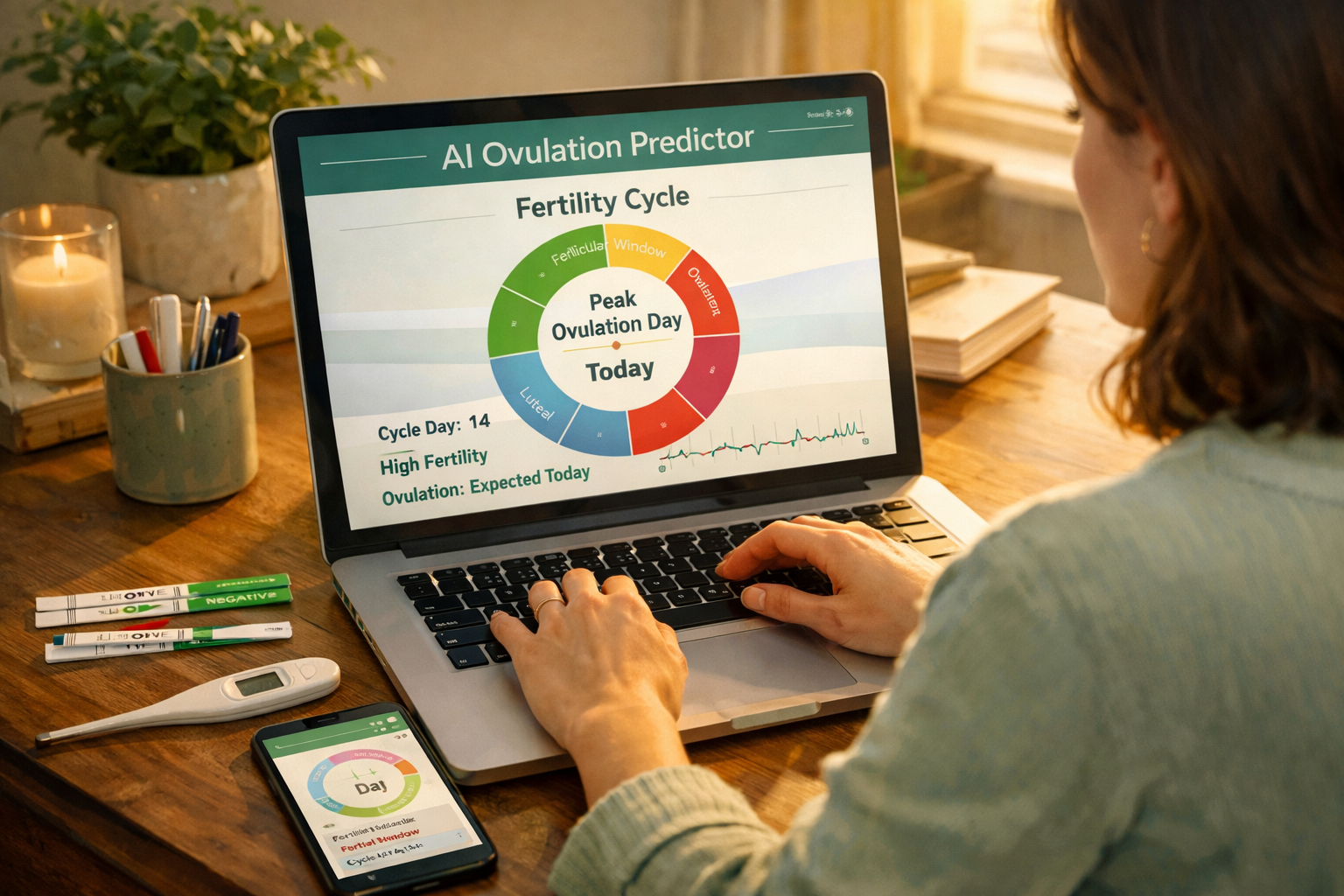
You can also use our AI Ovulation Predictor to get a personalized read on your cycle timing.
Tracking Tools That Make This Easier
Recognizing the signs ovulation is over (day by day) is much simpler when you use more than one method. Here's a quick comparison:
| Method | Confirms Ovulation Is Over? | Timing | Cost |
|---|---|---|---|
| BBT charting | Yes (3-day rule) | Retrospective (1–3 days after) | Low (thermometer only) |
| Cervical mucus | Partially (real-time) | Same day or 1 day after | Free |
| OPK strips | Partially (LH drop) | 24–48 hours after peak | Low–moderate |
| Fertility apps/AI tools | Estimates only | Varies | Free–moderate |
| Ultrasound (follicle tracking) | Yes (definitive) | Same day | High (clinical) |
Best approach: Combine BBT + cervical mucus for the most accurate at-home picture. Add OPKs if you want to also predict ovulation in real time.
Our Fertile Window Calculator can help you map your most fertile days based on your cycle data.
FAQ: Signs Ovulation is Over (Day by Day)
Q: How do I know for sure that ovulation is over? Three consecutive elevated BBT readings, combined with a return to dry or sticky cervical mucus and a negative OPK after a positive, together give strong confirmation that ovulation has passed.
Q: Can I still get pregnant after ovulation is over? If ovulation has been confirmed (three high BBT days), the egg is no longer viable. Sperm can survive up to 5 days, but without a viable egg, conception cannot occur in that cycle. For more, see can you get pregnant with late ovulation.
Q: Does ovulation pain stop immediately when ovulation ends? Usually yes — mittelschmerz (mid-cycle pain) typically fades within a few hours to a day after the egg is released.
Q: My BBT rose but dropped again after one day. Did ovulation happen? A single elevated temperature is not enough to confirm ovulation. One high reading followed by a drop is inconclusive — you need three consecutive elevated readings. Illness, poor sleep, or alcohol can cause a false spike.
Q: How long does the egg survive after ovulation? The egg survives approximately 12–24 hours after release. After that window, fertilization is no longer possible for that cycle.
Q: Can ovulation happen twice in one cycle? Two separate ovulations can occur within the same 24-hour window (which can result in fraternal twins), but a second ovulation days later in the same cycle is extremely rare and not well-supported by evidence in most women.
Q: What if my mucus stays wet after ovulation? Some women experience a secondary estrogen patch mid-luteal phase that produces a brief return of wetter mucus. This does not indicate fertility. If you're unsure, BBT is the more reliable confirmation tool.
Q: Is bloating a sign ovulation is over? Bloating that starts 1–3 days after ovulation is a common progesterone effect and can signal the luteal phase has begun — which means ovulation has passed.
Q: How do I know if I ovulated late this cycle? If your BBT shift occurs later than expected (after Day 21 in a 28-day cycle, for example), you may have ovulated late. Read our guide on late ovulation symptoms for more detail.
Q: Should I keep taking OPKs after I get a positive? There's no benefit to continuing OPKs after a clear positive. Once you've seen the peak, stop testing and focus on confirming ovulation through BBT over the next 3 days.
Conclusion
Understanding the signs ovulation is over — day by day — gives you real control over your fertility awareness, whether you're trying to conceive or simply want to understand your cycle better. The key signals are a sustained BBT rise over three days, a shift in cervical mucus from slippery to thick or dry, disappearing ovulation pain, and a negative OPK after your peak positive.
Your actionable next steps:
- Start tracking BBT using a dedicated thermometer and log readings daily — our BBT Chart Tool makes this simple.
- Observe your cervical mucus each day and note the texture and appearance.
- Use OPKs to catch your LH surge, then watch for the drop.
- Combine all three methods for the clearest picture of when your fertile window opens and closes.
- If you're trying to conceive, understand that implantation timing comes next — typically 6–12 days after ovulation.
No single sign tells the whole story. But when you track BBT, mucus, and OPKs together, the pattern becomes clear — and that knowledge is genuinely useful, cycle after cycle.
References
- Wilcox, A.J., Dunson, D., & Baird, D.D. (2000). The timing of the "fertile window" in the menstrual cycle: day specific estimates from a prospective study. BMJ, 321(7271), 1259–1262. https://doi.org/10.1136/bmj.321.7271.1259
- Stanford, J.B., & Mikolajczyk, R.T. (2002). Mechanisms of action of intrauterine devices: Update and estimation of postfertilization effects. American Journal of Obstetrics and Gynecology, 187(6), 1699–1708.
- Fehring, R.J., Schneider, M., & Raviele, K. (2006). Variability in the phases of the menstrual cycle. Journal of Obstetric, Gynecologic & Neonatal Nursing, 35(3), 376–384.
- World Health Organization. (2004). Medical eligibility criteria for contraceptive use (3rd ed.). WHO Press.
- Baird, D.T. (1984). Ovarian steroidogenesis. Seminars in Reproductive Endocrinology, 2(3), 217–228.