Trying to conceive can be an exciting, yet often anxious, journey. Many individuals wonder about the very first signs that conception has successfully occurred. This comprehensive guide details implantation symptoms day by day, helping you understand the subtle indicators that may appear as an embryo settles into the uterine lining. We'll explore what to look for, when these symptoms typically occur, and how to differentiate them from other common bodily changes.
Key Takeaways
- Implantation typically occurs 6 to 12 days after ovulation, most commonly between 8 and 10 DPO (Days Post-Ovulation).
- Not everyone experiences noticeable implantation symptoms; many women have no signs at all.
- Common implantation symptoms include light spotting (implantation bleeding), mild cramping, fatigue, and breast tenderness.
- Implantation bleeding is usually very light, pink or brown, and lasts only a day or two, distinctly different from a regular period.
- Distinguishing true implantation symptoms from premenstrual syndrome (PMS) or other cycle-related changes can be challenging due to symptom overlap.
- The most reliable way to confirm pregnancy is through a positive home pregnancy test taken after a missed period or by a doctor-ordered blood test.
- Tracking ovulation can help you pinpoint the potential implantation window more accurately.
Quick Answer
Implantation symptoms day by day are subtle signs that an embryo has attached to the uterine wall, a critical step in early pregnancy. These symptoms, which may include light spotting, mild cramping, or fatigue, typically emerge 6 to 12 days after ovulation, well before a missed period. While these signs can offer early clues, they are often mild and can easily be mistaken for premenstrual symptoms or may not occur at all.
What is Implantation and When Does It Occur?
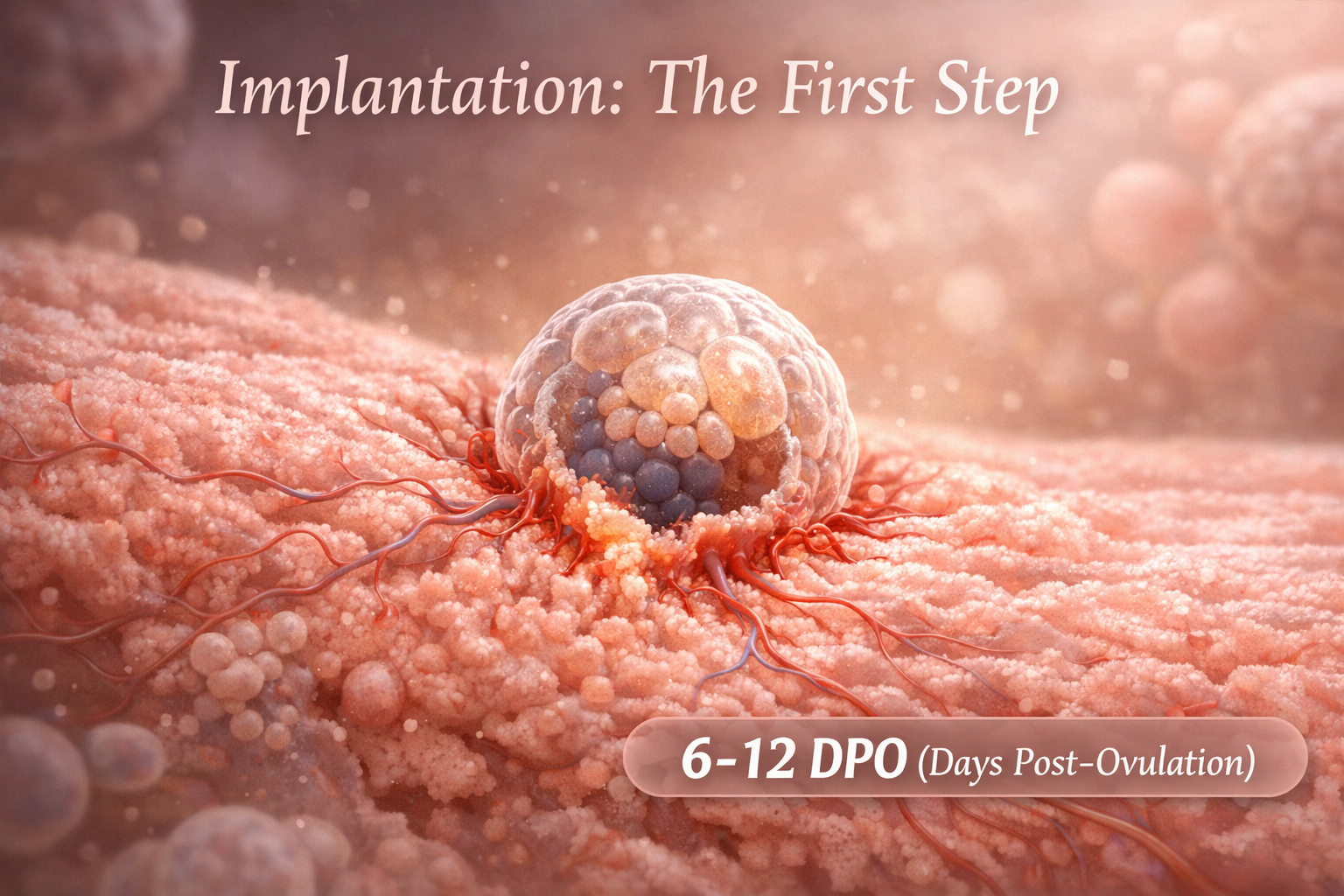
Implantation is the crucial process where a fertilized egg, now a blastocyst, attaches itself to the lining of the uterus. This event marks the official beginning of pregnancy, allowing the embryo to receive nourishment from the mother. This usually occurs between 6 and 12 days after ovulation, with the most common window being 8 to 10 days post-ovulation (DPO) [1].
The journey from fertilization to implantation is intricate. After an egg is fertilized in the fallopian tube, it travels to the uterus, continuously dividing and developing into a blastocyst. Once in the uterus, the blastocyst 'hatches' from its protective outer layer and embeds itself into the rich endometrial lining, which has been prepared by hormones like progesterone. This attachment triggers hormonal changes necessary to support the growing pregnancy.
- Fertilization: Occurs shortly after ovulation in the fallopian tube.
- Travel to Uterus: The fertilized egg (zygote, then morula, then blastocyst) takes 3-5 days to reach the uterus.
- Hatching: The blastocyst sheds its outer shell (zona pellucida) just before implantation.
- Attachment: The blastocyst then adheres to the uterine wall, initiating the release of human chorionic gonadotropin (hCG), the pregnancy hormone.
Understanding this timeline can help you better interpret any potential Implantation Symptoms Day by Day you might experience. For precise timing, consider using an implantation calculator to estimate your personal window.
Understanding Implantation Symptoms Day by Day
The symptoms of implantation, if they occur, are usually mild and vary greatly from person to person. They are often indistinguishable from premenstrual syndrome (PMS) or early period signs, which can make interpretation challenging without a confirmed pregnancy test. These subtle indicators can appear over a few days during the implantation window.
Many women experience no discernible symptoms at all, or their symptoms are so mild they go unnoticed. However, some common signs women might look for include light spotting, mild cramping, and subtle changes in breast tenderness or fatigue. The key is to pay attention to the timing and characteristics of these symptoms relative to your ovulation and expected period.
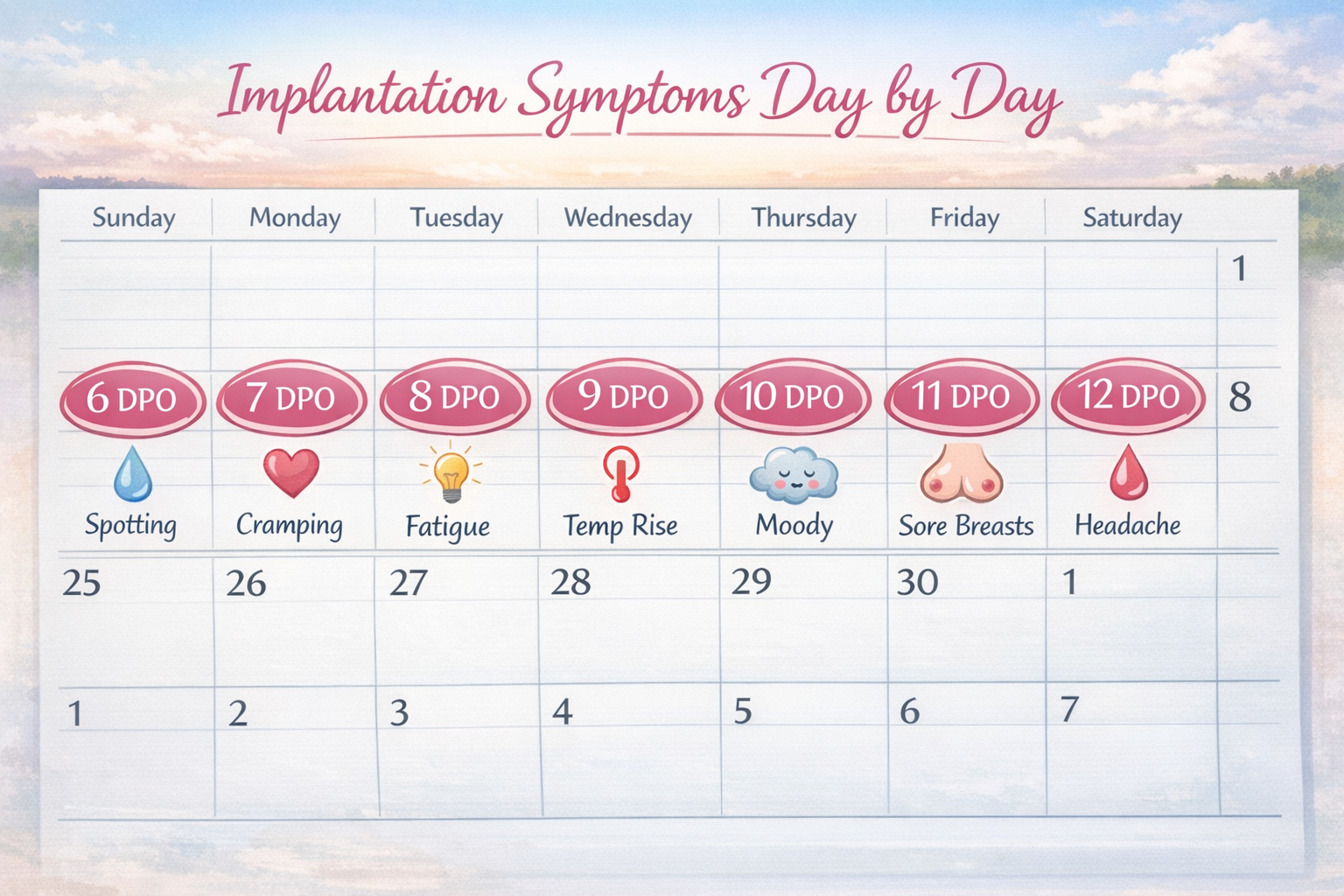
- Days 1-5 Post-Ovulation (DPO): No symptoms related to implantation typically occur yet, as the fertilized egg is still traveling to the uterus.
- Days 6-7 DPO: This is the earliest window for implantation. If it occurs, you might notice very faint, short-lived spotting or mild, barely perceptible cramping. This is less common but possible.
- Days 8-10 DPO: This is the most common time for implantation. Symptoms like light pink or brown spotting (implantation bleeding) and mild uterine cramping are most likely to appear during these days. You might also notice increased fatigue or minor breast tenderness.
- Days 11-12 DPO: Implantation may still occur in this later window. By this time, you might also start experiencing very early pregnancy symptoms as hCG levels begin to rise, such as heightened sensitivity to smells or slight nausea, although these are more indicative of rising hCG rather than implantation itself.
It's important to remember that the absence of these symptoms does not mean you are not pregnant, just as their presence does not definitively confirm pregnancy without a test.
Distinguishing Implantation Bleeding from Your Period
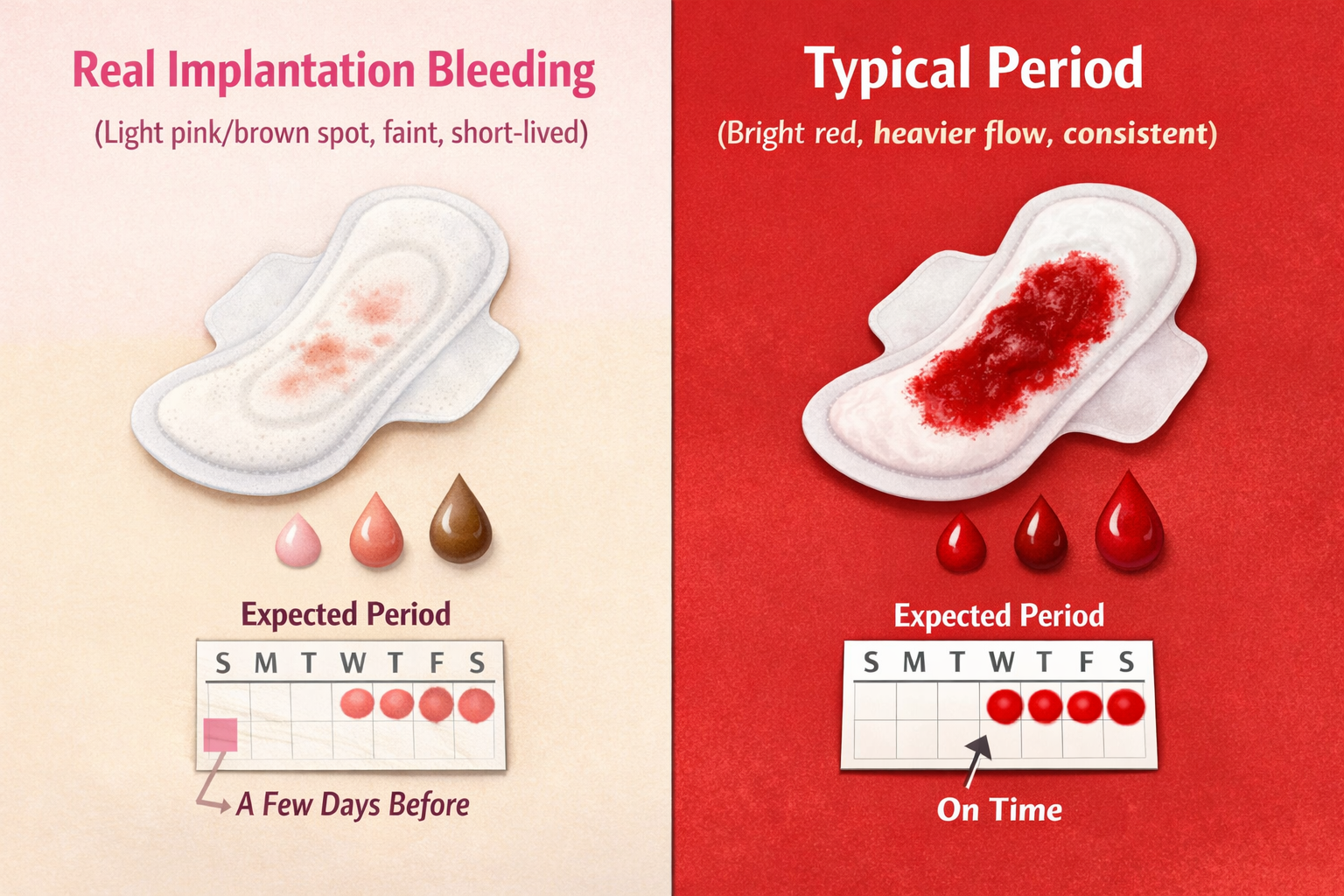
Implantation bleeding is one of the most commonly discussed Implantation Symptoms Day by Day, but it's often confused with a light period or spotting before menstruation. The key differences lie in its color, consistency, flow, and timing relative to your expected period.
Implantation bleeding is typically much lighter and shorter-lived than a menstrual period. While a period starts heavier and lasts several days, implantation bleeding is usually very scant, appearing as light pink or brownish discharge and lasting only a day or two.
| Feature | Implantation Bleeding | Regular Period |
|---|---|---|
| Color | Light pink, rust-colored, or brownish 🤎 | Bright red to dark red 🩸 |
| Consistency | Thin, watery, or mucous-like | Heavier, sometimes with clots |
| Flow | Very light, barely noticeable; usually only a few spots or streaks | Moderate to heavy, requiring pads/tampons |
| Duration | A few hours to 1-2 days ⏳ | Typically 3-7 days |
| Timing | 6-12 DPO (around 1 week before expected period) | On or around the expected date of your menstrual cycle |
| Associated Pain | Mild, transient cramping (if any) | Moderate to severe cramping, often consistent |
| Other Symptoms | May accompany other early pregnancy signs (fatigue, nausea) | May accompany PMS symptoms (bloating, mood swings) |

If you observe very light spotting that fits the description of implantation bleeding, particularly if it occurs in your estimated implantation window (which you can track with an Implantation Date Calculator), it could be an early sign of pregnancy. However, it's still crucial to confirm with a pregnancy test.
Other Common Early Implantation Symptoms Day by Day
Beyond spotting and cramping, several other subtle symptoms may suggest successful implantation and the very beginnings of pregnancy. These are largely due to hormonal shifts, primarily the increase in progesterone and the initial rise of hCG.
These symptoms are often non-specific and can overlap significantly with premenstrual syndrome (PMS), making them unreliable indicators on their own. However, if experienced together or in the absence of an expected period, they can contribute to the overall picture of potential early pregnancy.
- Mild Cramping: Often described as a dull ache or tingling sensation in the lower abdomen, less intense than menstrual cramps. It's thought to be caused by the embryo embedding into the uterine lining.
- Fatigue: Feeling unusually tired or drained, even after sufficient rest. This is one of the earliest and most common pregnancy symptoms, driven by rapidly rising progesterone levels.
- Breast Tenderness or Swelling: Your breasts might feel heavier, more sensitive, or sore to the touch. The areolas might also darken or enlarge slightly. This is due to hormonal changes preparing your body for lactation.
- Nausea or Food Aversions: While often associated with morning sickness later on, some women report a subtle feeling of queasiness or a sudden dislike for certain foods or smells very early on.
- Headaches: Hormonal fluctuations can trigger mild headaches in some individuals during this early phase.
- Mood Swings: The significant hormonal changes can lead to increased emotional sensitivity, irritability, or tearfulness, similar to PMS.
- Increased Basal Body Temperature (BBT): If you're tracking your BBT, you might notice that your temperature remains elevated past the point it would normally drop before your period. A sustained high BBT for 18 days post-ovulation is a strong indicator of pregnancy. You can use a BBT Chart Tool to track this.
Remember that these signs are highly subjective. The only definitive way to confirm pregnancy is through a positive pregnancy test.

When to Take a Pregnancy Test

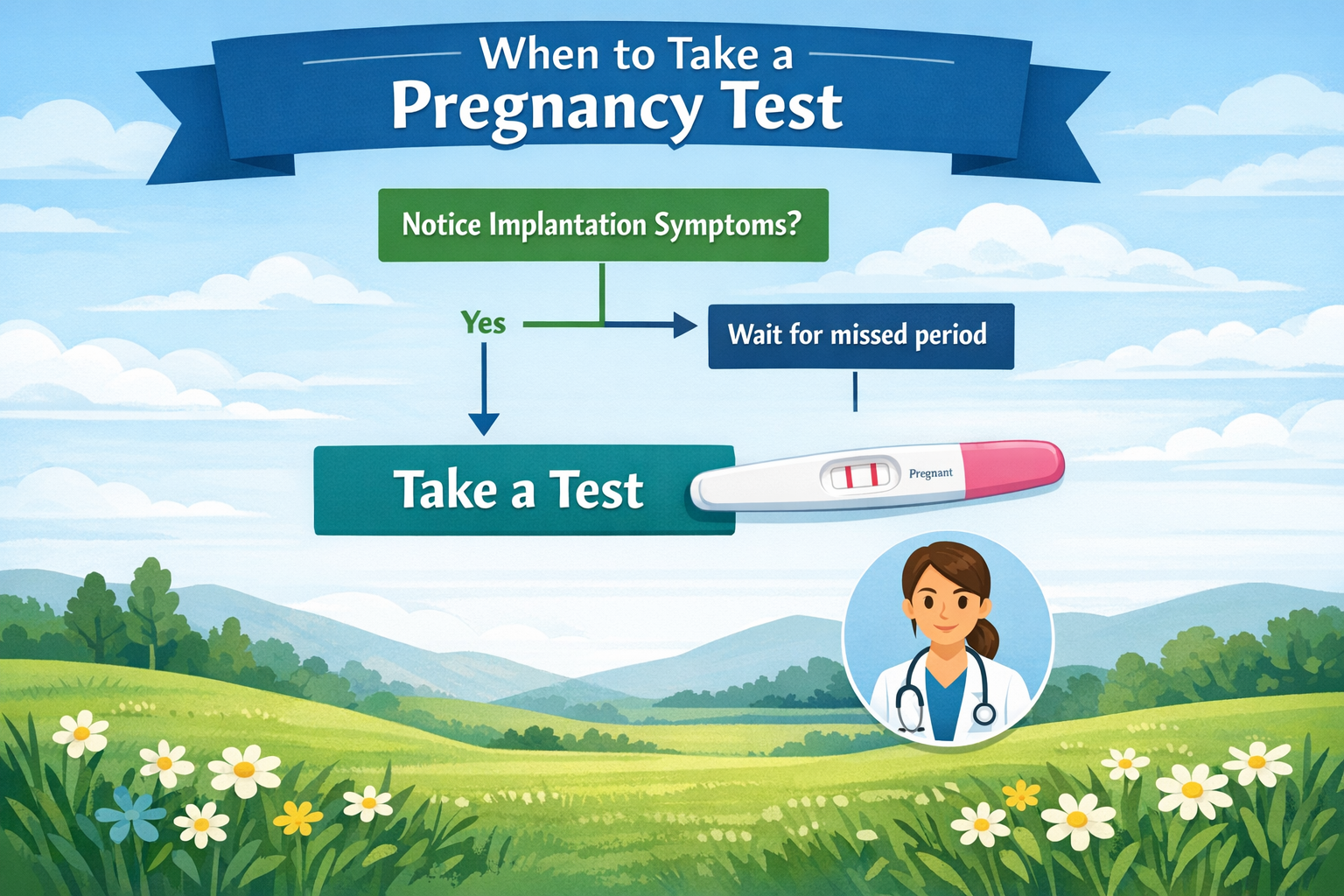
Understanding Implantation Symptoms Day by Day can build anticipation, but knowing the right time to take a pregnancy test is crucial for accurate results and to avoid unnecessary stress. While some tests claim to detect pregnancy very early, timing is key to getting a reliable answer.
The most accurate time to take a home pregnancy test is after you've missed your period. Taking it too early, even if you suspect implantation has occurred, can lead to a false negative because hCG levels may not yet be high enough to be detected.
Guidelines for Pregnancy Testing:
- Wait for a Missed Period: Most home pregnancy tests are designed to be most accurate on or after the first day of your missed period. By this time, if you are pregnant, your hCG levels will typically be high enough for detection.
- Early Detection Tests: Some ultra-sensitive pregnancy tests can detect hCG levels a few days before your expected period. If you choose this option, be aware that results might be less reliable, and a negative result may warrant retesting a few days later.
- First Morning Urine: Use your first morning urine for testing, as it is the most concentrated and will have the highest level of hCG, increasing the chances of an accurate result.
- Confirm with a Doctor: A positive home pregnancy test should be followed up with a visit to your healthcare provider for confirmation through a blood test (which can detect hCG earlier and more accurately) and to begin prenatal care.

If you've been tracking your cycle with tools like an Ovulation Symptoms Checker or an AI Ovulation Predictor, you might have a good idea of your ovulation date. If you believe implantation occurred at 8 DPO, for example, taking a test before 14 DPO (the day of your expected period) might still be too early for a definitive result. Patience is often the best approach.
Conclusion
Navigating the signs and wonders of early pregnancy, especially the subtle nuances of Implantation Symptoms Day by Day, can be both hopeful and challenging. While symptoms like light spotting, mild cramping, fatigue, or breast tenderness can hint at successful implantation, they are often indistinguishable from everyday bodily changes or premenstrual signs. It's important to approach these observations with a balanced perspective, recognizing that many women experience no symptoms at all, and the presence of symptoms doesn't guarantee pregnancy.
The most reliable confirmation of pregnancy remains a positive home pregnancy test taken after a missed period or a blood test administered by a healthcare professional. Tracking your ovulation and understanding your unique cycle can provide valuable context, but ultimately, patience and accurate testing are your best allies in this exciting journey. If you suspect you might be pregnant, the next step is to take a test and consult your doctor for personalized guidance and care.
Related Reading
- Early Pregnancy Symptoms Checker — Am I Pregnant? | Free Quiz
- Fertile Window Calculator | Find Your 6-Day Conception Window
- Late Ovulation: Chances, Timing, & Implantation Success
FAQ
Q1: How soon do implantation symptoms appear after conception? Implantation symptoms typically appear 6 to 12 days after ovulation, which is usually about 6-12 days after conception occurs.
Q2: Can you feel implantation happening? Some women report feeling mild cramping or a tingling sensation during implantation, but it is often very subtle and easily missed or mistaken for other bodily sensations.
Q3: Is implantation bleeding always a sign of pregnancy? No, implantation bleeding is not a definitive sign of pregnancy. While it can occur in early pregnancy, spotting can also be caused by hormonal fluctuations, irritation, or other factors not related to pregnancy.
Q4: How long does implantation bleeding last? Implantation bleeding is usually very light and short-lived, lasting anywhere from a few hours to one or two days. It is much lighter and shorter than a typical menstrual period.
Q5: Can you get a negative pregnancy test if you have implantation symptoms? Yes, it is possible. If you test too early, even if implantation has occurred, your hCG levels might not be high enough for a home pregnancy test to detect, leading to a false negative.
Q6: Are implantation symptoms different for everyone? Absolutely. Implantation symptoms vary significantly from person to person. Some women experience a range of symptoms, while many others have no noticeable signs at all.
Q7: Can implantation cause severe pain? No, implantation typically causes only mild cramping or discomfort, if any. Severe pain or heavy bleeding is not characteristic of implantation and should be evaluated by a healthcare professional.
Q8: When should I take a pregnancy test after experiencing implantation symptoms? The most accurate time to take a home pregnancy test is after you have missed your period. If you test earlier, consider retesting a few days later if your period is still absent.
Q9: What causes fatigue during implantation? Fatigue during implantation and early pregnancy is primarily caused by the rapid rise in progesterone levels, which has a sedating effect on the body, and the significant energy expenditure required for early fetal development.
Q10: Are period cramps and implantation cramps different? Implantation cramps are generally milder, shorter-lived, and more of a dull ache or tingling sensation compared to typical menstrual cramps, which are often more intense and consistent.
Q11: Can implantation bleeding be heavy? No, implantation bleeding is by definition light spotting or a very scant flow. If you experience heavy bleeding, it is not implantation bleeding and should be discussed with a doctor.
Q12: Is it normal to have no implantation symptoms? Yes, it is completely normal to have no noticeable implantation symptoms. Many successful pregnancies occur without any discernible signs during the implantation phase.