Quick Answer: A one-time pregnancy chance calculator estimates the probability of conceiving after a single act of unprotected intercourse by factoring in key biological data like menstrual cycle regularity, ovulation timing, and age. While not a definitive predictor, it provides a valuable percentage-based estimate, primarily useful for individuals seeking to understand their fertility window and potential risk or opportunity for conception.
Key Takeaways
- Estimates, Not Guarantees: A one-time pregnancy chance calculator offers a probability, not a certainty, of conception from a single sexual encounter.
- Core Factors: Calculations heavily rely on ovulation timing, sperm viability, and female age as primary determinants.
- Fertile Window is Key: The highest chances occur within the 5-6 day fertile window leading up to and including ovulation.
- Accuracy Varies: Calculator accuracy depends on the user's input precision and the algorithm's sophistication; it's not a diagnostic tool.
- Age Matters Significantly: Fertility declines with age, a crucial factor integrated into these calculators.
- Sperm Lifespan: Sperm can survive in the female reproductive tract for up to 5 days, extending the fertile window beyond just ovulation day.
- Not for Contraception: These tools are for understanding conception chances, not as a method of birth control.
- Consult a Professional: For personalized advice or concerns, always speak with a healthcare provider.
What is a One-Time Pregnancy Chance Calculator?
A one-time pregnancy chance calculator is a digital tool designed to estimate the likelihood of conception occurring after a single instance of unprotected sexual intercourse. It functions by analyzing various physiological inputs provided by the user to pinpoint the approximate fertile window within a menstrual cycle, thereby quantifying the odds of pregnancy. This tool is especially helpful for those who might be tracking their fertility, had an accidental unprotected encounter, or are generally curious about the biological mechanics of conception.
The calculator typically requires information such as:
- Last Menstrual Period (LMP) Start Date: To establish the starting point of the current cycle.
- Average Cycle Length: The number of days from the start of one period to the start of the next.
- Luteal Phase Length (optional but helpful): The time between ovulation and the next period, usually 12-16 days.
- Age: Female age is a significant factor in fertility.
- Date of Unprotected Intercourse: The specific day for which the pregnancy chance is being calculated.
By processing these details, the calculator determines the approximate day of ovulation and cross-references it with the date of intercourse. Since sperm can live for several days inside the female body (typically up to 5 days), having intercourse in the days leading up to ovulation can still lead to pregnancy. The calculator then provides a percentage-based probability, offering a clearer picture of the risk or opportunity. For a broader understanding of how these tools work, you can explore our general Pregnancy Chance Calculator – Find Your Exact Odds of Conceiving.
How Does a One-Time Pregnancy Chance Calculator Work?
A one-time pregnancy chance calculator functions by primarily estimating your ovulation day and then assessing the proximity of unprotected intercourse to this fertile window. The algorithms use statistical data on typical menstrual cycles, fertility rates, and sperm viability to generate a percentage chance.
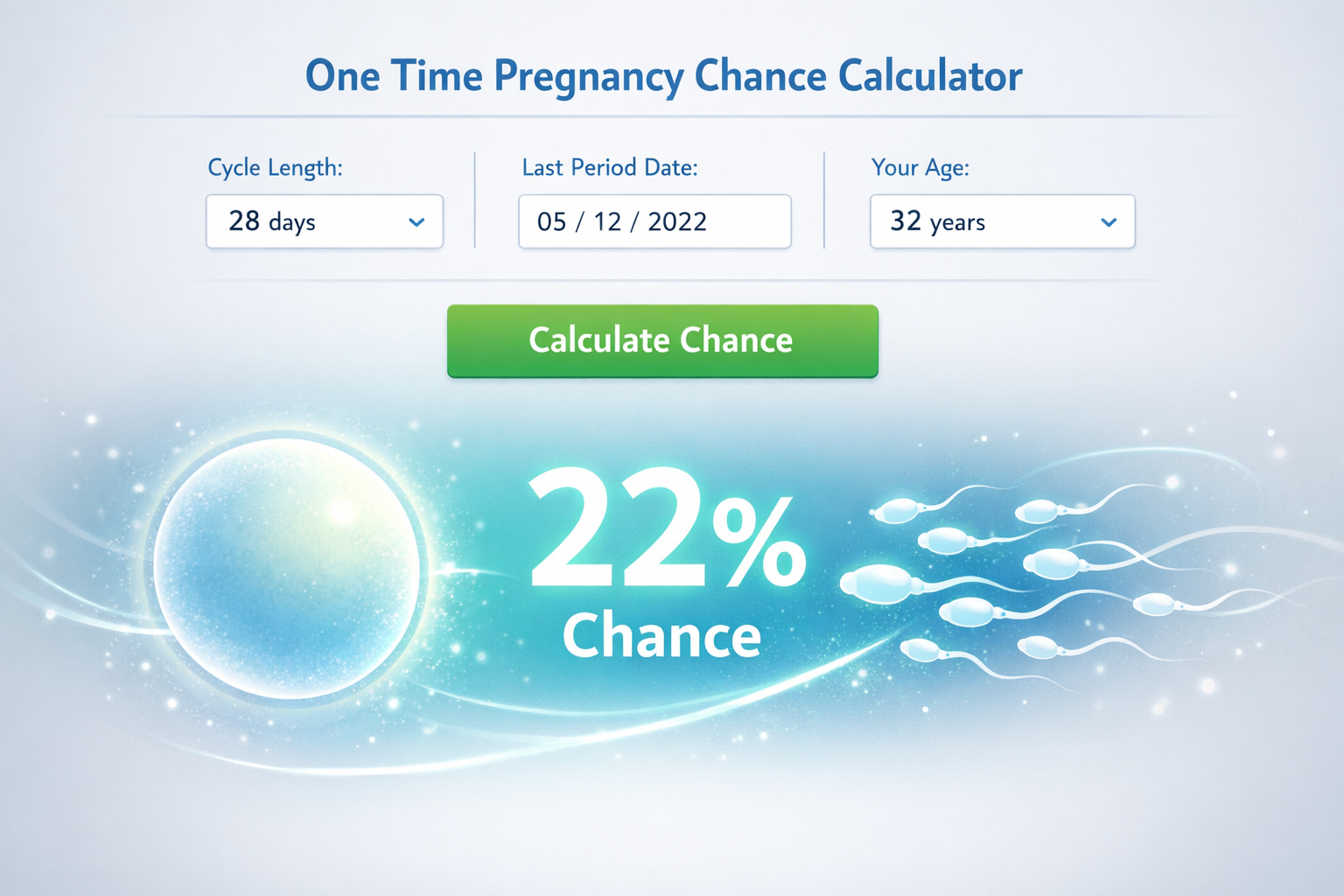
Here’s a breakdown of the core mechanics:
- Menstrual Cycle Analysis: The calculator first uses your last menstrual period (LMP) and average cycle length to predict your approximate ovulation date. Most women ovulate around day 14 of a 28-day cycle, but this can vary significantly.
- Identifying the Fertile Window: The fertile window is generally considered to be the 5 days leading up to ovulation and the day of ovulation itself. This is because sperm can survive for up to 5 days in the reproductive tract, waiting for an egg, and the egg is viable for about 12-24 hours after release.
- Timing of Intercourse: The calculator then compares the date of unprotected sex to your estimated fertile window. The closer intercourse occurs to ovulation, the higher the chance of pregnancy. Intercourse on the day of ovulation or the day before typically yields the highest probabilities.
- Considering Age: Age is a critical biological factor. As women age, particularly after 30, fertility naturally declines. A robust one-time pregnancy chance calculator incorporates age-specific fertility rates into its calculations. For instance, a 25-year-old woman will generally have higher odds than a 40-year-old woman for the same timing of intercourse. You can find more specific information on age-related chances at our Pregnancy Chance by Age Calculator.
- Sperm Viability: The calculator also implicitly accounts for the average lifespan of sperm. While this can vary, the 5-day survival window is a crucial element in determining the overall fertile period.
Decision Rule: Choose a calculator that asks for comprehensive input (LMP, cycle length, age, intercourse date) to get the most accurate estimate. Simple calculators that only ask for the date of intercourse will be less precise due to missing key biological context.
Common Mistake: Relying on the calculator as a definitive "yes" or "no" answer. It provides a probability, not a certainty. A 10% chance still means pregnancy is possible, and a 90% chance isn't a guarantee.
Factors Influencing Your One-Time Pregnancy Chance
Your one-time pregnancy chance is a complex interplay of several biological and timing-related factors, with some carrying more weight than others. Understanding these elements is crucial for interpreting any calculator's results accurately.
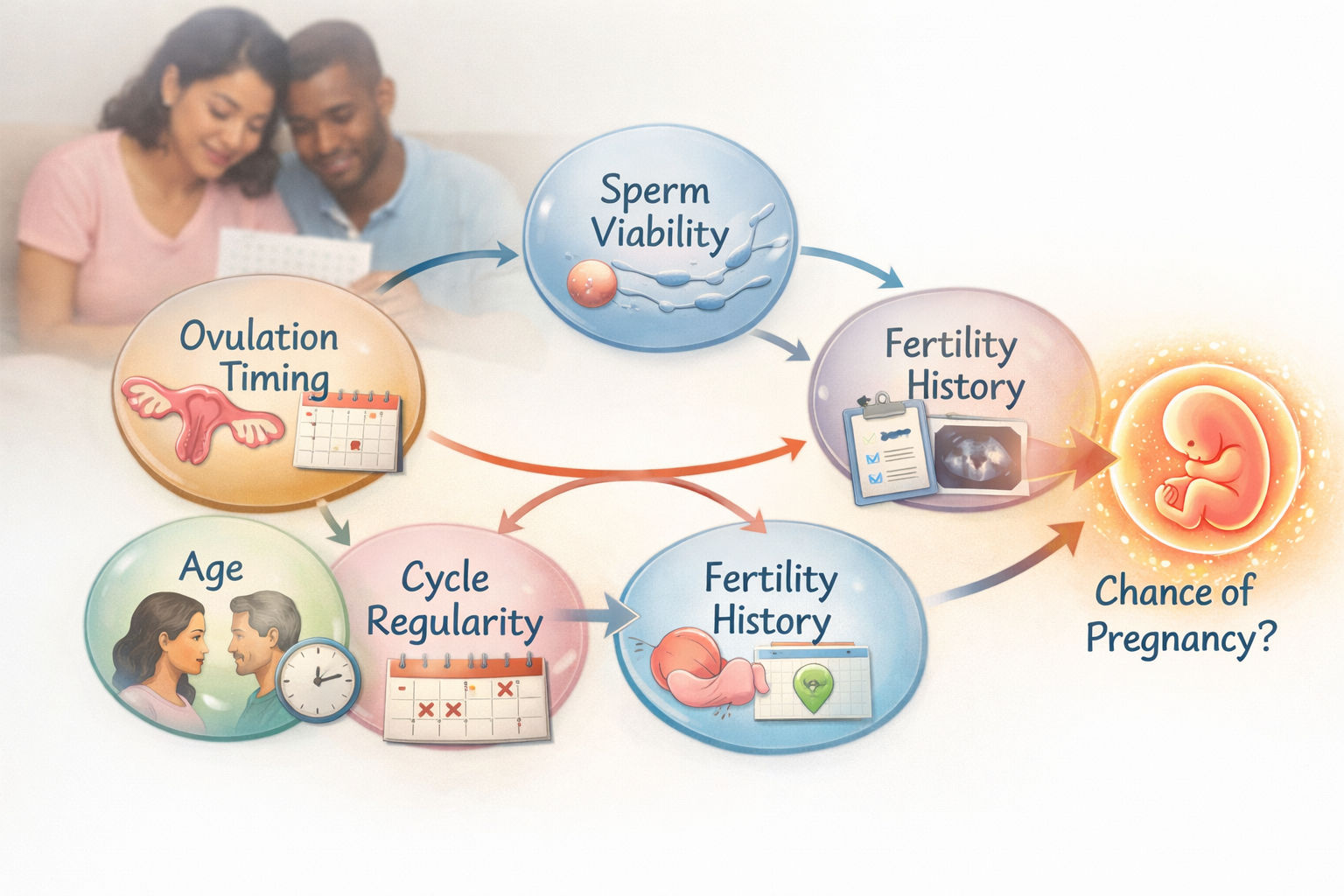
Here are the primary factors:
- Timing of Intercourse Relative to Ovulation: This is the most critical factor. The highest chance of pregnancy occurs if unprotected intercourse happens within the 1-2 days leading up to ovulation or on the day of ovulation itself. Sperm can survive for up to 5 days, so sex a few days before ovulation is still viable, but the odds decrease with each passing day further from ovulation. Our guide on Pregnancy Chances After One Unprotected Act (2026 Guide) offers detailed insights.
- Female Age: Fertility naturally declines with age. For women, the peak fertility years are typically in their late teens and 20s. After age 30, fertility gradually declines, with a more significant drop after 35 and a sharp decrease after 40. This is due to changes in egg quantity and quality. For specific age-related probabilities, refer to articles like What Are My Chances of Getting Pregnant at 30? or What Are My Chances of Getting Pregnant at 40?.
- Menstrual Cycle Regularity: Women with regular cycles (e.g., consistent 28-day cycles) can more easily predict ovulation, which improves the accuracy of a one-time pregnancy chance calculator. Irregular cycles make ovulation prediction challenging, thus reducing the calculator's reliability.
- Sperm Quality and Quantity: While calculators don't typically ask for this input, male fertility factors are always at play. Healthy, viable sperm are essential for conception.
- Overall Reproductive Health: Underlying fertility issues in either partner, such as PCOS, endometriosis, low sperm count, or blocked fallopian tubes, can significantly impact the actual chance of pregnancy, regardless of timing.
- Lifestyle Factors: Diet, exercise, stress levels, smoking, alcohol consumption, and certain medications can indirectly affect fertility in both partners.
| Factor | Impact on One-Time Pregnancy Chance |
|---|---|
| Intercourse Timing | Highest if 1-2 days before or on ovulation day. Rapidly decreases outside the fertile window. |
| Female Age | Peak fertility in 20s. Gradual decline after 30, significant drop after 35. |
| Cycle Regularity | Regular cycles allow for more accurate ovulation prediction, increasing calculator reliability. |
| Sperm Health | Good sperm quality and count are essential for fertilization. |
| Reproductive Health | Pre-existing conditions (e.g., PCOS, endometriosis, male factor infertility) can lower chances significantly. |
| Lifestyle (Both Partners) | Smoking, excessive alcohol, poor diet, high stress can negatively impact fertility and thus one-time pregnancy chances. |
Limitations and Accuracy of a One-Time Pregnancy Chance Calculator
While a one-time pregnancy chance calculator is a useful tool for estimation, it's crucial to understand its limitations and the inherent variability in its accuracy. It provides a probability based on averages and user-provided data, not a definitive medical diagnosis or guarantee.
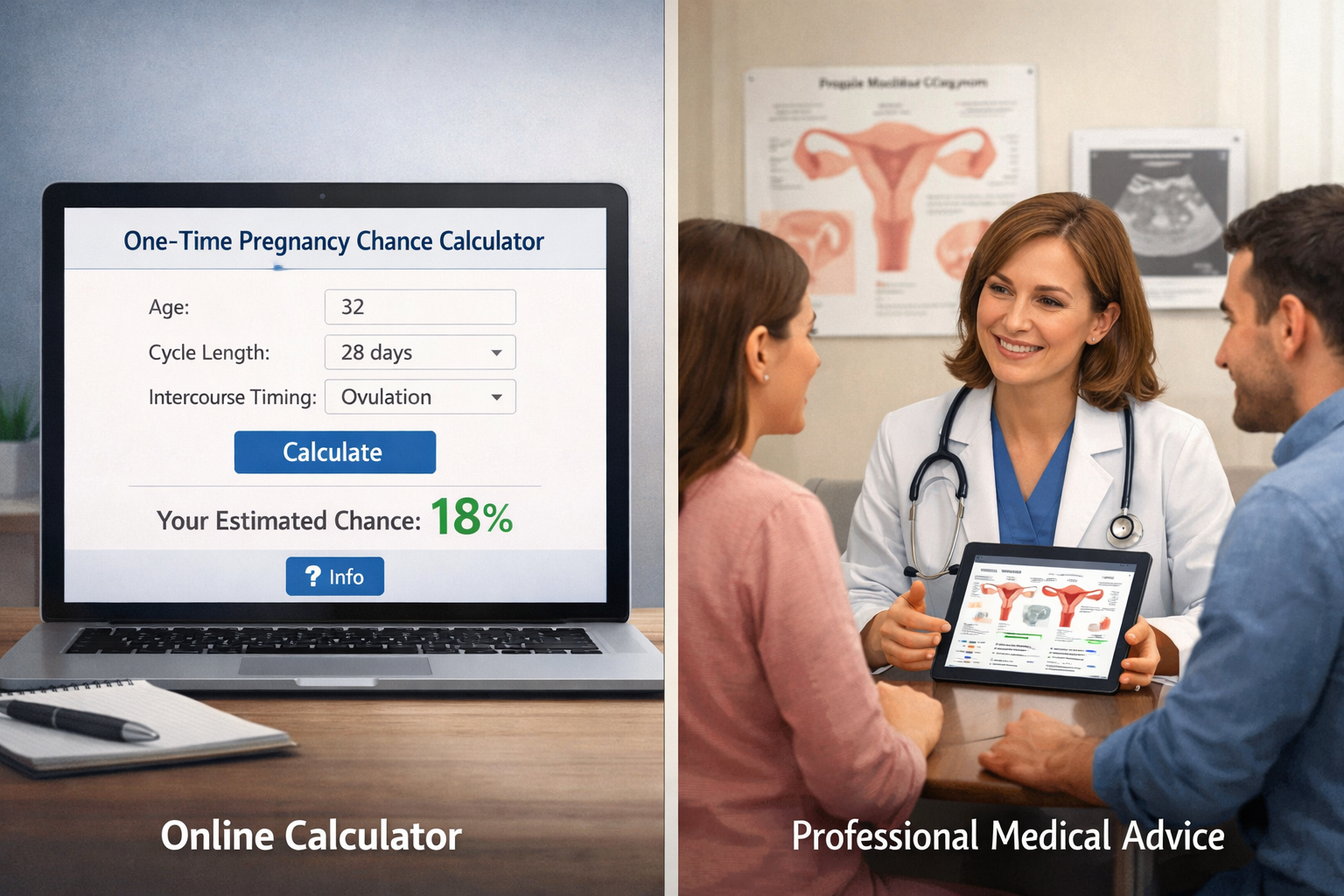
What Limits Accuracy?
- Ovulation Variability: Ovulation can vary from cycle to cycle, even in women with generally regular periods, due to stress, illness, travel, or hormonal fluctuations. Calculators estimate ovulation but cannot definitively confirm it like an ovulation predictor kit (OPK) or basal body temperature (BBT) charting can. For more on late ovulation, see our article Late Ovulation: Chances, Timing, & Implantation Success.
- Individual Biological Differences: Every woman's body is unique. Factors like the exact lifespan of sperm in the reproductive tract or the viability of an egg can differ from person to person and cycle to cycle.
- Inaccurate User Input: The calculator's output is only as good as the information you put in. Incorrect average cycle length, an unknown last menstrual period, or misremembering the date of intercourse will lead to inaccurate results.
- Undiagnosed Fertility Issues: The calculator assumes basic fertility. It cannot account for underlying conditions such as blocked fallopian tubes, PCOS, endometriosis, or male factor infertility, which significantly reduce actual conception chances.
- Method of Conception Prediction: Simple calculators might only use the "calendar method" for ovulation prediction, which is less accurate than methods incorporating basal body temperature tracking or LH surge detection. Advanced calculators may integrate more complex algorithms, but still rely on estimated data.
- Lack of Real-Time Data: Unlike real-time fertility monitoring (e.g., ovulation tests, ultrasounds), a calculator works retrospectively or predictively based on historical data. It can't account for what is happening in your body right now.
Understanding Accuracy Levels
A study published in Human Reproduction (Stanford et al., 2002) found that even with optimal timing, the chance of conception in a single cycle for a healthy young couple is around 20-25%. This inherent biological variability means no calculator can ever guarantee 100% accuracy for a one-time event. Online calculators generally offer moderate accuracy for predicting the fertile window but lower accuracy for predicting individual conception success due to the many variables they cannot measure.
When to Use It: Use a one-time pregnancy chance calculator as an educational tool to understand general probabilities and your fertile window. It's particularly useful if you're trying to conceive and want to optimize timing, or if you've had unprotected sex and want a general idea of the potential risk.
When Not to Rely Solely On It: Do not use it as a substitute for contraception or as a definitive "diagnosis" of pregnancy or non-pregnancy. If you have concerns about potential pregnancy, a home pregnancy test or a visit to a healthcare professional is always recommended. For more on the accuracy of such tools, read How Accurate Are Pregnancy Calculators? Your 2026 Guide.
Conclusion
Understanding your one-time pregnancy chance can be empowering, whether you're trying to conceive or simply seeking information after an unplanned event. A one-time pregnancy chance calculator offers a valuable, data-driven estimate by considering critical factors like ovulation timing, age, and cycle regularity. While these tools are remarkably helpful for gaining a general perspective and identifying your fertile window, it's crucial to remember their probabilistic nature. They provide odds, not certainties, and cannot account for all the individual biological nuances or underlying fertility challenges.
For those actively trying to conceive, using a calculator alongside other fertility tracking methods like ovulation predictor kits can significantly enhance your chances by pinpointing the optimal fertile window. For anyone concerned about a potential pregnancy after a single unprotected encounter, the calculator offers an initial risk assessment, but should always be followed up with a reliable pregnancy test and, if needed, professional medical advice. Always treat these calculators as informational aids and consult with healthcare professionals for personalized guidance regarding your reproductive health and pregnancy concerns in 2026.
FAQ
Q: How accurate is a one-time pregnancy chance calculator? A: A one-time pregnancy chance calculator offers an estimate based on averages and user input, not a definitive prediction. Its accuracy is moderate for predicting the fertile window but less precise for individual conception success due to many unmeasurable biological factors.
Q: What information do I need for a one-time pregnancy chance calculator? A: Typically, you need your last menstrual period (LMP) start date, average cycle length, your age, and the specific date of unprotected intercourse.
Q: Can a one-time pregnancy chance calculator be used as birth control? A: No, a one-time pregnancy chance calculator should not be used as a method of birth control. It provides probabilities, and even a low percentage chance means pregnancy is still possible.
Q: What is the most fertile day for a one-time pregnancy? A: The most fertile day for a one-time pregnancy is typically the day of ovulation and the day immediately preceding it, as the egg is viable for a short period and sperm can survive for several days.
Q: Does my age affect my one-time pregnancy chance? A: Yes, female age significantly affects the one-time pregnancy chance. Fertility naturally declines with age, particularly after 30 and more sharply after 35, due to changes in egg quality and quantity.
Q: How long can sperm survive in the body to cause pregnancy? A: Sperm can typically survive in the female reproductive tract for up to 5 days, meaning intercourse several days before ovulation can still lead to pregnancy.
Q: If the calculator says my chance is low, should I still take a pregnancy test? A: Yes, if you've had unprotected sex and are concerned, you should always take a reliable pregnancy test at the appropriate time (e.g., after a missed period), regardless of the calculator's estimate.
Q: Are there other factors a calculator doesn't consider? A: Yes, a calculator doesn't account for underlying fertility issues in either partner, sperm quality, overall reproductive health, or specific lifestyle factors that can impact conception.
Q: Can irregular periods affect the calculator's accuracy? A: Yes, irregular periods make it much harder for a calculator to accurately predict your ovulation date and fertile window, thus reducing the reliability of its pregnancy chance estimate.
Related Reading
- Pregnancy Chances After One Unprotected Act (2026 Guide)
- How Accurate Are Pregnancy Calculators? Your 2026 Guide
- Fertile Window Calculator – Best Days to Conceive & Ovulation Tracker (Free)
Sources
- Stanford, J. B., White, G. L., & Hatasaka, H. H. (2002). Timing of intercourse to achieve pregnancy: current evidence. Human Reproduction, 17(8), 2095-2099.