Short answer: Yes — you can absolutely get pregnant with late ovulation. The key is tracking your real fertile window and understanding how late ovulation shifts implantation and pregnancy testing timelines.
For many hopeful parents-to-be, understanding the intricacies of the menstrual cycle is a crucial step on the path to conception. While the "average" 28-day cycle with ovulation around day 14 is widely discussed, the reality is that cycles vary significantly. What happens, then, when ovulation doesn't follow this typical pattern? When ovulation occurs later in the cycle, it can raise questions and concerns about fertility, specifically regarding Late Ovulation: Pregnancy Chances & Implantation Timing. If you've found yourself navigating the complexities of a longer cycle, you're not alone, and understanding the science behind late ovulation is key to optimizing your chances of conception.
Key Takeaways
- Late Ovulation Defined: Ovulation is considered "late" when it occurs after day 21 of a menstrual cycle.
- Pregnancy is Possible: Conception is absolutely possible with late ovulation, provided intercourse is timed correctly within the fertile window.
- Fertile Window Shifts: The fertile window (5 days before ovulation plus ovulation day) shifts later in the cycle when ovulation is delayed, making accurate tracking crucial.
- Luteal Phase Importance: A healthy luteal phase (12-14 days) is vital for successful implantation. A shortened luteal phase (under 10 days) can hinder implantation.
- Implantation Timing Risks: While implantation can occur 4-10 days after conception, implantation beyond day 10 significantly increases miscarriage risk.
Understanding Late Ovulation and its Impact on Fertility
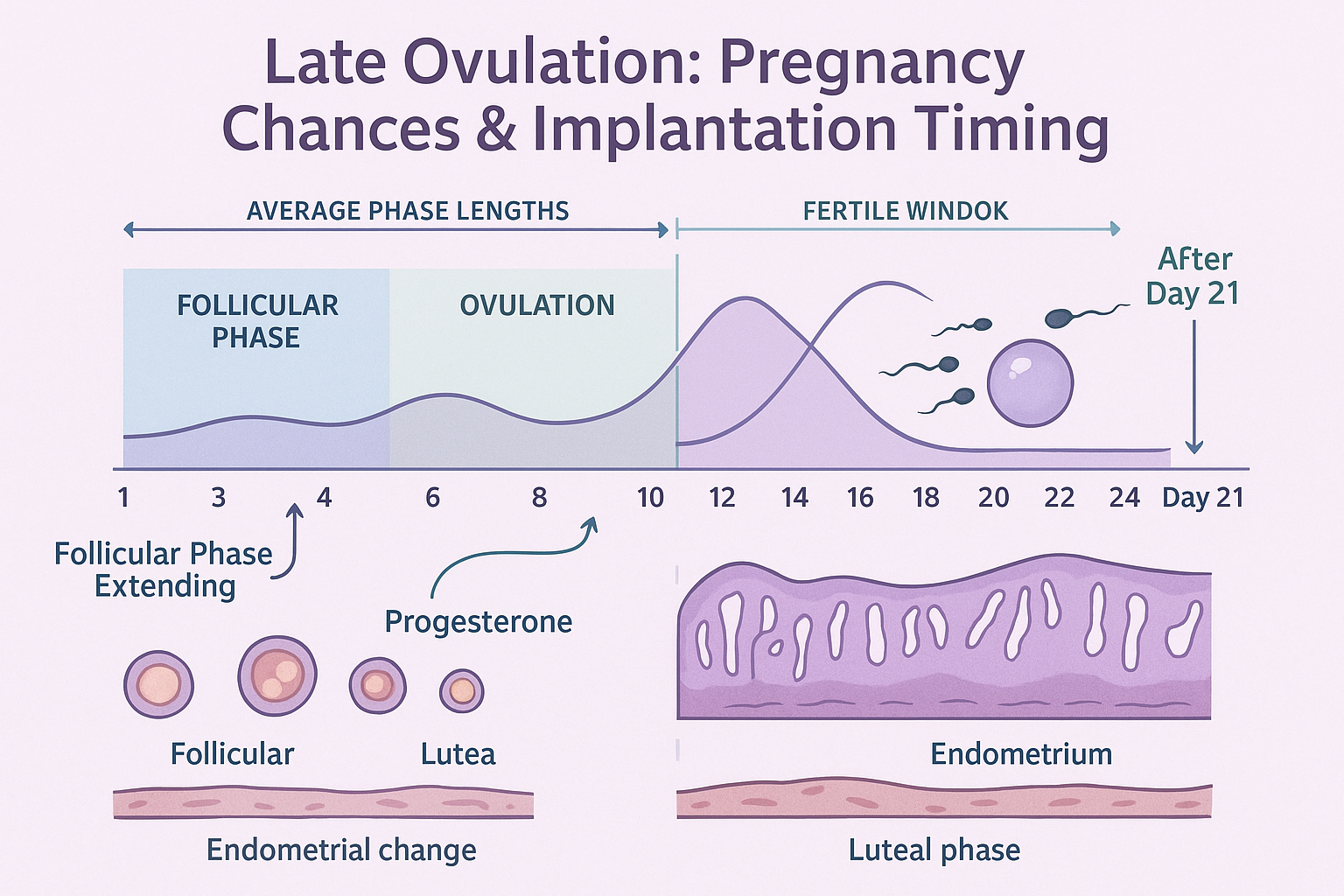
The menstrual cycle is a finely tuned symphony of hormones, designed to prepare a woman's body for potential pregnancy. It's typically divided into two main phases: the follicular phase and the luteal phase. The follicular phase begins on the first day of your period and ends with ovulation, while the luteal phase starts after ovulation and continues until your next period. Ovulation is the release of a mature egg from the ovary, ready to be fertilized.
Generally, ovulation occurs around day 14 of a 28-day cycle. However, this is an average, not a rule. Late ovulation is medically defined as ovulation occurring after day 21 of a menstrual cycle [1, 2, 3]. This can happen for various reasons, leading to a longer overall cycle length. While it might seem like a disadvantage, it's important to clarify that late ovulation does not necessarily mean you can't get pregnant.
What Causes Late Ovulation?
Several factors can contribute to late ovulation. Understanding these can help individuals work with their healthcare providers to address underlying issues if necessary. Common causes include:
- Polycystic Ovary Syndrome (PCOS): This is one of the most common causes of irregular and late ovulation, characterized by hormonal imbalances.
- Stress: High levels of physical or emotional stress can disrupt hormonal signals that control ovulation.
- Thyroid Disorders: Both an overactive (hyperthyroidism) and underactive (hypothyroidism) thyroid can interfere with ovulation.
- High Prolactin Levels: Elevated prolactin, the hormone responsible for milk production, can inhibit ovulation.
- Perimenopause: As women approach menopause, their cycles can become irregular, including delayed ovulation.
- Significant Weight Fluctuations: Being significantly underweight or overweight can impact hormonal balance and ovulation timing.
- Intense Exercise: Extremely strenuous exercise can sometimes suppress ovulation.
- Recent Discontinuation of Hormonal Birth Control: It can take several months for the body's natural cycle to regulate after stopping birth control.
Recognizing the signs of late ovulation is crucial for anyone trying to conceive. These signs can be subtle, but consistent tracking can reveal patterns.
Identifying Late Ovulation
Tracking your cycle is paramount, especially when ovulation isn't regular. Here are common methods:
- Basal Body Temperature (BBT) Charting: Your basal body temperature rises slightly (0.5-1 degree Fahrenheit) after ovulation and stays elevated until your period. Tracking this daily can help pinpoint when ovulation occurred, even if it's late. Many find a BBT chart tool helpful for this.
- Ovulation Predictor Kits (OPKs): These kits detect the surge in Luteinizing Hormone (LH) that precedes ovulation by 24-36 hours. If you're ovulating late, you might need to use OPKs for a longer duration each cycle.
- Cervical Mucus Monitoring: As ovulation approaches, cervical mucus often becomes clear, stretchy, and resembles raw egg whites – an ideal environment for sperm. This "fertile quality" mucus typically appears a few days before and on the day of ovulation.
- Ovulation Symptoms: Some women experience mild cramping (mittelschmerz), breast tenderness, or increased libido around ovulation. While not definitive, these can be clues. A symptoms checker can help you log and interpret these.
- Cycle Length Calculator: If your cycles are consistently longer than 35 days, it's a strong indicator of late ovulation. You can use a cycle length calculator to track this over time.
Can You Get Pregnant with Late Ovulation?
The unequivocal answer is yes, pregnancy is absolutely possible with late ovulation [1, 2, 5]. The key, however, lies in precisely timing intercourse within your fertile window. The fertile window consists of the five days leading up to ovulation plus the day of ovulation itself [5]. When ovulation is delayed, this entire fertile window shifts later in your cycle.
This means that if you're accustomed to planning intercourse around day 12-14, but you're actually ovulating on day 25, you could be missing your conception opportunities. This is why accurate tracking, using the methods described above, becomes even more vital. Tools like an ovulation calculator or an AI ovulation predictor can be incredibly helpful in navigating these shifted fertile windows.
One potential concern occasionally linked with late ovulation, especially in cycles longer than 35 days, is a slightly reduced egg quality [2]. While this can be a factor for some, it doesn't preclude successful pregnancy. Many women with late ovulation go on to conceive healthy babies. The primary challenge is often correctly identifying the fertile window.
🗓️ Did you know? Sperm can survive in the female reproductive tract for five or more days [3]. This means having intercourse 2-3 days before ovulation can significantly increase your chances of conception, as sperm will be waiting when the egg is released. This extended sperm viability is particularly helpful for those with unpredictable or late ovulation.
[[IMAGE_0]]
Navigating Your Fertile Window with Late Ovulation
Predicting the fertile window is crucial, and it becomes a bit more of a detective job with late ovulation. Here’s how to approach it:
- Consistent Tracking is Key: Don't rely on generic cycle apps that assume a 28-day cycle. Use a method that confirms ovulation, like BBT charting or consistent OPK use. A fertile window calculator can adapt to your unique cycle data once you've identified your ovulation day.
- Look for LH Surge: When you start getting positive OPKs, you know ovulation is typically 24-36 hours away. This is your cue to have intercourse.
- Observe Cervical Mucus: This is a natural and free way to predict fertility. The presence of stretchy, clear mucus often precedes the LH surge and ovulation.
- Listen to Your Body: Pay attention to any ovulation symptoms you might experience. While not foolproof, they can be helpful indicators.
- Patience and Persistence: Cycles can fluctuate. Don't get discouraged if one cycle is longer than another. Consistency in tracking over several months will give you the clearest picture.
Implantation Timing and Its Significance with Late Ovulation
Once fertilization occurs, the journey of the embryo to the uterus and its subsequent implantation is a critical step in achieving pregnancy. Understanding this timeline, especially how it relates to Late Ovulation: Pregnancy Chances & Implantation Timing, is vital for anyone trying to conceive.
The Journey to Implantation
After fertilization in the fallopian tube, the newly formed embryo begins a rapid series of cell divisions while traveling towards the uterus. This journey typically takes 3-5 days. Once in the uterus, the embryo, now called a blastocyst, "hatches" from its protective shell and begins to attach to the uterine lining.
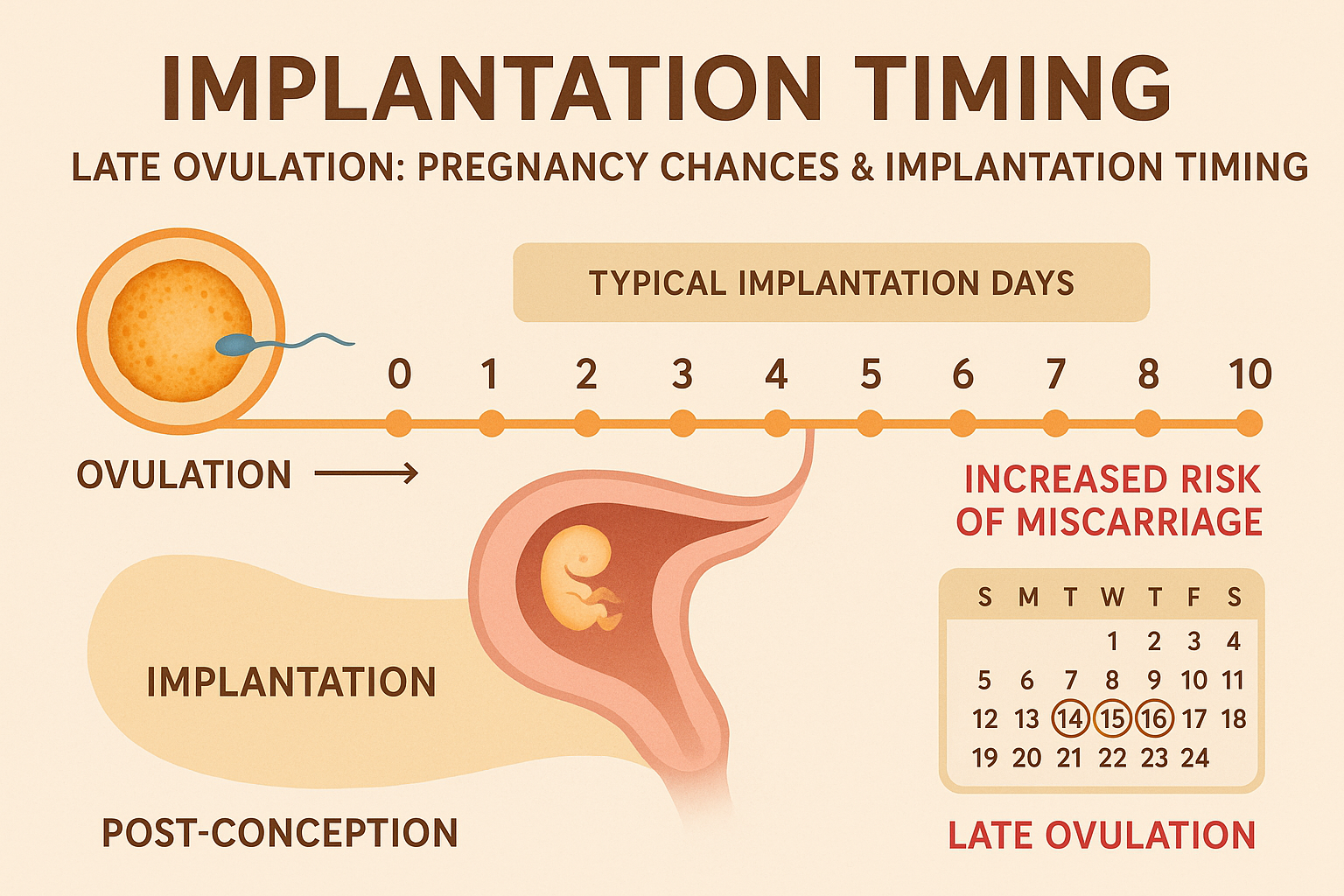
Implantation typically occurs anywhere from 4 to 10 days after conception [1]. This window is crucial, as the uterine lining (endometrium) must be perfectly receptive to the embryo. This receptivity is maintained by the hormone progesterone, which is produced by the corpus luteum (the remnant of the follicle after the egg is released).
The Role of the Luteal Phase
The luteal phase is the period after ovulation and before the next period begins. Its primary function is to prepare and maintain the uterine lining for potential implantation. For successful implantation, the luteal phase should ideally be between 12 and 14 days long [2]. This provides enough time for the embryo to travel, implant, and for the body to start producing hCG (human chorionic gonadotropin), which signals the corpus luteum to continue progesterone production.
If the luteal phase is shortened, typically defined as fewer than 10 days, it is known as a Luteal Phase Defect (LPD). A short luteal phase means there might not be enough time or sufficient progesterone to adequately prepare the uterine lining, and implantation may not occur successfully [2]. While late ovulation primarily affects the follicular phase length, it's essential to ensure your luteal phase remains healthy to support a viable pregnancy. If you consistently observe a short luteal phase, discussing it with your doctor is advisable.
Implantation Timing and Miscarriage Risk
The timing of implantation itself carries significant implications for pregnancy viability. While implantation can happen between 4 and 10 days after conception, studies have shown a concerning trend:
- Implantation occurring more than 8-10 days after conception significantly increases the risk of miscarriage [1, 3].
- By day 12 after conception, the odds of miscarriage can reach as high as 82% [1].
This means that even if conception occurs, a very late implantation may indicate issues with the embryo's development or the uterine environment, making the pregnancy less likely to be viable. It's a subtle but important distinction: late ovulation doesn't inherently increase miscarriage risk, but late implantation does. However, if late ovulation leads to a compromised luteal phase or other issues, it could indirectly impact implantation success.
💡 Remember: While these statistics can be daunting, they refer to implantation timing, not ovulation timing directly. Many successful pregnancies result from late ovulation, as long as implantation happens within the optimal window.
[[IMAGE_1]]
How Late Ovulation Can Influence Implantation Timing
While late ovulation per se doesn't change the biological timing of implantation after fertilization, it can create scenarios that indirectly impact its success:
- Difficulty in Timing Intercourse: If you don't accurately track ovulation, you might miss your fertile window entirely, or time intercourse too early, potentially resulting in conception occurring at a suboptimal time relative to the uterine lining's readiness.
- Concerns about Egg Quality: As mentioned, cycles significantly longer than 35 days might occasionally be associated with slightly reduced egg quality [2]. If egg quality is compromised, it could theoretically impact the embryo's development and its ability to implant effectively, or lead to later implantation.
- Luteal Phase Health: Even with late ovulation, a healthy luteal phase of 12-14 days is crucial. If late ovulation is coupled with a luteal phase defect, the chances of successful implantation are reduced.
If you suspect late ovulation is affecting your ability to conceive, or if you're concerned about your implantation timing, consulting a healthcare professional is always the best course of action. They can help diagnose any underlying issues and recommend appropriate interventions.
What to Do if You Suspect Late Ovulation or Implantation Issues
- Track Diligently: Continue monitoring your cycle with BBT, OPKs, and cervical mucus. Tools like an implantation calculator can help you estimate your window once conception has occurred.
- Consult Your Doctor: If you've been tracking for several months with no success, or if your cycles are consistently very long (e.g., over 35-40 days), seek medical advice. Your doctor can perform tests to check hormone levels, assess for PCOS, thyroid issues, or other conditions.
- Consider Fertility Specialists: For persistent issues, a fertility specialist can offer more advanced diagnostics and treatments, such as ovulation induction medications (e.g., Clomid, Femara) to encourage earlier, more regular ovulation.
- Maintain a Healthy Lifestyle: Manage stress, maintain a healthy weight, eat a balanced diet, and limit alcohol and caffeine. These factors can positively influence overall reproductive health.
When to Expect a Period or a Positive Pregnancy Test
With late ovulation, everything shifts later. This means if you ovulate late, your period will also be delayed. This isn't necessarily a cause for concern, but simply a result of a longer follicular phase [4].
If you've timed intercourse correctly and are hoping for a positive pregnancy test, remember that the earliest you can typically test is about 10-14 days after ovulation, not after your last period. Because late ovulation pushes this window back, you'll need to wait longer than someone with a "standard" cycle. A pregnancy chance calculator can give you an idea of your odds, and once you have a positive test, a due date calculator can help estimate when your baby might arrive.
Common Questions About Late Ovulation
Can you still get pregnant with late ovulation?
Yes. Many women conceive successfully even if ovulation happens later than day 21. The key is identifying your actual fertile window and timing intercourse correctly.
Does late ovulation delay implantation?
Late ovulation delays the entire pregnancy timeline, including implantation and pregnancy testing. Implantation still usually happens 6–10 days after ovulation.
When should I take a pregnancy test after late ovulation?
If you ovulated late, you should wait at least 12–14 days after ovulation before taking a pregnancy test. Testing too early can cause false negatives.
Can stress cause late ovulation?
Yes. Emotional stress, illness, travel, sleep disruption, and hormonal imbalances can all delay ovulation.
Does late ovulation increase miscarriage risk?
Late ovulation itself does not automatically increase miscarriage risk. However, extremely delayed implantation after conception may reduce pregnancy viability.
Conclusion
Understanding Late Ovulation: Pregnancy Chances & Implantation Timing is a crucial step for many individuals on their fertility journey in 2025. While late ovulation can introduce complexities by shifting the fertile window, it absolutely does not mean the end of your pregnancy hopes. By diligently tracking your cycle, identifying your personal fertile window, and understanding the critical timing of implantation, you can significantly improve your chances of conception.
The primary takeaway is that accurate ovulation tracking is paramount. Methods like basal body temperature charting, ovulation predictor kits, and cervical mucus monitoring empower you to pinpoint your unique fertile window, even when it occurs later than average. Remember that while late ovulation extends the follicular phase, a healthy luteal phase of 12-14 days is essential for successful implantation. Should you have concerns about consistently late ovulation, a short luteal phase, or difficulties with conception after a reasonable period of trying, do not hesitate to consult your healthcare provider or a fertility specialist. They can provide personalized advice, conduct necessary diagnostics, and recommend appropriate interventions to support your journey to parenthood. Keep tracking, stay informed, and remain hopeful.
References
[1] Wilcox, A. J., Baird, D. D., & Weinberg, C. R. (1999). Time of implantation of the conceptus and loss of pregnancy. New England Journal of Medicine, 340(23), 1796-1799. [2] Lenton, E. A., Landgren, B. M., & Sexton, L. (1984). Normal variation in the length of the luteal phase of the menstrual cycle. British Journal of Obstetrics and Gynaecology, 91(7), 685-689. [3] Wilcox, A. J., Weinberg, C. R., & Baird, D. D. (1995). Timing of sexual intercourse in relation to ovulation. New England Journal of Medicine, 333(23), 1517-1521. [4] Reed, B. G., & Carr, B. R. (2018). The Normal Menstrual Cycle and the Control of Ovulation. In K. L. Feingold (Ed.), Endotext. MDText.com, Inc. [5] Barratt, C. L. R., Bjorndahl, L., De Jonge, D., et al. (2017). The ESHRE guidelines on male infertility: The ESHRE Working Group on Male Infertility. Human Reproduction Open, 2017(2), hox010.