Quick Answer: You can tell if you ovulated successfully by tracking a combination of physical signs (like a temperature rise and changes in cervical mucus), using ovulation predictor kits (OPKs), and confirming with a blood progesterone test or ultrasound. No single method is 100% reliable on its own, but combining two or three gives you a much clearer picture.
Key Takeaways
- A sustained basal body temperature (BBT) rise of about 0.2°C (0.4°F) after ovulation is one of the most reliable at-home signs.
- Ovulation predictor kits detect the LH surge that triggers ovulation — a positive OPK means ovulation is likely coming within 12–36 hours, not that it has already happened.
- Egg-white cervical mucus appears just before ovulation; after ovulation, it typically becomes thick and cloudy.
- Mittelschmerz (one-sided pelvic pain) can signal ovulation but is not present in everyone.
- A progesterone blood test drawn 7 days after suspected ovulation is the most medically reliable confirmation.
- Ultrasound monitoring (follicle tracking) is the gold standard used in fertility clinics.
- Ovulation can be irregular — stress, illness, and hormonal conditions can delay or suppress it.
- If you're not seeing clear signs after several cycles, talk to your doctor about further testing.
What Does "Successful Ovulation" Actually Mean?
Successful ovulation means a mature egg was released from one of your ovaries and is available for fertilization. It's not just about detecting the LH surge — it means a follicle actually ruptured and an egg was released. This distinction matters because an LH surge can occasionally occur without a follicle releasing an egg, a condition called luteinized unruptured follicle (LUF) syndrome.
For most people trying to conceive, knowing how to confirm ovulation — not just predict it — is the critical step. Prediction tells you when to try; confirmation tells you whether your cycle is working as expected.
The Most Reliable Ways to Know If You Ovulated Successfully
Several methods can help you confirm ovulation, ranging from free at-home tracking to clinical tests. Using more than one method together is the most effective approach.
1. Basal Body Temperature (BBT) Charting
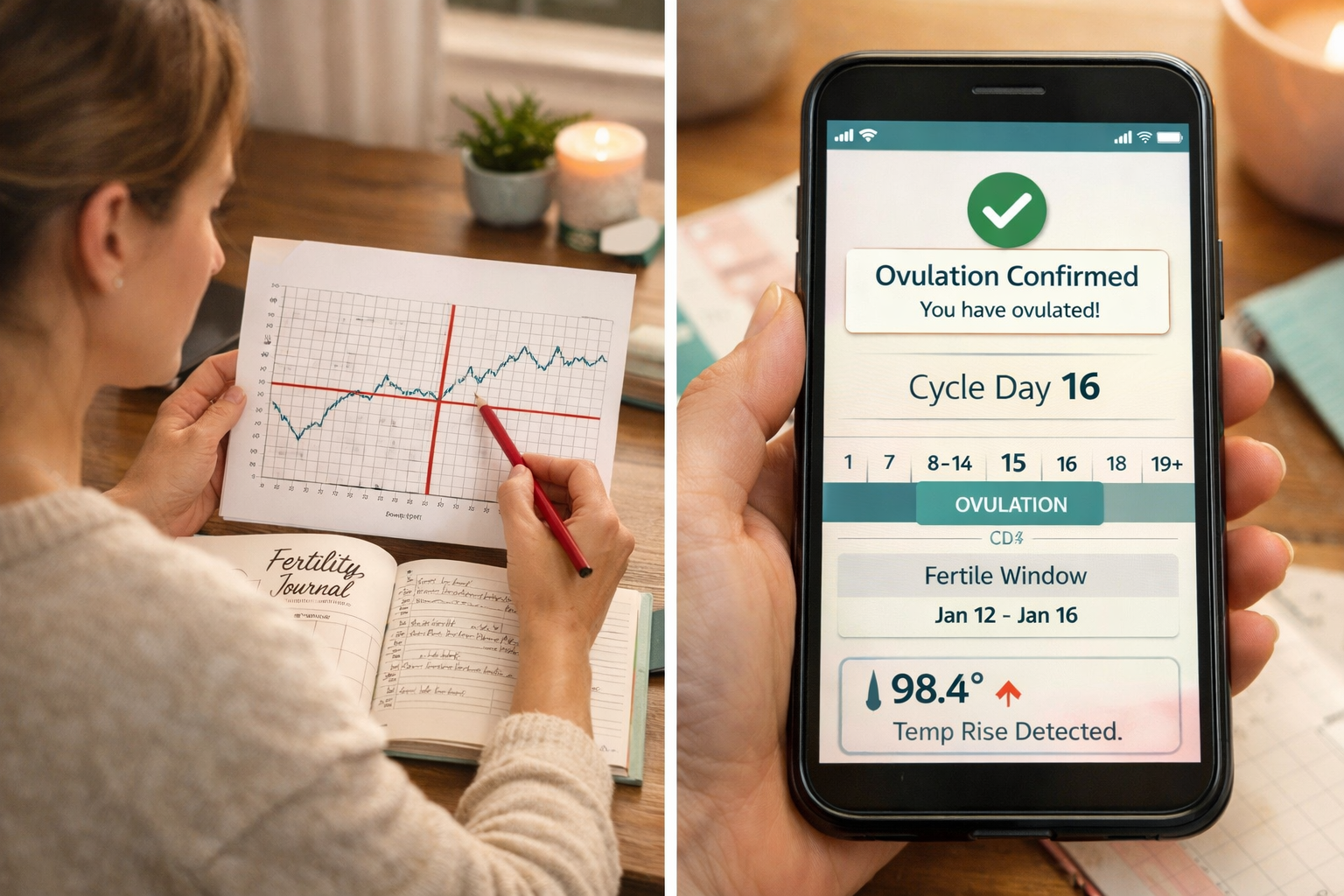
Your resting body temperature rises slightly after ovulation due to the hormone progesterone. This rise is typically 0.2°C (0.4°F) or more and stays elevated for at least three consecutive days — which is the standard confirmation that ovulation occurred.
How to do it:
- Take your temperature every morning before getting out of bed, at the same time each day.
- Use a BBT thermometer (accurate to two decimal places).
- Record readings in a chart or app.
- Look for a clear, sustained thermal shift — not just a one-day spike.
Common mistake: A single elevated reading doesn't confirm ovulation. You need at least three consecutive higher temperatures to confirm the shift.
You can use our BBT Chart Tool to log and visualize your temperature data across cycles.
2. Ovulation Predictor Kits (OPKs)
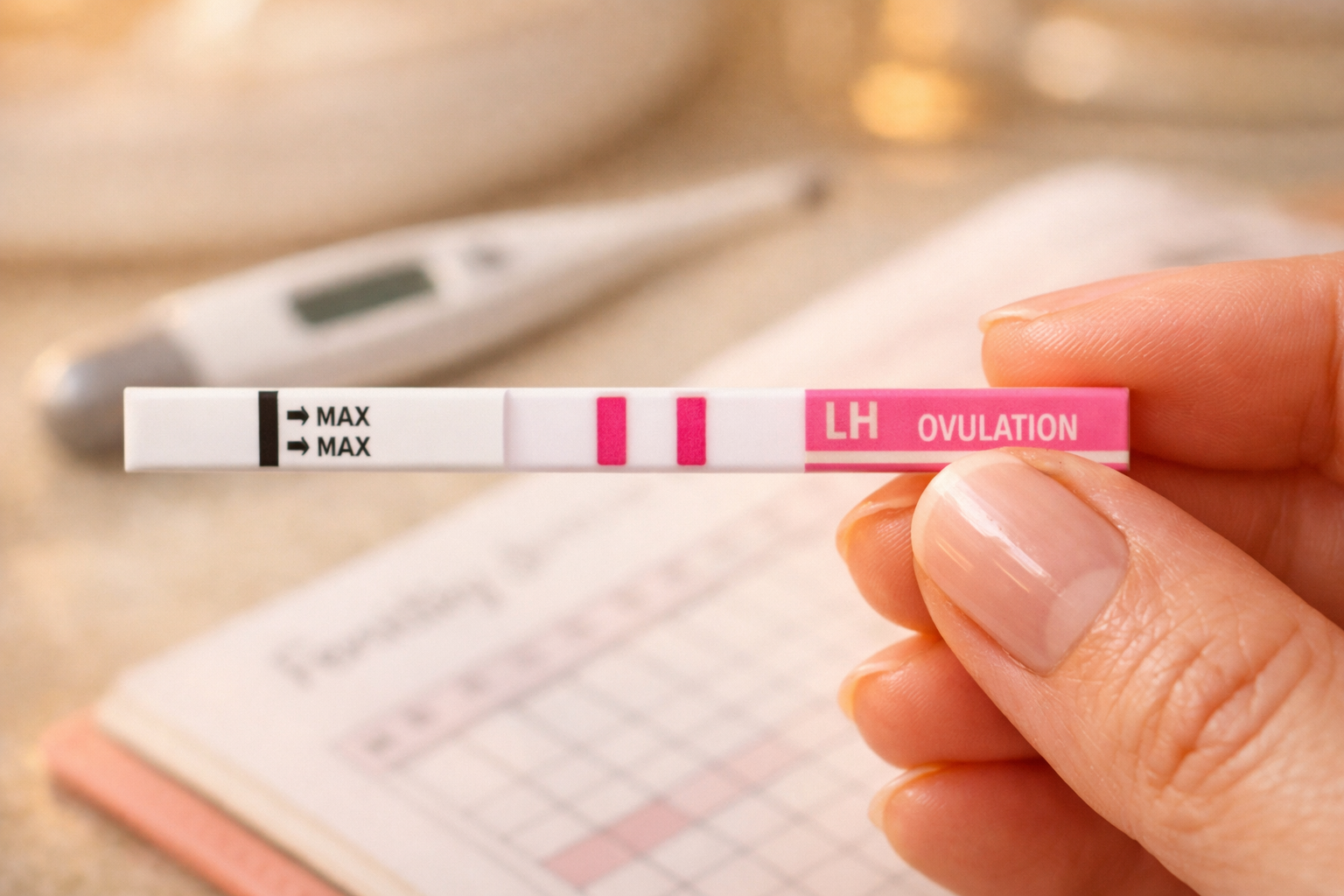
OPKs detect the luteinizing hormone (LH) surge in your urine. A positive result means ovulation is likely within 12–36 hours. They're widely available, easy to use, and reasonably accurate for predicting ovulation.
Important limitation: OPKs confirm an LH surge, not that ovulation actually happened. For most people with normal cycles, ovulation follows the surge — but not always.
"A positive OPK is a green light to try to conceive, not a guarantee that the egg was released."
3. Cervical Mucus Monitoring
Cervical mucus changes throughout your cycle in response to estrogen and progesterone.
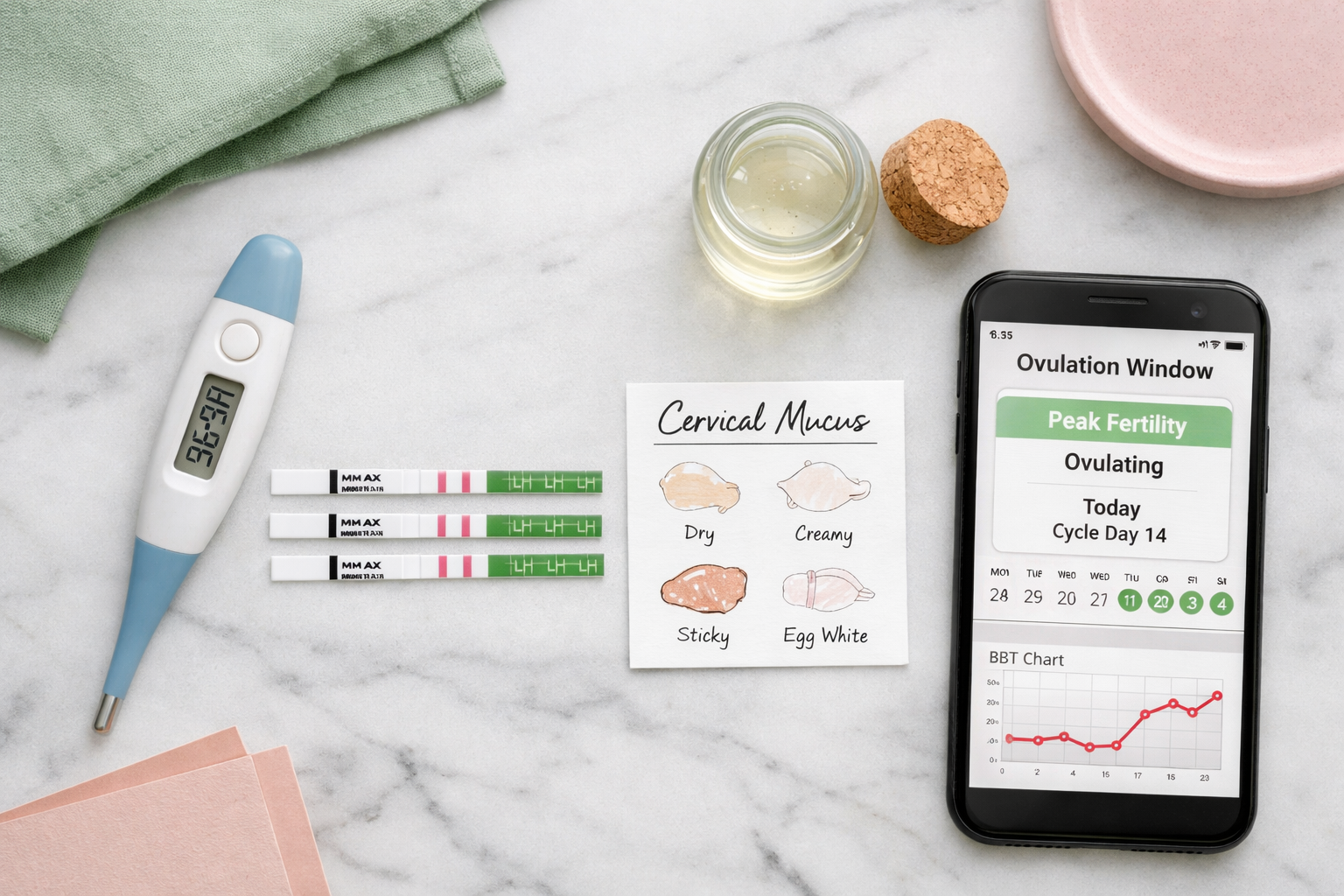
| Phase | Mucus Appearance | What It Means |
|---|---|---|
| After period | Dry or sticky | Low fertility |
| Pre-ovulation | Creamy, white | Fertility increasing |
| At ovulation | Clear, stretchy (egg-white) | Peak fertility |
| After ovulation | Thick, cloudy, or absent | Ovulation likely occurred |
The shift from egg-white mucus back to thick or absent discharge is a retroactive sign that ovulation happened.
4. Progesterone Blood Test (Most Reliable at Home)
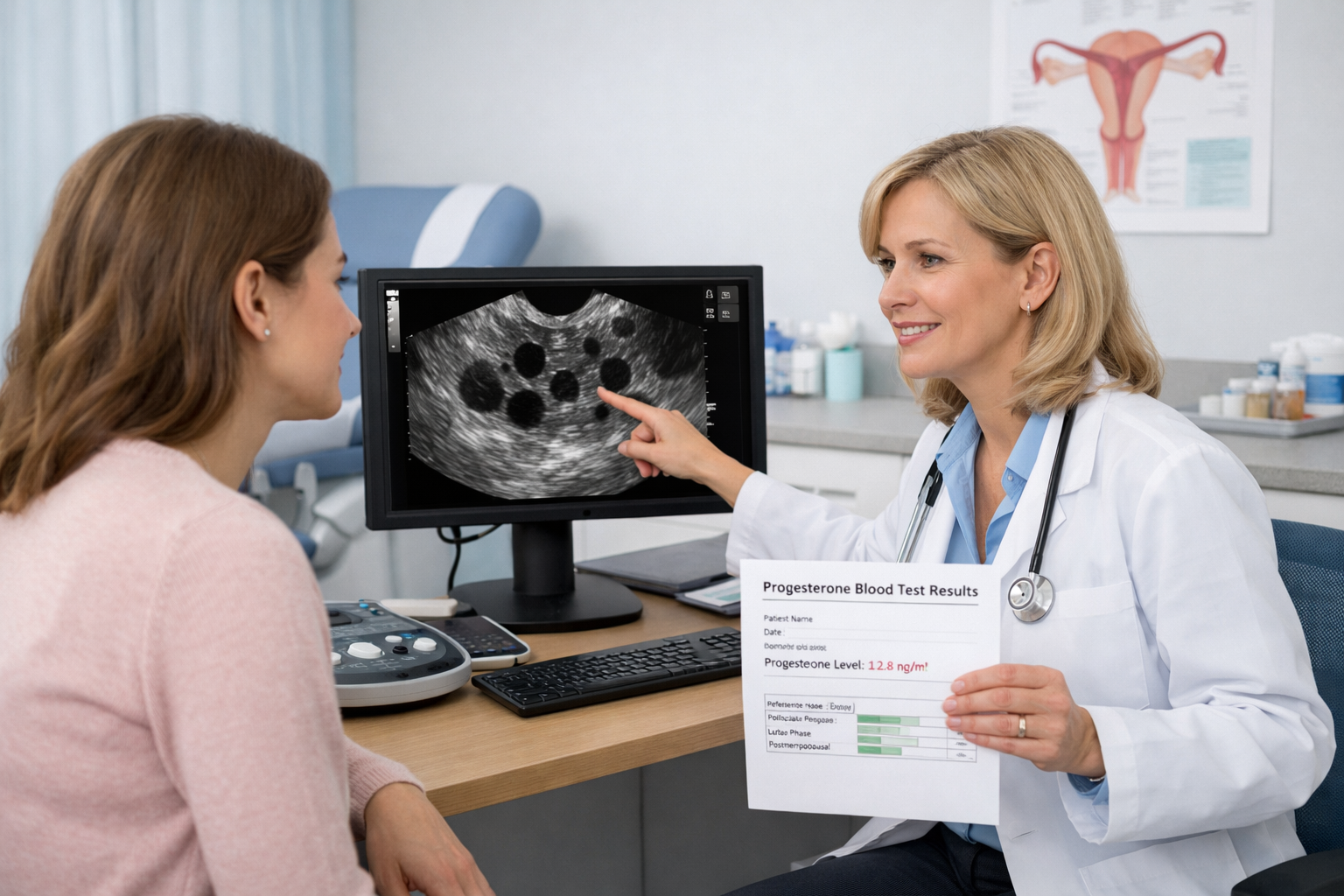
A blood test measuring progesterone levels — drawn about 7 days after suspected ovulation (often called "day 21" in a standard 28-day cycle) — is the most reliable non-imaging way to confirm ovulation. A progesterone level above 3 ng/mL generally suggests ovulation occurred, though many clinicians look for levels above 10 ng/mL to confirm a strong ovulatory response (American College of Obstetricians and Gynecologists).
Choose this if: You want medical confirmation, you've had irregular cycles, or you've been trying to conceive for several months without success.
5. Ultrasound Follicle Monitoring
A transvaginal ultrasound can track follicle growth and confirm rupture after ovulation. This is the gold standard used in fertility clinics. It's not a routine at-home option, but it's the most definitive method available.
Physical Signs That Suggest You Ovulated Successfully
Beyond tests and charts, your body often gives physical clues. These signs are supportive evidence — not confirmation on their own — but they're worth knowing.
- Mittelschmerz: A one-sided cramping or twinge in your lower abdomen. This occurs in some people at the time of ovulation. It can last a few minutes to a few hours.
- Breast tenderness: Progesterone after ovulation can cause breast soreness in the days following.
- Bloating: Some people notice mild bloating around ovulation.
- Increased libido: Estrogen peaks just before ovulation, which can naturally increase sex drive — this is well-timed biologically.
- Light spotting: A small amount of spotting around ovulation is normal for some people.
Edge case: These symptoms can also be caused by other hormonal fluctuations, so they should be used alongside other tracking methods, not instead of them.
Use our Ovulation Symptoms Checker to log your symptoms and get a clearer picture of where you are in your cycle.
How to Know If You Ovulated Successfully Using Multiple Methods Together
The most accurate approach combines at least two methods. Here's a practical tracking routine many fertility specialists recommend:
Step-by-step confirmation checklist:
- ✅ Start taking BBT readings from day 1 of your cycle.
- ✅ Begin checking OPKs from a few days before your expected ovulation window.
- ✅ Monitor cervical mucus daily.
- ✅ Note any physical symptoms (cramping, spotting, breast tenderness).
- ✅ After a positive OPK, watch for a BBT rise over the next 2–3 days.
- ✅ Confirm the thermal shift holds for 3+ consecutive days.
- ✅ If in doubt, ask your doctor for a progesterone blood test 7 days after suspected ovulation.
If you're unsure when ovulation happened, our Fertile Window Calculator can help you estimate your most fertile days based on your cycle length.
What If You're Not Seeing Clear Signs of Ovulation?
Some people track carefully and still can't confirm ovulation. This can happen for several reasons.
Possible causes of unclear or absent ovulation signs:
- Irregular cycles caused by conditions like PCOS, thyroid disorders, or hyperprolactinemia
- Stress or significant weight changes that disrupt the hormonal cascade
- Perimenopause, which can cause irregular or skipped ovulation
- Certain medications, including some hormonal contraceptives (even after stopping them)
- Anovulatory cycles, where menstruation occurs but no egg is released
For more on what can disrupt ovulation timing, see What Causes Late Ovulation and Is Late Ovulation Normal?
When to see a doctor: If you've tracked for 3 or more cycles and can't confirm ovulation, or if your cycles are consistently longer than 35 days or shorter than 21 days, it's worth talking to your OB-GYN or a reproductive endocrinologist.
How to Know If You Ovulated Successfully When Your Cycle Is Irregular
Irregular cycles make ovulation harder to predict and confirm. If your cycle length varies by more than a week from month to month, calendar-based estimates won't be reliable.
What works better for irregular cycles:
- Daily OPK testing starting earlier in your cycle (around day 8–10)
- BBT charting every day without skipping
- Progesterone blood test timed from suspected ovulation (not cycle day)
- Ultrasound monitoring if you're working with a fertility specialist
If you ovulate late in your cycle, implantation timing also shifts. Our guide on Late Ovulation: Chances, Timing, and Implantation Success explains how this affects your chances of conception.
You can also use our Late Ovulation Calculator to estimate your fertile window if your cycles run long.
FAQ: How to Know If You Ovulated Successfully
Q: Can I confirm ovulation without any tests? A: You can gather strong evidence using BBT charting and cervical mucus monitoring together, but you can't get medical confirmation without a blood test or ultrasound. Physical signs alone are supportive, not definitive.
Q: How many days after ovulation does BBT rise? A: BBT typically rises within 1–2 days after ovulation and stays elevated for at least 12–14 days. A sustained rise of 3+ consecutive days above your pre-ovulation baseline is considered confirmation.
Q: Does a positive OPK mean I definitely ovulated? A: Not necessarily. A positive OPK means your LH surged, which triggers ovulation in most cases. But in some people — especially those with PCOS — LH can surge without an egg being released.
Q: What progesterone level confirms ovulation? A: Most clinicians consider a mid-luteal progesterone level above 3 ng/mL as evidence of ovulation, and above 10 ng/mL as evidence of a healthy ovulatory response. Your doctor will interpret results in context.
Q: Can you ovulate without any symptoms? A: Yes. Many people ovulate without noticeable symptoms. The absence of mittelschmerz or other physical signs doesn't mean ovulation didn't happen.
Q: How soon after ovulation can I take a pregnancy test? A: A pregnancy test won't be accurate until at least 10–14 days after ovulation (around the time of your expected period). Testing earlier usually gives a false negative. See our Implantation Calculator to estimate when implantation might occur.
Q: What if my BBT never rises? A: A flat BBT chart over multiple cycles may suggest anovulation (cycles without ovulation). This warrants a conversation with your doctor and possibly a progesterone blood test to confirm.
Q: Can late ovulation still lead to pregnancy? A: Yes. Late ovulation can result in a healthy pregnancy, though it may shift your expected period and implantation timing. Read more in Can You Get Pregnant With Late Ovulation?
Q: Is it possible to ovulate twice in one cycle? A: Releasing two eggs in one cycle is possible (which can result in fraternal twins), but it typically happens within a 24-hour window. You don't ovulate twice at separate points in a single cycle.
Q: How long is the egg viable after ovulation? A: A released egg survives for approximately 12–24 hours. Sperm can survive in the reproductive tract for up to 5 days, so having intercourse before ovulation is often more effective than after.
Conclusion
Knowing how to confirm ovulation successfully comes down to combining the right tools: BBT charting for a thermal shift, OPKs for the LH surge, cervical mucus observation for hormonal changes, and a progesterone blood test when you need medical certainty. No single method tells the whole story, but together they give you a reliable picture of what your cycle is doing.
Your next steps:
- Start a BBT chart this cycle using our BBT Chart Tool.
- Use OPKs alongside cervical mucus monitoring during your fertile window.
- If you want to estimate your fertile days, try our Fertile Window Calculator.
- If you've tracked for 3+ cycles without clear confirmation, ask your doctor about a mid-luteal progesterone test.
- If your cycles are irregular, explore our Late Ovulation Calculator and read about late ovulation symptoms to better understand your pattern.
Understanding your cycle is one of the most empowering things you can do for your reproductive health — whether you're trying to conceive now or just want to know your body better.
References
- American College of Obstetricians and Gynecologists (ACOG). Fertility Awareness-Based Methods of Family Planning. Committee Opinion. 2019. https://www.acog.org
- Su, H. W., Yi, Y. C., Wei, T. Y., Chang, T. C., & Cheng, C. M. (2017). Detection of ovulation, a review of currently available methods. Bioengineering & Translational Medicine, 2(3), 238–246. https://doi.org/10.1002/btm2.10058
- Prior, J. C., Naess, M., Langhammer, A., & Forsmo, S. (2015). Ovulation prevalence in women with spontaneous normal-length menstrual cycles – a population-based cohort from HUNT3, Norway. PLOS ONE, 10(8), e0134473. https://doi.org/10.1371/journal.pone.0134473
- National Institutes of Health, Office of Research on Women's Health. Ovulation and Fertility. https://www.nichd.nih.gov