Experiencing unexpected spotting or bleeding can be confusing, especially if you're trying to conceive or suspect you might be pregnant. The crucial question often becomes: Is this implantation bleeding, or is my period simply starting? Understanding the differences between implantation bleeding vs period is key to interpreting what your body is telling you. This article will provide a comprehensive guide to help you distinguish between these two common occurrences, offering clear distinctions in timing, appearance, symptoms, and what steps to take next in 2026.
Key Takeaways
- Implantation bleeding is a light spotting that can occur when a fertilized egg attaches to the uterine lining, typically 10-14 days after conception.
- A menstrual period is heavier, lasts longer, and occurs when pregnancy hasn't happened, and the uterine lining sheds.
- Timing is a primary differentiator: implantation bleeding happens before your expected period, while a period begins on or around its due date.
- The color and flow volume are distinct: implantation bleeding is usually pinkish or brownish and very light, whereas a period is typically bright red and heavier.
- Associated symptoms also vary, with implantation often accompanied by mild cramping, while periods involve more significant pain and other premenstrual symptoms.
- If you're unsure, tracking your cycle and taking a pregnancy test a few days after your expected period can provide clarity.
- Consult a healthcare provider if bleeding is heavy, accompanied by severe pain, or if you have concerns about your reproductive health.
Quick Answer
Implantation bleeding is typically light spotting, pink or brown, occurring 10-14 days after conception and before a missed period, lasting for a few hours to a couple of days with mild or no cramping. In contrast, a menstrual period is a heavier flow of bright red blood, starting around the expected due date, lasting 3-7 days, and often accompanied by moderate to severe cramping and other PMS symptoms. The key to discerning implantation bleeding vs period lies in carefully observing the timing, color, flow, and accompanying symptoms.
What is Implantation Bleeding, and How Does it Differ from a Period?
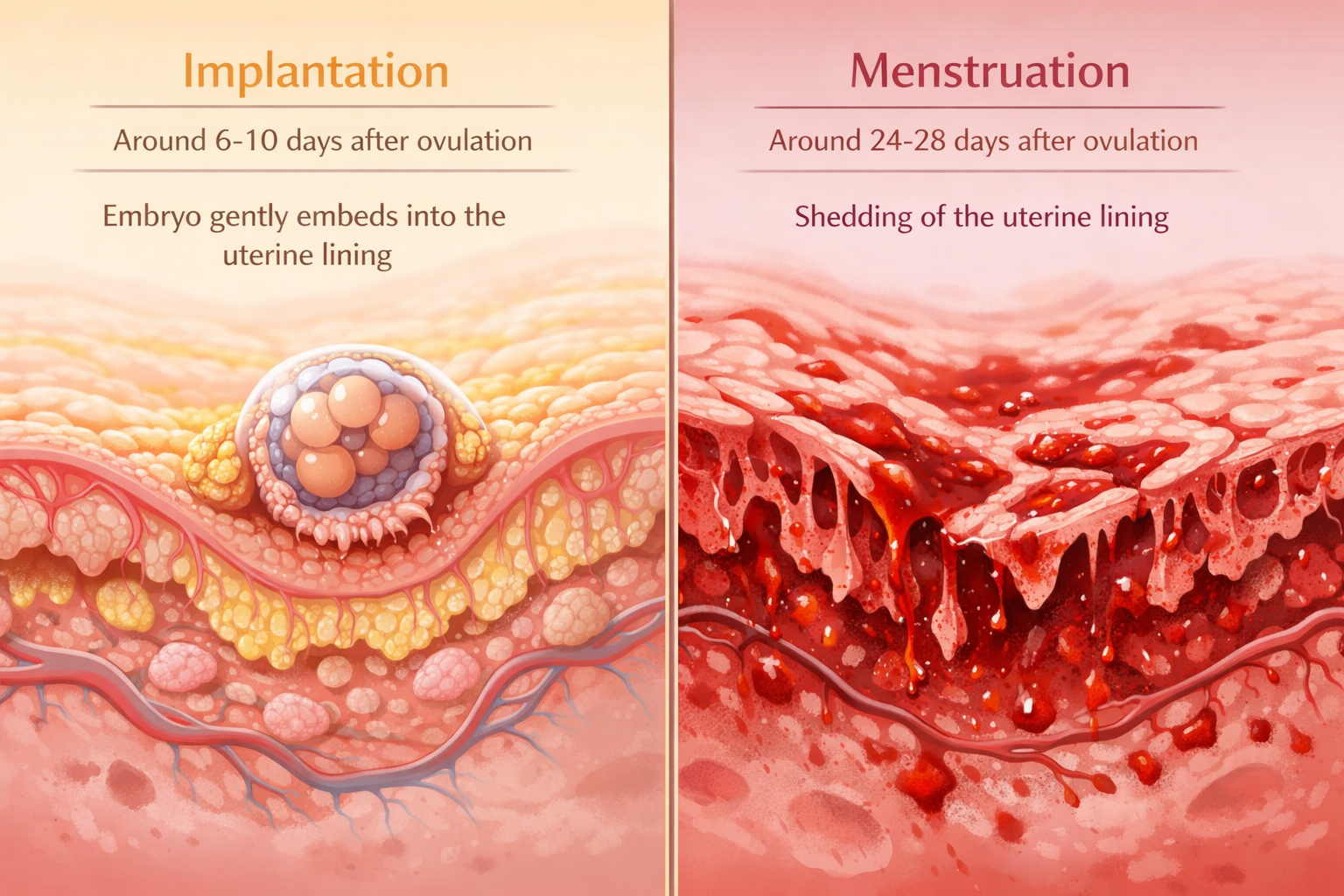
Implantation bleeding is light vaginal bleeding or spotting that can occur when a fertilized egg attaches to the uterine lining, a process called implantation. This event typically happens about 10 to 14 days after conception, often just before your period would normally be due. The primary difference between implantation bleeding vs period is its nature: implantation bleeding is a sign of potential early pregnancy, while a period signifies the absence of pregnancy.
When a fertilized egg, now an embryo, burrows into the rich lining of the uterus, it can sometimes disrupt small blood vessels, leading to minimal bleeding. This is a normal part of the early pregnancy process and not all pregnant individuals experience it. On the other hand, a menstrual period is the shedding of the uterine lining (endometrium) when pregnancy has not occurred. This process involves the entire lining detaching and exiting the body, resulting in a heavier, more sustained blood flow. If you're trying to calculate when this might occur, resources like an Implantation Calculator | When Will Embryo Implant After Ovulation can provide estimated timelines based on your cycle.
How Do You Tell the Difference Between Implantation Bleeding vs Period by Appearance?
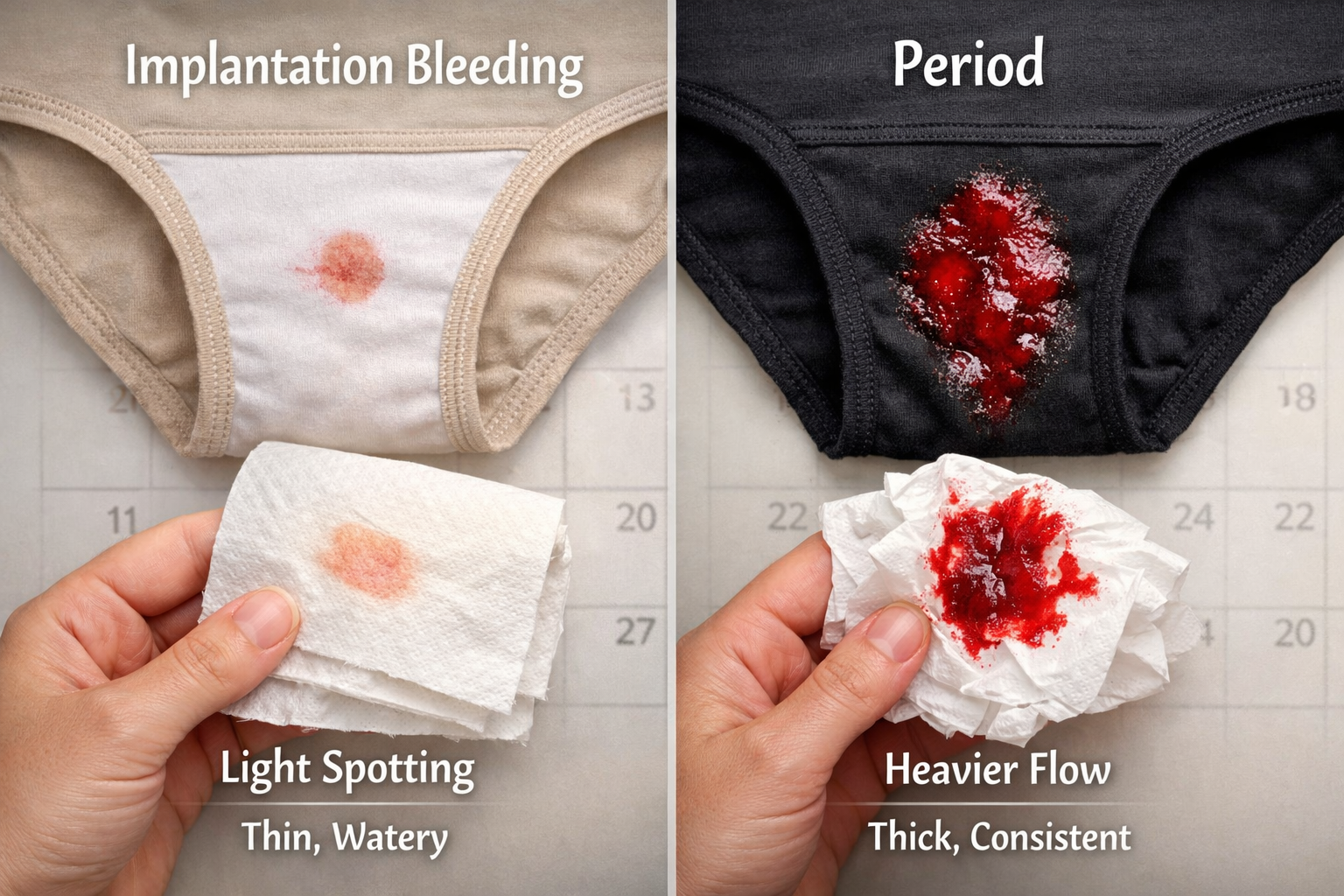
Distinguishing implantation bleeding vs period by appearance involves closely observing the color, consistency, and volume of the blood. Implantation bleeding is generally light, pinkish, or brownish, and much less voluminous than a typical period, while a period is usually bright red and flows more heavily.
Here's a breakdown of the visual distinctions:
- Color:
- Implantation Bleeding: Often appears as light pink, rust-colored, or brownish. This is due to the blood being older as it takes time to travel out of the body, or it's mixed with cervical fluid.
- Period: Typically starts as a bright red, vibrant color, turning darker red as the flow progresses.
- Consistency:
- Implantation Bleeding: Usually thin and watery, without clots.
- Period: Can range from watery to thick, and often contains small clots or tissue fragments from the uterine lining.
- Volume and Flow:
- Implantation Bleeding: Very light spotting, often just a few drops or a faint streak that appears only when wiping. It's usually not enough to fill a pad or tampon.
- Period: Starts light but typically increases in flow, requiring pads or tampons. The flow is continuous for several days.
Decision Rule: If you observe very faint, light pink or brown spotting that doesn't soak through a liner and resolves quickly, it's more likely to be implantation bleeding. If the bleeding is bright red, increases in volume, and requires menstrual products, it's characteristic of a period.
What Are the Key Timing Differences for Implantation Bleeding vs Period?
The timing of the bleeding is one of the most reliable indicators when trying to differentiate implantation bleeding vs period. Implantation bleeding occurs earlier, typically 6-12 days after ovulation, which is generally before your expected period, whereas a period begins around its usual due date.
- Implantation Bleeding Timing:
- Occurs roughly 6-12 days after fertilization, which corresponds to about 10-14 days post-ovulation.
- This usually falls a few days to a week before your period is expected.
- It typically lasts for a few hours to a maximum of 1-3 days.
- To estimate your implantation timing more precisely, you can use an Implantation Date Calculator – Estimate Implantation Timing Accurately.
- Menstrual Period Timing:
- Starts approximately 14 days after ovulation if fertilization doesn't occur.
- This is generally on or around your regularly scheduled period date, assuming a typical 28-day cycle.
- A regular period typically lasts between 3 to 7 days.
- Tools like a Cycle Length Calculator | Track Your Menstrual Cycle Regularity can help you monitor your cycle and predict your period due date.
Edge Case: Individuals with irregular cycles might find timing less straightforward. In such cases, tracking ovulation using methods like basal body temperature (BBT) charting can provide a clearer picture of when implantation might occur relative to ovulation. If you're wondering, "Why is my period late?", and haven't experienced any spotting, it might be worth using a Period Delay Calculator — Why Is My Period Late?.
What Other Symptoms Accompany Implantation Bleeding vs Period?
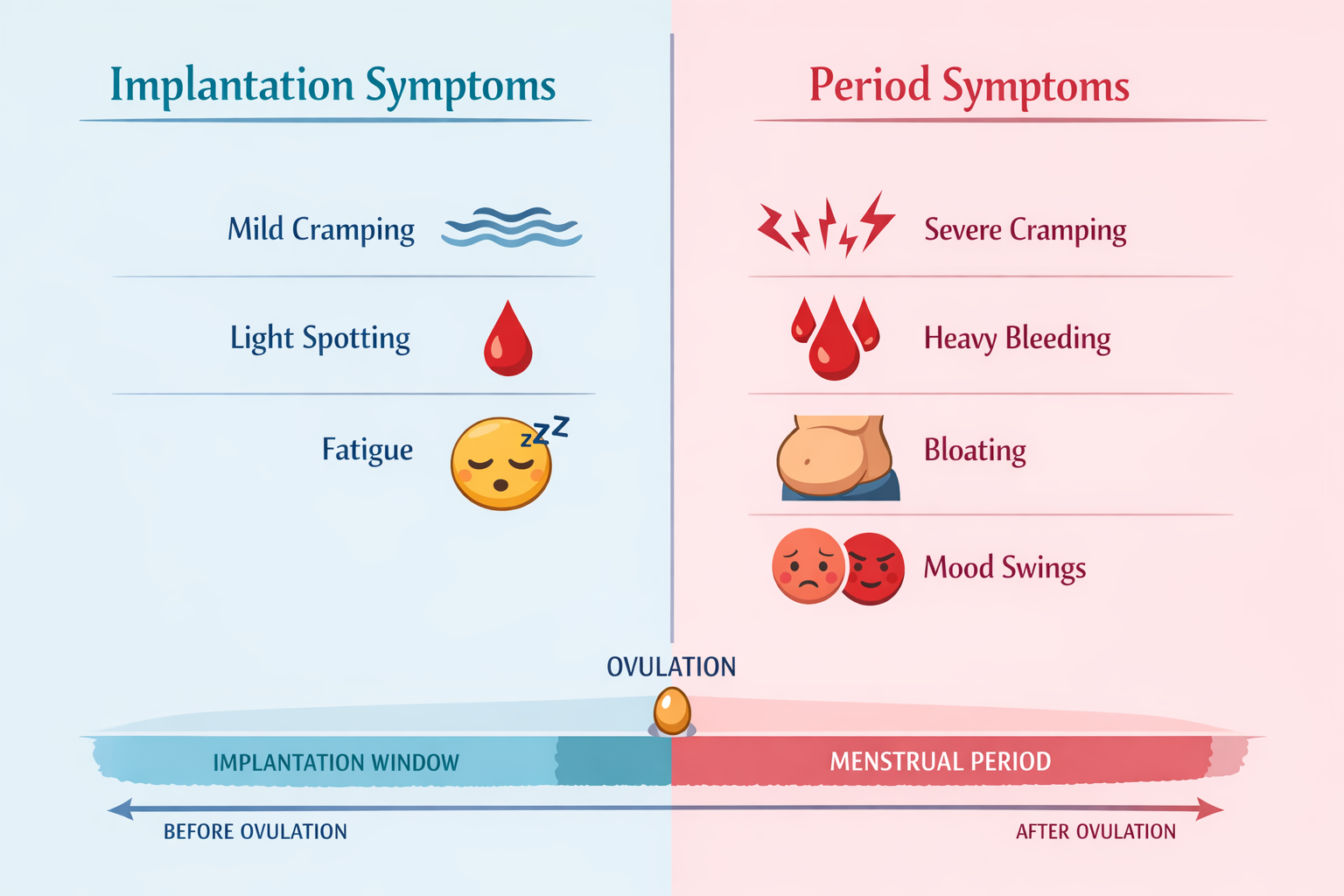
Beyond the bleeding itself, understanding the accompanying symptoms can offer further clues when differentiating implantation bleeding vs period. Implantation bleeding is typically associated with milder symptoms or none at all, while a full period comes with a broader range of more intense premenstrual syndrome (PMS) symptoms.
Here's a comparison of common associated symptoms:
| Symptom | Implantation Bleeding | Menstrual Period |
|---|---|---|
| Cramping | Mild, fleeting cramps (light fluttering or dull ache) | Moderate to severe cramps, often persistent |
| Bloating | Uncommon or very mild | Common, can be significant |
| Breast Tenderness | Possible, due to early hormonal changes | Common, as part of PMS, often subsides with period onset |
| Mood Swings | Less common or mild | Very common, can be pronounced |
| Fatigue | Possible, due to early pregnancy hormones | Can occur, but less specific to early pregnancy |
| Headaches | Less common | Common as a PMS symptom |
| Nausea | Can occur (early pregnancy symptom) | Uncommon as a period symptom |
| Food Cravings/Aversions | Possible (early pregnancy symptom) | Less common or different patterns than pregnancy |
Common Mistake: Many people confuse light implantation cramps with the onset of their period cramps. Implantation cramps are typically much milder, often described as a slight tugging or fluttering sensation, whereas period cramps can be sharp, throbbing, and debilitating, usually requiring pain relief. If you're experiencing a mix of symptoms, consider using an Early Pregnancy Symptoms Checker — Am I Pregnant? to evaluate further.
When Should You Take a Pregnancy Test if You're Unsure?
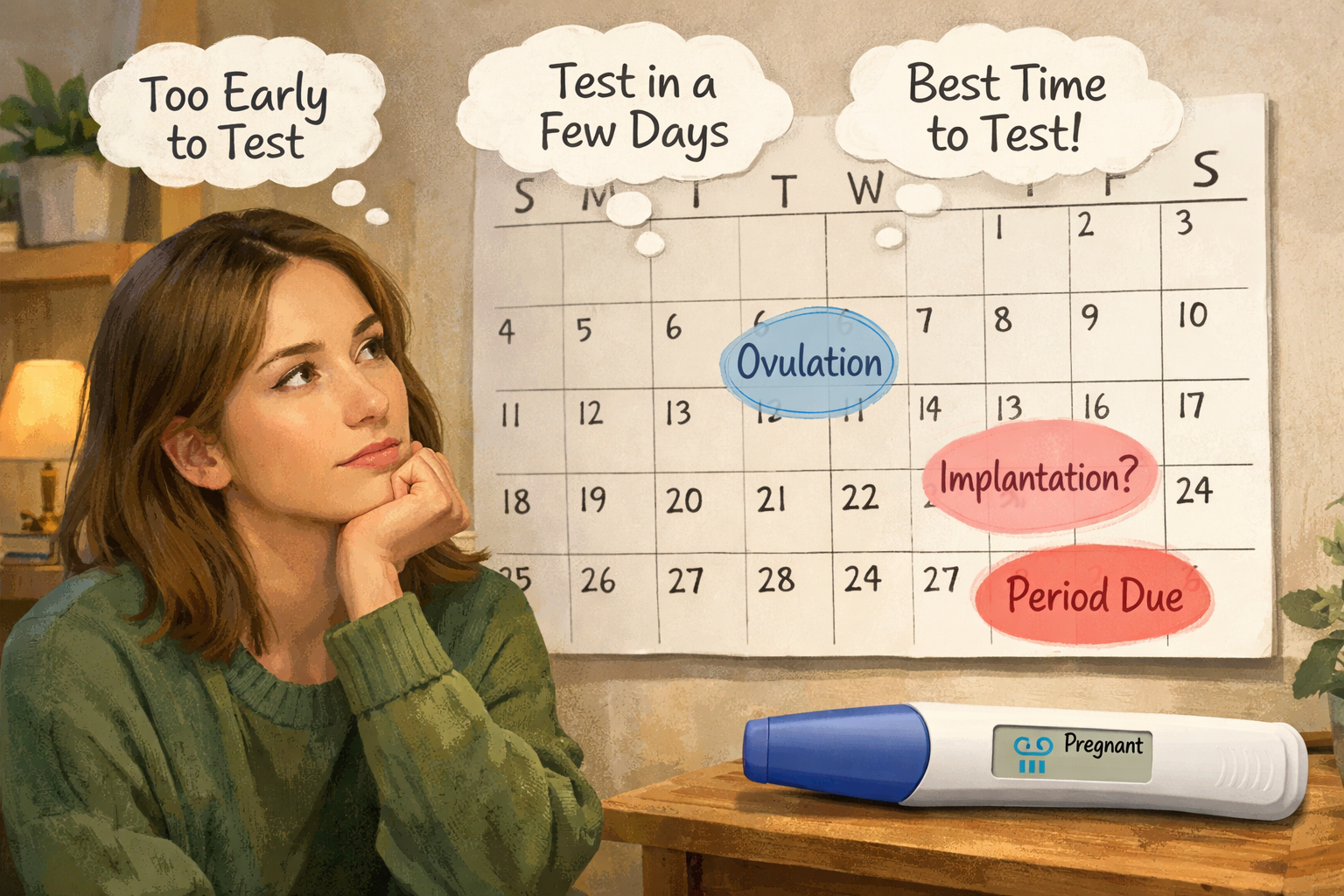
If you're unsure whether you're experiencing implantation bleeding vs period, the most definitive way to confirm or rule out pregnancy is to take a pregnancy test. The optimal time to take a home pregnancy test is typically a few days after your expected period date.
Here's why:
- Hormone Levels: Home pregnancy tests detect human chorionic gonadotropin (hCG) in your urine. Your body only starts producing hCG after implantation occurs, and levels need time to build up to be detectable by a test.
- Accuracy: While some "early detection" tests claim to work a few days before a missed period, their accuracy is higher the closer you are to or past your period due date. Testing too early, especially immediately after potential implantation bleeding, might result in a false negative because hCG levels aren't yet high enough.
- Waiting Period: If you suspect implantation bleeding, wait at least 3-5 days after the spotting stops, or until your period is actually late, before taking a test. This gives your body sufficient time to produce detectable levels of hCG if you are indeed pregnant.
Actionable Next Steps:
- Track Your Cycle: Keep a record of your menstrual cycle, including period start/end dates, ovulation (if you track it), and any spotting. This will help you identify patterns and determine if bleeding is unusual for your cycle.
- Wait for Your Expected Period: If you experience spotting that seems like implantation bleeding, wait until the day your period is actually due.
- Take a Pregnancy Test: If your period doesn't arrive by its due date, take a home pregnancy test. Follow the instructions carefully for the most accurate result.
- Confirm with a Doctor: If your home test is positive, or if you continue to have concerns and your period remains absent, schedule an appointment with your healthcare provider for confirmation and guidance.
Remember, even if you experience what seems like implantation bleeding, it doesn't guarantee pregnancy. Other factors can cause light spotting, such as hormonal fluctuations, stress, or minor cervical irritation.
When to Contact a Healthcare Professional About Bleeding
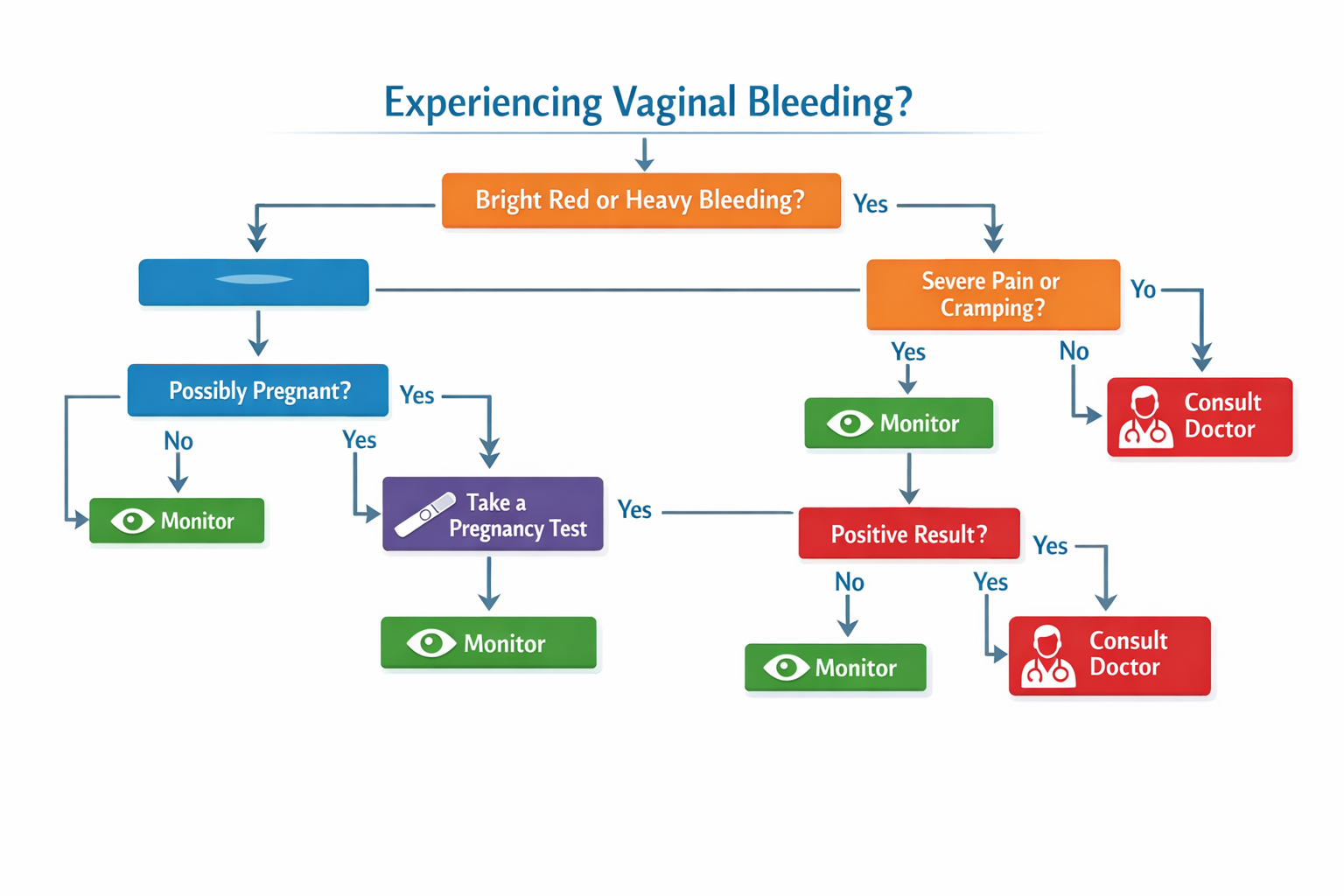
While understanding implantation bleeding vs period can provide some peace of mind, there are specific circumstances when it's always best to contact a healthcare professional about vaginal bleeding. This includes any heavy, prolonged, or painful bleeding that is unusual for you, or if you have concerns about potential pregnancy complications.
Consider reaching out to a doctor if:
- Bleeding is Heavy: If the bleeding is as heavy or heavier than a typical period, especially if you're soaking through more than one pad or tampon per hour for several hours.
- Severe Pain: If bleeding is accompanied by intense abdominal pain, one-sided pain, or pain that radiates to your shoulder, which could indicate an ectopic pregnancy or other serious condition.
- Unusual Color or Odor: If the blood has a very unusual color (e.g., very dark brown with a foul odor) or consistency.
- Fever or Chills: If you develop a fever, chills, or other signs of infection alongside the bleeding.
- Positive Pregnancy Test with Heavy Bleeding: If you've had a positive pregnancy test and then experience bleeding that resembles a period, this could be a sign of miscarriage and warrants immediate medical attention.
- Known Pregnancy Concerns: If you have a known medical condition that could complicate pregnancy or bleeding.
- Persistent Uncertainty: Even if the bleeding is light, but you're experiencing unusual symptoms or are very anxious about whether it's implantation bleeding vs period, a medical consultation can provide clarity and reassurance.
Quick Example: If you have a positive pregnancy test and then experience bleeding that is bright red and requires you to change a pad every hour, contact your doctor immediately. This scenario differs significantly from typical implantation spotting and requires prompt evaluation. Always prioritize your health and well-being by seeking professional advice when in doubt.
Conclusion
Navigating the subtle signs your body presents, particularly when it comes to implantation bleeding vs period, can be a source of both hope and anxiety. We've explored the key distinctions in timing, appearance, and accompanying symptoms to help you interpret these bodily signals. While implantation bleeding is a potential early sign of pregnancy—characterized by light, pinkish or brownish spotting a week or so before your period—a regular period is a heavier, brighter red flow occurring on schedule.
Remember that while these guidelines offer valuable insight, every individual's experience can vary. The most reliable next step if you suspect pregnancy, especially after experiencing potential implantation bleeding, is to wait until your period is due and then take a home pregnancy test. If the test is positive, or if you have any lingering concerns about unusual bleeding, pain, or your reproductive health, do not hesitate to consult a healthcare professional. They can provide accurate diagnosis, personalized advice, and ensure your well-being throughout this important time.
FAQ
Q: Can implantation bleeding be heavy like a period? A: No, implantation bleeding is typically much lighter than a period, usually just spotting or a faint streak, not a heavy flow.
Q: How long does implantation bleeding usually last? A: Implantation bleeding is generally brief, lasting from a few hours to a maximum of 1 to 3 days.
Q: What color is implantation bleeding? A: Implantation bleeding is often light pink, rust-colored, or brownish.
Q: Is cramping always present with implantation bleeding? A: No, cramping is not always present, and if it is, it's typically very mild—a light fluttering or dull ache, not severe pain.
Q: Can I mistake implantation bleeding for a light period? A: While possible, a true implantation bleed is usually lighter, shorter, and different in color than even a light period. Pay attention to all the details discussed.
Q: When is the best time to take a pregnancy test after suspected implantation bleeding? A: For the most accurate results, wait until after your expected period date, or at least 3-5 days after the suspected implantation bleeding has stopped.
Q: What if I have a positive pregnancy test but also heavy bleeding? A: If you have a positive pregnancy test and experience heavy bleeding similar to a period, contact your doctor immediately, as this could indicate a miscarriage or other complication.
Q: Does everyone experience implantation bleeding? A: No, not all pregnant individuals experience implantation bleeding; it's estimated that only about 10-30% of pregnancies involve it.
Q: Can stress cause spotting that looks like implantation bleeding? A: Yes, stress, hormonal fluctuations, certain medications, or even minor irritation to the cervix can sometimes cause light spotting that is not related to pregnancy.
Q: Will an early pregnancy test detect implantation bleeding? A: Early pregnancy tests detect hCG, which only begins to rise after implantation. While some tests claim to detect it early, waiting until after your missed period provides more accurate results.
SEO Meta