When Was My Baby Conceived? Unraveling Your Conception Date in 2026
Last updated: March 6, 2026
Discovering you're pregnant often brings a flood of emotions, and one of the first questions many expectant parents ask is, "When was my baby conceived?" Pinpointing the exact conception date can feel like solving a puzzle, crucial for understanding your baby's development, estimating your due date, and planning for their arrival. While an exact conception day can be elusive for many, several reliable methods exist to help you narrow down the window and gain clarity.
Key Takeaways
- Conception is distinct from your last menstrual period (LMP): Pregnancy length is typically calculated from your LMP, but conception usually occurs about two weeks later.
- Ovulation is key: Conception happens when a sperm fertilizes an egg, which is only released during ovulation.
- Your fertile window is typically 6 days: This includes the five days leading up to and the day of ovulation.
- Ultrasound is the most accurate method: Early ultrasounds (especially in the first trimester) provide the most precise estimate for conception and due dates.
- Tracking methods can help: Basal body temperature (BBT), ovulation predictor kits (OPKs), and cervical mucus monitoring can pinpoint ovulation.
- Irregular cycles complicate estimates: Women with irregular periods may find it harder to determine conception based on LMP alone.
- Conception date calculators: Online tools, like the Conception Date Calculator, use various data points to provide estimates.
- Always consult a healthcare provider: Medical professionals provide the most accurate and personalized guidance for your pregnancy timeline.
Quick Answer
Determining when your baby was conceived primarily relies on identifying your ovulation day, as fertilization can only occur during your fertile window. While your due date is typically calculated from the first day of your last menstrual period (LMP), actual conception usually takes place about two weeks after your LMP, around the time of ovulation. The most accurate way to confirm a conception date is often through an early ultrasound.
How Is Conception Date Calculated?
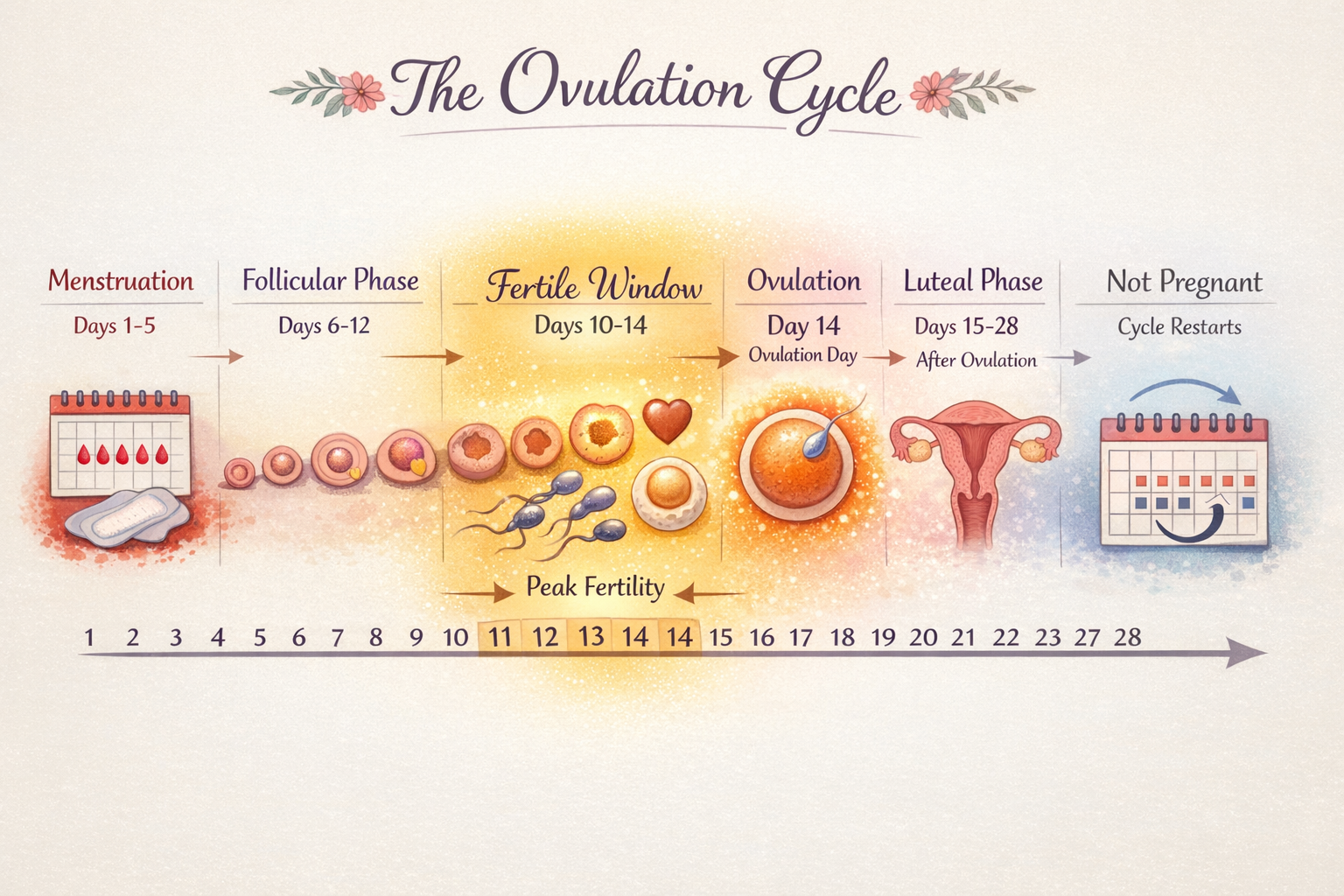
Calculating your conception date involves understanding the menstrual cycle and the timing of ovulation. While a baby's due date is traditionally estimated based on the first day of your last menstrual period (LMP), conception itself happens later, around the middle of your cycle when an egg is released.
For individuals with a regular 28-day menstrual cycle, ovulation typically occurs around day 14. Since sperm can live for up to five days inside the female reproductive tract and an egg is viable for about 12-24 hours after release, the "fertile window" for conception spans approximately six days: the five days leading up to ovulation and the day of ovulation itself. Therefore, if your LMP was January 1st, your estimated conception date would likely fall around January 14th, plus or minus a few days. This 2-week difference is why a full-term pregnancy is considered 40 weeks from LMP, but the baby is only approximately 38 weeks old from conception.
What Are the Most Accurate Ways to Determine When Was My Baby Conceived?
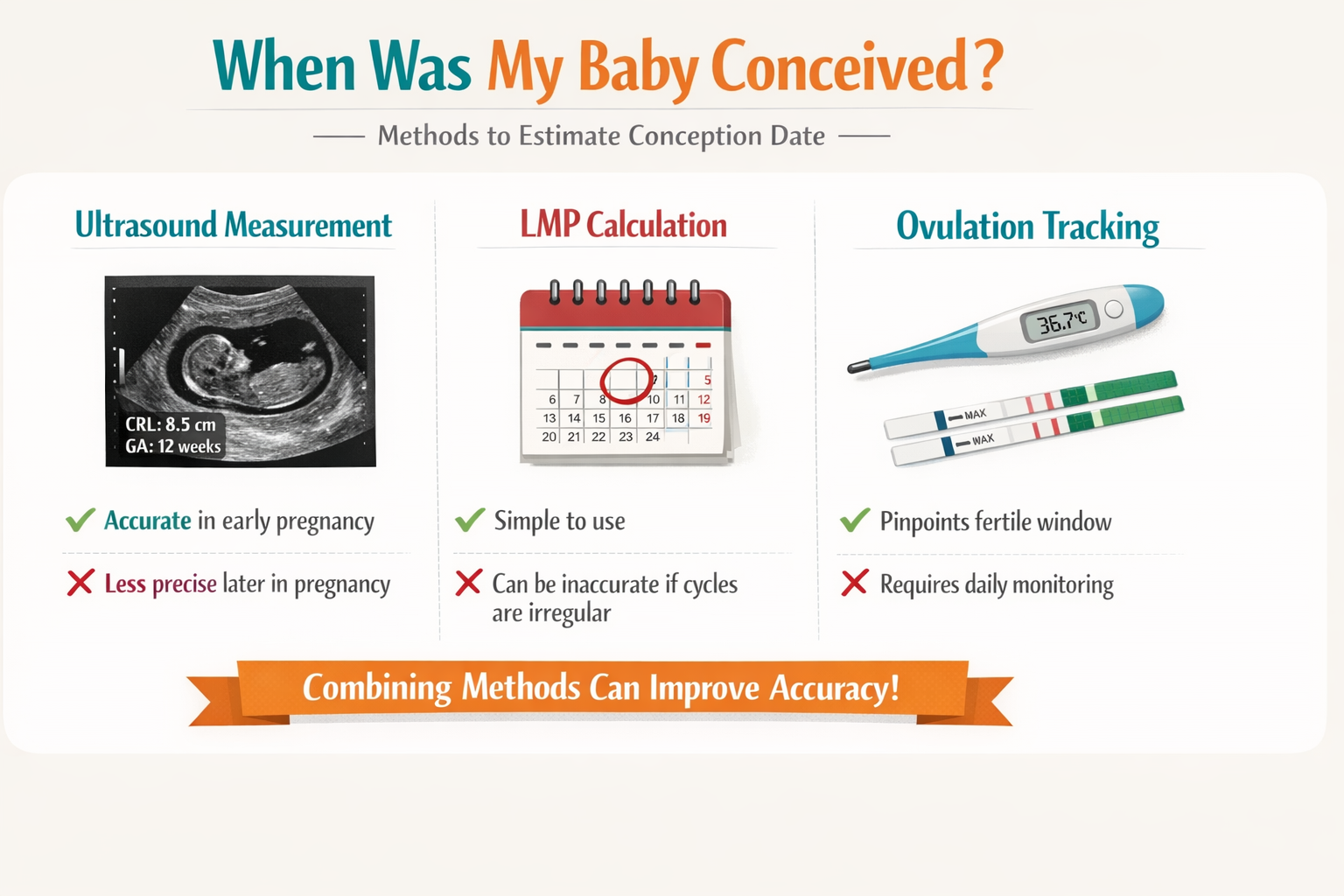
The most accurate ways to determine when your baby was conceived involve a combination of medical assessments and diligent self-tracking. While no method can pinpoint the exact hour of fertilization, these approaches provide the closest estimates.
For precise dating, an early ultrasound is generally considered the gold standard.
Here's a breakdown of the most reliable methods:
- Early Ultrasound: An ultrasound performed in the first trimester (typically between 6 and 12 weeks of pregnancy) is the most accurate method for dating a pregnancy and, consequently, estimating the conception date. The sonographer measures the crown-rump length (CRL) of the embryo, which correlates directly with gestational age. This method is particularly useful for women with irregular cycles, as it doesn't rely on LMP.
- Last Menstrual Period (LMP): If you have a regular menstrual cycle, your doctor will likely use the first day of your LMP to estimate your due date. Conception is then estimated to have occurred approximately two weeks after your LMP. For example, if your LMP was October 1st, 2025, your estimated conception date would be around October 15th, 2025. This is a common starting point but can be less accurate if your cycles are irregular or you're unsure of your LMP.
- Ovulation Tracking: If you actively tracked your ovulation, this method can be highly accurate.
- Basal Body Temperature (BBT): Monitoring your BBT daily can reveal a slight rise (0.5-1.0 degrees Fahrenheit) after ovulation, indicating that it has occurred. The day before or the day of this temperature spike is your most fertile day.
- Ovulation Predictor Kits (OPKs): These kits detect a surge in luteinizing hormone (LH), which typically happens 24-36 hours before ovulation. A positive OPK provides a strong indicator of your fertile window.
- Cervical Mucus Monitoring: Changes in cervical mucus consistency (becoming clear, stretchy, and egg-white-like) can signal impending ovulation.
- For those who track their cycles meticulously, the AI Ovulation Predictor can use your data to help pinpoint ovulation with advanced machine learning. If you know your exact ovulation date, your conception date is likely within 12-24 hours of that event.
Decision Rule: Choose early ultrasound for the highest accuracy, especially if your periods are irregular or you didn't track ovulation. Rely on LMP only if you have consistently regular cycles and are confident about your last period's start date. Ovulation tracking is excellent if performed diligently before conception.
How Do Irregular Periods Affect Determining When Was My Baby Conceived?
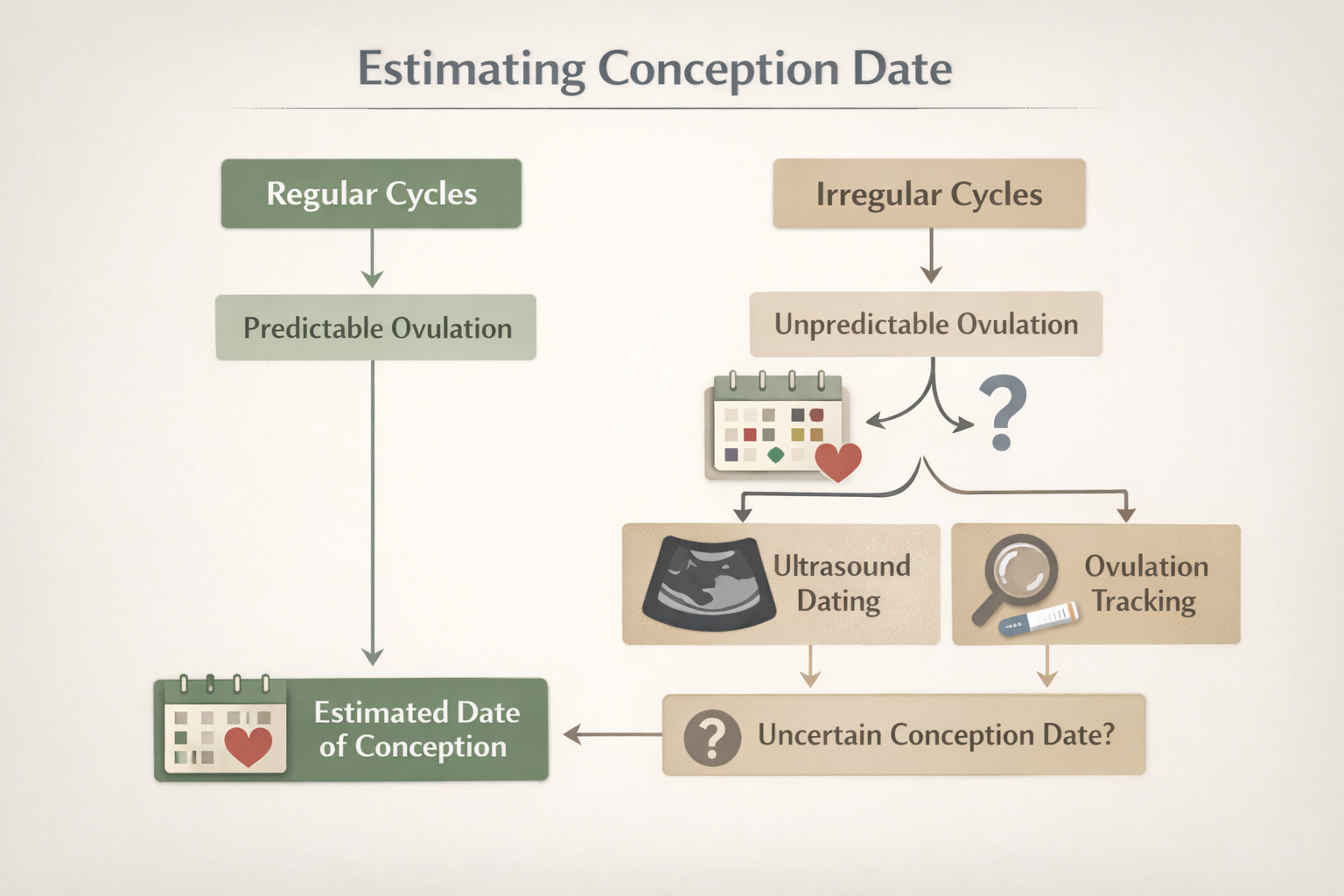
Irregular periods significantly complicate the process of determining an accurate conception date because they make it difficult to predict ovulation. Without a predictable cycle, the standard "two weeks after LMP" rule becomes unreliable, often leading to discrepancies in estimated due dates.
When your menstrual cycles are irregular, the timing of ovulation can vary greatly from one cycle to the next, or it might not occur at all in some months. This means:
- LMP Method is Unreliable: Using the first day of your last menstrual period (LMP) to estimate conception and due date is inaccurate. The assumed 14-day window between LMP and ovulation no longer applies consistently. Your actual ovulation could happen much earlier or much later than average.
- Increased Reliance on Ultrasounds: For women with irregular periods, an early dating ultrasound is almost always necessary to establish a more accurate gestational age and estimated due date. The ultrasound measures the size of the embryo/fetus, providing a direct measurement of its developmental age, regardless of when your last period was.
- Challenges with Ovulation Tracking: While ovulation tracking methods like BBT and OPKs can still be used, they require more vigilance and patience with irregular cycles. You might need to track for longer periods or use more OPK strips to catch the LH surge. This can be frustrating but is often the best self-tracking approach for pinpointing your personal fertile window. You can learn more about this through resources like "Late Ovulation Symptoms Explained" for further insights.
- Potential for Late Ovulation: Irregular cycles are often linked to late ovulation, which can delay conception. Understanding "Does Late Ovulation Delay Implantation?" can provide further context on how this impacts your pregnancy timeline.
Common Mistake: Assuming a fixed 28-day cycle length and calculating conception based on LMP when your periods are irregular. This can lead to a miscalculated due date and unnecessary anxiety about fetal growth if the baby appears smaller or larger than expected for the "LMP date."
What Role Does Fertilization and Implantation Play in Determining Conception?
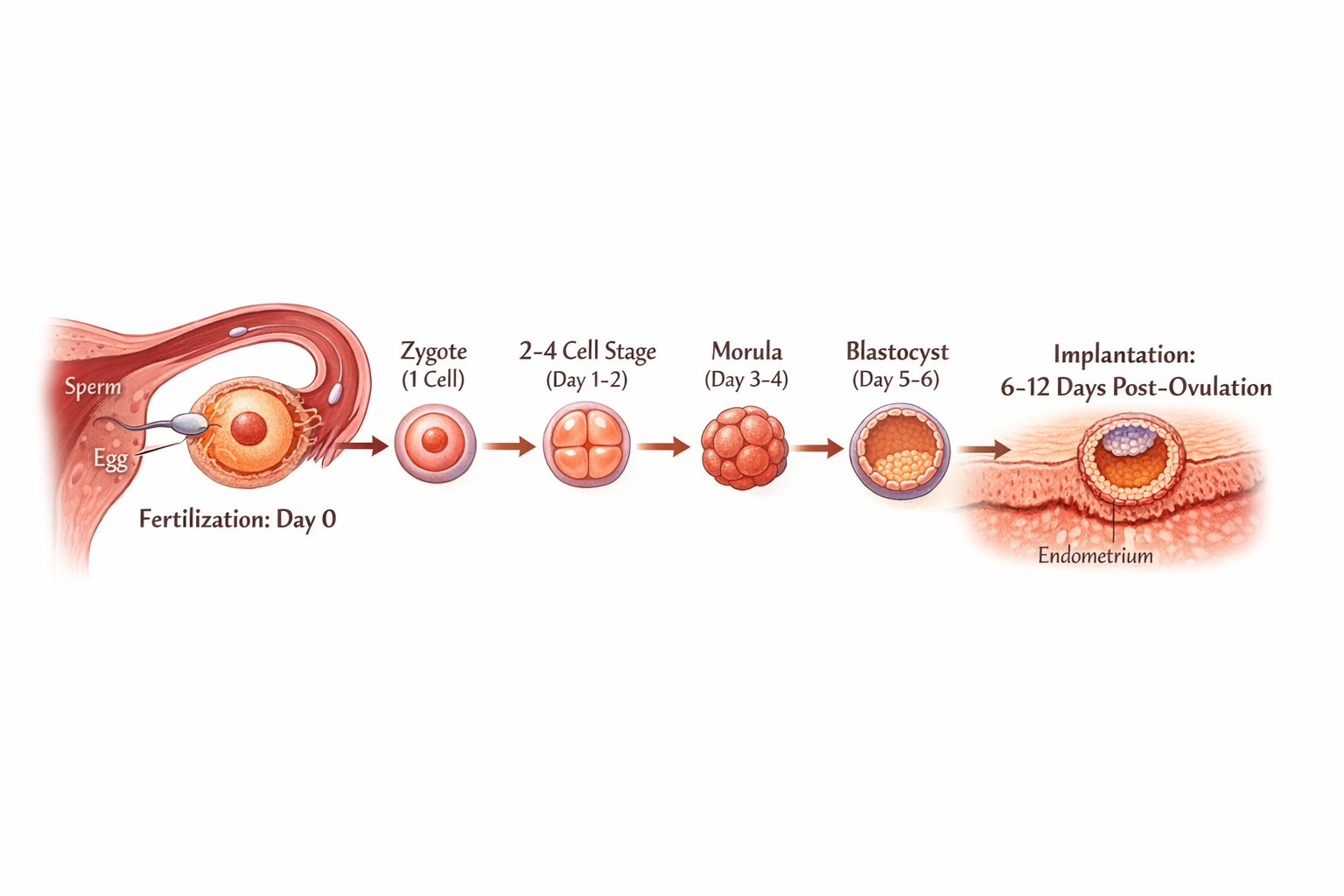
Fertilization marks the precise moment a sperm and egg unite, while implantation is when the resulting embryo attaches to the uterine wall. While fertilization is the actual start of a new life, implantation is what triggers the hormonal changes detected by pregnancy tests and is crucial for the continuation of the pregnancy.
Understanding these stages helps clarify the timeline from intercourse to a confirmed pregnancy:
- Fertilization: This occurs when a sperm successfully penetrates an egg, typically in the fallopian tube. This is the moment of conception. For fertilization to happen, intercourse must take place during your fertile window, which is the few days leading up to and including ovulation. Sperm can live inside the body for up to five days, meaning intercourse on Monday could lead to fertilization on Friday if you ovulate then. The egg, once released, is viable for only about 12-24 hours.
- Journey to the Uterus: After fertilization, the now-formed zygote begins a journey down the fallopian tube, dividing rapidly. This process takes approximately 3-5 days, during which it develops into a blastocyst.
- Implantation: Upon reaching the uterus, the blastocyst attempts to embed itself into the uterine lining. This process, known as implantation, typically occurs 6 to 12 days after ovulation (or 6-12 days after fertilization). Implantation is a critical step because it establishes the connection between the embryo and the mother, initiating the production of human chorionic gonadotropin (hCG), the hormone detected by pregnancy tests.
- For more detailed information on this crucial phase, you can refer to "When Does Implantation Occur After Ovulation". Understanding the timing of implantation is also key to knowing when you might experience early pregnancy symptoms like implantation bleeding or when to take a pregnancy test. The Implantation Calculator can help estimate this window.
While fertilization is the "point of conception," the 6-12 day gap until implantation means there's a delay before pregnancy can be detected. Knowing these steps helps manage expectations about when you can get a positive pregnancy test and how various calculators estimate your timeline.
When Should I Consult a Doctor to Confirm My Conception Date?
You should consult a doctor to confirm your conception date as soon as you get a positive home pregnancy test, or if you suspect you might be pregnant. Early prenatal care is vital for a healthy pregnancy, and your doctor will use the most accurate methods available to establish your pregnancy timeline.
Here's why and when professional medical consultation is important:
- Confirmation of Pregnancy: Your doctor will confirm your pregnancy through blood or urine tests, which are more sensitive and accurate than home tests.
- Dating Ultrasound: As discussed, an early dating ultrasound (typically between 6 and 12 weeks gestational age) is the most reliable way to establish your due date and, by extension, your conception date. This is especially crucial for women with irregular periods, those who can't recall their LMP, or those who conceived while breastfeeding.
- Personalized Guidance: Your doctor can provide personalized advice based on your medical history, cycle regularity, and any symptoms you might be experiencing. They can also discuss potential risk factors and create a comprehensive prenatal care plan.
- Monitoring Early Pregnancy: Regular check-ups allow your healthcare provider to monitor the baby's development, your health, and address any concerns promptly. Establishing an accurate conception and due date helps ensure timely screenings and interventions.
- Peace of Mind: Receiving professional confirmation and a clear timeline can provide significant peace of mind, allowing you to focus on a healthy pregnancy journey.
Actionable Next Steps: Once you have a positive pregnancy test, contact your healthcare provider to schedule your first prenatal appointment. Be prepared to share the date of your last menstrual period (if known), any ovulation tracking data you have, and your health history.
Conclusion
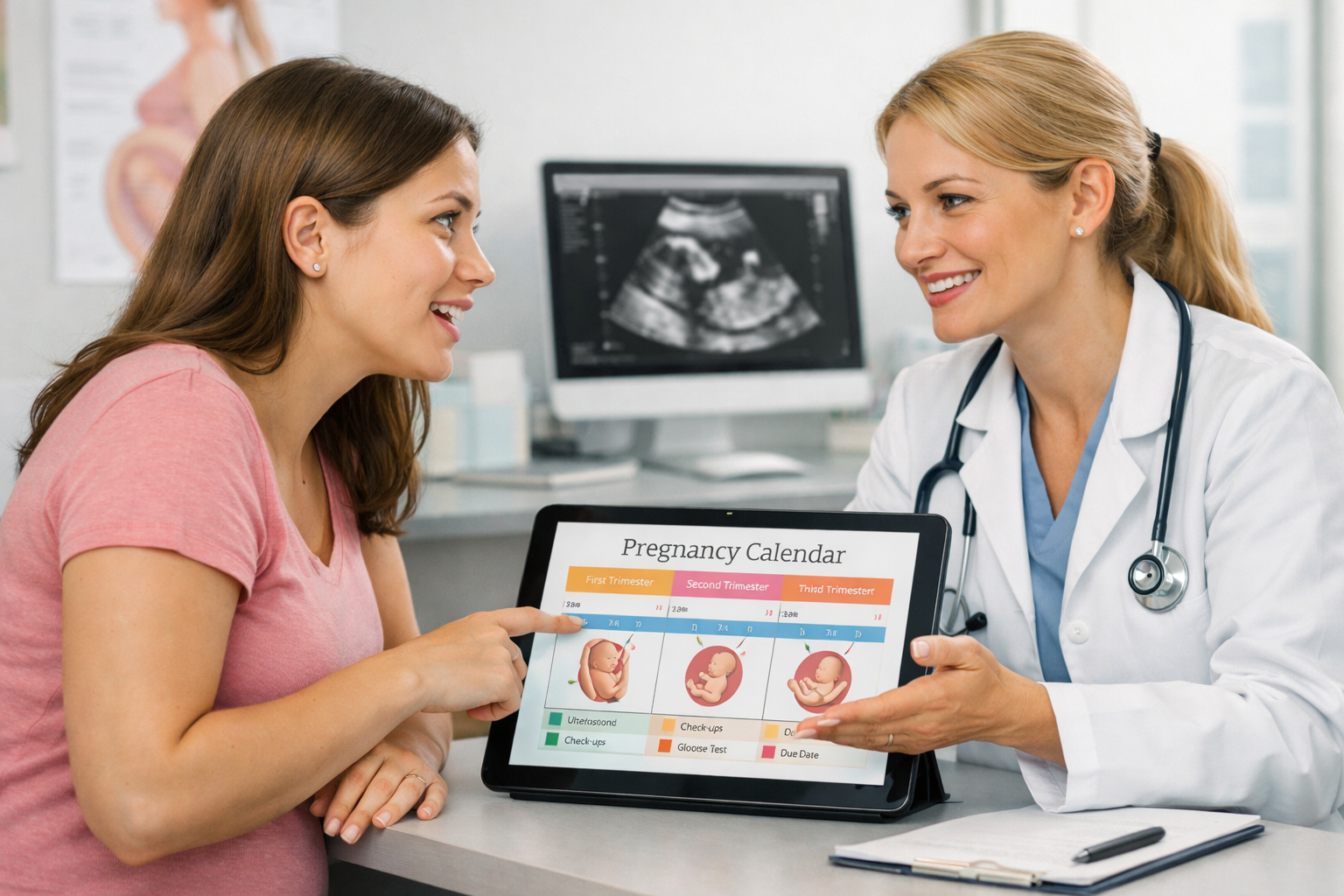
Pinpointing the exact moment your baby was conceived can be a fascinating, yet sometimes challenging, aspect of early pregnancy. While methods like tracking your last menstrual period and ovulation can provide good estimates, an early ultrasound remains the most accurate way to establish your conception date and gestational age, especially for those with irregular cycles. Understanding the biological processes of fertilization and implantation clarifies why there's a window of time between intercourse and a positive pregnancy test.
Ultimately, whether you're using an online conception calculator or meticulous ovulation tracking, the goal is to gain clarity and prepare for your baby's arrival. Always remember that a healthcare professional is your best resource for accurate dating and personalized guidance throughout your pregnancy journey. Don't hesitate to reach out to them as soon as you suspect you're pregnant to confirm your dates and begin comprehensive prenatal care.
Related Reading
- Due Date Calculator | Estimate Your Baby's Arrival Day
- Fertile Window Calculator: Maximize Conception in 2025
- Implantation Symptoms Day by Day
FAQ
Q: Is my conception date the same as my due date? A: No, your conception date is the estimated day you became pregnant, while your due date is the estimated day your baby will be born, typically about 38 weeks after conception or 40 weeks from your last menstrual period.
Q: Can a pregnancy test tell me my conception date? A: Most standard home pregnancy tests detect hCG, confirming pregnancy, but cannot tell you your precise conception date. Some advanced digital tests can estimate "weeks since conception" but these are still estimates.
Q: How accurate is the LMP method for determining conception? A: The LMP method is generally accurate for women with very regular 28-day cycles, estimating conception around two weeks after LMP. It becomes less accurate with irregular cycles.
Q: What if I don't know my last menstrual period date? A: If you don't know your LMP, your doctor will rely heavily on an early ultrasound to accurately date your pregnancy and estimate your conception date.
Q: Does having sex multiple times impact my conception date? A: If you had sex multiple times within your fertile window, it's impossible to know which specific act led to fertilization. The conception date will still be estimated based on the date of ovulation.
Q: How soon after conception can I take a pregnancy test? A: You can usually take a pregnancy test about 10-14 days after ovulation, which is roughly when implantation occurs and hCG levels become detectable.
Q: What is the fertile window? A: The fertile window is the period of about six days during which conception is possible, encompassing the five days leading up to ovulation and the day of ovulation itself.
Q: Can stress affect my conception date? A: Chronic stress can sometimes lead to irregular ovulation or delayed ovulation, which can, in turn, affect the timing of conception.